
Finding the Best Commercial Griddle for Your Kitchen
Choosing the right commercial griddle isn't just about buying another piece of equipment. It's an investment in your restaurant's consistency—the kind that turns a good dish into a great one and keeps customers coming back. The right griddle is a chef's secret weapon, creating that perfect golden-brown crust and even cook that other methods can't touch.
Why a Great Commercial Griddle Is Your Kitchen's Secret Weapon
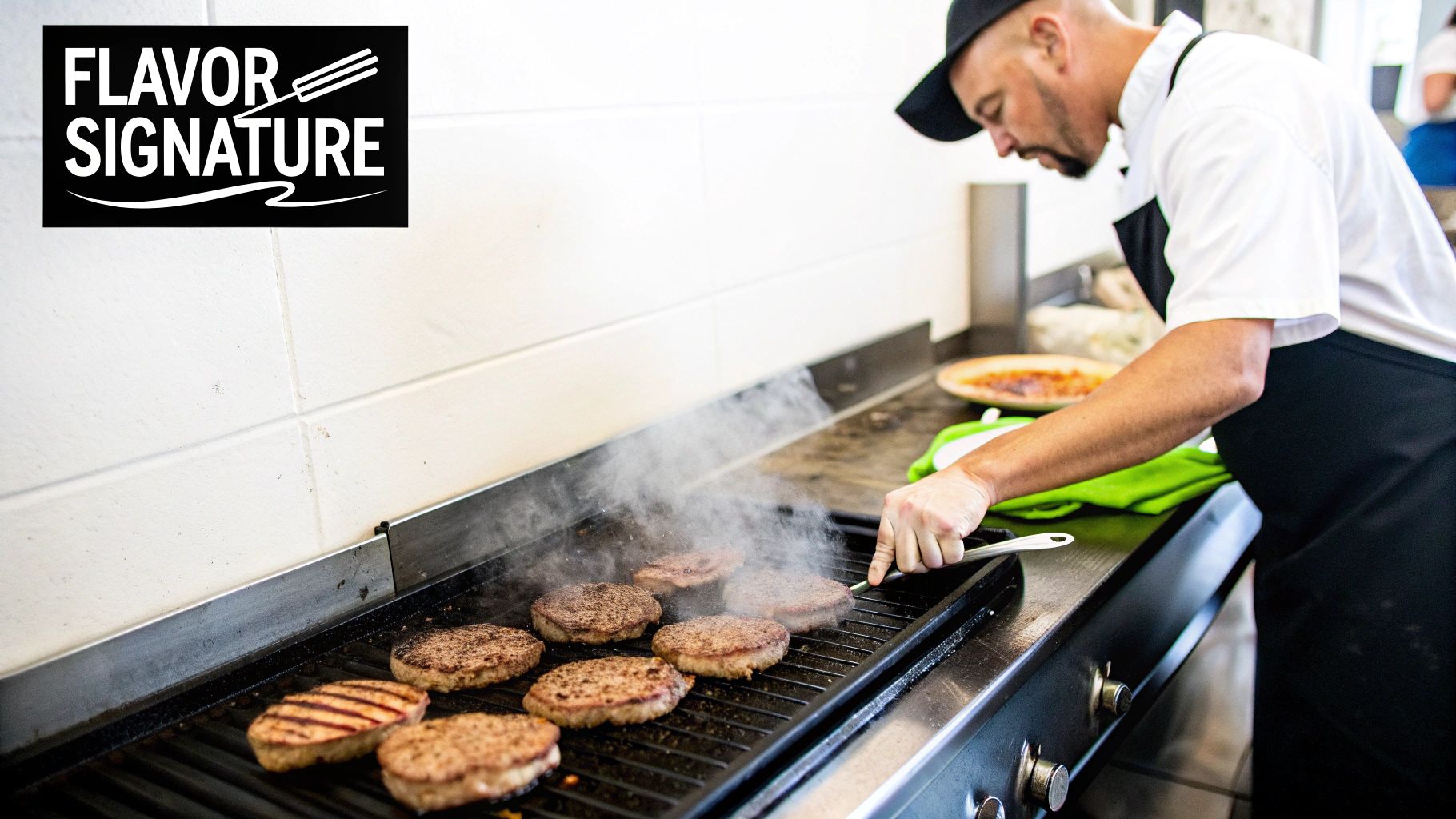
A commercial griddle is far more than just a flat-top; it's the engine of versatility in any professional kitchen. It’s what allows you to cook a perfect breakfast rush of pancakes and eggs, then pivot to searing smash burgers for lunch, all on the same surface.
Think of it this way: a standard pan is a basic tool, but a commercial griddle is a finely tuned instrument. While both cook food, the griddle is built for one job: to deliver consistent, even heat across a large surface area for maximum output. This powerhouse doesn't just cook—it gives you the space and control to execute a diverse menu with speed and precision.
Elevating the Customer Experience
That consistent, even heat from a griddle's flat plate ensures food is cooked perfectly from edge to edge. This process, known as the Maillard reaction, is the chemical magic behind the complex flavors and golden-brown aromas you just can't get any other way. It creates a perfectly crisp exterior on everything from hash browns to burger patties.
When a customer orders a dish off the griddle, they have a specific expectation. They're anticipating that perfect browning, the sizzling sound, and the delicious aroma. A good commercial griddle delivers on that promise every single time.
Investing in the right unit has a direct, positive impact on your restaurant's brand and your bottom line. A perfectly cooked dish becomes a signature item—a real reason for customers to return and recommend you to others.
Expanding Your Menu's Potential
A versatile griddle gives you the confidence to get creative and expand your menu with offerings that consistently impress. Just think about the possibilities:
- Perfectly seared smash burgers and cheesesteaks with a beautiful, even crust.
- Fluffy pancakes and French toast with a consistent golden-brown finish.
- Caramelized vegetables like onions and peppers that cook down beautifully without burning.
The ability to consistently produce high-quality, perfectly cooked food is a huge competitive advantage. For anyone new to this type of equipment, understanding the basics is key. You can learn more about what a commercial charbroiler is and how it differs from a griddle to appreciate the unique role each plays.
Ultimately, a commercial griddle turns simple ingredients into profitable menu items, justifying price points and building a reputation for consistency. It’s a true investment in quality, speed, and your brand's identity.
Gas vs. Electric: What Fuel Source Is Right for You?
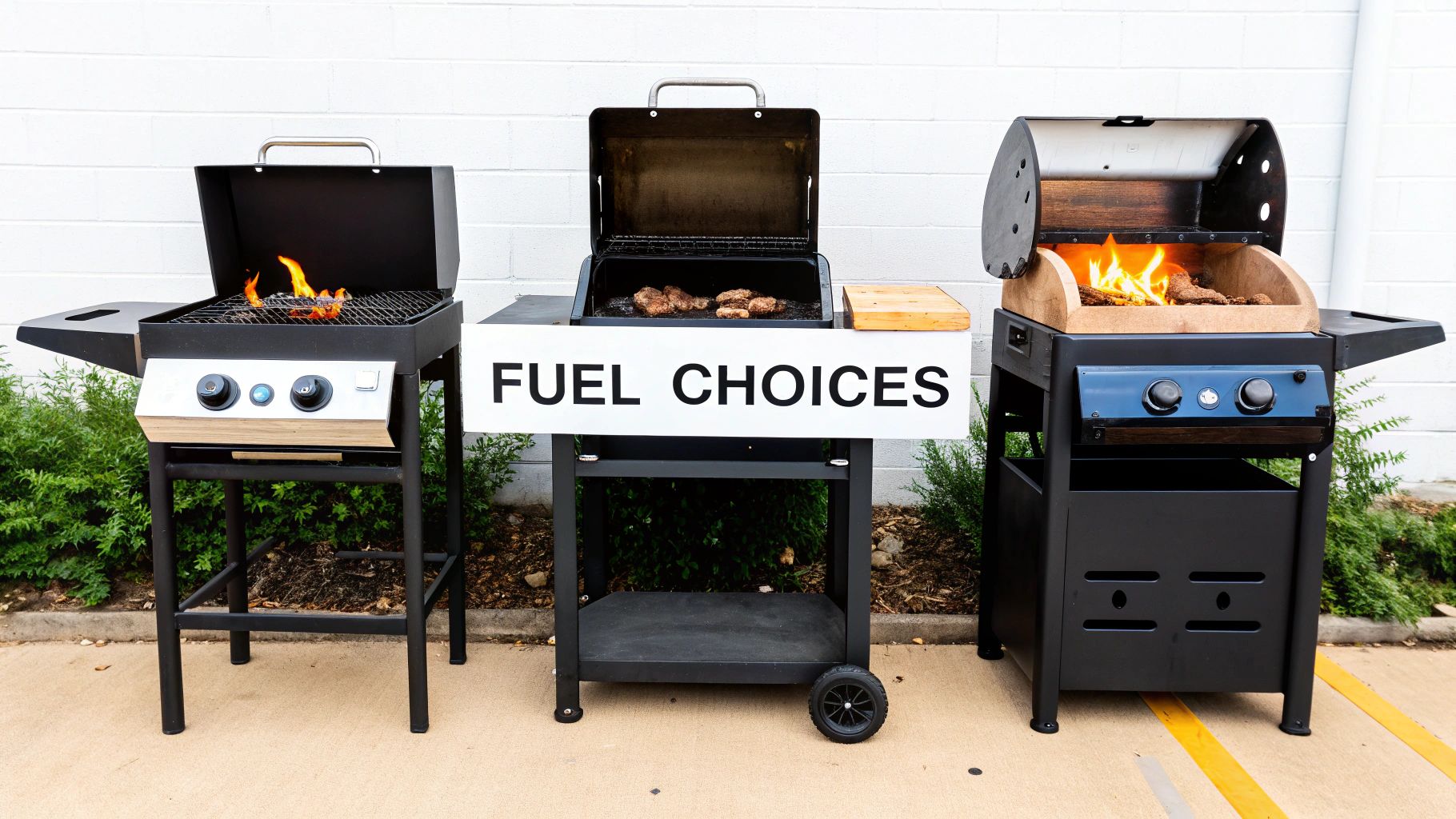
Picking the fuel for your commercial griddle is one of the biggest calls you'll make for your kitchen. It's like a chef choosing their favorite knife—the decision affects everything from power and precision to the final taste on the plate. Gas and electric models each bring something different to the table, and the right choice boils down to your menu, workflow, and kitchen setup.
This isn't just about heat; it's about the heart of your operation. Your fuel source defines the cooking experience, shaping everything from your speed of service to the efficiency of your line.
Gas Griddles: The Dependable Workhorse
In the world of high-volume commercial kitchens, gas griddles are the undisputed champs. They’re prized for a killer combination of speed, power, and sheer reliability. Think of them as the engine that powers countless restaurants through the craziest breakfast and lunch rushes.
Picture a Saturday morning with tickets flying. A gas griddle heats up quickly and holds its temperature steady, letting your crew serve customers without breaking a sweat or sacrificing quality. That kind of dependability is gold. Some leading brands even offer thermostatic controls that regulate temperature automatically, mixing raw power with smart tech.
Plus, gas units give you dead-simple temperature control with manual knobs, making it a breeze to go from cooking delicate eggs on one zone to searing burgers on another. For kitchens that need that kind of flexibility, gas is invaluable. It’s also important to know your gas types, which is why we have a guide breaking down natural gas vs propane for commercial gear.
Electric Griddles: The Precision Instrument
When it comes to precision and ease of installation, electric griddles are in a class of their own. They deliver incredibly even heat across the entire cooking surface, killing the frustrating hot spots that can ruin a dish on other types of griddles.
This makes them the perfect tool for delicate items like crepes or seafood, where finesse and consistency are everything. For kitchens with restrictions on gas lines—think certain high-rise buildings, food halls, or food trucks—electric models are often the only way to go.
Electric griddles trade the raw power of gas for unmatched temperature control and operational simplicity. This makes them a smart, strategic choice for specific culinary needs and environments where consistency is king.
They offer a clean, efficient cooking environment that simplifies installation and boosts kitchen safety across the board. While you might miss the slightly faster response time of a gas flame, their reliability and ease of use make them a serious asset in the right kitchen.
Ultimately, the best fuel source for your griddle comes down to what you value most.
- For speed, volume, and power: Gas is your go-to.
- For precision and ease of installation: Electric is the clear winner.
How to Choose the Right Griddle Plate Material and Style
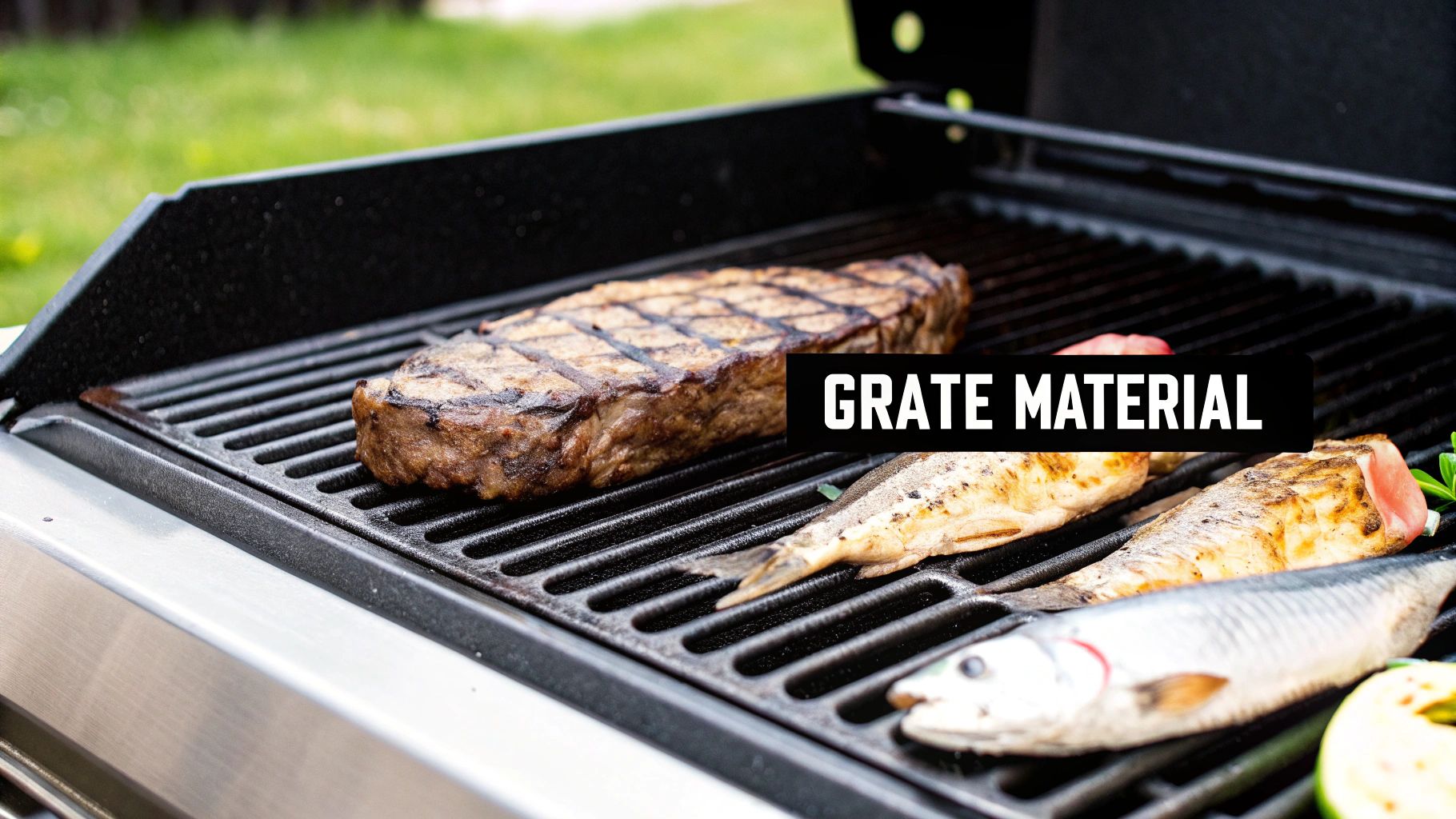
The griddle plate is where all the action is. This is the point of contact between the heat and your food, and it’s responsible for the perfect browning, flavors, and textures that make griddled food so incredible. Getting the plate material right is a huge decision that shapes your final product.
Think of the plate as the canvas for your menu. The material determines how well it retains heat, how easy it is to clean, and how it transfers energy to your food. It's a balancing act between the culinary results you want and the maintenance routine your kitchen crew can realistically stick with.
Steel Griddle Plates: The King of Heat Retention
If you're after a classic, all-purpose workhorse that can handle anything you throw at it, a heavy-duty steel plate is the industry standard. Steel soaks up heat and holds onto it, delivering a powerful, even sear for everything from steaks to burgers.
That powerful heat retention means the griddle recovers temperature quickly, even when you slap a bunch of cold ingredients on it. The trade-off for this amazing performance is the upkeep. Steel needs regular seasoning—baking oil onto the surface to build a non-stick layer and prevent rust. For any kitchen serious about all-around performance, it’s a little extra work that's always worth it.
Chrome Griddle Plates: The Showpiece Performer
For busy kitchens where presentation, easy cleanup, and delicate cooking are priorities, chrome plates are often the smarter move. These griddles have a mirror-like finish that's less porous than steel, meaning less flavor transfer between items like fish and pancakes.
While chrome doesn't hold heat quite as fiercely as steel, it's incredibly easy to wipe clean, reducing cleanup time significantly. This makes it a great choice for open kitchens or for cooking delicate items that tend to stick. For a lot of operations, the time saved on maintenance and the pristine appearance make chrome a no-brainer.
Your choice between steel and chrome really boils down to this: Are you chasing the raw power and heat retention of steel, or do you need the low-maintenance, non-stick surface of chrome?
The Strategic Advantage of Plate Thickness
Beyond the material, the thickness of the griddle plate gives you another layer of control over your cooking.
-
Standard Duty (1/2" - 3/4" thick): Perfect for diners and cafes that cook a lot of breakfast items. The thinner plate heats up quickly, making it ideal for eggs, bacon, and pancakes.
-
Heavy Duty (1" thick): This is the go-to for steakhouses and burger joints. A thick plate provides superior heat retention and recovery, ensuring a consistent sear even when you're loading it up with frozen patties or cold steaks.
Ultimately, finding the best commercial griddle for your restaurant means matching the plate directly to your menu. By thinking through both the material and the thickness, you can make sure every dish that comes off that flat-top looks and tastes exactly how you want it to.
Sizing Your Griddle for Maximum Workflow and Profit
Picking the right griddle isn’t just about filling a space on your cook line; it’s a decision that echoes through every service, every rush, and every ticket. Go too small, and you've just created the biggest bottleneck in your kitchen. On the other hand, a unit that’s too big is just burning money and wasting precious real estate.
Getting this right means matching the machine to your mission. A bustling diner cranking out hundreds of breakfasts a night has completely different needs than a small cafe. This is where you move from just buying equipment to making a strategic investment in your kitchen’s engine.
Matching Size to Service Volume
First things first, you need a realistic picture of your peak service. Are we talking 50 customers a day or 500? That one answer will point you toward either a countertop or a full-size floor model.
-
Countertop Models (24-48 inches): Perfect for spots where space is tight or griddling is a supporting player. Think food trucks, cozy cafes, and ghost kitchens. A compact 24-inch or 36-inch unit can deliver all the firepower you need without taking over the entire line.
-
Floor Models (48-72+ inches): When the griddle is the main event, you need the big guns. High-volume restaurants, diners, and large-scale catering operations depend on the massive cooking surface of a 60-inch or 72-inch griddle to fire multiple orders at once. This is how a table of eight gets their orders simultaneously.
Your choice here dictates the very rhythm of your kitchen. The right size ensures your griddle station is an asset, not an anchor, keeping tickets flowing smoothly from the printer to the pass.
Demystifying BTUs and Recovery Speed
Once you’ve got a handle on the physical size, the next spec to look at is BTUs (British Thermal Units). It’s easy to get lost in the numbers, but here’s the most important thing to know: BTUs are really about recovery speed.
A higher BTU rating means your griddle bounces back to its ideal cooking temperature almost instantly after cold food hits the plate. This is the secret to getting consistent, golden-brown results, rush after rush.
Picture this: an order for six burgers, straight from the cooler, hits the griddle. A low-BTU unit will see its temperature plummet, struggling to recover and steaming the meat instead of searing it. A high-BTU beast, however, rebounds in seconds, delivering that intense, consistent heat that creates a perfect crust. That rapid recovery is what keeps your line from grinding to a halt.
It’s no surprise that the demand for this kind of high-performance gear is growing. Restaurants need to deliver consistent quality without slowing down service. You can dig deeper into market trends and see what's driving the demand for better commercial charbroilers at Market Report Analytics.
Griddle Sizing and BTU Guide by Operation Type
To make things even simpler, we've put together a reference table. Use it as a starting point to match your daily customer volume (your "covers") with the right griddle width and power. This will help you find a unit that can handle today's business and whatever comes next.
| Operation Type | Daily Covers | Recommended Width (inches) | Recommended BTU Range |
|---|---|---|---|
| Food Truck / Small Cafe | Under 100 | 24 - 36 | 60,000 - 90,000 |
| Mid-Sized Restaurant | 100 - 250 | 36 - 48 | 90,000 - 120,000 |
| High-Volume Diner | 250+ | 60 - 72+ | 150,000 - 180,000+ |
Think of this as your cheat sheet for making a smart choice. Finding the best commercial griddle means investing in the heart of your kitchen. By getting real about your volume and focusing on recovery speed, you're setting your team up to win, guaranteeing amazing food quality, and putting your business in the best position to succeed.
Essential Installation and Safety Requirements
Let's be clear: a commercial griddle is a beast of a machine, and installing it correctly isn't just a suggestion—it's non-negotiable. Getting the setup right from day one is about protecting your people, your customers, and your entire business from the very real risks of fire and equipment failure. This is not a DIY weekend project; it's a job for certified pros, period.
To get a griddle humming safely in your kitchen, you need to nail three things: proper ventilation, safe clearance, and professional hookups. If you drop the ball on any of these, you're looking at potential fines, a visit from the fire marshal that shuts you down, or far worse. Treat this process with the same level of care you put into crafting your menu.
Mastering Ventilation and Airflow
The absolute most important piece of the installation puzzle is a commercial-grade ventilation hood. This isn't a "nice-to-have" item; it's a mandatory safety system. A griddle kicks out an incredible amount of smoke, heat, and greasy vapor, and all of that has to be pulled out of your kitchen safely and effectively.
Without the right ventilation, that smoke and grease creates an immediate fire hazard and a toxic breathing environment for your staff. The hood has to be the right size for your griddle and positioned directly over it to do its job. To really dig into the specifics, check out our in-depth guide on commercial kitchen ventilation systems—it's full of must-know details for any operator.
Understanding Clearance and Local Codes
Next up is clearance, which is simply the minimum safe distance you must maintain between your griddle and anything that can burn. We're talking walls, shelves, and even other pieces of equipment. Manufacturers provide exact clearance specs for a reason, and ignoring them is like playing with fire.
Following local fire and health codes isn't just about passing your next inspection. It's about creating a fundamentally safe workplace that prevents disasters before they happen and protects your business from massive liability.
These rules are not optional. Before a single tool comes out, you need to be talking to your local fire marshal and health department to understand every code that applies to your setup. A certified installer will make sure everything is compliant, from the clearance distances to the specific fire suppression system your griddle requires.
This chart helps visualize how your daily volume directly impacts the size of the griddle you need, which is a huge factor when planning your installation space.
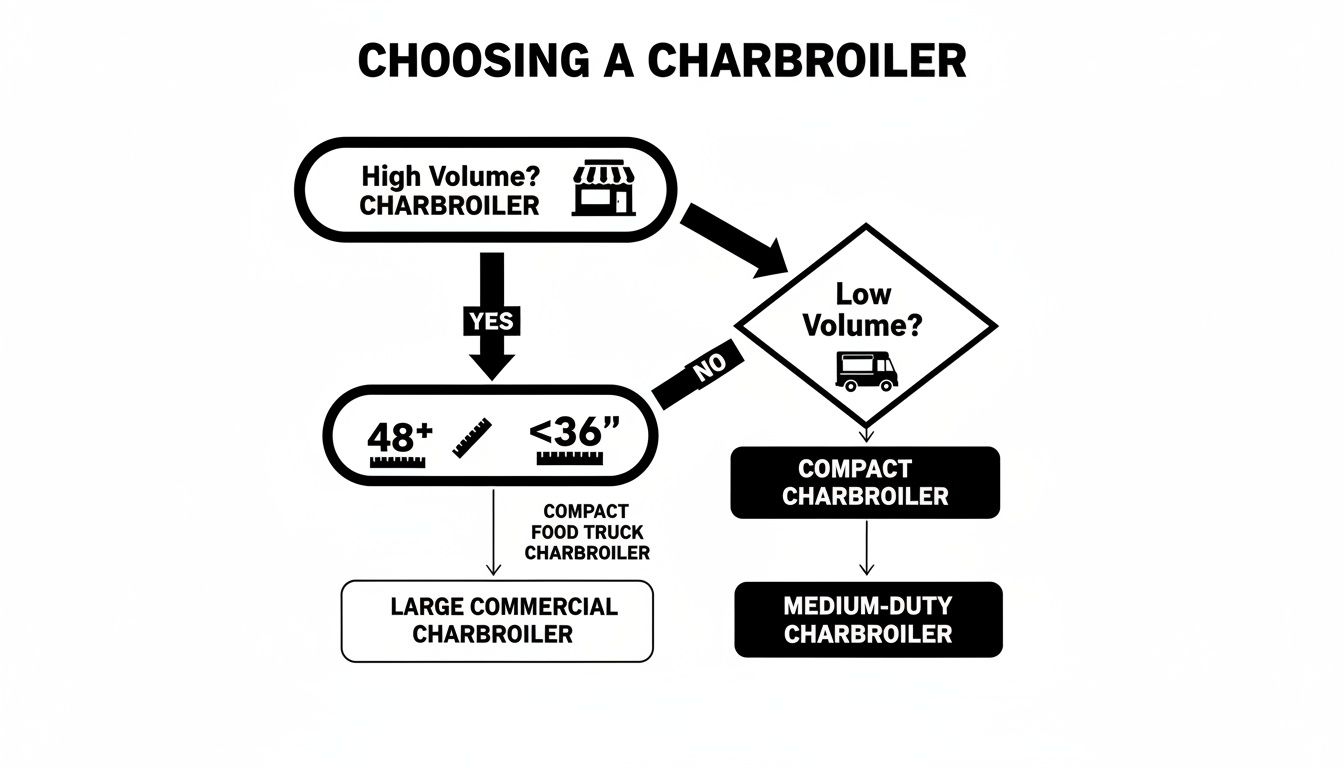
As you can see, a high-volume spot will likely need a larger unit—48 inches or more—which demands more space for ventilation and clearance. On the other hand, smaller operations can get by with more compact models.
Finally, and this is critical, always bring in certified technicians for all your gas and electrical work. Shoddy connections are one of the top causes of kitchen fires and equipment meltdowns. A licensed pro ensures gas lines are secure and every wire meets code, giving you the confidence that your new griddle is ready to perform safely for years to come.
Keeping Your Griddle in Peak Condition
Think of your griddle like a high-performance engine. You wouldn't skip an oil change and expect it to run forever, right? The same goes for this kitchen workhorse. Consistent maintenance isn’t just another item on your closing checklist; it's the single best way to protect your investment and guarantee amazing food quality.
A strict cleaning schedule prevents dangerous grease buildup, keeps cooking temperatures reliable, and can seriously extend the life of your equipment. More importantly, it ensures every dish gets a clean, consistent cook, free from any old, burnt residue. This directly impacts guest satisfaction and, ultimately, your restaurant's reputation.
Your Daily Maintenance Checklist
Consistency is everything. Making these quick tasks a non-negotiable part of your end-of-shift routine will stop major buildup before it starts and keep your griddle firing on all cylinders. This isn't about a deep scrub; it’s about setting yourself up for success the next day.
-
Scrape the Surface: While the griddle is still warm (around 300-350°F), use a bench scraper to remove all food debris and grease from the plate. This stops carbon from building up, which can cause hot spots and transfer bitter flavors.
-
Empty the Grease Trap: This is a huge safety step. An overflowing grease trap is a massive fire hazard. It needs to be emptied after every single service and washed to prevent spills and keep things sanitary.
-
Season the Plate (for steel griddles): After cleaning, apply a very thin coat of cooking oil to the steel surface. This protects it from rust and maintains the non-stick seasoning you've built up.
Just those few minutes of daily care will head off the vast majority of common performance problems.
Weekly and Monthly Deep Cleaning
While the daily scrape handles the surface gunk, you need a more thorough routine to tackle the stubborn stuff and give your equipment a quick health check. This is where you get into the spots that a daily once-over can’t reach.
"If a griddle is left uncleaned, carbonized grease on the plate can block heat from reaching the food, resulting in uneven cooking and poor efficiency. Plus, it can ruin the appearance and taste of the food."
Once a week, it’s time for a more intensive clean. Use a griddle brick or screen while the surface is warm to scrub away any tough, cooked-on residue, always moving with the grain of the steel. This deep clean restores the plate's smooth surface.
On a monthly basis, go a step further. Visually inspect the burners or heating elements for any blockages that could be causing hot and cold spots. It's also a smart move to check all your gas connections and hoses for any signs of cracking or leaks. These simple checks are your best defense against an unexpected breakdown in the middle of a dinner rush. Stick to this routine, and your griddle will be a reliable powerhouse for years.
Common Questions About Commercial Griddles
Even after you've done your homework, investing in a major piece of kitchen equipment always brings up a few last-minute questions. We get it. Getting straight answers helps you pull the trigger with confidence and get the most out of your new gear. Here are the things we hear most often from chefs and operators.
What's the Real Difference Between a Griddle and a Charbroiler?
This is the big one, and it all comes down to how the heat hits the food. A commercial griddle uses a solid, flat steel plate. The heat is indirect and spread evenly across the whole surface. This makes it the go-to for anything that needs consistent browning, like pancakes, eggs, bacon, and smash burgers.
A charbroiler, on the other hand, blasts food with direct, intense heat from burners below, cooking it on grates. This is what creates those classic sear marks and that unmistakable smoky flavor you want for steaks, chicken, and burgers. Think of it this way: a griddle is like a high-powered, massive flat-top pan, while a charbroiler is for grilling.
Which Griddle Plate Material Is Best?
There's no single "best" material—the right choice really hinges on your menu and how much time your team has for maintenance. Each one has its own personality.
- Steel Plate: This is the industry standard for a reason. Steel is a true workhorse, built to take a beating day in and day out. It requires a bit more elbow grease to clean and keep seasoned, but for all-around performance, it's tough to beat.
- Chrome Plate: If you have an open kitchen where customers can see the cook line, chrome is your answer. It's less porous than steel, which means less flavor transfer between foods and less sticking. It's also a breeze to wipe clean, but you have to use special non-abrasive tools to avoid scratching that mirror finish.
- Composite Plate: These are engineered to offer the best of both worlds. Composite plates heat up fast and have quick recovery times, meaning they get back to temperature quickly after you slap down a bunch of cold product. That can seriously speed up your ticket times and even save you a bit on the gas bill.
How Do I Properly Clean a Steel Griddle?
Consistent cleaning is non-negotiable if you want your griddle to perform well and last for years. For a standard steel flat-top, the daily shutdown routine is pretty simple, but you can't skip it.
After the last order is out, let the griddle cool down to a safe 300-350°F. Use a bench scraper to get the big stuff off, then pour on some room-temperature water to steam off the rest. To season it, just apply a thin layer of oil and scrub it in with a griddle brick, always moving with the grain of the steel.
Doing this every single day prevents that nasty black carbonized grease from building up. That buildup acts like an insulator, blocking heat and making your food taste off. And one more pro tip: never, ever use ice to shock-cool the griddle. The extreme temperature change can warp the steel plate permanently.
Ready to find the perfect cooking equipment for your line? The team at Griddles.com has been in your shoes and is here to help you sort through the options to find reliable gear that works for your menu and your budget. Explore our full selection of commercial griddles and charbroilers today!