

Best Commercial Griddle: Top Picks for Your Kitchen
Choosing the best commercial griddle is never a one-size-fits-all decision. What works for a high-volume diner slamming down burgers all day just won't cut it for a fine dining kitchen carefully searing delicate fish. It all comes down to balancing the plate material, size, and heat source against your menu, your busiest rush, and your kitchen's unique flow. You’re matching the tool to the job.
How to Choose the Best Commercial Griddle
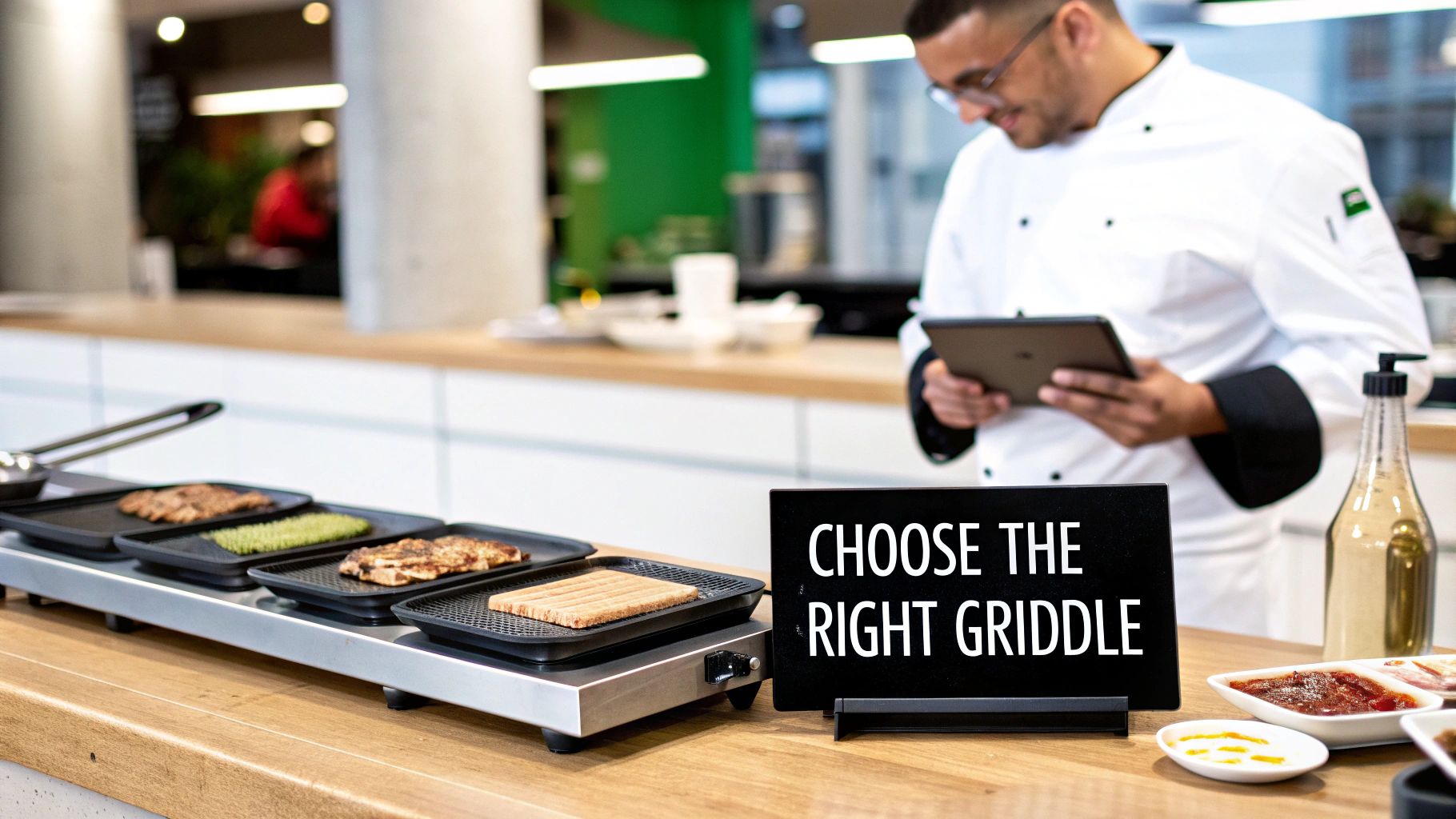
Picking the right commercial griddle is one of those foundational choices you make for your kitchen. This single piece of equipment often becomes the absolute workhorse of the line, and it has a direct impact on ticket times, how consistent your food is, and even what your monthly utility bills look like. Getting this right from the start saves you from costly replacements and major operational headaches down the line.
The whole process really boils down to three core decisions: what kind of griddle plate you need (steel vs. chrome), your heat source (gas vs. electric), and the griddle's overall size and footprint. Each one has its own set of pros and cons that fit different kitchen needs. And while you're focused on your hot line, don't forget the rest of your kitchen's needs, like finding the right cold storage in our guide on selecting a walk-in freezer.
Understanding Key Griddle Decision Points
To make your search less overwhelming, start by thinking about how you'll actually use the griddle day-to-day. A bustling breakfast joint flipping hundreds of pancakes an hour needs something with incredible heat recovery, which makes a thick steel plate griddle a top contender. On the other hand, a food truck with tight space and limited power might find a compact, electric countertop model is the smarter play for its portability and fine-tuned temperature control.
The most common mistake we see is chefs choosing a griddle based on price alone. The 'best' griddle is an investment in your kitchen's workflow—it needs to handle your menu's demands, not just fit your initial budget.
Thinking this way first ensures you’re only looking at equipment that actually makes sense for your business. This table gives you a quick-reference overview to help you zero in on which griddle type is the best match for your kitchen's real-world needs.
| Griddle Type | Ideal Use Case | Key Advantage |
|---|---|---|
| Standard Steel Plate | High-volume diners, burger joints, and breakfast spots | Excellent heat retention and durability for constant use. |
| Chrome Top | Restaurants cooking delicate items like eggs, fish, and vegetables | Non-stick surface prevents sticking and simplifies cleanup. |
| Electric Countertop | Food trucks, cafes, and kitchens with limited space | Offers precise temperature control and portability. |
| Heavy-Duty Gas | Steakhouses and busy commercial kitchens | Provides powerful, rapid heat recovery for fast searing. |
Understanding Different Commercial Griddle Types
Picking the right commercial griddle means first getting a handle on the basic types out there. Each style is built for a different kitchen, a different workflow, and even different installation needs. You'll mainly run into three categories: countertop models, drop-in units, and specialty teppanyaki griddles.
For many businesses, especially where space is tight, a countertop griddle is the most straightforward and flexible choice. Think food trucks, concession stands, or small cafes that need more cooking power without a full kitchen overhaul.
These are self-contained units. You can move them for deep cleaning or just rearrange your line when the menu changes. This plug-and-play nature makes them a brilliant starting point for new kitchens or for testing out a new griddle-centric dish without committing to a permanent setup.
Countertop Griddles for Ultimate Flexibility
Countertop units are the workhorses of dynamic kitchens. Picture a ghost kitchen that needs to flip its concept on a dime; a 24-inch countertop griddle can be swapped for other equipment without calling a contractor. A catering business can just as easily load one up and bring it to an event for on-site cooking.
This portability is everything for mobile operations. The setup is simple, usually just needing a sturdy surface and the right gas or electrical hookup.
Drop-In Griddles for a Seamless Cook Line
If you're building a kitchen with a clean, high-end look, the drop-in griddle is the way to go. These units are designed to be built right into a countertop or chef's base, giving you a completely flush and integrated cooking station. You'll see this a lot in upscale restaurants where aesthetics and easy cleaning are top priorities.
By getting rid of the gaps you'd have with a countertop model, drop-in griddles make it much harder for grease and food bits to get trapped. It creates a smoother, more organized line where chefs can easily slide pans and tools around.
The biggest thing to remember with drop-in griddles is that they are permanent. You have to plan your kitchen layout perfectly from day one, because moving one later is a major project that requires custom fabrication.
Specialty Teppanyaki Griddles for Performance Cooking
Teppanyaki griddles are in a class of their own, built specifically for cooking in front of customers. These are the stars of Japanese hibachi restaurants, featuring a thick, highly polished surface that provides amazing heat control and a stage for the chef's performance.
Unlike a standard back-of-house griddle, a teppanyaki unit is all about the show. They often have sophisticated heating zones, letting a chef sear a steak on one part of the griddle while gently warming vegetables on another.
Comparing Control Types for Precision Cooking
Beyond the griddle's physical shape, the temperature controls are what determine how precise you can be. This decision directly affects how consistent your food turns out, whether you're flipping delicate pancakes or searing thick burgers.
- Thermostatic Controls: These work just like your oven at home. You set an exact temperature—say, 350°F—and a sensor cycles the heat to hold it there. This makes them perfect for sensitive foods like eggs, fish, and pancakes that need steady, reliable heat.
- Manual Controls: Think of these like a gas stovetop with simple low, medium, and high settings. You get less precision, but you get raw power and simplicity. They're fantastic for high-volume kitchens where experienced chefs cook by feel, cranking out burgers, cheesesteaks, and other hearty items.
In the end, whether you choose a countertop, drop-in, or specialty model—and which controls you pair it with—comes down to your menu, your kitchen layout, and your style of cooking.
Comparing Griddle Plate Materials and Thickness
The griddle plate is the heart of your entire operation; it's where the magic happens. Picking the right material and thickness isn't just a tech-spec decision—it directly impacts your cooking speed, how your food tastes, and how much time you spend scrubbing down at the end of the night. It's the difference between a perfect, even sear on a hundred burgers and struggling with flaky fish that sticks.
Getting to grips with the real-world differences between steel, chrome, and composite surfaces is fundamental. Each one handles heat in its own way, giving you specific advantages depending on your menu and workflow. The key is to match the griddle's thermal properties to what your kitchen actually needs.
Just like with griddles, commercial equipment is often categorized by its specific use and how it fits into a kitchen layout. The choice comes down to your operational demands.
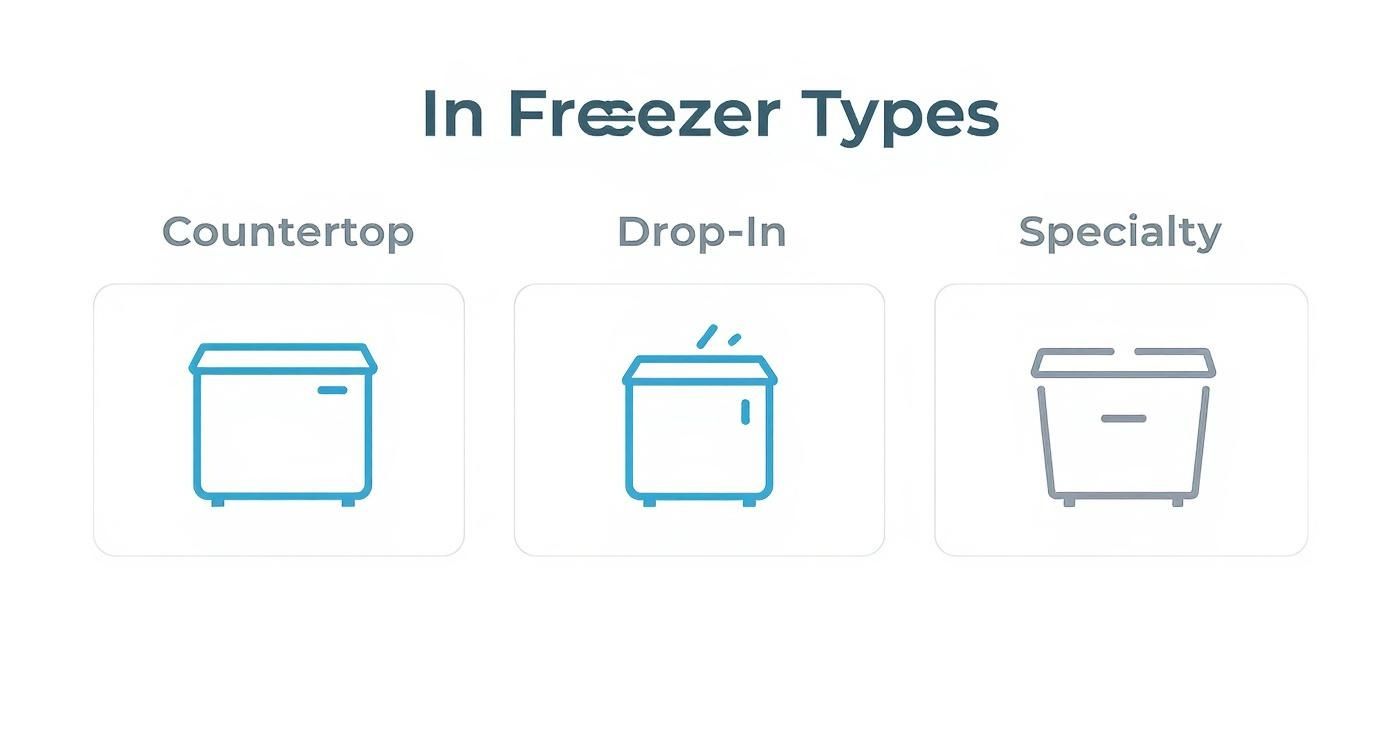
This just goes to show that whether it's cooking or cooling equipment, the right choice depends entirely on your available space and how you need the equipment to work with your team.
Steel Griddle Plates: The Industry Workhorse
There’s a reason steel is the most common griddle plate material out there. It’s tough, affordable, and an absolute beast when it comes to holding onto heat. For any high-volume kitchen that needs to pump out food consistently during a crazy dinner rush, steel is the go-to.
The secret sauce for a steel plate is its thickness. Most quality commercial griddles, like the ones you'll find at Griddles.com, have a hefty 1-inch thick steel plate. Think of that slab of metal as a thermal battery; it stores a massive amount of heat.
So when you slam down a dozen cold burger patties, a thick steel plate won't flinch. The temperature barely drops, allowing for lightning-fast recovery and consistent cook times. That's crucial for keeping tickets moving in a busy diner or burger joint.
Chrome Griddle Plates: For More Delicate Operations
Chrome-plated griddles offer a totally different cooking experience. Their surface is incredibly smooth and non-porous, which gives them fantastic non-stick properties. This makes them ideal for delicate items like eggs, pancakes, and fish that you want to cook without drowning them in oil.
A huge plus for chrome is the lack of flavor transfer. Since the surface isn't porous like steel, you can sear salmon, give it a quick wipe, and then cook veggies right after without any fishy taste carrying over. It’s a game-changer for kitchens with diverse menus.
The trade-off for that beautiful non-stick surface is the maintenance. Chrome is sensitive. You have to use specific, non-abrasive tools to clean it. One wrong move with a metal scraper can permanently damage the plating, so making sure your staff is trained is non-negotiable.
Griddle Plate Material Comparison
Choosing between steel and chrome really boils down to your menu. A steakhouse absolutely needs the powerful, consistent sear that only a thick steel plate can deliver. On the flip side, a breakfast spot would get huge benefits from a chrome top that releases pancakes and eggs without a fight.
This table cuts through the noise and lays out the core differences to help you match the right material to your kitchen's needs.
| Material Type | Heat Retention | Best For | Maintenance Level | Price Point |
|---|---|---|---|---|
| Steel | Excellent | Burgers, steaks, high-volume searing | High (requires seasoning) | $$ |
| Chrome | Good | Eggs, fish, delicate items, low flavor transfer | Medium (requires special tools) | $$$ |
| Composite | Varies | Specialty applications, quick heat-up | Low to Medium | $$$$ |
Ultimately, this comparison shows that your menu should drive your decision. Steel is for power and volume, while chrome is for precision and finesse.
The Critical Role of Griddle Plate Thickness
No matter what material you choose, the plate's thickness is what separates the pros from the amateurs. A thin plate—anything under 3/4-inch—heats up fast, but it loses that heat just as quickly. This means slow recovery times and inconsistent cooking, which will create bottlenecks during a rush.
A thicker plate, 1-inch or more, gives you far superior heat distribution. It gets rid of the hot and cold spots you find on cheaper units, ensuring that every single item cooks at the same temperature, whether it’s in the middle or on the edge. That kind of reliability is the mark of a true commercial-grade machine built for the trenches.
At the end of the day, investing in a griddle with a thick, high-quality plate is an investment in consistency. It's a core feature that defines the best commercial griddle options and separates them from the equipment that will let you down when you need it most.
Gas Vs. Electric Griddles: Which Is Right for You?
Choosing between a gas and electric griddle is one of the biggest calls you'll make for your cook line. This decision goes way beyond what utility hookups you have—it defines your cooking speed, temperature recovery, and day-to-day operating costs. The right answer is all about your menu, your volume, and your kitchen.
A slammed diner flipping burgers and pancakes all morning needs raw power and lightning-fast heat recovery. On the other hand, a ghost kitchen carefully searing delicate scallops needs pinpoint temperature accuracy. Let's break down the real-world differences to figure out which machine will work with you, not against you.
The Case for Gas Griddles: Power and Speed
When it comes to raw, unadulterated power, gas griddles are the undisputed champs. They heat up faster than electric models, which means your crew can get cooking sooner when a shift starts. But their real superpower is temperature recovery.
Imagine dropping a full press of cold burger patties onto the cooktop. A powerful gas unit snaps right back to temperature almost instantly. That rapid recovery is the secret to consistent cook times and a perfect sear, especially when you're in the weeds. For high-volume spots—burger joints, steakhouses, breakfast diners—this kind of responsiveness isn't a luxury; it's a necessity.
The Argument for Electric Griddles: Precision and Consistency
Gas may win on sheer muscle, but electric griddles are the masters of precision and consistency. An electric model delivers incredibly even heat across the entire surface, wiping out the hot spots you can sometimes get with gas burners. That makes them the go-to for any kitchen handling delicate foods that demand perfect temperature control.
Think about a café turning out flawless omelets or a fine-dining spot searing scallops. The steady, unwavering heat from an electric griddle ensures every single item is cooked perfectly from edge to edge. Plus, for mobile operations like food trucks or locations without a gas line, electric is often the only way to go.
It really boils down to a simple trade-off: speed versus precision. A high-volume steakhouse lives and dies by the instant heat recovery of gas. A kitchen obsessed with consistency for delicate items will get more mileage from the stable, even heat of an electric griddle.
Understanding what your customers prioritize is key when selling any type of kitchen equipment. For example, when chefs are shopping for their equipment, the details matter immensely. Our research shows that about 20% of customer feedback focuses on performance specs like energy efficiency and temperature stability. It’s clear that buyers are zeroing in on what drives performance, and you can discover more insights on what drives freezer purchasing decisions from the full analysis.
Installation and Utility Considerations
Your choice has real logistical consequences, too. A gas griddle needs a dedicated gas line and a proper ventilation system—usually a full commercial hood—which can add serious cost and complexity to your installation. In contrast, many smaller electric countertop units can run off a heavy-duty electrical outlet, giving you much more flexibility on where you can place them.
Don't forget to look at your utility bills. In a city where natural gas is cheap, a gas griddle will be far more economical over its lifetime. But if electricity is cheap and gas is pricey in your area, an electric model could save you a ton on operating costs. You have to check your local rates before you buy; it will make a huge difference in the griddle's total cost of ownership.
Calculating the Right Griddle Size for Your Needs
Picking the right griddle size is about more than just making sure it fits in your kitchen. It's a core operational decision that has a direct line to your output, ticket times, and overall efficiency. Go too small, and you'll create a massive bottleneck during the weekend rush. Go too big, and you're just wasting space and burning through energy. The sweet spot is that perfect balance between your peak production needs and your kitchen’s footprint.
The key is to think in terms of your busiest service. Don't plan for a quiet Tuesday afternoon; you need a griddle that can handle your Saturday morning onslaught. A solid rule of thumb is to figure out the total cooking surface area you need to push out orders during that peak hour. This is what keeps your line from getting buried when the tickets start flying.
Matching Griddle Size to Your Menu
Your menu is just as critical as your customer count. A simple burger joint can probably get by with enough space for patties and buns. But a breakfast spot? That’s a whole different ball game.
Think about a cafe juggling pancakes, eggs, bacon, and hash browns all at once. Every one of those items needs its own space and, ideally, its own temperature zone on the flat top.
- Breakfast Cafe: A 48-inch or even a 60-inch griddle is often the right call. That gives you enough distinct zones to cook delicate eggs at a lower temp on one side while getting a hard sear on bacon on the other.
- Steakhouse: A steakhouse might only need a powerful 36-inch griddle. Here, the priority is intense, consistent heat for searing, not cooking a dozen different things simultaneously.
This is where being thoughtful about your equipment really pays off. The right tools, from the griddle to your cold storage, are fundamental to your success. It’s no surprise the broader commercial equipment market is growing so fast. The commercial refrigeration equipment market alone—which covers the coolers every kitchen depends on—was valued at around USD 85.6 billion in 2024. It’s projected to hit an estimated USD 161 billion by 2034, all because reliable kitchen infrastructure is non-negotiable.
A classic mistake is underestimating how much room each menu item really takes up. Before you buy, map out your griddle on paper. Block out the square inches needed for each part of your most popular dishes. You'll get a much more realistic picture of the surface area you actually need.
Strategic Placement for Optimal Workflow
Where you put the griddle matters just as much as its size. It needs to sit logically within your cook line to cut down on wasted steps and speed up the handoff between stations. For instance, placing the griddle right next to a refrigerated prep table lets a chef grab ingredients and get them cooking in one smooth motion.
This is especially true in smaller kitchens. When space is at a premium, equipment that pulls double duty is a lifesaver. You might want to check out our selection of undercounter refrigeration units. They give you crucial cold storage right under your prep or cooking station, saving steps and maximizing every square foot you have. Smart placement is what turns a chaotic kitchen into a smooth, efficient operation, which means faster ticket times and a happier team.
Keeping Your Griddle in Peak Condition
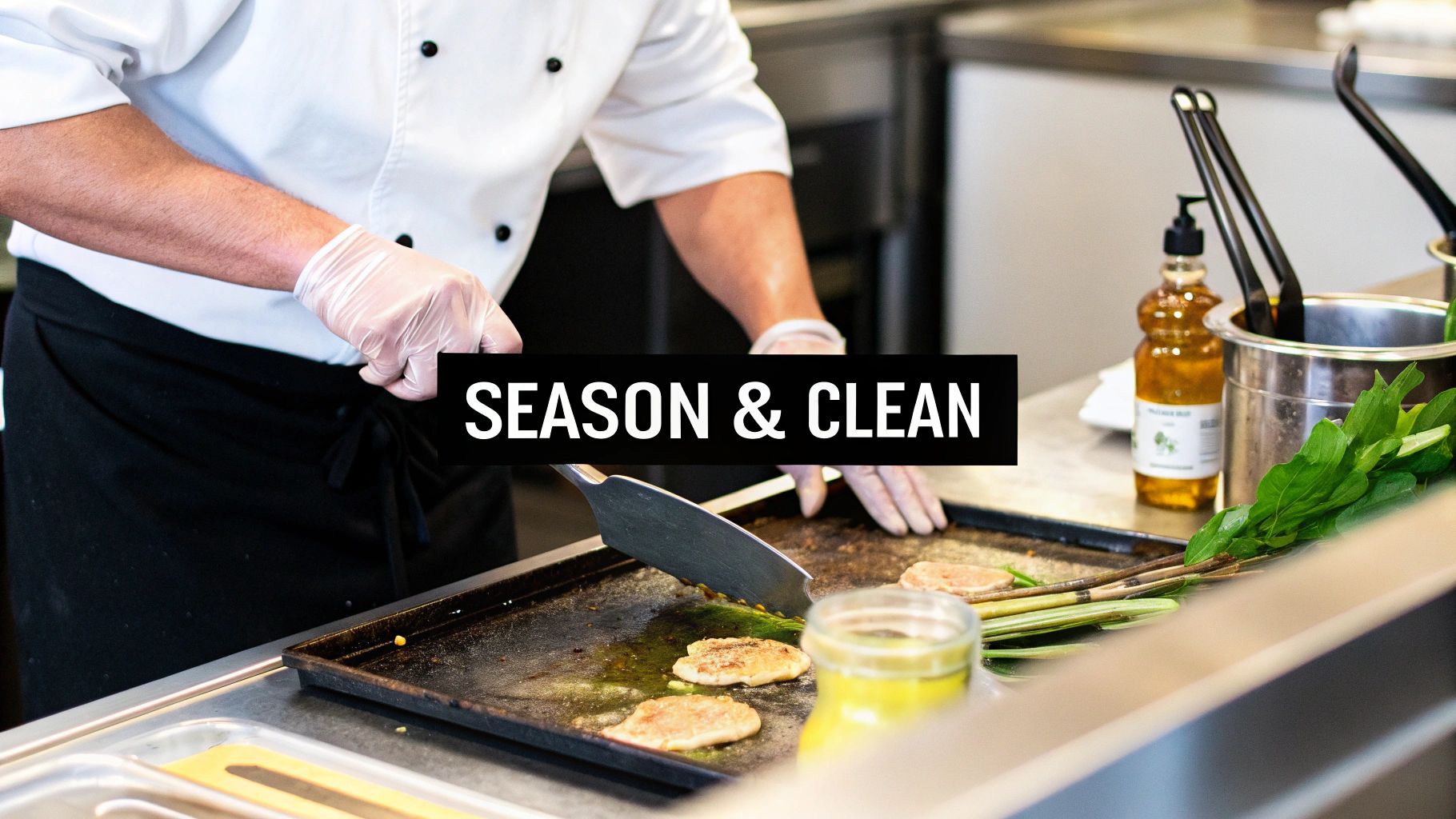
Buying a quality commercial griddle is the starting line, not the finish. The real way to get your money's worth is through rock-solid, consistent maintenance. This isn't just about appearances; it's about protecting your investment and your food quality.
A clean, well-cared-for griddle is your kitchen's MVP. It heats up evenly, uses less energy, and won't make your pancakes taste like last night's burgers. Skipping daily and weekly cleanings leads to nasty carbon buildup, which causes hot spots and ruins performance. Think of maintenance as part of the recipe for success.
Your Daily Maintenance Checklist
The end-of-shift clean-down is your first line of defense. For classic steel griddles, get scraping while the surface is still warm. Use a griddle brick to scrub off any baked-on gunk, then wipe it down with a thin coat of oil to head off any rust. This simple process builds up that beautiful, non-stick seasoned surface every chef loves.
Chrome griddles need a softer touch. Stick to non-abrasive pads and cleaners approved by the manufacturer—you don't want to scratch that delicate surface. A quick wipe with a soft cloth and water after use is usually enough. And for any griddle, emptying and washing the grease trap every single day is a must for both safety and sanitation.
Here's the bottom line: Proper maintenance is the difference between a griddle that lasts five years and one that lasts fifteen. A simple 15-minute daily cleaning routine can save you thousands in replacement costs and lost revenue from downtime.
Weekly and Long-Term Care
Once a week, take a closer look. Check the gas burners or electric heating elements for any grease or food debris that could be messing with your heat distribution. It’s also a good idea to calibrate your temperature controls to make sure they’re accurate. Consistent, safe cooking depends on it.
This mindset of proper upkeep should apply to all your kitchen gear, from the hot line to cold storage. You can learn more about taking care of your equipment by reading our guide on maintaining a stainless steel commercial refrigerator.
The industry is clearly moving toward more durable, high-performance equipment. For instance, the global commercial blast freezer market is projected to grow by 52.4%, hitting USD 1,306 million by 2035. This shows that savvy operators are investing in machinery that lasts. You can read more about these commercial freezer market projections and see why longevity is key.
Got Questions? We've Got Answers.
Even after you've weighed all the options, a few last-minute questions always seem to pop up before you pull the trigger on a new griddle. It's smart to get these details sorted out first—it’s the difference between hitting the ground running and facing unexpected headaches on day one.
We get these questions all the time from chefs and kitchen managers, so we've put together the answers to the most common ones right here. Think of it as your final checklist for making a confident investment.
How Do I Properly Season a New Steel Griddle?
Seasoning is the secret sauce to a perfect non-stick steel griddle. First things first, give that new griddle a good scrub with soap and water to get rid of any factory residue, then dry it completely. Now, grab a high-smoke-point oil (canola works great) and apply a very thin coat over the entire cooking surface.
Crank the heat up to 300-350°F and wait for the oil to start smoking. Once it does, turn the griddle off and let it cool down completely. You'll want to repeat this whole process three to five times until you see a dark, slick patina forming. That’s your reward—a protective layer that prevents rust and makes food slide right off.
The goal here is polymerization, where the oil bakes into a hard, non-stick coating. Don't rush it. A perfectly seasoned griddle is one of a kitchen's most valuable assets.
What Is the Best Way to Clean a Griddle Daily?
How you clean your griddle depends entirely on what it's made of. For a classic steel griddle, the key is to scrape it while it's still warm. Use a good griddle scraper for the big stuff and a griddle brick for anything stubborn. Wipe it clean with a damp cloth and finish with a thin layer of oil to keep rust away.
If you have a chrome griddle, treat it with a bit more care. Never use abrasive tools like scrapers or bricks—you'll scratch and ruin the delicate surface. A soft cloth or a non-abrasive pad with a manufacturer-approved cleaner is all you need. Gentle, consistent cleaning is what keeps that chrome finish non-stick and looking sharp.
Can I Use One Griddle for Different Types of Food?
Absolutely, as long as you're strategic about it. If you've got a larger griddle—think 48 inches or more—you can easily create different temperature zones. This lets you sear burgers on high heat on one end while you toast buns or cook eggs over gentle heat on the other. It's a bit tougher to pull off with smaller models, though.
Just be mindful of flavor transfer, especially with a porous steel plate. Cooking fish right before you make pancakes is a recipe for an unhappy customer. For menus with a lot of variety, a chrome griddle is your best bet, since its non-porous surface won't hang onto strong flavors.
Ready to equip your kitchen with the perfect workhorse? At Griddles.com, we specialize in helping you find the ideal griddle for your menu and volume. Explore our collection of top-rated commercial griddles and enjoy free shipping on every order at https://griddles.com.