
Your Ultimate Guide to Commercial Griddles
Imagine being able to cook faster, get perfectly consistent results every single time, and run a more efficient kitchen. That's the promise of a commercial griddle. This high-performance workhorse uses a large, flat cooking surface to cook food evenly and quickly. For any professional kitchen looking to pump up its output and quality, this technology is a must-have.
Why a Commercial Griddle Is a Kitchen Game-Changer
In any busy kitchen, whether it's a bustling diner or a tight ghost kitchen, speed and consistency are the name of the game. The line between a good meal and a great one often boils down to how it's cooked. This is where a commercial griddle becomes an absolute essential, working right alongside other key pieces of equipment to build a powerful and versatile cooking line.
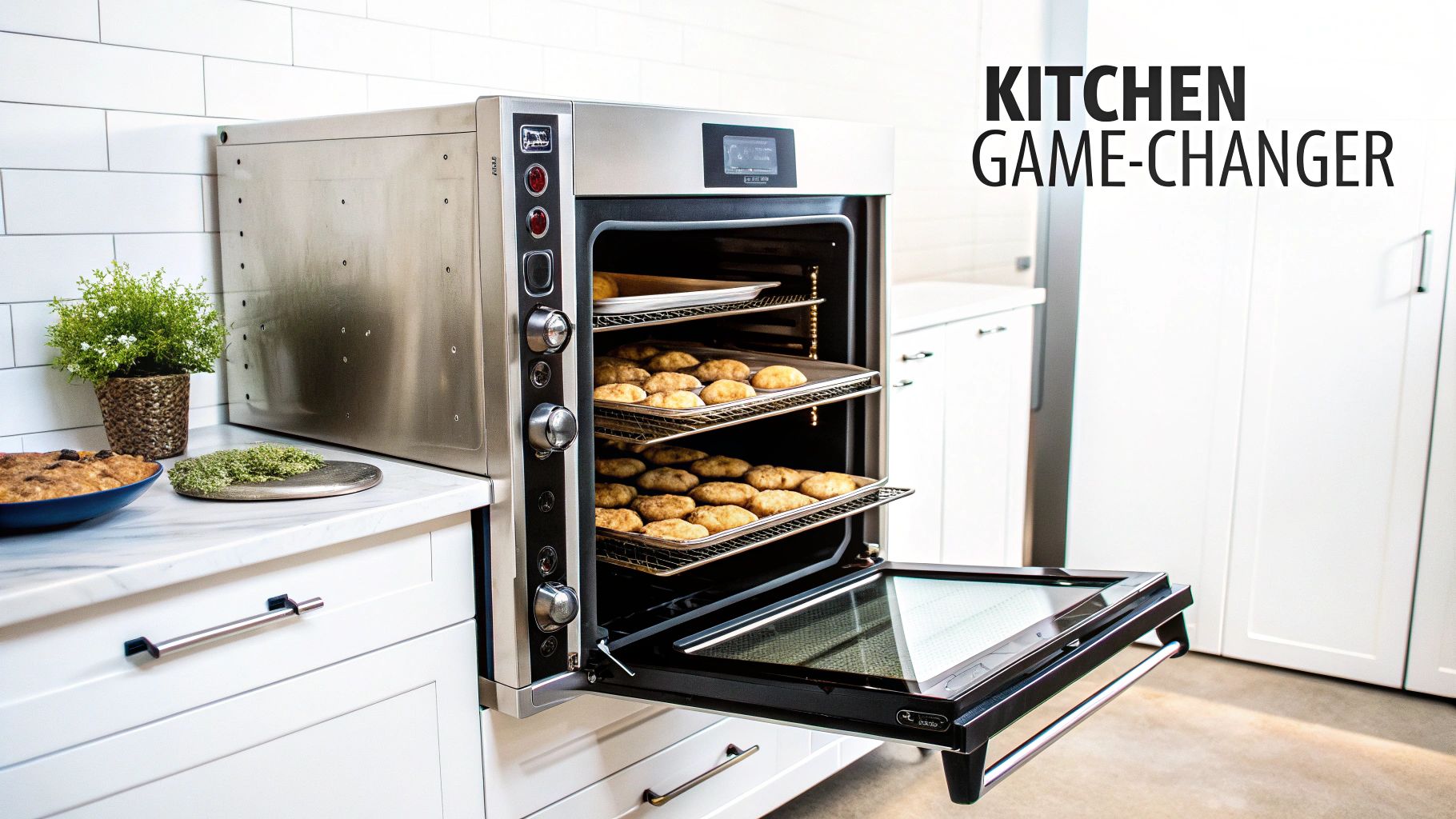
Unlike a standard range with individual burners, a commercial griddle offers a massive, uninterrupted cooking area. This one simple change makes a massive difference. The large, heated plate provides consistent temperature across its surface, eliminating the "hot spots" that plague standard pans and cause uneven cooking.
Think about it this way: it’s like the difference between cooking on a small skillet versus a giant, perfectly heated canvas. That expansive surface transfers heat way more effectively. The result? Faster, more uniform cooking across the board. No more having to juggle multiple pans or pulling out a steak that’s perfectly seared on one side and pale on the other.
Elevating Your Menu and Your Workflow
The practical benefits of this cooking method directly impact your menu and your bottom line. A commercial griddle is a master at tasks that are vital for any diverse menu.
- Superior Searing and Browning: The direct contact with the hot plate is the secret to beautifully seared steaks and perfectly crisp hash browns.
- Consistent Breakfast Results: From pancakes and eggs to sizzling bacon, a griddle ensures everything cooks to perfection.
- Increased Kitchen Throughput: The large surface area means you can cook more food at once, serving more customers during your busiest hours, which directly translates to more revenue.
This kind of efficiency is why the market is booming. The commercial cooking equipment sector was valued at a whopping USD 10.5 billion in 2023 and is projected to nearly double to USD 20.0 billion by 2033. This growth is all thanks to demand from high-volume kitchens that rely on griddles to slash cooking times. In North America, which holds a 37.3% market share, these griddles are considered vital for everyone from breakfast spots to ghost kitchens. You can dig into more market trends in the full report from Market.us.
A commercial griddle isn't just another piece of equipment; it's a strategic investment in your kitchen's efficiency. It gives chefs the power to produce higher quality food more consistently—and that's the foundation of any successful restaurant.
At the end of the day, buying the right equipment is all about optimizing your entire operation. When you have a dependable commercial griddle, you create a dynamic cooking station that can handle breakfast, lunch, and dinner rushes with ease. This guide will walk you through everything you need to know to make the smartest choice for your kitchen.
How Griddle Cooking Unlocks Kitchen Efficiency
To really get what makes a commercial griddle tick, you have to think about how heat actually works. A regular pan on a burner is a bit like a small, isolated heat source. A commercial griddle, on the other hand, is like a vast, heated plain. The big difference is the direct, consistent heat transfer across a large surface.
This constant, even heat is the whole secret. Instead of waiting for a small pan to recover its temperature, the griddle plate maintains its heat, cooking food from every angle of its base. This is called conductive heat transfer, and it's way more efficient than cooking in multiple small batches. It literally provides a stable thermal mass that ensures food cooks faster and much more evenly.
In a busy kitchen, you'll feel that impact right away. Say goodbye to juggling four pans at once just to keep up with the breakfast rush. That consistent cooking environment gets rid of the annoying hot and cold spots that plague traditional burners, giving you predictable results every single time.
From Faster Cook Times to Flawless Searing
The payoff from this large cooking surface goes way beyond just even cooking. By cooking more efficiently, a commercial griddle directly improves your kitchen's speed and the quality of whatever you're sending out to customers. You can see the difference in both cooking time and final texture.
For instance, a commercial griddle can slash cook times significantly compared to traditional pan-frying. That means a batch of burgers that normally takes several minutes in batches might be perfectly cooked all at once. When you're in the middle of a dinner rush, those saved minutes pile up, letting you serve more tables without throwing the back of the house into chaos.
The real magic of a commercial griddle is how it turns heat into a powerful tool. The direct contact doesn't just cook food; it crisps, sears, and caramelizes with a consistency you just can't get in a standard pan.
This incredible searing ability comes down to something called the Maillard reaction—the science-y name for the reaction between amino acids and sugars that makes browned food taste so good. The direct, dry heat of a griddle plate is an expert at this, creating beautifully golden crusts on pancakes and perfectly crispy skin on fish fillets. For any restaurant where looks and texture are everything, that's a total game-changer. And if you're looking for other ways to speed up service, you can learn more about fast cooking ovens in our detailed guide.
Why Surface Area Is Your Greatest Asset
At the end of the day, that flat top is the hero of the commercial griddle. It’s not just about getting hot; it's about creating the perfect cooking environment to get you superior results.
Here’s a quick look at how that surface helps your menu:
- Breakfast Perfection: For things like pancakes, eggs, and bacon, the even heat distribution means every single item on the griddle gets a consistent cook and a uniform golden-brown color.
- Searing Excellence: Steaks, burgers, and vegetables get a delicious, crispy outside while the inside stays moist and tender.
- Melting and Toasting: That steady, even heat is also great for more delicate jobs, like making grilled cheese or toasting buns, making the griddle incredibly versatile.
By mastering the transfer of heat, a commercial griddle does more than just cook your food—it makes it better. That simple but powerful technology is what makes it a smart investment for any serious kitchen looking to level up both its quality and its efficiency.
Decoding Essential Commercial Griddle Features
Picking the right commercial griddle goes way beyond just finding a model that squeezes into your available space. To get a machine that actually improves your kitchen’s rhythm, you have to understand what makes it tick. Think of it like choosing an engine for a car—your decision affects its power, efficiency, and what it can truly handle.
Let's break down the core features so you can match a griddle perfectly to your operation's real-world needs.
This simple decision tree can help you nail down that first big question: is a griddle even the right tool for your kitchen?
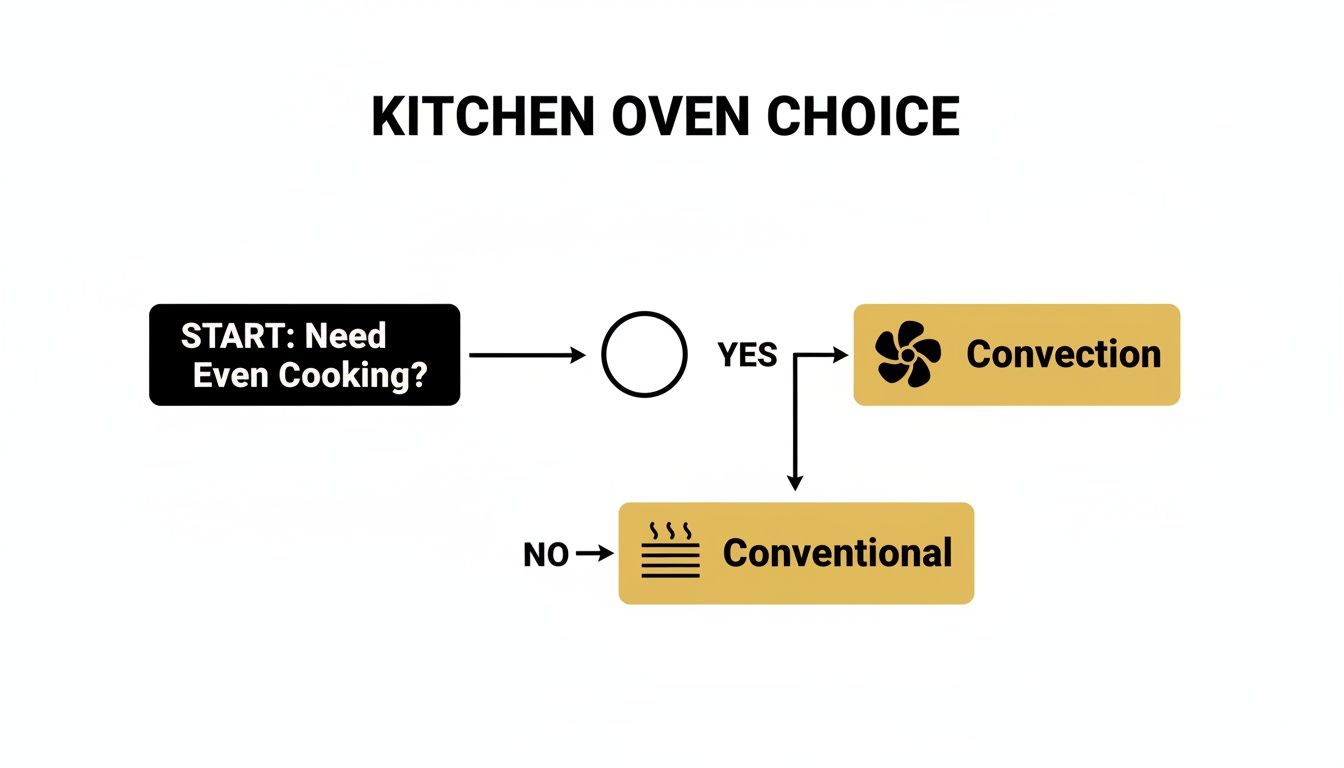
As you can see, if getting consistent, evenly cooked results for a wide variety of foods is at the top of your list, a commercial griddle is almost always the way to go.
Size And Capacity
Your first big decision is about physical size and how much you can cook at once. This choice ripples through your entire kitchen, affecting your output and how the griddle fits in with your existing equipment. Explore our full lineup of commercial griddles to see the options.
-
Countertop Griddles: These are the heavy lifters in many kitchens, available in sizes from 24" to 72". They offer immense cooking space for high-volume restaurants, diners, and catering kitchens. A busy diner could have a 48" model firing up pancakes, eggs, and bacon all at once.
-
Teppanyaki Griddles: These are specialized griddles perfect for front-of-house cooking or specific menu items. They are lifesavers for operations where presentation is key, like Japanese steakhouses or interactive dining experiences.
The goal is to match the griddle to your menu and your floor plan. A massive griddle in a tight kitchen creates a traffic jam, while an undersized one in a bustling restaurant will just become a source of constant frustration.
Fuel Type: Electric vs. Gas
Next up, you’ll need to choose between an electric or gas-powered model. Each has its own personality, and the right fit usually comes down to your kitchen's utility setup and what you plan on cooking.
A gas commercial griddle is known for heating up fast. Chefs often love them for their responsive temperature control—when you turn the dial, you feel the change immediately. Their power is measured in BTUs (British Thermal Units); a higher BTU rating means more raw heating muscle. If your kitchen is already plumbed for gas for your ranges, this is often the path of least resistance.
On the flip side, an electric commercial griddle is the king of consistency. They provide an incredibly stable, even heat that’s a dream for delicate items. Power here is measured in kilowatts (kW). They might take a few extra minutes to preheat, but you’re rewarded with precision. Plus, installation is a breeze if you don’t have gas hookups.
The choice between gas and electric isn't just about your utility bill. It’s about the kind of heat you want. Gas gives you powerful, responsive heat that’s great for high-volume searing, while electric delivers a steady, even heat that’s perfect for consistent results.
Power Ratings And Performance
A griddle's power rating—whether it's BTUs for gas or kW for electric—tells you a lot about its real-world performance. It’s not just about hitting a high temperature; it’s about how fast it gets there and, more importantly, how quickly it bounces back after being loaded up with cold product during a rush.
A higher BTU or kW rating means the griddle has the muscle to preheat quickly and hold its temperature. This temperature recovery time is everything in a busy kitchen. An underpowered griddle will gasp for air during a dinner service, leading to longer cook times and inconsistent food. Always think about your busiest hour when looking at power specs.
Plate Material and Thickness
Finally, what kind of surface do you want to cook on? The griddle plate itself impacts heat retention, maintenance, and how your food cooks.
- Steel: This is the industry standard. Steel plates are durable, hold heat exceptionally well, and develop a natural non-stick surface once seasoned. The thicker the plate (e.g., 1 inch vs. ½ inch), the better it will retain heat.
- Chrome: A chrome-plated griddle offers a super non-stick surface that's easy to clean and prevents flavor transfer. This is ideal for delicate foods like fish or for kitchens that switch between sweet and savory items. They require non-metal utensils to avoid scratching.
To help you see how these features apply to different kitchen sizes, here's a quick comparison.
Commercial Griddle Features at a Glance
This table breaks down how to think about these key specifications based on the size and scope of your foodservice operation.
| Feature | What to Consider for Small Operations (Food Trucks, Cafes) | What to Consider for Mid-Size Operations (Diners, Restaurants) |
|---|---|---|
| Size & Capacity | A 24" or 36" griddle is often perfect. It saves space and handles smaller batches efficiently. | A 48" or larger griddle is usually necessary to keep up with higher volume and larger orders. |
| Fuel Type | Electric is often easier and safer to install in mobile or smaller spaces without existing gas lines. | Gas is a popular choice for its raw power and quick recovery, especially if gas lines are already in place. |
| Power (BTU/kW) | Moderate power is sufficient. Focus on efficiency, as you may have limited electrical or gas capacity. | Higher BTU/kW ratings are critical for fast preheating and quick temperature recovery during peak hours. |
| Plate Material | Standard steel is durable, affordable, and perfectly fine for simpler menus and experienced staff. | Thicker steel or chrome ensures consistency across shifts and staff for signature dishes. |
Ultimately, choosing the right features comes down to a clear-eyed assessment of your menu, your volume, and your team's workflow. Getting this right from the start saves a lot of headaches down the road.
Pairing Your Griddle With Other Kitchen Equipment
A great kitchen is all about synergy. You want every piece of equipment working in concert to create a smooth, efficient workflow. While a commercial griddle is a workhorse by itself, pairing it with other key equipment creates a truly formidable cook line that can handle just about anything you throw at it. It’s a combination built for maximizing both speed and versatility.
Think of your griddle as the frontline soldier, handling the fast, high-heat searing and cooking that needs to happen right now. A convection oven or charbroiler can act as your strategic support, perfectly finishing dishes, batch-baking, or adding grill marks. This one-two punch lets you execute complex orders without skipping a beat, turning your kitchen into a model of efficiency.
Unlocking Menu Versatility
The real magic of a versatile cook line is the sheer range of menu options it opens up. With both a griddle and other equipment, you can move past simple cooking methods and start building dishes with layers of flavor and texture. For any restaurant trying to make a name for itself, that kind of flexibility is priceless.
Here’s where this powerhouse duo really shines in the real world:
- The Bustling Breakfast Diner: Imagine the morning rush. Your griddle is cranking out stacks of pancakes, sizzling bacon, and perfectly fried eggs. Meanwhile, a nearby oven is baking trays of fresh muffins and biscuits.
- The Gourmet Burger Joint: Chefs are getting that perfect crust on burger patties right on the griddle. Then, they can finish burgers with melted cheese under a salamander broiler, all while the griddle toasts buns to golden perfection.
- The Fast-Casual Lunch Spot: Your menu features seared chicken sandwiches. The chicken gets its beautiful color and initial cook on the griddle top. It’s then held in a warming drawer while other components are prepared, freeing up precious griddle space for the next order.
By splitting the cooking tasks between the griddle and other equipment, you create a system that’s not just faster but also delivers a higher-quality final product. The griddle gives you the initial sear, while other tools provide specific finishing touches.
Streamlining Your Kitchen Workflow
Beyond just letting you cook more things, designing a smart cook line fundamentally changes your kitchen’s operational flow for the better. This setup allows you to batch-cook certain items while handling made-to-order dishes on the griddle—a killer strategy for surviving peak service hours.
For instance, you could be searing steaks on the griddle during a lull. When the dinner rush slams you, those are ready to be quickly finished in an oven or plated. It's a simple move that drastically cuts down on ticket times and lowers the stress on your line cooks.
This workflow also crushes bottlenecks. Instead of having multiple cooks crowding around one station, tasks are split logically. One chef can own the griddle while another oversees the fryer or range, creating a calmer, more organized kitchen.
Whether you're running a commercial gas griddle or an electric model, this division of labor makes your whole operation more productive. To get a better handle on how different fuel types might impact your line, you can learn more about choosing the right commercial gas griddle in our comprehensive guide. This strategic pairing turns your kitchen into a true powerhouse of both quality and speed.
Installation and Maintenance for Peak Performance
Dropping a chunk of change on a new griddle is just the first step. To get your money's worth, you need a flawless setup and a solid care routine. Nailing the installation sets you up for success, while consistent maintenance is what protects your workhorse from the daily beating of a busy kitchen. Getting these two things right isn’t just a good idea—it’s how you guarantee safety, efficiency, and a long life for your griddle.
Before you even think about firing it up, you need to understand what your specific griddle needs to run properly. Every model is different, and a little planning goes a long way.
Essential Utility Hookups and Placement
Long before the delivery truck shows up, you need a game plan for where the griddle will live and how it will get power. A gas commercial griddle, for instance, absolutely must be installed by a licensed pro. They're the only ones qualified to safely tap into your kitchen's gas line. This is one job you never, ever DIY—a bad connection can lead to dangerous leaks and serious code violations.
Electric models have their own rules. They need a dedicated circuit that matches the voltage and amperage on the spec sheet. Trying to share a circuit is a recipe for disaster, risking fire and causing all sorts of performance headaches. No matter the fuel type, make sure the griddle sits perfectly level with plenty of breathing room on all sides.
Ventilation: The Unseen Hero of Griddle Performance
Let’s talk about one of the most overlooked but critical parts of any griddle installation: ventilation. A commercial griddle pumps out a massive amount of heat, grease, and smoke. All that has to go somewhere, and that somewhere can’t be your kitchen. This is where a commercial kitchen hood comes in.
A proper ventilation hood does more than just pull smoke out of the air. It’s a full-blown safety system that protects your crew, keeps you in line with fire codes, and stops dangerous, greasy gunk from building up everywhere.
Skimping on ventilation creates a miserably hot and dangerous kitchen. It also forces your equipment to work way harder than it should in an overheated space, which is a fast track to failure. To really get a handle on this, you can learn all about the different types of commercial kitchen ventilation systems in our detailed guide.
A Simple Checklist for Proactive Maintenance
Once your griddle is installed and humming along, the mission shifts to keeping it that way. A simple, consistent maintenance routine is your best defense against surprise breakdowns and eye-watering repair bills. Here’s a quick checklist to make it easy.
Daily Cleaning Routine (5-10 Minutes):
- Scrape Down the Surface: While the griddle is still warm (not hot), use a griddle scraper to remove all food debris and grease.
- Clean with Griddle Stone: Use a griddle stone or screen to polish the surface and remove any stubborn carbon buildup.
- Season the Plate (for steel/cast iron): After cleaning, apply a thin layer of cooking oil to the warm surface to protect it and maintain the non-stick patina.
Weekly Checks (5 Minutes):
- Inspect Grease Trough and Tray: Ensure the grease trough is clear and the tray is emptied and cleaned regularly to prevent overflow and fire hazards.
- Calibrate Thermostat: Place a surface thermometer on the griddle to see if the reading matches the dial. If it's off significantly, you may need a technician for calibration.
Monthly Inspections (10-15 Minutes):
- Check Burners/Elements: For gas griddles, check for consistent blue flames. For electric, ensure all elements are heating evenly.
- Inspect Connections: Check gas hoses or electrical cords for any signs of wear and tear.
Beyond your own routine, it's smart to think about the bigger picture. If you're looking for a deeper understanding of equipment care across your entire kitchen, you can learn a lot by mastering commercial maintenance contracts. A proactive strategy like this keeps every part of your griddle, from the burners to the plate, working together perfectly.
Troubleshooting Common Commercial Griddle Issues
Even the most rock-solid commercial griddle will have a bad day. It’s inevitable in a busy kitchen. When your griddle goes down, profits go with it, but you can often fix the most common hiccups yourself before making a pricey service call. A little basic first-aid can save you a mountain of stress mid-service.
Let's walk through some of the classic headaches that can throw a wrench in your workflow, from frustratingly uneven heating to a griddle that flat-out refuses to get hot.
Solving Uneven Heating and Hot Spots
There's nothing more maddening than a griddle with hot and cold spots. This is a classic sign of a burner or element problem—the very thing a commercial griddle is meant to eliminate.
Before you call for backup, try these simple checks:
- Check Burner Tubes: On a gas griddle, clogged ports on a burner tube are a common offender. Turn it off, let it cool, and use a stiff wire brush to clean out any debris from the burner ports.
- Inspect Elements: On an electric griddle, if one section is cool, a heating element may have failed. Visually inspect the elements (when cool and off) for any signs of damage.
- Level Your Griddle: If your griddle is on a slant, liquids and oils will pool to one side, leading to uneven cooking. Grab a level and adjust the legs until it’s perfectly flat.
When the Griddle Won't Reach Temperature
A griddle that takes forever to preheat or can't hold its temperature is a huge bottleneck. This usually points a finger at the heating elements or the parts that tell them what to do.
If your griddle is running cool, the thermostat is the first place to look. A thermostat that's out of whack can think the griddle is hotter than it really is, telling the heat to shut off way too early. You can easily test this: stick a reliable surface thermometer on the plate and see how its reading stacks up against the griddle's dial.
Think of troubleshooting as a process of elimination. Start with the easiest, most obvious stuff—is the gas on? Is it plugged in securely?—before you start digging into thermostats and ignitors. You'll often find the culprit in minutes.
For a gas commercial griddle, a bad ignitor is a very common problem. If you can smell gas but you don't see a flame—or just a weak, sad glow—the ignitor probably isn't getting hot enough to light the burner. On older gas models, if the pilot light won’t stay lit, you might have a dirty thermocouple or an issue with the gas valve. Just remember to be extremely careful anytime you're dealing with gas components.
Frequently Asked Questions
When you're outfitting a kitchen, questions are bound to pop up. Let's tackle some of the most common ones we hear from chefs and operators who are thinking about adding a commercial griddle to their lineup.
What Is the Best Material for a Commercial Griddle Plate?
The griddle plate material really dictates how it cooks and how you'll care for it. The workhorse of the industry is steel. It's fantastic at holding onto heat and spreading it evenly, which is exactly what you need when you're cranking out orders back-to-back.
If your menu needs quick temperature changes, cast iron is a solid choice. It heats up and cools down fast but demands a strict seasoning routine to keep it from rusting.
Then you have chrome-plated griddles. These are incredibly easy to clean, offer a non-stick surface, and won't let flavors mingle—perfect if you're flipping pancakes right after searing fish. Just remember, you have to use non-metal tools to avoid scratching that chrome finish.
How Often Should I Season My Griddle?
Seasoning is everything for a steel or cast iron griddle; it's what makes it a joy to cook on. Before you cook a single thing on a new griddle, it needs a thorough initial seasoning. After that, it's just simple upkeep. A light re-seasoning—just a thin wipe of oil on the warm surface after cleaning—should be part of your closing routine at the end of every day.
A well-seasoned griddle surface is a chef's best friend. It creates a natural, non-stick patina that not only prevents food from sticking but also adds a unique, subtle flavor to everything you cook on it.
Can I Use the Same Griddle for Breakfast and Dinner Service?
You bet. In fact, that's one of a griddle's superpowers. Its flexibility is a massive advantage for any kitchen with a menu that changes throughout the day. The trick is to give it a good scrape and clean between services. Nobody wants their morning pancakes to taste like last night's grilled onions.
To make things even easier, some kitchens with larger griddles (like a 48-inch model) will assign different zones for specific foods. This helps keep service flowing and flavors pure all day long.
Ready to build the ultimate cook line for your kitchen? Explore a wide selection of high-performance commercial griddles and other essential equipment at Griddles.com. Find the perfect tools to boost your efficiency and expand your menu today by visiting https://griddles.com.