

A Quick Guide to Commercial Griddle Sizes & Dimensions
Choosing the right size for your commercial griddle is a big decision. It’s a delicate balancing act between what your menu demands, how much kitchen space you have, and how slammed you get during a rush. There's no magic "best" size—it all comes down to what your specific business needs.
Why Griddle Size Matters
Think of your griddle like a painter's canvas. You wouldn't try to paint a giant mural on a tiny easel, right? Same idea here. A food truck needs a compact, efficient surface, while a packed breakfast spot needs a massive flat top to flip pancakes and fry eggs for dozens of orders at once.
Getting this wrong can cause real headaches. Too small, and you’ve got a service bottleneck that slows down your whole kitchen. Too big, and you're just wasting valuable space and paying for energy you don't need.
It’s about more than just the width. You need to match the cooking surface to your kitchen's natural workflow. The first step is knowing the main players:
- Countertop Griddles: These are the most common and versatile. You can add them to just about any existing cook line to instantly boost your capacity.
- Drop-In Griddles: Built right into a countertop, these give a clean, custom look. You often see them in open kitchens, food bars, or prep stations.
- Teppanyaki Griddles: Made for performance cooking, these are the stars of front-of-house displays where the chef is part of the show.
The Growing Demand for Versatility
This need to find the perfect fit is part of a bigger picture. The global market for commercial griddles is growing fast, thanks to the constant needs of the food service industry. In the U.S., it's the countertop electric models—usually between 24 to 48 inches wide—that own a huge piece of the market because they're so flexible. For a deeper dive, you can check out more commercial equipment market insights on gminsights.com.
The right griddle isn't just a piece of equipment; it's the heart of your production line. Sizing it correctly ensures you can consistently meet customer demand without overwhelming your kitchen staff or your utility budget.
At the end of the day, the goal is simple: find that sweet spot where your production capacity and physical footprint are in perfect harmony. You want a griddle that works for you, not against you. This guide will walk you through exactly how to find that balance.
Choosing the Right Countertop Griddle Dimensions
Countertop griddles are the undisputed workhorses in most commercial kitchens. Their plug-and-play nature means you can slide one onto any cook line and instantly ramp up your cooking capacity, all without needing a major renovation. Getting the size right, however, is key to keeping your kitchen workflow from hitting a snag.
It really comes down to a balancing act between your menu output and your physical space. A compact griddle might fit the space perfectly, but if it creates a bottleneck during your busiest hours, it's the wrong tool for the job. On the flip side, an oversized unit just eats up precious counter real estate and burns through energy you don't need to be using.
Small Footprint, Big Impact
For smaller spots like cafes, food trucks, or concession stands, the 24-inch griddle is a fantastic place to start. It’s the perfect size for kitchens where space is tight but there's a steady demand for griddled items. You can easily knock out about a dozen burgers or pancakes at once, making it ideal for lower-volume but consistent service.
When your needs start to outgrow that smaller surface, it's time to size up. The 36-inch and 48-inch models are really the sweet spot for the industry. These are versatile enough for a typical diner or fast-casual restaurant to handle a diverse menu during a crazy lunch rush. A 36-inch model can pump out roughly 18-24 burgers at the same time, while a 48-inch griddle pushes that capacity up to over 30.
This chart gives a quick look at the main types of griddles you'll find in commercial kitchens.
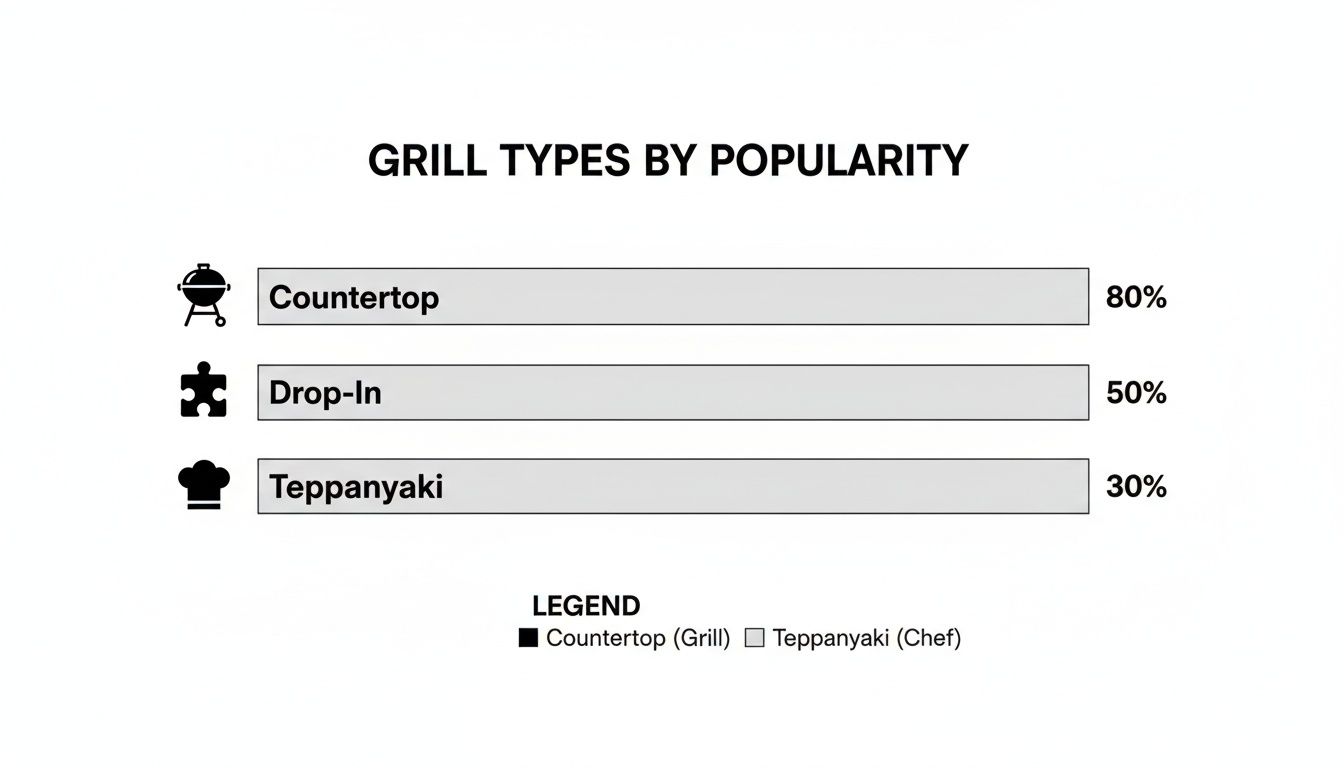
As you can see, countertop models are by far the most popular choice, mostly because they're so flexible and easy to get up and running.
Sizing Up for High-Volume Operations
When your business is all about high-speed, high-volume production, you need a griddle that can keep up. This is where the big players—the 60-inch and 72-inch griddles—come in. These massive units are built for the busiest breakfast joints, institutional cafeterias, and steakhouses that are constantly slammed.
Think of it this way: the griddle size directly translates to your maximum revenue per hour. A 72-inch griddle that can cook 60 Philly cheesesteaks at once is not just a cooking appliance; it is a powerful production engine for your business.
These larger models often come with multiple thermostatic controls, which is a game-changer. It lets your chefs create different temperature zones across a single surface. For example, you could be searing steaks on one end while gently warming buns on the other. This zoning capability is absolutely essential for executing complex menus efficiently and keeping food quality high when the tickets are flying.
Ultimately, picking the right commercial griddle size isn't just about the dimensions—it's about matching your production power to your business goals.
Drop-In and Teppanyaki Griddle Sizes
Countertop griddles are great for their grab-and-go flexibility, but some kitchens need a more permanent, built-in solution. This is where drop-in and teppanyaki griddles really come into their own, transforming from a simple tool into a central part of your kitchen's workflow and even the customer experience.
Thinking Through Drop-In Griddle Dimensions
Drop-in griddles are built to sit perfectly flush with a countertop. The result is a clean, seamless surface that looks sharp and is a breeze to wipe down. You'll typically find them in widths from 24 inches for smaller stations all the way up to 48 inches or more for busy cooking lines.
Because you're permanently installing one of these, you have to plan ahead. This isn't something you can just slide into place later. You need to think about:
- Counter Fabrication: The countertop has to be cut with absolute precision to match the griddle's exact specs. Measure twice, cut once.
- Ventilation: This is non-negotiable. You must plan for a powerful hood system and ensure there's enough clearance before you start building.
- Utility Access: Gas and electric lines have to be run to the exact spot before the countertop goes in.
Getting this right upfront pays off big time, giving you a rock-solid, integrated cooking station that makes your kitchen run like a well-oiled machine.
Sizing Up Teppanyaki Griddles for the Show
Teppanyaki griddles are all about performance. You see them as the main event in Japanese hibachi restaurants or as a showpiece in open kitchens. Their size isn't just about cooking volume—it's about presentation. These units are usually much larger, often starting at 48 inches and stretching to 72 inches or even bigger for custom setups.
That massive surface area isn't just for looks. It lets chefs create different heat zones to cook multiple parts of a meal at once, all while putting on a show for the guests.
A teppanyaki griddle is more than just a piece of equipment; it's a stage. The size needs to be big enough for the chef's performance and give customers a great view, tying your equipment directly to the dining experience.
So, which one is right for you? It all comes down to what you're trying to achieve. Drop-in models are for back-of-house efficiency and a sleek look. Teppanyaki griddles are for when the cooking itself is part of your restaurant's main attraction. Both require serious planning to make sure they fit perfectly into your kitchen's design.
Figuring Out Your Ideal Griddle Surface Area
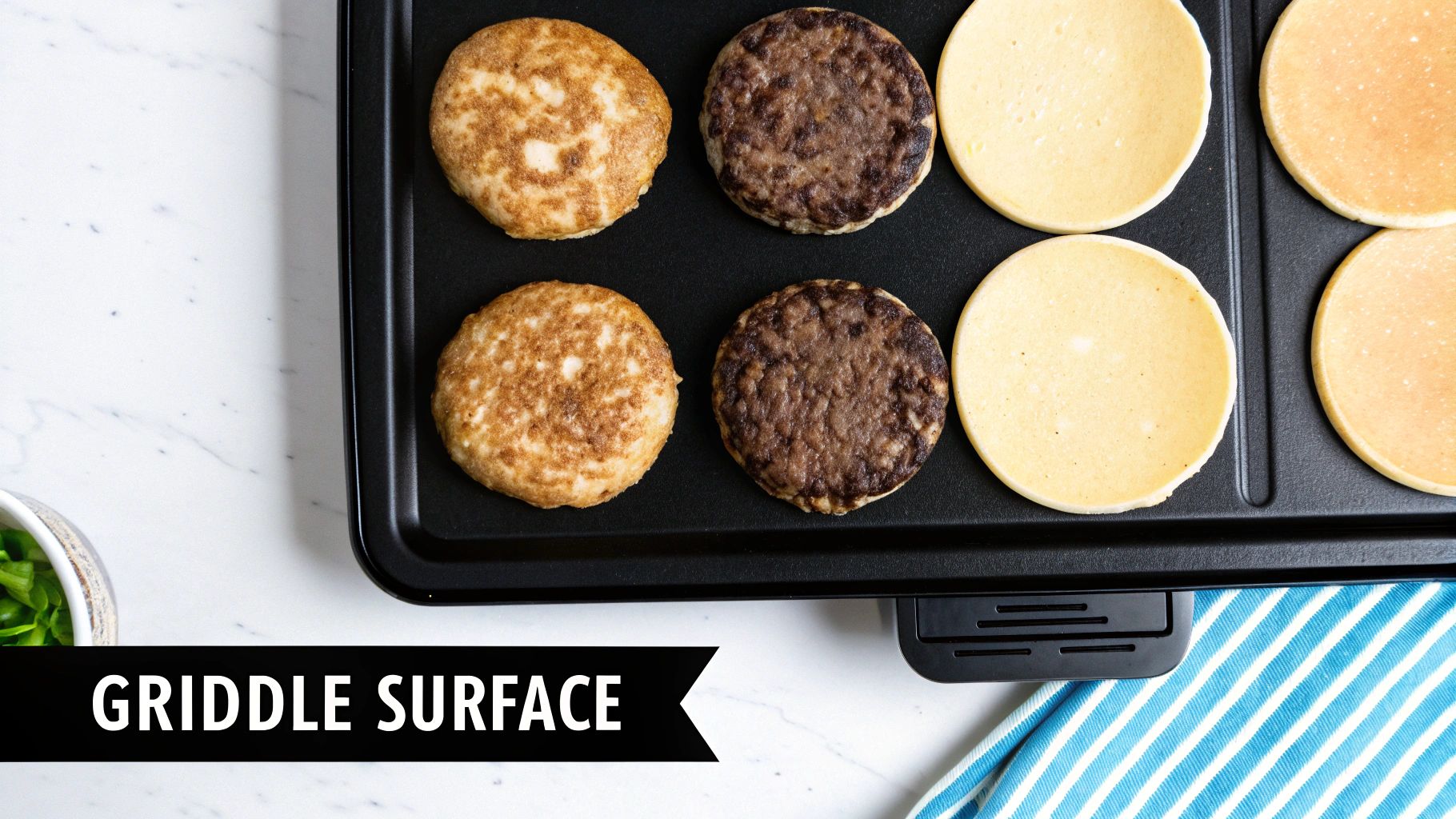
When you're sizing up a new griddle, it's easy to get caught up in the width alone. But the real magic number is the total cooking area, measured in square inches. Thinking this way forces you to focus on what truly matters: your kitchen's actual output. It’s a small mental shift, but it’s the key to making sure you can crush the dinner rush without breaking a sweat.
And don't worry, this isn't about guesswork. It all comes down to your menu and your sales numbers. Pull the data on your most popular griddled items and figure out how many you're slinging during your busiest hour. Once you have that, you can work backward to find the exact surface area you need.
From Menu Demand to Griddle Dimensions
Let's break it down. Start by measuring the footprint of your top seller. A classic 4-inch burger patty, for example, needs about 12.5 square inches of space. If you're flipping 100 burgers an hour during the lunch rush and each one takes about 8 minutes to cook, you'll need to have about 14 burgers on the flat top at all times.
That means you need at least 175 square inches just to keep up with the burgers. Now, do the same math for your pancakes, hash browns, or anything else you're cooking. This simple exercise turns the vague idea of "griddle size" into a hard number you can actually work with.
A new griddle is an investment in your restaurant's capacity. I always tell people to plan for growth by picking a unit that can handle a 25-30% bump in business. That foresight will save you from hitting a production wall and having to do a costly upgrade later.
Finding the Sweet Spot for Growth
Meeting today's demand is one thing, but what about tomorrow? A griddle that's running at full capacity from day one gives you zero room to grow your business. That's why building in a bit of a buffer is one of the smartest moves you can make for your kitchen's future.
This isn't just my opinion; the market backs it up. Griddles in the 36-inch to 48-inch range are consistently the most popular for a reason. They hit that perfect sweet spot between high-volume output and a manageable kitchen footprint, which is why they're the workhorse in so many restaurants. You can dig into more commercial equipment market trends on grandviewresearch.com if you're curious.
In the end, you're looking for a commercial griddle that doesn't just keep pace with you now but gives you the breathing room to serve even more happy customers down the line.
How to Measure Your Kitchen for a New Griddle
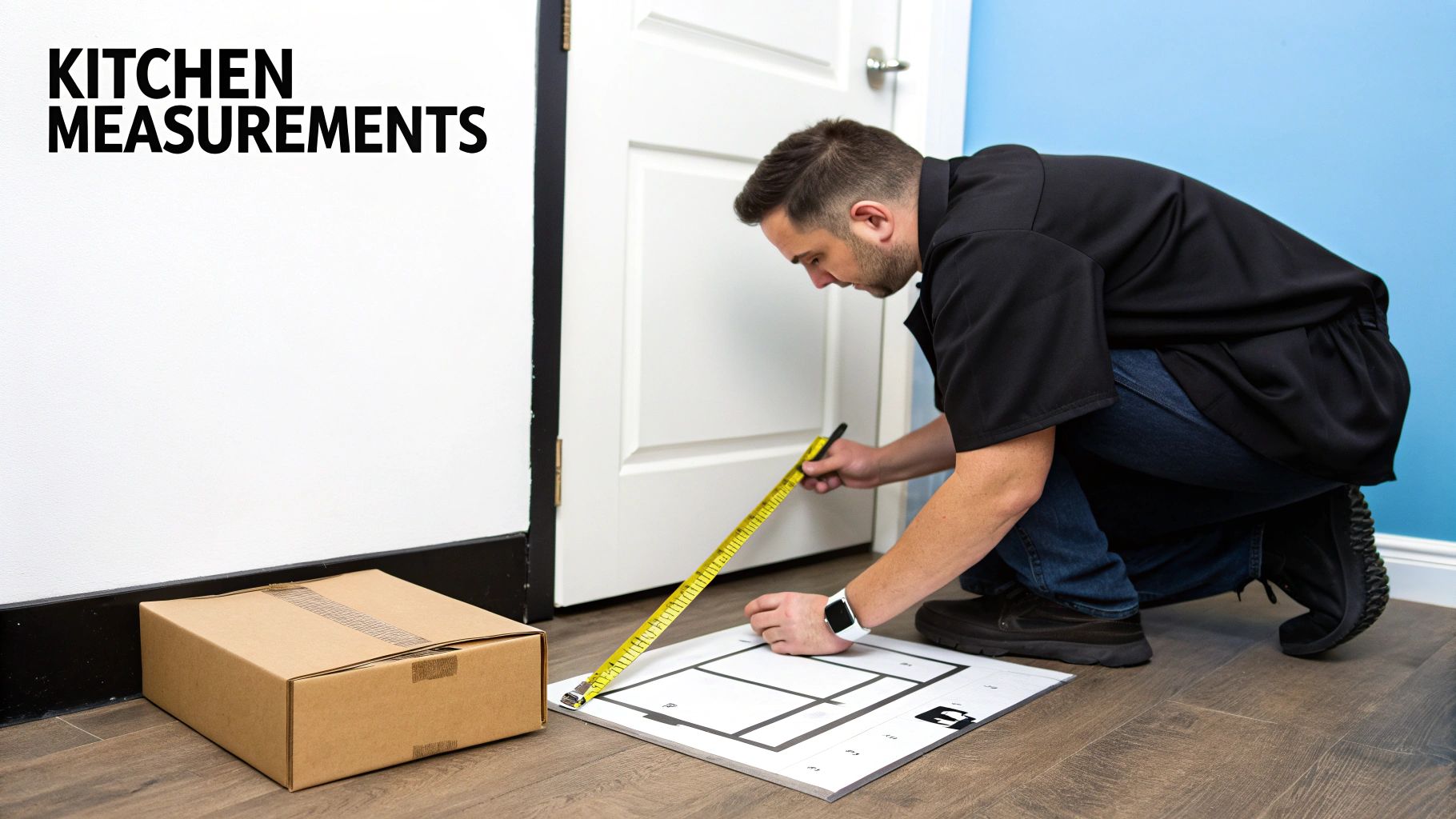
You’ve found the perfect griddle. That's great, but it's only half the job. Now, you have to make sure it can actually get into your kitchen and fit in its new home.
It’s an all-too-common mistake: only measuring the final spot on the cook line. A successful delivery means thinking about the entire journey from the truck to its final destination. Start by walking the path and measuring every single doorway, hallway, and tight corner. Don't forget to account for things that stick out, like door swings or handrails. A few minutes with a tape measure now can save you from a massive delivery-day disaster.
Beyond the Footprint: Installation Essentials
Once you've confirmed the griddle can make it inside, it’s time to focus on the installation area. The unit's physical dimensions are just a starting point. To operate safely and efficiently, you need to factor in crucial clearance space and utility connections.
The most overlooked measurement isn't the griddle's width or depth—it's the clearance. Forgetting to leave adequate space for ventilation and utility hookups can lead to performance issues, safety hazards, and even failed inspections.
Proper airflow is non-negotiable for cooking equipment. Most manufacturers will tell you exactly how much breathing room a unit needs, which is often around 6 inches from the rear and sides. Ignoring this can cause the griddle to overheat, shorten its lifespan, and create a dangerously hot environment for your crew.
Your Measurement Checklist
To sidestep any costly errors, it pays to be methodical. The following checklist walks you through the key measurements that often get missed in the heat of the moment.
Before you finalize your purchase, grab a tape measure and use this table to map out your space. This will give you a clear picture of what will—and won't—fit.
Griddle Installation Measurement Checklist
| Measurement Area | Your Measurement (Inches) | Required Clearance (Inches) | Notes (e.g., Gas Line, Outlet) |
|---|---|---|---|
| Doorways (All on path) | |||
| Hallways/Corridors | |||
| Tight Corners/Turns | |||
| Final Installation Spot (W x D x H) | |||
| Rear Clearance | (Check specs) | ||
| Side Clearance (Left) | (Check specs) | ||
| Side Clearance (Right) | (Check specs) | ||
| Utility Access (Gas/Electric) | |||
| Overhead Clearance (Hood) |
Once you've filled this out, you'll have a complete blueprint for a smooth and successful installation. Below are the key areas this table helps you think through:
- Delivery Path: Measure the width and height of every doorway, corridor, and elevator on the route. Make a note of any sharp turns or low ceilings.
- Installation Spot: Get the exact width, depth, and height available for the griddle itself.
- Ventilation Clearance: This is critical. Add the manufacturer’s required rear and side clearance to the griddle's dimensions. That’s the true amount of space you need.
- Utility Access: Pinpoint the location of your gas lines and electrical outlets. You need enough slack to connect everything easily without crimping cords or hoses.
- Workflow Space: Finally, step back and visualize your cooks at work. Make sure there’s enough room for them to move safely around the new unit without bumping into prep tables, fryers, or each other.
If you're trying to maximize every inch of a small kitchen, our guide on under-counter fridge dimensions has some great tips on space-saving strategies that apply to any piece of equipment.
Matching Griddle Size to Your Business Type
This is where the rubber meets the road. Connecting griddle dimensions to what actually happens in your kitchen is how a smart purchase becomes your secret weapon. The right size isn't just about what fits; it’s about matching the machine's output to your menu, your speed, and your customer flow.
Every business is different, so a one-size-fits-all griddle is a recipe for failure. Let's get practical. Your choice of equipment, from the flat top to the coolers, has to work together. For instance, knowing the ins and outs of a stainless steel commercial refrigerator helps you set up the entire cook line for a smoother, faster service.
High-Volume Breakfast and Burger Joints
For a diner slammed with the morning breakfast rush, it's all about output. You need a massive surface to juggle dozens of pancakes, eggs, and bacon orders at once. A 60-inch or 72-inch griddle is your best bet here. These beasts provide the raw cooking area needed to crush the rush and keep tickets moving.
It's the same story for a popular burger joint. When speed is the name of the game, you need a griddle that can keep up. A 48-inch griddle is the classic workhorse in this scenario, easily handling 30+ burgers at a time. This capacity means you can power through the lunch and dinner peaks without breaking a sweat.
Specialized Operations Like Food Trucks and Steakhouses
In a food truck, every square inch counts. Space is the biggest challenge, making a compact 24-inch or 36-inch countertop griddle the clear winner. You get the cooking power you need without sacrificing precious real estate for prep and other gear. It's all about getting the most bang for your buck from a small footprint.
A steakhouse, however, plays a different game. Here, precision trumps pure volume. A 48-inch or 60-inch griddle with multiple thermostatic controls is the perfect tool for the job.
The real magic for a steakhouse is creating different temperature zones on one surface. A chef can get a hard, beautiful sear on a steak in one spot while gently wilting spinach or toasting buns in another. That's control.
This level of finesse is what ensures every plate that leaves the kitchen is perfect, which is exactly what fine-dining customers expect. When you match the griddle’s size and features to your kitchen's reality, it stops being just an appliance and becomes a core part of your success.
A Few Common Questions About Griddle Sizes
Even after you've narrowed down your options, a few questions always seem to pop up right before you pull the trigger on a new griddle. Let's tackle some of the most common ones we hear from chefs and restaurant owners to help you finalize your decision with total confidence.
What's The Difference Between Griddle Depth And Plate Thickness?
This is a great question because while the terms sound similar, they impact your cooking in completely different ways.
Griddle depth is simply the front-to-back measurement of your cooking surface. Think of it as your total workspace. A deeper griddle gives you more real estate to work with, which is a lifesaver when you need room to stage food or manage a big wave of orders.
Plate thickness, on the other hand, is all about heat performance. A thicker plate, like the beefy 1-inch plates found on high-end models, acts like a thermal battery. It holds onto heat incredibly well and spreads it evenly, which means fewer pesky hot spots. It also recovers its temperature much faster when you slap down a bunch of cold food, giving you consistent results even during the busiest rush.
How Does Griddle Size Affect How Much Energy I'll Use?
It's a pretty direct relationship: the bigger the griddle, the more surface area you have to heat, and the more gas or electricity it's going to guzzle. A 72-inch griddle can easily use more than double the energy of a little 24-inch model.
This is exactly why getting the size right is so critical for your bottom line. If you buy a griddle that’s way too big for your actual needs, you're just paying to heat extra steel every single day. The sweet spot is finding the smallest size that can handle your peak demand without becoming a frustrating bottleneck in the kitchen.
Think of it like this: every burger or pancake has a production cost. A perfectly sized griddle keeps the energy cost per item as low as possible. An oversized one just inflates that cost with every order, eating into your profits.
How Do I Know How Many Burners Or Controls I Need?
The number of controls you'll want comes down to the complexity of your menu. If you're a one-trick pony cooking the same thing at the same temperature all day—say, smash burgers—you might get away with a single thermostat.
But if you're juggling different foods that need different temperatures at the same time, you absolutely need multiple controls. A good rule of thumb is to have one independent control for every 12 inches of griddle width. This lets you create separate heat zones. You can sear steaks on one side and gently warm buns on the other. This versatility is essential for executing a diverse menu and maintaining high food quality.
Ready to find the perfect griddle that fits your kitchen and your menu? At Griddles.com, we specialize in helping businesses like yours select the right equipment to boost efficiency and output. Explore our full range of commercial griddles and build out your perfect cook line today. Check out our collection at https://griddles.com.