

Mastering Commercial Griddle Cleaning and Seasoning
Regular commercial griddle cleaning is one of those tasks that's easy to put off, but it’s an absolute must for keeping your customers safe and your equipment from breaking down. It's more than just a quick scrape-down; it's a deep clean to get rid of carbon buildup, grease, and food debris from the cooking surface. After that, a proper seasoning is crucial to maintain a non-stick surface and prevent rust.
Why You Can't Afford to Skip Commercial Griddle Cleaning
That flat-top humming away in the corner? It's easy to take it for granted, but here’s the reality: it's a core piece of your food production line. The FDA considers the food cooked on it a direct product of its condition. So, ignoring its upkeep isn’t just a small oversight—it’s a direct gamble with your customers' health and your business's reputation.
The surface of a griddle is hot, greasy, and constantly in use, which is basically a perfect storm for building up all sorts of nasty stuff. If you don't have a solid cleaning routine, you’re basically rolling out the welcome mat for problems that can ruin food quality and damage your equipment.
The Grime Hiding on Your Griddle
The usual suspects we find on neglected griddles are carbon buildup, polymerized grease, and food residue. Carbon is the hard, black crust that forms from burnt-on food and oil. Polymerized grease is that sticky, brown layer that seems impossible to remove.
This stuff does a lot more than just make your griddle look dirty or transfer off-flavors to food. The consequences can be serious:
- Health Hazards: Built-up grease and food debris can harbor bacteria and become a food safety risk. Every pancake or burger cooked on a dirty surface can pick up old, rancid flavors and contaminants.
- Equipment Failure: Carbon buildup acts as an insulator, creating hot and cold spots on your griddle. It forces the whole unit to work way harder to maintain temperature. This means lower efficiency, expensive repair bills, and a much shorter lifespan for your griddle.
- Failed Health Inspections: Trust me, health inspectors know exactly what to look for. A dirty cooktop can lead to big fines, forced shutdowns, and a black eye on your reputation that’s hard to recover from.
A clean griddle says a lot about your commitment to quality and safety. It’s not just about ticking a box for an inspector; it’s about protecting the people who trust you.
This push for better hygiene is changing the industry. The market for high-efficiency commercial cooking equipment was already worth billions and continues to grow, driven by the demand for higher safety and performance standards in foodservice.
It's an Investment, Not an Expense
At the end of the day, consistent griddle cleaning pays for itself. The cost of the right cleaning supplies and a bit of staff time is nothing compared to the fallout from a foodborne illness outbreak, a catastrophic equipment failure, or getting shut down by the health department.
Just like with any other essential piece of kitchen gear, such as a commercial ice and water dispenser, staying ahead of problems saves you from much bigger headaches. By making cleaning a non-negotiable part of your routine, you’re protecting your customers, your equipment, and the future of your business.
Gathering Your Tools and Prepping for Safety
I’ve seen it a hundred times: someone dives into cleaning a griddle without a plan and ends up making a bigger mess, or worse, hurting themselves or the equipment. The secret to a smooth, safe cleaning job is all in the prep work.
Think of it like mise en place in the kitchen. Get all your tools and safety gear ready before you even touch the griddle. This keeps you organized, prevents cross-contamination, and saves you from frantically searching for the right scraper mid-clean.
Assembling Your Cleaning Arsenal
Walking into this job with the wrong supplies is a recipe for disaster. You can’t just grab any old cleaner from the janitor's closet. Using the wrong chemicals or a rough scouring pad can permanently damage the griddle surface, and that’s a costly repair you don't want.
Here’s the essential gear I always have on hand:
- Personal Protective Equipment (PPE): This isn't optional. At a minimum, you need heat-resistant gloves and safety glasses. Griddle cleaners and hot surfaces demand respect.
- Griddle Scraper & Scouring Pads: A heavy-duty scraper is essential for removing baked-on food. Use pads designed specifically for griddles to avoid scratching the steel.
- Food-Safe Griddle Cleaner: After the heavy scraping, you need a cleaner that can cut through the grease. Make sure it's an approved, food-safe formula designed for hot surfaces.
- Griddle Brick or Screen: For tough carbon buildup, a griddle brick is your best friend. It provides the abrasive power needed without gouging the cooktop.
- Lint-Free Cloths: Microfiber or disposable towels work best. They wipe the surface clean without leaving behind fibers that can burn onto the griddle later.
- Squeeze Bottles: Have a few on hand and label them clearly: one for water, one for oil for seasoning. You don't want to mix these up.
It’s no surprise that proper maintenance is getting more attention. The global commercial cooking equipment market was valued at around $6.2 billion in 2025 and is projected to hit nearly $11 billion by 2035, partly because of new sanitation tech. It just goes to show how vital this process is.
Prioritizing Safety Before You Start
Safety isn’t just about putting on gloves. It’s about creating a totally secure work environment. Before you do anything else, you absolutely must manage the heat and power source.
First, if you're doing a deep clean, unplug the griddle or turn off the gas supply. For daily cleaning on a hot surface, ensure you are using tools with long handles and heat-resistant gloves. For a deep, cold clean, go to the breaker box and shut off the correct circuit for electric models. This is non-negotiable—grease and electricity don’t mix.
Next, ensure the griddle is at the correct temperature for the cleaning product you're using. Many professional griddle cleaners are designed to work on a hot surface (around 300-350°F), but always read the instructions on the label.
Take a second to double-check. Is the power managed correctly? Is the griddle at the right temperature? A splash of hot water or cleaner can cause serious burns.
Finally, get some air moving. Turn on the vent hood. Open a door or set up a fan to ventilate the area. Cleaning chemicals on a hot surface can create some strong fumes, and good airflow will keep you from breathing in anything nasty. For a better idea of what to keep stocked, our guide on essential cleaning supplies for restaurants has some great tips. A few minutes of careful prep makes the whole job safer and more effective.
The Complete Cleaning and Seasoning Walkthrough
Alright, let's get our hands dirty. We've done the prep work, and now it's time to dive into the nitty-gritty of getting your griddle back to pristine condition. A proper clean isn't just about making it look good—it's about protecting the taste of your food, ensuring food safety, and frankly, making your expensive equipment last longer.
Think of this process in two distinct parts. First, we have the cleaning phase. This is all about the physical removal of the gunk: carbon, grease, and any other buildup you can see. After that comes the seasoning phase, which is the crucial step that creates a non-stick surface and protects the steel from rust. You can't skip one and call the job done; they work together to get your griddle truly clean and ready for service.
Kicking Off the Cleaning Phase
First things first, while the griddle is still hot, use a scraper to remove all loose food debris and excess grease. Scrape everything into the grease trap. Once the major debris is gone, you can begin the deep cleaning process.
This initial scrape-down is more important than you might think. Trying to clean a griddle with chunks of food still on it is like trying to mop a floor you haven't swept—you'll just be pushing the mess around.
Applying the Cleaning Solution
With the surface scraped, it's time to apply your griddle cleaner. These specialized cleaners are formulated to break down polymerized grease and carbon without damaging the griddle's steel surface.
Follow the manufacturer's instructions for applying the cleaner. Most require the griddle to be at a specific temperature (usually 300-350°F). Pour the cleaner on and spread it evenly across the surface. You'll see it start to bubble and lift the baked-on grime.
Let the cleaner sit for the recommended amount of time. Don't rush it. The solution needs that designated time to work its magic and dissolve the tough buildup that scraping alone can't handle.
The biggest mistake I see people make is getting impatient and not letting the cleaner work. Let the chemicals do the heavy lifting for you. It saves you an incredible amount of scrubbing later and ensures a much deeper clean.
Once the cleaner has sat, use a griddle pad or screen to scrub the surface. Work in small circles to lift all the loosened carbon and grease. After a good scrub, use your scraper to push the liquid slurry into the grease trap. Finish by squeegeeing the surface with water and wiping it clean with a damp cloth until all traces of the cleaner are gone.
The Crucial Seasoning Finish
Your griddle might look clean now, but the job isn't finished. The final, non-negotiable step is seasoning. Cleaning strips the surface bare, and seasoning is what builds up that slick, non-stick layer of polymerized oil. This is the step that ensures great cooking performance and protects your investment from rust.
Before you start, remember the basic safety rules. This is non-negotiable when working with any piece of commercial equipment.
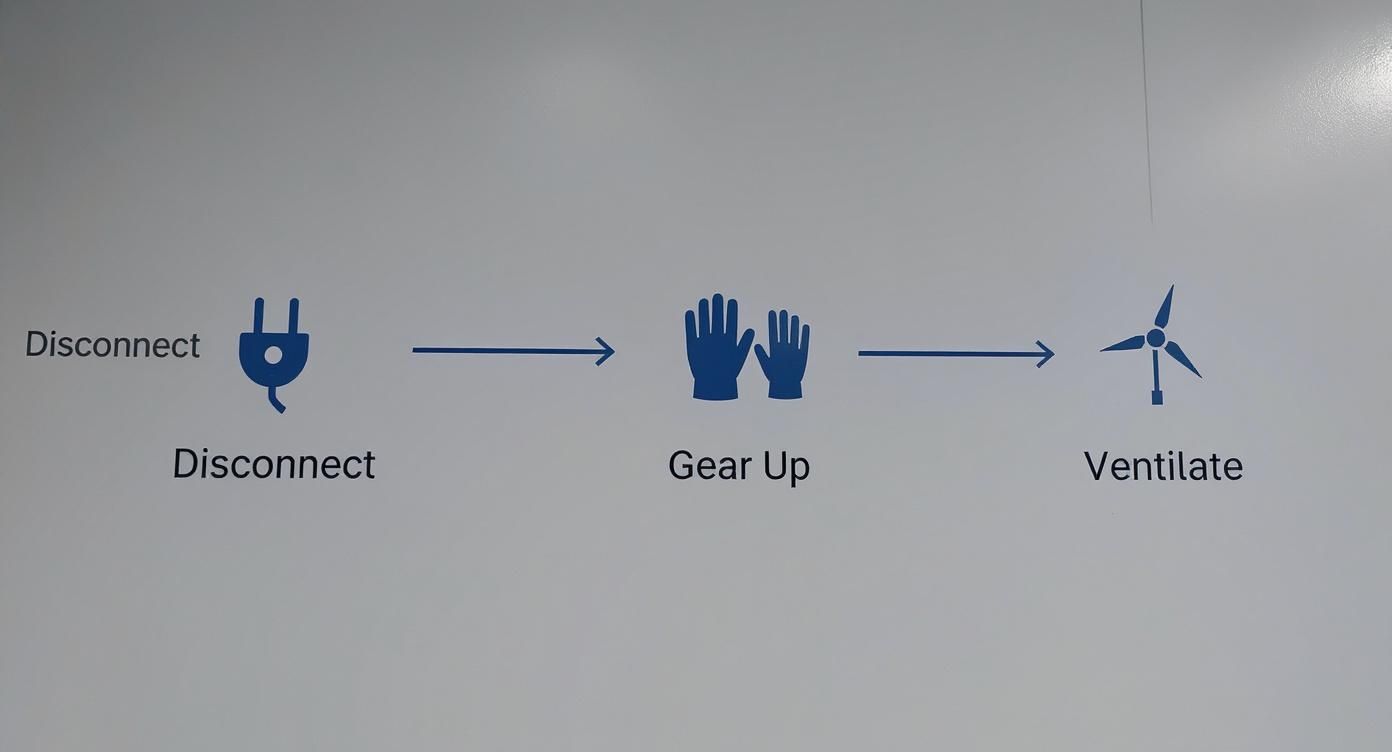
These three fundamentals—power managed, PPE on, and good airflow—are the foundation for doing this job safely and preventing any accidents before they happen.
To season the griddle, heat it to around 300-350°F. Apply a very thin layer of cooking oil (canola, vegetable, or specialty griddle oil all work well) to the entire surface. Use a clean, lint-free cloth to spread it evenly. You want a micro-thin layer, not a puddle.
Let the oil cook until it starts to smoke, then turn off the heat and let it cool. This process, called polymerization, is what creates the non-stick surface. Repeat this process a few times for a new griddle or after a deep cleaning to build up a durable seasoning. The surface will turn a dark brown or black—that's what you want!
Solving Common Commercial Griddle Problems
Even if you stick to a perfect cleaning schedule, you’re going to run into stubborn issues. It happens. You might see that dreaded sticky residue reappear just a week after a deep clean, or maybe the food has a weird, burnt taste. These problems are usually symptoms of a bigger issue, and knowing how to play detective can save you a ton of frustration—and the cost of a service call.
Most of these recurring headaches are tied directly to your technique or the products you're using. A griddle is a simple piece of equipment, but small mistakes in cleaning or cooking can lead to big problems. It's a simple detail, but one that gets overlooked all the time during troubleshooting.
Tackling Persistent Stickiness and Flaking
I’ve seen it a thousand times: the stubborn return of a sticky surface or black flakes in the food. That sticky feeling is usually from too much oil being used during seasoning or cooking, which hasn't fully polymerized. Black flakes are almost always bits of old, burnt-on carbon breaking free from a poorly cleaned surface. A good cleaning and re-seasoning cycle will fix the current problem, but to stop it from happening again, you have to adjust your technique.
First thing to do is look at your daily process. Poor cleaning at the end of a shift is a huge culprit, allowing carbon to build up layer by layer.
- Are you scraping thoroughly after each use? Small bits of food left behind will quickly carbonize and build up.
- Is the seasoning layer too thick? Applying too much oil creates a soft, gummy layer instead of a hard, non-stick surface. A thin coat is all you need.
- Are you using too much sugar-based sauce on the griddle? Sugars caramelize and burn very quickly, leading to rapid carbon buildup.
Improving your daily scraping and using only a minimal amount of oil for seasoning is your best bet for a long-term fix. The goal is a slick, hard surface, not a greasy one.
Battling Hot and Cold Spots
If your kitchen is in a high-volume setting, you're already familiar with the endless fight against uneven cooking—pancakes burning on one side and raw on the other. This will slow down your line and kill your food quality. If you feel like your griddle has developed a mind of its own, that's a dead giveaway that carbon buildup is the real problem.
A good, deep cleaning is critical for getting rid of it, but prevention is always better than a cure. The single best investment you can make is in a good quality griddle scraper and committing to using it properly.
Don’t just assume the quick scrape at the end of the night is doing the job. Carbon buildup acts as an insulator, preventing heat from transferring evenly from the burners to the food. A clean surface is an efficient surface.
A thorough daily cleaning prevents carbon from building up in the first place. Not only does this solve your heating issues, but it also protects your griddle from long-term damage and keeps it running like it should. If hot spots persist after a deep clean, it could signal a problem with the heating elements or gas burners, requiring a service call.
Eliminating Unpleasant Odors and Tastes
Nothing sinks your heart faster than a customer saying their food tastes "burnt" or "off." If your food has a rancid, dirty, or chemical smell or taste, that’s a major red flag. This problem almost always comes down to one of three culprits.
Troubleshooting Griddle Odors
| Potential Cause | Actionable Solution |
|---|---|
| Old, Rancid Grease | The grease trap needs to be emptied and cleaned daily. Old grease can go rancid, and the odors can permeate the food you're cooking. |
| Improper Rinsing | If you don't fully rinse out the cleaning chemicals, they'll leave a nasty residue that will transfer to the food. Always follow the manufacturer's instructions for rinsing to the letter. |
| Cross-Contamination | Cooking fish and then pancakes without a thorough scrape-down in between will transfer flavors. Clean the griddle surface between cooking different types of food. |
By methodically checking these common issues, you can almost always track down the root of the problem. When you address the source—whether it's a dirty grease trap, poor rinsing, or cross-contamination—you can finally put these frustrating issues to bed and get back to serving food that is always delicious and consistent.
How to Maintain Your Griddle Between Deep Cleans
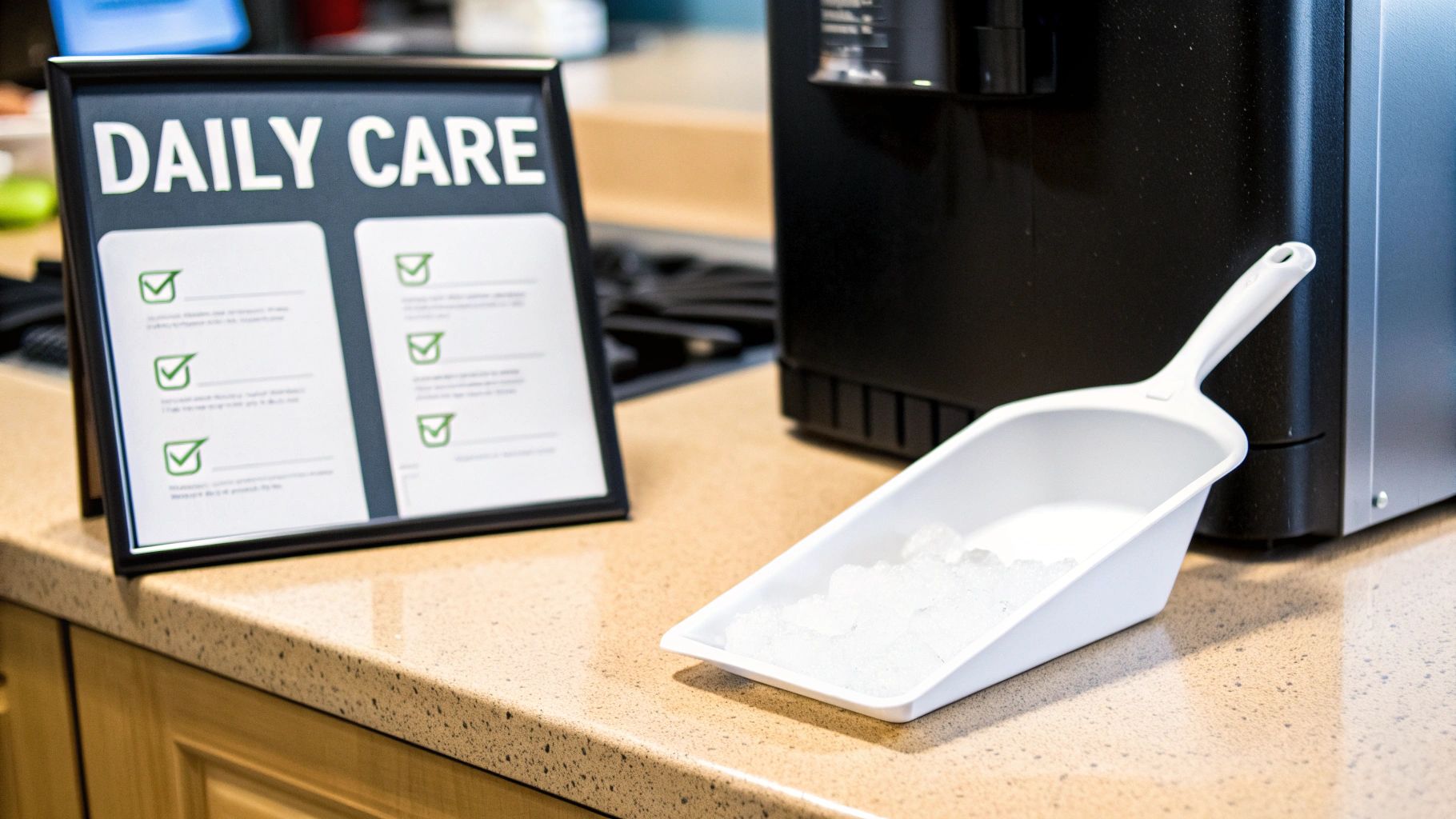
A serious deep clean is non-negotiable, but the real magic to keeping a griddle safe and humming along happens in the small, everyday habits. This simple, preventative stuff is what actually keeps the gunk from taking hold and makes your big monthly cleanups a whole lot less painful.
Think of it this way: you wouldn't just leave your prep counters a mess after a busy service and wait for the end-of-month scrub-down. Your griddle deserves that same constant respect. Consistent care is the only way to really prevent the carbon, grease, and residue we've been talking about from getting a foothold in the first place.
Your Daily Maintenance Checklist
Working a few quick jobs into your opening or closing routine will pay you back tenfold. These things take maybe five minutes, but they are your front line of defense against flavor transfer and a surprise repair bill.
This isn't just about being tidy; it's about setting a professional standard.
- Wipe Down Exterior Surfaces: Grab a food-safe degreaser and give the outside of the griddle a good wipe, especially the knobs, backsplash, and sides. This stops grime from the kitchen from building up.
- Scrape the Surface Between Orders: Just a quick scrape is all it takes. Remove any burnt-on bits or excess grease before you cook the next item to prevent flavor transfer.
- Empty and Clean the Grease Trap: The grease trap is a huge sanitation risk. It needs to be emptied, washed, and sanitized at the end of every day—never let it overflow.
These little steps are critical. They’re a constant reinforcement of food safety and prove that the food you're serving is as clean as the griddle making it.
Weekly and Monthly Check-Ins
Beyond the daily scrape-down, you need to set aside a few minutes for some slightly deeper checks. This is how you spot trouble before it becomes a full-blown emergency. Think of it as proactive, not reactive, maintenance.
For example, a clogged grease trough can’t drain properly. This causes grease to pool on the cooking surface, creating a fire hazard and ruining food. That's an easy, cheap fix that prevents an expensive, weekend-killing breakdown.
"A well-maintained machine is a reliable machine. The time you invest in weekly checks directly translates into fewer emergency service calls, lower utility bills, and a longer lifespan for your equipment."
Regular inspections are also just smart business. The cost of running a commercial griddle is a real line item on the budget, and as any operator knows, keeping up with service and cleaning impacts your bottom line. It's a major factor in the commercial ice maker industry on cognitivemarketresearch.com, where high maintenance costs can make businesses think twice about investing in new equipment.
Here's a simple rhythm to get into:
- Check and Clean the Grease Trough (Weekly): The trough or channel that funnels grease to the trap is a magnet for carbon buildup. Use a scraper or stiff brush to clear it out and ensure grease can flow freely.
- Inspect the Seasoning (Weekly): Take a look at the surface when it's clean. Are there any spots where the seasoning is flaking or looks dull? These areas may need a quick touch-up seasoning to prevent rust and sticking.
- Examine Burners and Connections (Monthly): For gas griddles, take a quick look at the burners. Are the flames blue and even? Yellow flames can indicate a problem. For electric models, check that connections are secure.
These checks are fundamental for any of the top-tier commercial griddles on the market. Staying on top of this stuff guarantees you have a constant flow of high-quality food, and it makes those deep cleaning sessions go much faster.
Your Commercial Griddle Cleaning Questions Answered
Even after running through the steps, you probably still have a few questions. That's completely normal. Let's tackle some of the most common things that come up when operators get serious about their griddle maintenance.
How Often Should a Commercial Griddle Be Deep Cleaned?
While your daily cleanings are essential, you should perform a deep clean with a chemical cleaner at least once a week. Think of it as a reset for your cooking surface.
Of course, this isn't a hard-and-fast rule. A busy diner that's constantly running its griddle might need a deep clean every few days. It all comes down to usage, what you're cooking, and the overall buildup. A deep clean will strip the surface down to bare metal (or close to it), requiring a full re-seasoning.
A professional deep clean isn't just about sanitation; it's about performance. It removes the carbon that causes hot spots and ensures consistent cooking results for the long haul.
Can I Use Soap or Steel Wool to Clean My Griddle?
Absolutely not. You should never use soap or steel wool on your commercial griddle.
Soap will strip away the seasoning you've worked so hard to build up, leaving the surface prone to rust and sticking. Steel wool is too abrasive and can scratch and gouge the griddle plate, creating places for food to stick and bacteria to hide. Stick to cleaners, scrapers, and pads specifically designed for griddles.
What Causes Discoloration on My Griddle?
Seeing dark, black patches? That's usually carbon buildup, a clear sign you're overdue for a cleaning. It thrives on the hot, greasy environment of a griddle.
If you're seeing reddish-brown spots, that's typically rust. This is caused by moisture sitting on a poorly seasoned surface. A good scrub and a thorough re-seasoning will solve it. If rust is a constant battle, ensure your seasoning layer is properly maintained and that the griddle is lightly oiled at the end of the night.
What Causes Hot and Cold Spots on the Griddle?
If your griddle isn't cooking evenly—maybe one side of the surface cooks faster than the other—it's often due to carbon buildup. This buildup acts as an insulator, preventing the plate from heating uniformly. A thorough cleaning and scraping will almost always fix this.
If the problem sticks around after a deep clean, it could point to a more serious issue like a clogged burner on a gas griddle or a faulty heating element on an electric model. At that point, it’s time to call in a certified technician. Proper commercial griddle cleaning is the first step in troubleshooting, ensuring every part of your operation runs smoothly.
At Griddles.com, we know that high-quality, reliable equipment is the heart of any commercial kitchen. Find the perfect commercial griddle built to handle the daily grind and keep your kitchen performing at its best. Check out our full collection at https://griddles.com.