

Essential Cleaning Supplies for Commercial Griddles in Restaurants
When it comes to cleaning supplies for restaurants, nothing is more critical than what you use on your commercial griddle. The right combination of degreasers, scrapers, and sanitizers is the only way to cut through baked-on grease without wrecking the cooking surface. Nailing this down is your first real step toward a kitchen that runs like a well-oiled machine.
Your Essential Toolkit for a Pristine Commercial Griddle
Think of your commercial griddle as the workhorse of your kitchen. Like any high-performance engine, it needs the right fluids and tools to keep it humming. Grabbing the wrong supplies doesn't just leave a mess; it can lead to nasty flavor transfer, hot and cold spots, and even permanent damage to the steel. The goal here is simple: build a dedicated cleaning kit just for your griddle.
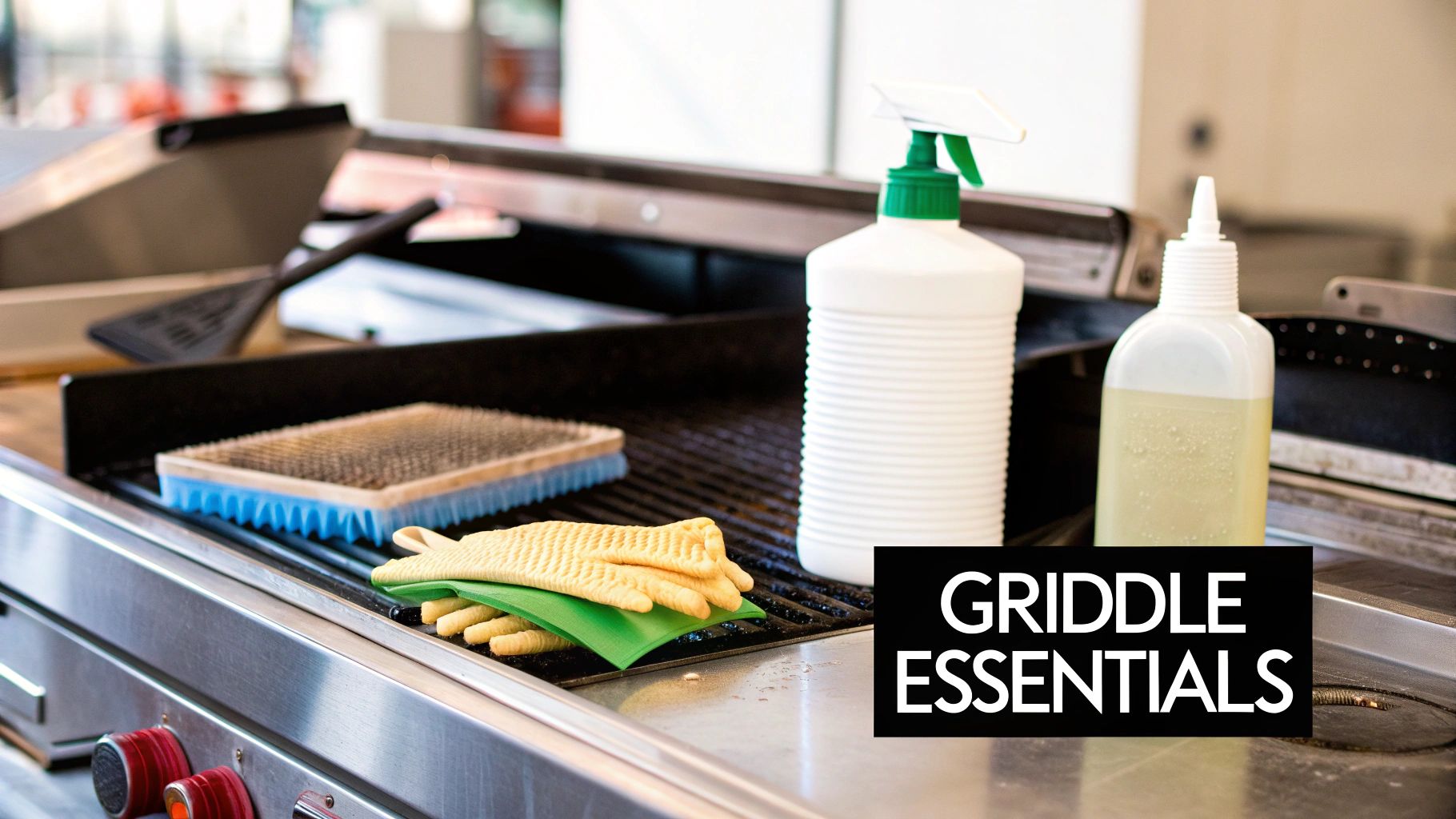
This isn’t just good practice—it’s big business. The kitchen care market chewed up about 28.57% of the massive USD 32.1 billion global cleaning industry in 2024. That number tells a story: sanitation in commercial kitchens is more intense than ever. According to market data from experts like Grand View Research, having the correct, purpose-built supplies isn't optional anymore. It's a cornerstone of running a modern restaurant.
The Must-Have Griddle Cleaning Categories
To keep things from getting complicated, let's break your griddle cleaning arsenal into three core groups. Each one has a specific job in the daily fight against grease and grime, and they all work together to keep that cooking surface ready for the next rush.
- Chemical Cleaners: These are your heavy hitters. We're talking about powerful, food-safe griddle degreasers formulated to dissolve that stubborn, carbonized gunk that welds itself to a hot surface.
- Abrasive Tools: This is the muscle. These are the tools you use to physically scrape and scrub away the grime the chemicals have loosened up. Think griddle scrapers, tough grill screens, and griddle stones that provide the friction needed to get the surface clean.
- Protective & Finishing Gear: This last group is all about safety and the final polish. It includes essentials like heat-resistant gloves, splash goggles, polishing pads, and of course, the food-grade griddle oil for that final seasoning.
A well-stocked griddle cleaning station isn't an expense—it's an investment in your equipment's longevity, your food's quality, and your kitchen's safety compliance. Neglecting it is like trying to cook a gourmet meal on a dirty pan.
Essential Commercial Griddle Cleaning Supply Checklist
To make sure your crew is always ready for action, a clear checklist is your best friend. Everyone should know what each tool does and exactly when to use it.
Here’s a simple table that breaks down the must-have cleaning supplies for your restaurant's griddle.
| Supply Category | Specific Item Example | Primary Function | Best Time to Use |
|---|---|---|---|
| Chemical Cleaners | Griddle Degreaser | Dissolves baked-on grease and carbon buildup. | During the end-of-day deep clean on a hot surface. |
| Abrasive Tools | Long-Handled Scraper | Removes loose food debris and heavy grease. | Between orders and as the first step of deep cleaning. |
| Abrasive Tools | Grill Screen/Pad | Scrubs away stubborn residue without deep scratches. | During the daily clean, after scraping and applying degreaser. |
| Protective Gear | Heat-Resistant Gloves | Protects hands from high temperatures and chemicals. | Anytime cleaning a hot griddle. |
| Finishing Supplies | Griddle Seasoning Oil | Creates a non-stick surface and prevents rust. | After cleaning and drying the griddle completely. |
Keep this list handy, and you'll ensure your griddle stays in prime condition, ready to deliver consistent, high-quality results day in and day out.
Choosing the Right Chemicals for Your Griddle Surface
Picking the right cleaning supplies for your restaurant's commercial griddle isn't as simple as grabbing the strongest-looking bottle you can find. Far from it. Using the wrong chemical is a fast track to a damaged cooktop, sketchy chemical residue, or even a failed health inspection. The real trick is matching the product to your griddle's material and the kind of grime you're fighting.
Not all cleaners are built the same. A good degreaser is basically a magnet for grease; its whole chemical purpose is to find fat molecules, break their bond with the steel, and lift them away. That’s why a dedicated griddle cleaner gets the job done when a generic soap just smears the mess around.
This is a huge piece of the professional cleaning industry, which is growing like crazy. The market for these products was valued at around USD 58.7 billion in 2025 and is on track to hit USD 97.5 billion by 2035. Surface cleaners, including the ones that keep your griddle sparkling, make up about 41% of that market. It just goes to show how vital these specific cleaning supplies for restaurants really are. You can get more details on this growth from Future Market Insights.
Matching Cleaner to Griddle Material
First things first: you need to know what your griddle is made of. The two most common surfaces, steel and chrome, are like night and day when it comes to cleaning.
- Steel Griddles: These are the tough, reliable workhorses of the kitchen. Their surface is a bit porous, which means they can take a beating from more aggressive cleaners and abrasive tools like grill screens or pumice stones. High-alkaline degreasers are your best friend here, as they're fantastic at demolishing that tough, carbonized grease.
- Chrome Griddles: A chrome-plated griddle has a delicate, non-porous finish that needs a much gentler approach. If you hit it with abrasive pads or harsh chemicals, you’ll scratch the surface and strip the chrome right off, leading to hot spots and uneven cooking. For these, you absolutely must use a non-abrasive, pH-neutral cleaner made specifically for chrome.
Using a heavy-duty cleaner meant for a steel griddle on a chrome top is a recipe for disaster. You'll end up with permanent pitting and flaking. Always, always read the product label to make sure it's compatible with your equipment.
Decoding Chemical Labels
Taking a second to understand the active ingredients in your cleaner will help you make smarter, safer choices for your kitchen. Just a few key terms on the label can tell you everything you need to know.
Key Chemical Categories:
- Degreasers (Alkaline Cleaners): This is what you'll see most often. These cleaners use high-pH ingredients like sodium hydroxide to literally turn hardened fat into a soapy substance that you can just wipe away. It's a chemical reaction called saponification, and it's incredibly effective. They're powerful but demand respect—always use proper PPE.
- Carbon Removers: For that stubborn, black, shell-like buildup, you need to bring in the heavy artillery. Carbon removers are typically more concentrated and are designed to break down the polymerized oils that create that rock-hard layer of gunk.
- Delimers (Acidic Cleaners): You won't use these every day on a griddle, but they're essential for removing mineral deposits (limescale) from hard water. Use them sparingly and only when needed, because acids can eat away at steel surfaces if you leave them on for too long.
Your goal is to find the perfect balance between cleaning power and surface safety. A cleaner that's too weak will just waste your crew's time and effort, while one that's too strong will chew through the lifespan of your griddle.
Once you get these distinctions, you can pick a product that cleans like a champ without causing damage. A busy diner flipping burgers all day on a steel griddle is going to need a potent alkaline degreaser. On the other hand, a quiet café using a chrome griddle for delicate crepes needs a gentle, specialized formula. No matter what you choose, follow the manufacturer's instructions for dilution and application to the letter. It's the only way to guarantee safety and get the best results.
Mastering Your Step-by-Step Griddle Cleaning Process
Getting a griddle perfectly clean isn't about guesswork or elbow grease. It’s about having a system. When you follow a proven method, you can turn this daily chore from something you dread into a quick, efficient part of your closing routine. The secret is using the right cleaning supplies for restaurants at the right time.
This guide breaks down the entire process, from the first scrape to the final seasoning. Each step is packed with practical tips to help your kitchen staff maintain your equipment like seasoned pros, which not only extends its life but also keeps your food quality top-notch.
This visual shows the simple but powerful transformation that happens when you use the right supplies—turning a greasy mess into a sparkling clean surface, ready for the next service.
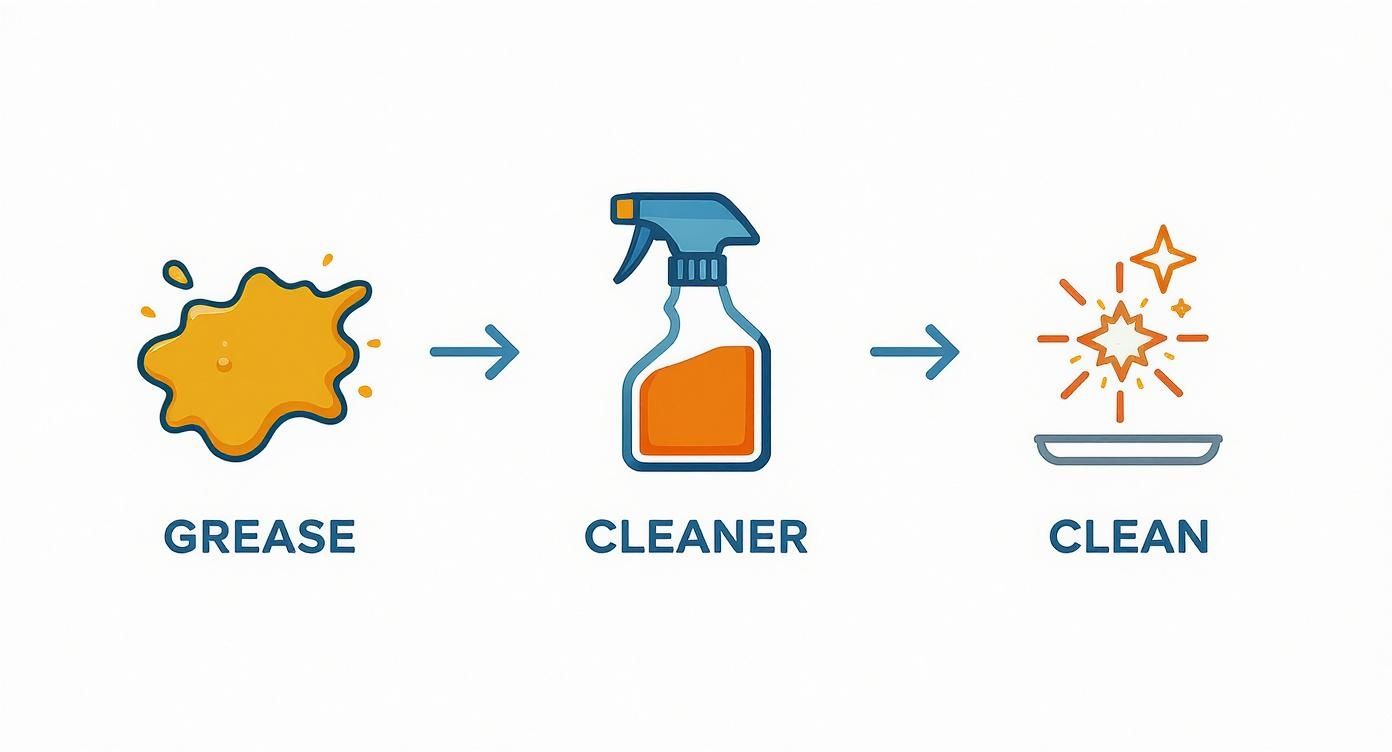
It’s a great reminder of how targeted cleaners do the heavy lifting by breaking down grease, making the physical scrubbing part of the job that much easier.
Step 1: Scrape Down the Hot Surface
The best time to start cleaning is the second service is over. While the griddle is still hot—the sweet spot is around 300-350°F—all that leftover grease and food debris is loose and comes off easily.
Grab a long-handled griddle scraper with a sharp, straight blade. Hold it at a low angle and use firm, even strokes to push all the gunk into the grease trap. Working with the heat, not against it, is a huge time and energy saver.
Step 2: Apply the Griddle Cleaner
Once you've cleared away the big stuff, it's time to let the chemical cleaner get to work. You might need to lower the griddle temperature a bit, as some cleaners can just flash off and evaporate if the surface is scorching hot.
Pour your food-safe griddle degreaser evenly across the cooktop. You’ll see it start to bubble and fizz almost immediately as it lifts the carbonized grease. That chemical reaction is what breaks down the stubborn, baked-on grime that scraping alone could never touch.
Always store and handle industrial cleaning products exactly as the label says. Keep them in their original containers, well away from food prep areas and heat sources (like the griddle itself) to prevent any accidents or cross-contamination.
Step 3: Scrub with a Griddle Pad or Stone
Now that the cleaner has done its job loosening the grime, it's time for a little abrasion. For your daily clean, a griddle pad or screen on a holder is your best friend. It gives you just enough friction to scrub away residue without gouging the steel.
If you’re dealing with some serious, caked-on carbon buildup, you might need to bring out a griddle stone or brick. Just be gentle. Use it with flat, even pressure to avoid scratching the surface. Work in small sections and let the combination of heat, chemicals, and scrubbing lift everything off.
Step 4: Squeegee and Rinse the Surface
After scrubbing the whole surface, use a griddle squeegee (or your scraper) to pull all that dirty liquid and debris into the grease trap. The griddle should already look worlds better.
Next, carefully pour a little warm water onto the griddle. The resulting steam helps lift any lingering chemical residue. Give it one final squeegee until the surface is completely clear of cleaner and water. For a deeper dive, our complete guide on how to clean a flat top griddle has even more expert tips and tricks.
Step 5: Dry and Season the Griddle
This final step is probably the most important one for protecting your investment. Take a clean, dry cloth or some heavy-duty paper towels and wipe the griddle surface until it’s bone dry. Any moisture left behind can lead to rust.
To finish, pour a thin, even coat of seasoning oil across the entire cooktop while it's still warm. This creates a protective, non-stick layer that not only prevents rust but makes tomorrow's cooking—and cleaning—a whole lot easier. It's a simple step that makes a huge difference in your griddle's performance.
The Best Tools and Protective Gear for Safe Cleaning
Even the most powerful cleaning chemicals are only half the story. Without the right tools and personal protective equipment (PPE), cleaning a commercial griddle is slow, frustrating, and downright dangerous. The best cleaning supplies for restaurants always include a set of hardware built specifically for griddle maintenance.
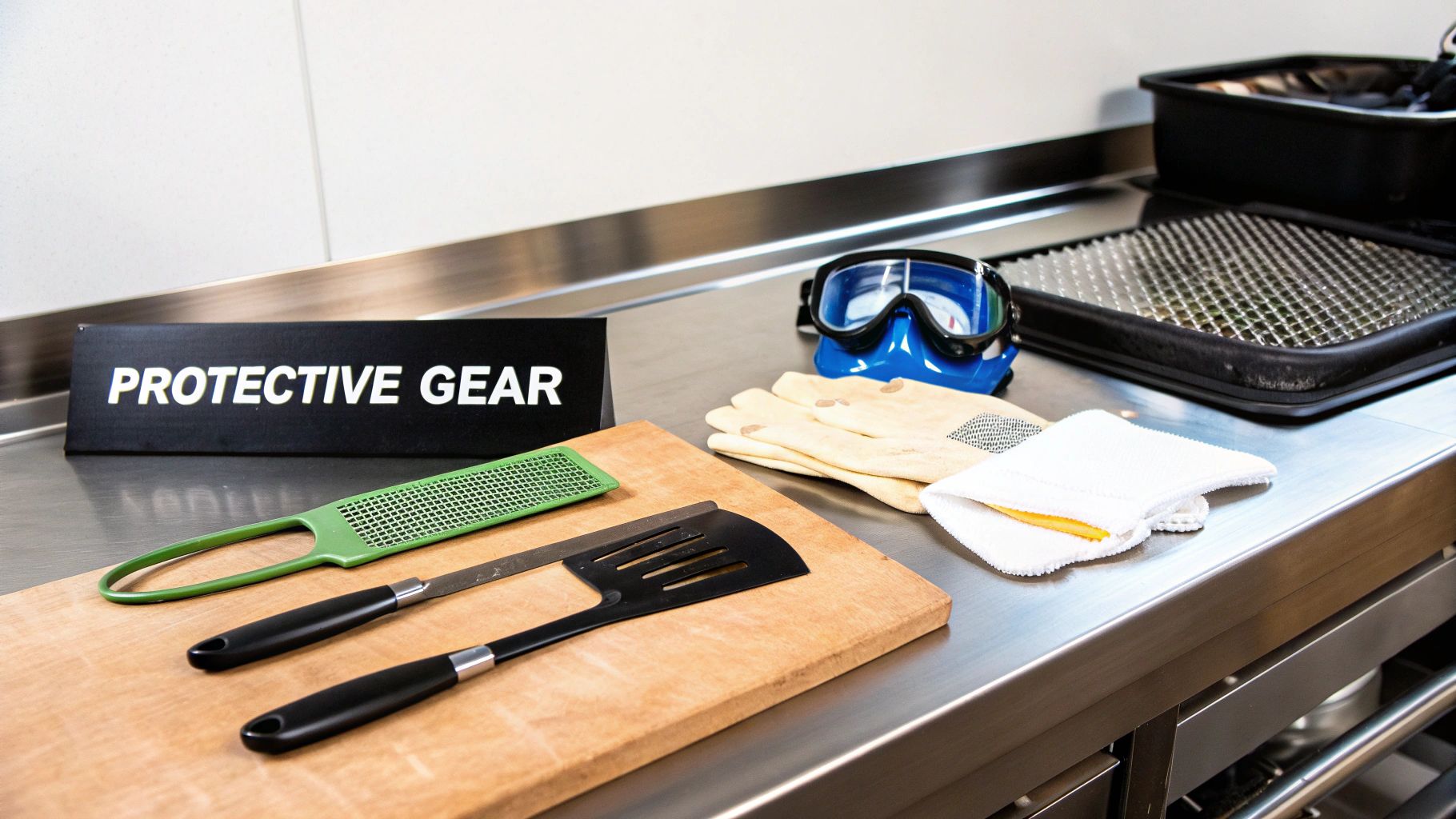
Think of it this way: a high-performance degreaser loosens the cooked-on grime, but it's a quality scraper that actually gets it off the surface. It’s this tag team of chemical power and physical force that brings your cooktop back to a mirror shine. Investing in good, durable tools will pay for itself by making the job faster and keeping your staff safe.
Essential Griddle Cleaning Implements
From heavy-duty scrapers for the initial attack to fine-grit pads for the final polish, each tool has a job. Giving your team the right equipment means they can handle anything from a quick wipe-down between orders to a serious end-of-night deep clean.
- Griddle Scrapers: This is your muscle. A long-handled scraper gives you the leverage you need to remove the bulk of the gunk while keeping your hands clear of the hot surface. Shorter-handled ones are great for precision work around the edges.
- Grill Screens and Pads: These are the workhorses for scrubbing. A grill screen, paired with a pad holder, lets you scrub away tough carbon and grease after the cleaner has done its work. They're more aggressive than a cloth but gentler than a pumice stone.
- Griddle Stones or Bricks: Made from pumice, these are for the absolute toughest, caked-on carbon messes. They’re incredibly effective but demand a gentle touch and even pressure to avoid scratching up your griddle.
- Polishing Pads: Once all the heavy lifting is done, a polishing pad smooths out the steel surface. This helps the seasoning stick better and creates a naturally non-stick cooktop for the next shift.
For a deep dive into different scrapers and how to use them, check out our guide on choosing the best flat top grill scraper for your operation.
Skipping proper PPE is a non-starter. A steam burn from a hot griddle or a chemical splash to the eye can result in serious injury and lost work time. Safety gear isn't optional; it's a fundamental part of the professional cleaning process.
Non-Negotiable Personal Protective Equipment (PPE)
In a busy kitchen, safety has to be priority number one, especially when you’re working with scorching hot surfaces and potent chemicals. The risk of getting hurt while cleaning a griddle is very real, but it’s also completely preventable if you have the right gear.
Heat-Resistant Gloves: Regular kitchen gloves just won't cut it against a 300-350°F griddle. You need heavy-duty, insulated gloves that are actually rated for high temperatures. They protect hands from direct burns and from the blast of scalding steam you get when liquid hits that hot steel.
Splash-Proof Goggles: When cleaner hits a hot griddle, it can bubble up and splash without warning. Splash-proof goggles create a seal around the eyes, stopping corrosive degreasers from causing severe eye damage. Your regular eyeglasses won’t offer nearly enough protection.
A kitchen's commitment to safety shows in its daily habits. Making sure this gear is always within reach—and that everyone knows its use is mandatory—is the mark of a well-run operation.
Comparing Griddle Cleaning Tools and Safety Gear
Choosing the right tool for the job makes all the difference. This table breaks down the essentials, helping you understand what to use and when.
| Item | Best For | Key Features | Safety Consideration |
|---|---|---|---|
| Long-Handled Scraper | Initial removal of heavy grease and food debris. | Provides leverage and keeps hands safely away from the heat. | Ensure the blade is sharp and not damaged to avoid scratching the griddle. |
| Grill Screen | Daily scrubbing of cooked-on food and tough grease. | Abrasive mesh cuts through residue without being overly harsh. | Always use with a pad holder to distribute pressure evenly and protect hands. |
| Heat-Resistant Gloves | Handling tools and cleaning on a hot griddle surface. | Insulated material protects against burns from direct contact and steam. | Check for any rips or tears before use to ensure full protection. |
| Splash-Proof Goggles | Protecting eyes from chemical splashes and steam. | Forms a seal around the eyes for comprehensive coverage. | Clean regularly to ensure clear visibility during the cleaning process. |
Ultimately, a well-stocked cleaning station with the right tools and PPE isn't just about following rules—it's about creating a safer, more efficient kitchen for everyone.
Building a Daily Griddle Cleaning Routine That Works
Consistency is what separates a gleaming, reliable griddle from a costly, greasy restoration project. Knowing the right tools and chemicals is half the battle, but actually using them in a structured daily routine is what keeps your equipment in top shape. A smart schedule isn't about one marathon deep clean; it’s about layering smaller cleaning tasks throughout the day to stop buildup in its tracks.
This kind of system is non-negotiable in any professional kitchen. There's a reason why restaurants make up the biggest slice of the commercial kitchen cleaning market—about 47.6% of the demand in 2024, according to industry reports like those from the IMARC Group. The sheer volume of cooking and unforgiving health codes demand constant attention to sanitation.
The Three Tiers of Griddle Cleaning
A great cleaning schedule isn't a one-and-done deal. It’s built on three different types of cleaning, each with its own rhythm and reason. When you weave all three into your daily workflow, you get a griddle that’s practically effortless to maintain.
- During-Shift Wipe-Downs: Think of this as the rapid-response team. It’s the quick scrape-down between orders that gets rid of loose food bits and prevents flavors from mingling. You don't want the bacon from breakfast showing up in the seared tuna for lunch.
- End-of-Shift Deep Clean: This is the big one—the daily reset button. After the last order is out, the griddle gets a full treatment: scraping, degreasing, scrubbing, rinsing, and re-seasoning. This leaves it perfectly prepped for the next day.
- Periodic Heavy-Duty Cleaning: This is your weekly or bi-weekly deep dive. It’s a more intense process designed to obliterate any stubborn carbon that the daily clean might have missed. Sometimes this involves a "boil out" or bringing in a more aggressive griddle stone.
A solid daily cleaning habit is your best defense against those grueling, labor-intensive deep cleans. It's like brushing your teeth every day to avoid a painful root canal—a little effort now prevents a massive headache later.
Creating a Griddle Cleaning Checklist
The secret to making sure every step gets done right, every single time? A checklist. It takes the guesswork out of the equation, creates a single standard for the whole team, and keeps everyone accountable. A good checklist is simple, clear, and easy to follow, even when your crew is exhausted after a ten-hour shift.
A killer checklist should have these four parts:
- Pre-Cleaning Steps: State the target temperature for cleaning (e.g., 300-350°F) and list the necessary PPE like heat-resistant gloves and goggles.
- Actionable Cleaning Steps: Use short, direct commands. "Scrape debris into grease trap." "Apply degreaser evenly." "Scrub surface with pad."
- Post-Cleaning Procedures: Don't forget the final touches. Include steps for rinsing, drying the surface completely, and wiping on a fresh layer of seasoning oil.
- Sign-Off Section: A spot for an employee and manager to initial is crucial. It confirms the job was done and checked.
The Long-Term Benefits of Routine Maintenance
Sticking to a daily cleaning routine does way more than just keep your griddle looking pretty. It delivers real, tangible benefits that hit your bottom line and make your kitchen run smoother. This is the foundation of a smart commercial kitchen equipment maintenance strategy.
For starters, consistent cleaning stops carbonized grease from building up, which is a common cause of uneven heating and frustrating hot spots. A clean griddle heats faster and more consistently, giving you better-cooked food and lower energy bills.
On top of that, a well-cared-for griddle just lasts longer, pushing back the massive expense of buying a new one. This proactive mindset saves you money on labor, cuts down on the need for harsh cleaning supplies for restaurants, and protects one of the most valuable workhorses in your kitchen.
Common Griddle Cleaning Questions Answered
Even with the best cleaning routine, questions about commercial griddles are going to pop up. Knowing the right answers is what protects your investment and keeps your food safe. Let's tackle some of the most common questions we hear from restaurant operators about keeping this kitchen workhorse in top shape.
Think of this as your quick-reference guide. When a new cook isn't sure which tool to grab or what step comes next, having clear, direct advice right here prevents a simple mistake from turning into a costly one. After all, the right technique saves you more than just time—it extends the life of your griddle.
Can I Use Regular Soap and Water on a Commercial Griddle?
This is probably the most common—and most critical—question we get. The short and simple answer is no. You should never use standard soap and water on the main cooking surface of your griddle. Regular dish soap just isn't built to cut through the super-tough, polymerized grease and carbon that builds up on a high-volume restaurant flat-top.
Even more important is the risk of thermal shock. Throwing a bunch of cold or cool water onto a hot griddle causes a rapid temperature drop that can literally warp the steel. The result is an uneven cooking surface and permanent damage. You have to stick with professional-grade, food-safe cleaning supplies for restaurants that are made specifically for this job.
How Often Should I Deep Clean My Restaurant Griddle?
How often you need to do a deep clean really comes down to your menu and how busy you are. That said, a solid rule of thumb is to perform a full, thorough deep clean at the end of every single day of service. This isn't just a quick scrape—it means scraping, applying a proper griddle cleaner, scrubbing with a pad or screen, and then re-seasoning the surface for the next day.
A consistent daily deep clean is the single best preventative measure you can take. It stops minor grease from becoming a baked-on, carbonized nightmare that requires hours of intense labor to remove.
For kitchens pumping out high-fat items like bacon and burgers all day long, you might need a more intensive "boil-out" or heavy decarbonizing session once a week. This tackles any stubborn gunk that the daily clean couldn't quite get, keeping your griddle in peak condition.
What Is the Difference Between a Griddle Stone and a Grill Screen?
Both of these are abrasive tools designed to muscle off tough, cooked-on food, but they have slightly different jobs in your cleaning kit. Knowing when to use which one is key to avoiding accidental damage to your cooktop.
- Griddle Stone (or Grill Brick): This is a porous, pumice-like block. It's the heavy hitter you bring out to scour away thick, heavily caked-on carbon. Because it's so aggressive, you need to use it with care—too much pressure can scratch the griddle surface.
- Grill Screen: Think of this as your daily driver. It's a mesh screen coated with an abrasive material (usually silicon carbide) that's less aggressive than a stone. This makes it perfect for the daily deep clean to remove grease and food residue without causing deep scratches.
For the best results, make the grill screen your go-to for daily cleaning. Save the griddle stone for those tougher, less frequent deep cleans when you’re facing buildup that a screen just can't handle.
Are Eco-Friendly Griddle Cleaners Actually Effective?
Absolutely. Many of today's eco-friendly griddle cleaners are incredibly effective and a fantastic option for kitchens that want to prioritize staff safety and sustainability. While some of the older "green" products had a reputation for not being tough enough, modern formulas are a whole different story.
Many now use powerful, plant-based solvents that dissolve grease and carbon just as well as the harsh stuff, but without nasty chemicals like caustic soda. These products are often non-fuming, biodegradable, and much safer for your team to be around. When you're shopping for one, look for third-party certifications like Green Seal or Safer Choice to be sure you're getting a product that meets high standards for both performance and the environment.
Ready to build the perfect griddle cleaning toolkit for your restaurant? At Griddles.com, we offer a curated selection of commercial griddles and essential kitchen equipment designed for durability and performance. Explore our collection at https://griddles.com and find the reliable gear your kitchen deserves.