

Your Complete Guide to the Commercial Stove Range with Griddle
In any serious commercial kitchen, space and efficiency are king. That's where a stove range with a griddle comes in. It's a heavy-duty, purpose-built workhorse that rolls open burners and a flat-top griddle into one solid, stainless steel unit. This isn't just an appliance; it's the command center for high-volume cooking, built to take a beating in diners, busy cafes, and food trucks.
The Indispensable Kitchen Command Center
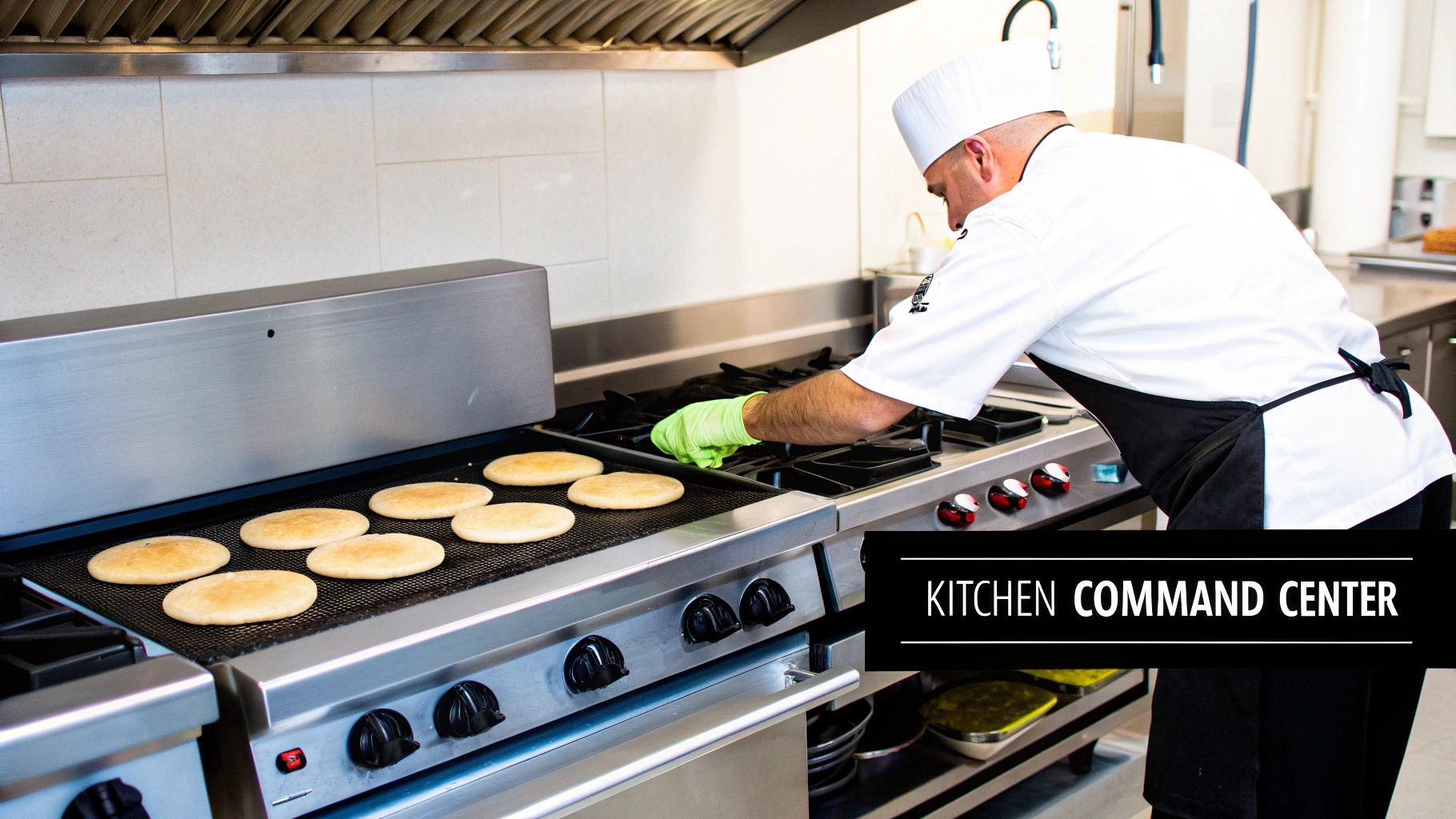
A commercial range is a strategic piece of equipment, the engine that keeps a fast-paced kitchen humming. It fuses two of the most critical cooking stations into a single footprint, letting a chef sear off steaks on the burners while simultaneously knocking out a ticket full of pancakes, eggs, and burgers on the griddle.
This kind of consolidation is a game-changer for any culinary business. When you look at the big picture of a restaurant's Back of House (BOH) operations, you see just how fundamental this piece of gear is. It has a direct impact on your workflow, ticket times, and the variety you can offer on your menu.
Core Value in a Professional Kitchen
The demand for this kind of versatility is huge and only getting bigger. The global market for commercial griddles is expected to grow from USD 576.4 million in 2025 to USD 912.4 million by 2035. Gas models are the undisputed favorite, pulling in 55.20% of the revenue. Why? Because chefs live and die by rapid heat-up times and precise temperature control, and that's where gas shines.
This growth really just highlights the undeniable benefits:
- Smarter Workflow: Chefs don't have to dance between a separate range and a griddle. Fewer steps mean less wasted motion and faster orders out the window.
- Space Saver: In tight quarters like a food truck or a ghost kitchen, every inch counts. Combining two appliances into one frees up precious real estate for prep or other essential gear.
- Menu Flexibility: This setup opens the door to a massive range of cooking techniques. You can be sautéing and boiling on the burners while grilling sandwiches and toasting buns on the flat-top, all at the same time.
A commercial range is the heart of the production line. Its ability to handle multiple cooking methods at once isn't just a convenience—it's a requirement for profitability during peak service hours.
Ultimately, putting a commercial range with a griddle on your line is a smart move. It's an investment in operational speed and culinary freedom, making it one of the most indispensable tools in your arsenal.
Commercial vs. Residential Griddle Range Comparison
It's crucial to understand that commercial units are built for entirely different worlds than their residential counterparts, with different materials, power, and durability. They are not interchangeable.
The table below breaks down the key differences at a glance.
| Feature | Commercial Range | Residential Range |
|---|---|---|
| Build Material | Heavy-gauge stainless steel | Lighter steel, plastic knobs |
| BTU/Wattage | 25,000+ BTU per burner | 7,000-18,000 BTU per burner |
| Griddle Plate | Thick steel (1/2" to 1") | Thin, often non-stick coated |
| Durability | Built for 12+ hours of daily use | Designed for 1-2 hours of daily use |
| Safety Certs | NSF/ANSI certified for sanitation | UL certified for home safety |
| Price | $2,000 - $15,000+ | $500 - $3,000 |
As you can see, a commercial range is an entirely different beast. It’s an investment in a piece of equipment that is legally certified and physically built to withstand the relentless demands of a professional kitchen, something a residential stove was never designed to do.
Choosing Your Power Source: Gas vs. Electric
When you're picking out a commercial stove range with a griddle, the first big decision you’ll face is the power source. This choice impacts everything from installation costs and kitchen workflow to the texture of your food. Think of it as choosing the engine for your restaurant—both get the job done, but in very different ways.
For most chefs, gas is king. There's just nothing like the instant, visible feedback of an open flame. A quick twist of a knob gives you immediate heat, letting you make split-second adjustments for a perfect sear or a delicate sauté. It's this raw responsiveness, measured in powerful British Thermal Units (BTUs), that makes gas the undisputed champion in busy kitchens where every second counts.
Gas ranges also give you fuel flexibility. Most units come set up for natural gas, but they can easily be converted to run on liquid propane. This is a game-changer for food trucks, pop-ups, or any location where a natural gas line isn't an option. If you're weighing your options, you can learn more about the differences between natural gas and propane for your griddle to figure out what works for your business.
The Case for Electric Ranges
While gas usually grabs the headlines, don't count electric ranges out. Their biggest strength is something gas struggles with: perfectly consistent, even heat across the entire griddle surface. The electric elements underneath eliminate the hot spots you sometimes get with gas burners, making them ideal for tricky items like pancakes, eggs, or crepes.
This precision makes electric a fantastic choice for certain menus. On top of that, installation can be much simpler and cheaper, especially if your building isn't already piped for gas. Sometimes, the best choice is the one that’s easiest to get up and running.
The choice between gas and electric really boils down to a trade-off: Gas gives you raw power and lightning-fast response, while electric offers unwavering consistency and simpler setup requirements.
Key Factors for Your Decision
To make the right call, you have to look past the sticker price and think about how you actually cook. Here’s what to weigh:
- Your Menu: If you’re slinging steaks and burgers that need a hard, fast sear, the brute force of a gas stove is your best friend. But if you’re cooking delicate items that demand precise, stable temperatures, an electric model will give you much better results.
- Your Kitchen's Infrastructure: Take a hard look at your space. Do you already have a commercial gas hookup? Is your electrical panel ready to handle a high-wattage appliance? The cost of running new lines or upgrading your electrical system can be a huge factor in the total price tag.
- Operating Costs: Gas and electricity prices can vary wildly depending on where you are. A little research into your local utility rates will give you a much clearer picture of the long-term running costs, helping you make a decision that fits your budget for years to come.
Decoding the Features That Truly Matter
When you're staring at a spec sheet for a new commercial stove range, it's easy to get lost in the weeds. But once you look past the brand names and the price tags, you'll find there are only a few features that really determine how a unit will perform when the ticket machine is spitting fire. Nailing these down is the key to making a smart investment.
It all starts with the heart of the machine: the griddle plate. Think of it as a thermal battery for your kitchen—its job is to soak up heat and then transfer it consistently to your food. The single most important factor here is the griddle plate thickness. A thin plate heats up in a flash, but it also loses that heat just as fast the second you slap down a dozen frozen burger patties.
A much better choice is a thicker plate, usually in the 3/4-inch to 1-inch thick range. This beast holds a massive amount of thermal energy. That means it keeps its temperature steady and recovers almost instantly, giving you consistent results even when the kitchen is running at full tilt.
Griddle Controls and Power
Once you have that thick plate, you need to decide how you're going to control all that heat. This brings us to the classic debate: thermostatic vs. manual controls. Manual controls are your basic low-medium-high knobs. They're dead simple, tough as nails, and perfect for experienced cooks who work by feel.
Thermostatic controls, on the other hand, are the cruise control for your griddle. You dial in an exact temperature—say, 350°F—and a thermostat cycles the power on and off to hold it there. That kind of precision is a lifesaver for delicate stuff like pancakes or eggs, where a few degrees can be the difference between golden brown and burnt. Figuring out the difference between thermostatic versus manual griddles is crucial for matching the equipment to your menu.
The real power of a commercial range isn't just its maximum heat output, but its ability to maintain consistent, predictable cooking temperatures under pressure. This consistency is what separates professional results from amateur ones.
Essential Sanitation and Safety Features
While cooking performance gets all the glory, the features that make cleaning and safety easier are non-negotiable in a pro kitchen. These aren't just nice-to-haves; they're critical for running a smooth, safe, and sanitary operation.
Keep an eye out for these must-have design elements:
- Tall Splash Guards: Properly welded guards on the sides and back of the griddle are your best friend. They contain grease splatter, which keeps the surrounding area cleaner and, more importantly, prevents your staff from slipping on a greasy floor.
- Efficient Grease Management: Look for a wide grease trough at the front that’s easy to get a scraper into. It needs to efficiently funnel every drop of runoff into a big, easy-to-remove drip tray. Nobody has time to wrestle with a poorly designed grease trap during a rush.
- Durable Construction: Pay attention to how the unit is built. Things like fully welded stainless steel and heavy-duty cast-iron burner grates are telltale signs of a range that's built to take a beating for years without warping or breaking down.
Finding the Right Size and Configuration
Your commercial range needs to fit your kitchen's workflow like a glove, not the other way around. The first big decision is size—it's a balancing act between the physical space you have and the volume of food you need to pump out. The whole point is to max out your productivity without creating a traffic jam on the line.
These ranges come in standard widths, usually starting at a nimble 24 inches and going all the way up to massive 60-inch or even 72-inch beasts. A smaller unit might be the only choice for a tight food truck, but a busy diner slinging hash browns and pancakes all morning will need that huge surface area to keep orders flying.
Matching Burners and Griddle Space
Beyond the overall footprint, the real make-or-break decision is the cooktop configuration. This is where you really dial in the appliance for your specific menu. A breakfast joint is going to live and die by its griddle space. On the other hand, a dinner service that’s all about simmering sauces and boiling pasta will need more open burners.
Some of the most popular layouts you'll see are:
- 24-Inch Griddle with 4 Burners: A solid, all-around setup for a menu that does a little bit of everything.
- 36-Inch Griddle with 2 Burners: Perfect for any kitchen that’s heavy on the grilled and seared items.
- 12-Inch Griddle with 6 Burners: Gives you maximum burner real estate with a small griddle for the occasional side job.
Getting this mix right directly fuels your kitchen's speed, and it's no surprise that demand for these combo units is on the rise. In fact, the U.S. market for range cookers, where these griddle tops are a major player, hit USD 1.86 billion in 2024 and is expected to keep climbing. According to an industry analysis from Grand View Research, this growth is all about kitchens wanting smarter, more flexible cooking stations.
Think of your range's layout as the command center of your kitchen. The right balance of burners and griddle space means fewer wasted movements and a smoother service when you're slammed.
Choosing the Right Base
Last but not least, you have to think about what’s going on underneath the cooktop. The base of your range is prime real estate, and you have a few options depending on what your kitchen needs.
A standard oven base is the classic choice, perfect for baking, roasting, or just holding dishes at temperature. If you need things cooked faster and more evenly—think baked goods or large roasts—upgrading to a convection oven base is a game-changer. But if you're already set for oven space, a simple cabinet base provides super convenient storage for pots, pans, and tools, right where your cooks need them most.
Getting Set Up and Keeping It Running
Dropping serious cash on a new commercial stove range with a griddle is just the first step. To get the most out of that investment, you need to nail the installation and stick to a solid maintenance routine. Get the setup right, and you're golden. Let it slide, and you're setting yourself up for headaches and costly downtime.
Don't even think about DIYing the install, especially with a gas unit. This is a job for a certified pro, period. They'll handle the gas lines safely, preventing dangerous leaks and making sure you're up to code with local fire and safety regulations. You'll also need a commercial-grade hood system overhead. These ranges kick out a ton of heat and grease, and proper ventilation is a must for your staff's safety and your kitchen's air quality.
Seasoning: The Secret to a Perfect Griddle Surface
Before you even dream of flipping that first burger, you have to season the griddle. This isn't just a suggestion; it's essential. Seasoning creates that beautiful, naturally non-stick surface that only gets better over time. Think of it like breaking in a cast-iron skillet—you're building up a protective layer that makes cooking a joy and cleanup a snap.
It’s a pretty simple process:
- Start Fresh: Give the new griddle a good wash with warm, soapy water to get rid of any factory oils or dust. Dry it completely.
- Oil It Up: Grab a high-smoke-point oil (canola or grapeseed work great) and pour a small amount on the surface. Use a clean cloth to spread a very thin, even layer across the entire plate.
- Bring the Heat: Fire up the griddle to medium-high. You'll see the oil start to smoke—that's exactly what you want. Let it smoke for about 15-20 minutes. This is the magic step where the oil polymerizes and bonds to the steel.
- Cool, Wipe, Repeat: Turn off the heat and let the griddle cool down all the way. Wipe off any excess oil. For a truly bulletproof surface, do this whole process two or three more times.
This initial seasoning is your foundation. From here on out, it’s all about daily care to keep that slick surface in top shape.
But even before you get to installation, you have to pick the right unit. This flowchart breaks down the basic decision-making process.
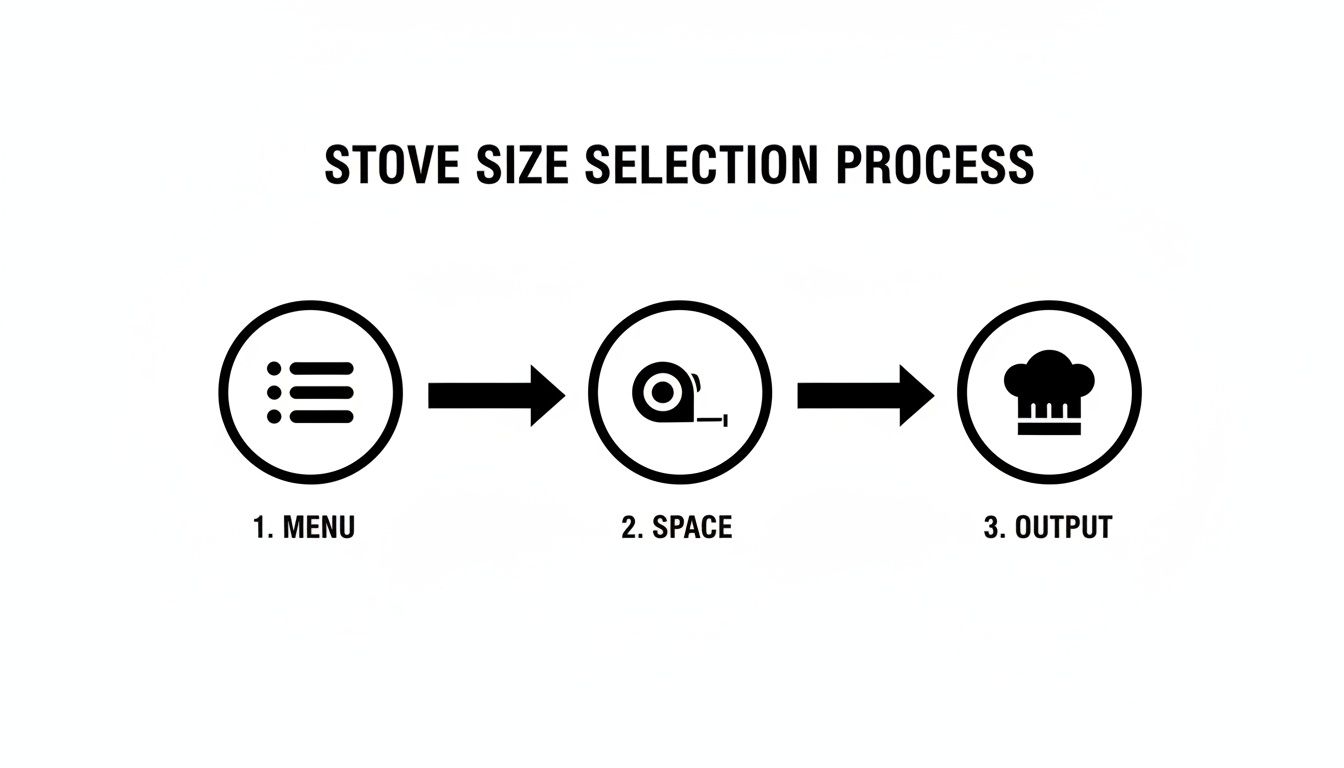
As you can see, it all starts with your menu. What you cook determines the size and power you need, which then has to fit within your kitchen's footprint.
Your Daily and Weekly Upkeep Game Plan
The real secret to a griddle that lasts for years is consistent cleaning. Don't wait. After every service, while the griddle is still warm (but not screaming hot), scrape all the gunk and grease into the drip tray. A quick wipe with a damp cloth is all it takes to stop that nasty buildup that kills flavor and messes with heat distribution.
A disciplined maintenance schedule is the best insurance against unexpected equipment failure. Five minutes of cleaning at the end of a shift can save you hours of downtime and hundreds in repair bills down the road.
Beyond the daily scrape-down, you need a proactive maintenance plan. We've put together a simple checklist to get you started on what needs to be done and when.
Daily vs. Weekly Maintenance Checklist
| Task | Frequency | Importance |
|---|---|---|
| Scrape Griddle Surface | Daily | High |
| Empty and Clean Drip Tray | Daily | High |
| Wipe Down Exterior Surfaces | Daily | Medium |
| Check Burner Pilots | Weekly | High |
| Inspect Gas Hoses/Connections | Weekly | High |
| Calibrate Thermostats | Monthly | Medium |
| Deep Clean Griddle Surface | As Needed | Medium |
This checklist is a great starting point, but a truly robust plan goes deeper. To build one for your kitchen, check out our complete guide to commercial kitchen equipment maintenance. It’s packed with detailed tips to help you catch small issues before they blow up into major, service-stopping problems.
Matching the Right Range to Your Business
Picking out a commercial stove range with an integrated griddle isn't a one-size-fits-all affair. The absolute workhorse for a packed breakfast diner would be a total disaster in a cramped food truck. The real secret to getting a great return on your investment is matching the machine to your mission.
Think of it like hiring a key employee for your line. Your menu, your daily customer count, and the space you're working with will tell you exactly who you need to hire for the job.
High-Volume Diners and Cafes
For any spot that lives and dies by the morning rush, griddle real estate is everything. A massive 36-inch or 48-inch griddle next to two or four burners is the classic diner setup for a good reason. It lets you dedicate a huge, heat-retaining surface to pancakes, eggs, and bacon while keeping burners free for simmering chili or searing off burgers for the lunch crowd.
You'll want a heavy-duty gas model with a 1-inch thick steel plate. That thickness acts like a thermal battery, holding its temperature steady even when you're slamming it with non-stop orders.
Agile Ghost Kitchens
Ghost kitchens are all about adaptability, often running several different menus out of one spot. This means you need gear that can pivot on a dime. A balanced setup, like a 24-inch griddle with four burners, gives you the power to switch from a brunch menu to a burger concept without missing a step.
Outfitting a new commercial kitchen can be a big expense. Looking into restaurant equipment financing can make getting the right stove range much more manageable.
Space-Conscious Food Trucks
On a food truck, every single inch counts. Compact 24-inch or 36-inch ranges are the name of the game here. Often, a unit with a smaller griddle and more burners is the most practical choice, letting you juggle a more diverse menu in a tiny footprint. And of course, propane-powered models are non-negotiable for life on the road.
The griddle's sheer versatility is why you're seeing them everywhere. The flat top griddle market in North America is on fire, expected to hit USD 1.5 billion by 2025 with a projected growth rate of 8%. That demand comes from one simple fact: you can cook almost anything on that single, easy-to-clean surface.
Frequently Asked Questions
When you're outfitting a commercial kitchen, questions are bound to come up. It's a big investment, and you want to get it right. Here are a few of the most common things we hear from operators about choosing and using a commercial stove range with a griddle.
What Is the Ideal Griddle Plate Thickness?
If you're running a high-volume kitchen, you'll want a griddle plate that's 3/4-inch to 1-inch thick. This is pretty much the gold standard for a reason.
Think of that thick steel plate like a thermal battery. It soaks up and holds onto a massive amount of heat. When the lunch rush hits and you slap down a dozen cold burger patties, the surface temperature barely dips. This means it recovers almost instantly, giving you perfectly consistent cooking from the first order to the last.
A thin plate, on the other hand, loses its heat in a flash. This leads to spotty cooking, longer ticket times, and a whole lot of frustration for your line cooks. Shelling out a bit more for a thicker plate is one of the smartest moves you can make.
How Do I Properly Season a New Griddle?
Seasoning your griddle is the absolute first thing you should do. It's a simple process that builds up a durable, naturally non-stick surface, and it pays you back on every single shift.
- Start Clean: First things first, give the new griddle a good wash with mild soap and water. You need to get any factory oils or dust off of it. Dry it completely.
- Apply Oil: Pour a little high-smoke-point oil (canola oil is perfect) onto the surface. Grab a clean cloth and spread it into a paper-thin, even layer across the entire plate.
- Heat and Cure: Fire up the griddle to medium-high heat. You're looking for the oil to start smoking. Let it smoke away for about 15-20 minutes. This is where the magic happens—the oil polymerizes, bonding to the steel to create that first non-stick layer.
- Cool and Repeat: Kill the heat and let the griddle cool all the way down. Wipe off any gummy excess oil. Now, do it all over again two or three more times. Each cycle builds up a stronger, slicker cooking surface.
Seasoning isn't just a one-and-done chore; it's the foundation of your griddle's performance. A perfectly seasoned griddle cooks faster, cleans up easier, and stops food from sticking. It's worth the effort.
Can I Use a Commercial Range in My Home?
This is a critical safety point: a commercial stove range with a griddle should never be installed in a residential kitchen. These units are beasts, and they come with major safety risks in a home setting.
Commercial ranges pump out way more heat than any residential appliance. They demand specialized, high-powered ventilation systems to suck out all the smoke and grease-laden vapor. They also have totally different gas line requirements and need specific safety clearances that a home kitchen just isn't designed for. Trying to install one at home creates a massive fire hazard and will almost certainly void your homeowner's insurance.
Ready to put a real workhorse in your kitchen? Check out our entire collection of professional-grade equipment at Griddles.com and find the perfect commercial stove range with griddle to power your operation.