
Mastering Commercial Griddle Temperatures for Perfect Cooking
When it comes to your commercial griddle, there isn't one single magic number for the temperature. Instead, you're aiming for a critical range, typically between 325°F and 400°F (163°C and 204°C) for most applications. This isn't just a suggestion; proper temperature control is essential for food safety—it ensures food is cooked thoroughly and kills harmful bacteria.
Defining the Goldilocks Zone for Griddle Cooking
Think of your griddle's temperature setting as a "Goldilocks Zone." If it's too hot, you're rolling out the red carpet for burnt food. If it's too cool, you risk undercooked product and slow service times. Nailing this balance is the single most important thing you can do to protect your food quality, your customers, and ultimately, your profits.
Any temperature that is too low for the food being cooked puts your product squarely in the "Temperature Danger Zone." This is where nasty pathogens like Salmonella and E. coli can survive and thrive if food isn't cooked to the correct internal temperature.
But keeping the right temperature is about more than just dodging health code violations. It's about achieving the quality, texture, and flavor that you pay good money for. From the perfect sear on a steak to the golden-brown finish of pancakes, every dish has its happy place. Get this right, and you'll see a real difference in consistency and a serious reduction in food waste.
Optimal Temperatures for Different Foods
Within that cooking zone, different foods have slightly different needs. Delicate items like eggs and pancakes need lower, gentler heat, while thick burgers and steaks require a higher temperature to achieve a proper sear. For any serious restaurant owner, knowing how to manage a commercial griddle is a non-negotiable part of the daily grind.
This guide gives you a quick visual breakdown of the temperature targets for your key ingredients, clearly marking the danger zone you absolutely have to avoid.
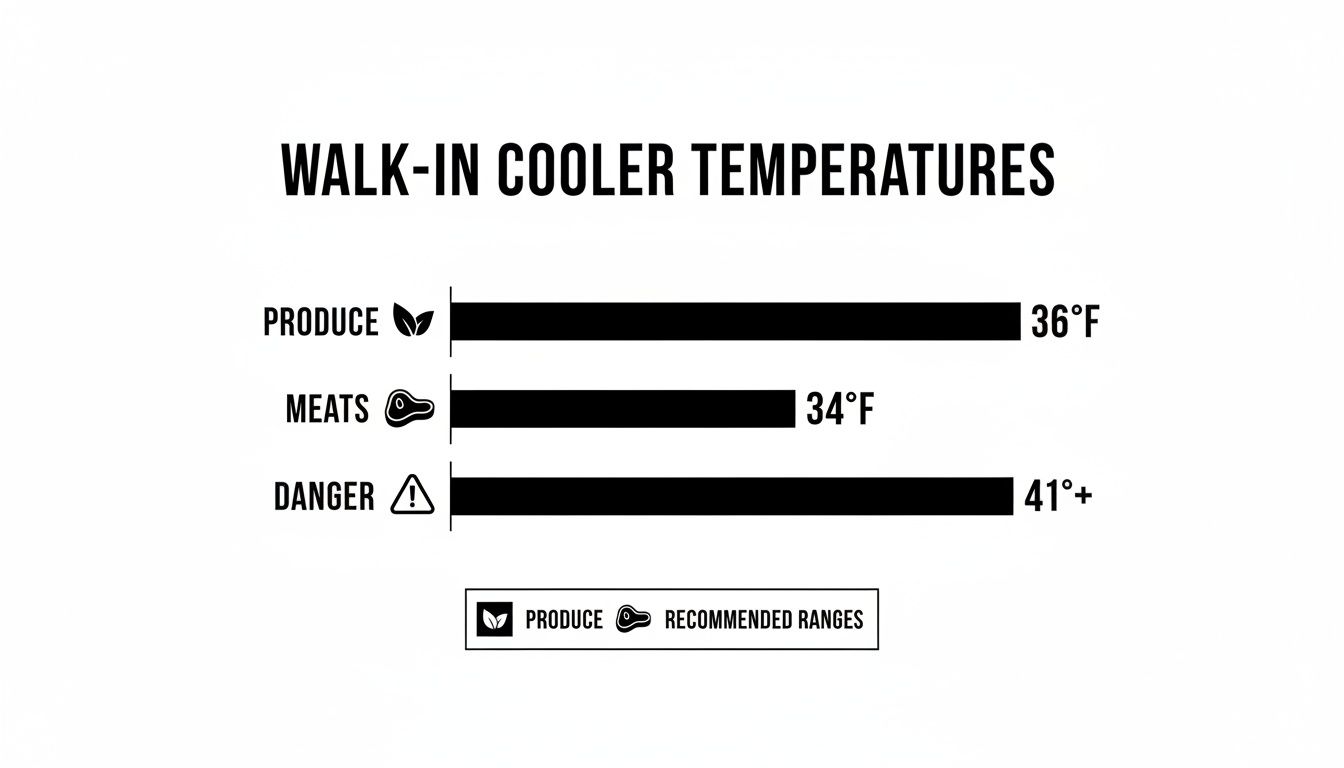
As you can see, pancakes do well around 350°F, but burgers need that extra heat at 400°F. If you don't cook food to a safe internal temperature, everything you serve is at risk.
The bottom line is simple: precise and stable heat is the bedrock of a professional kitchen. If your temperature is off or constantly fluctuating, it directly threatens food safety, messes with your operational flow, and can damage your reputation. It's one of those foundational things you just have to get right.
Recommended Commercial Griddle Temperatures by Food Type
To make it even easier, here’s a quick-reference chart breaking down the ideal temperature ranges for the most common items you'll be cooking. Use this as your go-to guide for setting up your griddle station.
| Food Category | Ideal Temperature Range (°F) | Ideal Temperature Range (°C) | Key Considerations |
|---|---|---|---|
| Pancakes & Eggs | 325°F - 350°F | 163°C - 177°C | Lower heat prevents burning and ensures even cooking. |
| Bacon & Sausage | 325°F - 360°F | 163°C - 182°C | Allows fat to render slowly without scorching the meat. |
| Vegetables | 350°F - 375°F | 177°C - 190°C | Hot enough for a good char without turning vegetables to mush. |
| Burgers & Steaks | 375°F - 450°F | 190°C - 232°C | High heat is crucial for creating the Maillard reaction (a good sear). |
| Toasted Buns | 300°F - 350°F | 149°C - 177°C | Gentle heat with butter creates a golden, non-greasy finish. |
Remember, these are precise targets. A few degrees might not seem like much, but it can be the difference between a perfect dish and a trip to the dumpster.
Why Temperature Stability Is Your Greatest Asset
Think of a commercial griddle with a fluctuating temperature like a car that keeps stalling in traffic. You wouldn't trust it to get you to your destination, and you can't trust an unstable griddle to cook perfect food. A few degrees might not seem like a big deal, but those swings are a direct threat to your food quality, your ticket times, and your customers.
The one concept every kitchen pro lives by is the Temperature Danger Zone. Health departments are crystal clear on this: between 40°F and 140°F, bacteria have a party. Nasty stuff like Salmonella, E. coli, and Listeria can double their numbers in just 20 minutes. If your griddle isn't hot enough to cook food to a safe internal temperature, it’s not just hurting food quality—it's actively creating risk.
The Hidden Costs of Unstable Temperatures
The most obvious hit from poor temperature control is waste. That beautiful case of prime beef or fresh ground chuck you just paid for can turn into burnt or undercooked product, punching a hole directly in your bottom line. But that's just the start of the financial pain.
When temperatures are all over the place, your griddle's heating elements or burners are forced to work overtime, kicking on and off constantly just to keep up. This struggle can send your energy bills through the roof and puts serious wear and tear on expensive parts. A minor temperature swing today can easily become a catastrophic equipment failure tomorrow, bringing your entire line to a screeching halt.
A stable commercial griddle temperature isn't just a detail for the chef; it's your business's most essential insurance policy. It protects your food cost, your brand, and most importantly, your customers.
Protecting Your Reputation and Customers
The financial loss from wasted food is bad, but the damage to your reputation can be permanent. All it takes is one foodborne illness outbreak traced back to your kitchen to cause a crisis you might never recover from.
Suddenly, you're not just dealing with lost product. You're facing:
- Health Code Violations: Nothing shuts down a business faster than a failed inspection. Fines, mandatory closures, and a public report card with a failing grade can scare customers away for good.
- Negative Reviews: In the age of social media, bad news travels at the speed of a click. A customer who gets sick will tell everyone they know online, leaving a digital stain on your name that's nearly impossible to remove.
- Loss of Trust: Once you lose a customer's trust, winning it back is a monumental task. The long-term damage from lost loyalty often dwarfs the initial cost of the food that went bad.
At the end of the day, keeping your commercial griddle at a precise, unwavering temperature is fundamental to running a professional kitchen. It’s not optional. It’s a non-negotiable practice that protects your finances, ensures you stay compliant, and shows a deep respect for the health of every single person you serve.
Implementing a Proactive Monitoring System
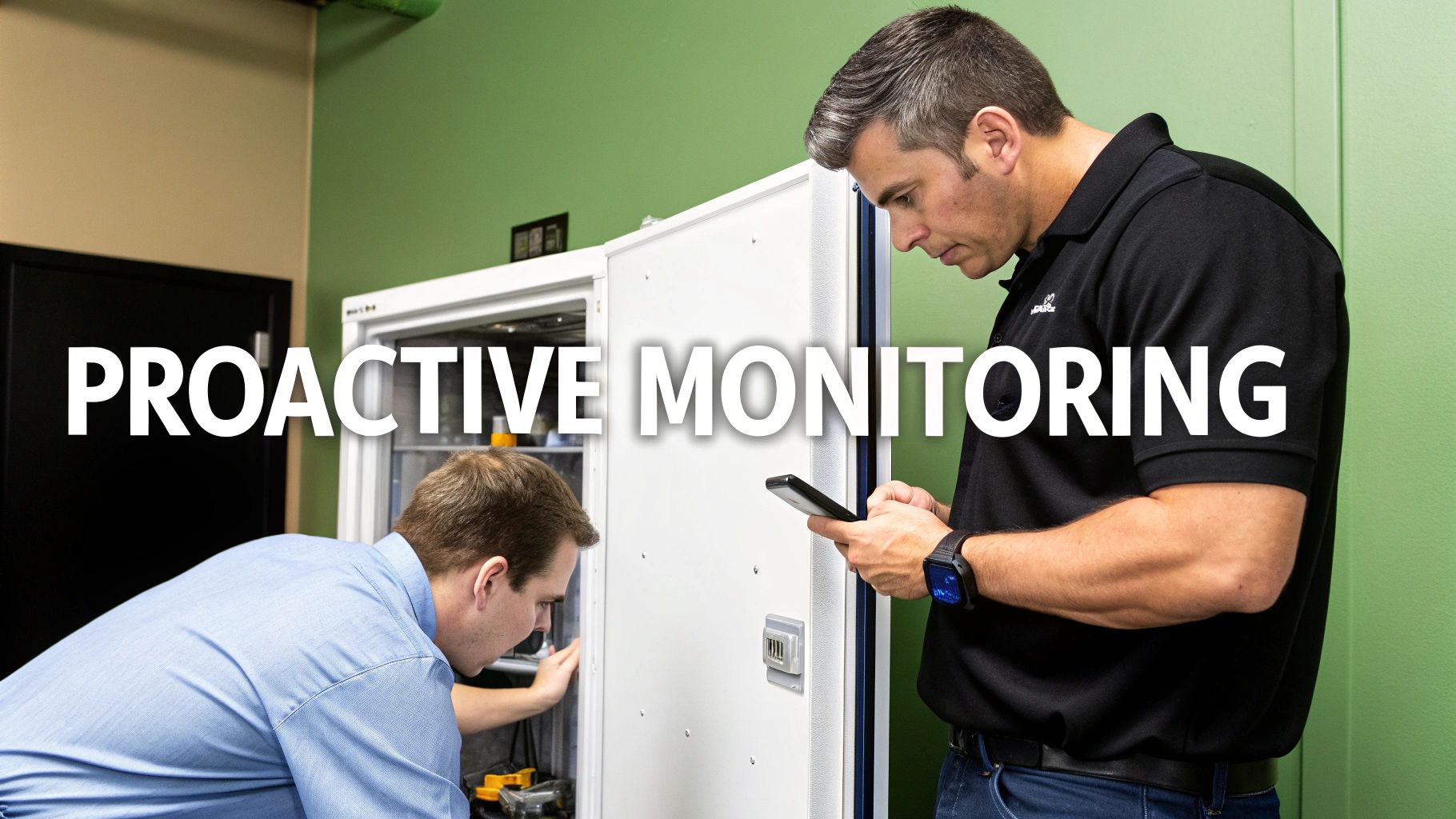
Waiting for food to look "done" before checking its temperature is like waiting to see smoke before you check for a fire. By the time you realize it's undercooked, the damage is already happening. A truly effective strategy for maintaining the correct commercial griddle temperature is proactive, not reactive. It all starts with ditching the idea that the dial setting is enough.
That single temperature dial on your unit? It gives you one data point, but the surface temperature can vary wildly. The spot directly over the burner is hotter than the edges. To get a real picture of your griddle's performance, you need an infrared thermometer to check temperatures across the entire surface. Think of it as getting a second, third, and fourth opinion on the consistency of your cooking.
Calibrating Your Tools for Accuracy
A probe thermometer telling you the wrong internal temperature is worse than no thermometer at all. Before you trust any device, it has to be calibrated. The good news is you don’t need an expensive service call for this. The ice-bath method is a ridiculously simple and reliable technique your team can master in minutes.
- Fill a glass to the very top with crushed ice.
- Add just enough cold water to fill in the gaps.
- Stick the thermometer stem right into the center of the icy slush for at least 30 seconds.
- That thermometer better read 32°F (0°C) on the dot. If it doesn’t, follow the manufacturer’s instructions to adjust it.
This simple check empowers your staff to verify accuracy on a regular basis, ensuring your temperature logs are always built on data you can actually trust. It's a small habit that delivers huge peace of mind.
Relying on a single, uncalibrated thermometer is one of the most common—and costly—mistakes in kitchen management. Proactive monitoring means trusting your data, and that trust begins with proven accuracy.
Upgrading to Modern Cooking Solutions
While basic thermostat-controlled griddles are a decent start, modern digital and chrome models are a massive upgrade. These setups use advanced sensors and controls to maintain precise temperatures across the cooking surface. Getting proactive means getting accurate heat, which makes it crucial to understand the different temperature sensor types that power this equipment.
For any busy kitchen, these advanced solutions are a complete game-changer. You can set precise temperatures that hold steady even during the busiest rush. It doesn't matter if you're searing steaks or frying eggs. This lets you prevent burnt or undercooked food before it costs you thousands of dollars in wasted product and lost customers.
It’s no surprise the global market for commercial cooking equipment was valued at around USD 10.2 billion and is projected to keep growing. These units are the heart of the kitchen, and technology that improves them is becoming just as essential.
Daily Habits That Protect Your Food Quality
Even the most sophisticated commercial griddle is only as good as the daily habits your team follows. Consistent practices are what really maintain the ideal commercial griddle temperature and protect the quality of every dish you serve. It's just like owning a high-performance car; the best gear in the world still needs a sharp driver to get the job done right.
Think about it—even the most powerful griddle can be brought to its knees by small, repeated mistakes during a chaotic dinner rush. Things that seem minor at the moment add up, forcing your equipment to work overtime, jacking up energy bills, and creating temperature swings that put your food in the danger zone. A few core habits can change everything.
Smart Practices for Temperature Stability
Keeping that cooking surface stable starts with how your team actually uses the griddle day in and day out. One of the biggest offenders? Overloading. It's tempting to cover every inch of the griddle with cold food during peak hours, but that massively drops the surface temperature, preventing a proper sear.
Another critical habit is proper cleaning. Shoving a pile of ice or cold water on a screaming hot griddle to "shock" it clean can cause thermal shock, which can warp the griddle plate over time. That leads to uneven heating and inconsistent cooking.
Your team's daily actions are the first line of defense in temperature management. A well-maintained and properly used griddle ensures consistent results and protects your entire menu.
Maintenance and Record-Keeping
You can't have stable temps without proper maintenance. It's that simple. Clogged burner ports and grease buildup are killers for heat distribution, creating nasty hot and cold spots. Stick to these basic rules:
- Clean It Daily: Scrape the griddle clean after every use and give it a thorough cleaning at the end of each day with a griddle brick and food-safe polish.
- Check the Burners: Make sure gas burner ports are free of debris for an even flame.
- Season a Steel Top: A properly seasoned steel griddle plate has a non-stick surface and transfers heat more efficiently.
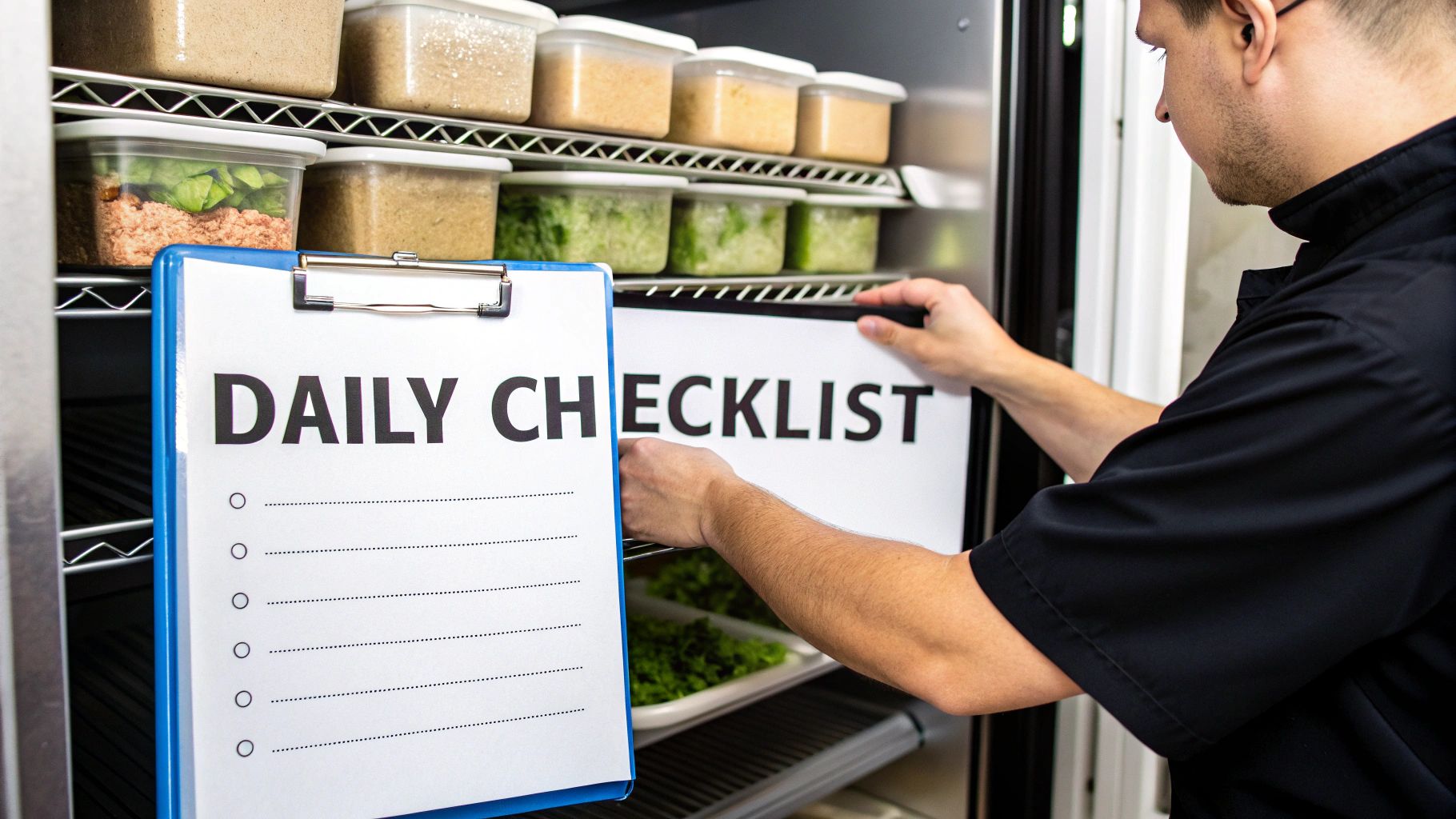
Finally, daily temperature logging is completely non-negotiable. A simple log sheet at the station gives you a running history of your griddle's performance. That little piece of paper is your best friend during a health inspection and your earliest warning sign that equipment failure is on the horizon. Just like managing a smaller reach-in cooler, consistent monitoring is the bedrock of a successful operation.
Troubleshooting Common Temperature Problems
Even when you're doing everything right, equipment can fail. That moment you notice your griddle isn't getting hot enough is always a gut-wrenching one—it’s a race against the clock to find the problem before your ticket times skyrocket. Acting fast can be the difference between a minor tweak and a major service call.
First thing's first: don't panic. Before you rush to call a repair tech, take a deep breath and run through a quick diagnostic. More often than not, the issue isn't a catastrophic system failure but something you can spot—and maybe even fix—yourself.
Identifying the Root Cause
That low temperature is just a symptom. To fix it, you have to play detective and find the actual disease, which could be anything from a faulty pilot light to a worn-out thermostat.
Start by checking these three common culprits:
- Clogged Burner Orifices: On a gas griddle, the small orifices that release gas can get clogged with grease and debris. This restricts gas flow, leading to a weak flame and low heat.
- Faulty Thermostat or Thermocouple: The thermostat controls the temperature, and the thermocouple is a safety device that shuts off the gas if the pilot light goes out. If either of these fails, your griddle won't heat correctly or may not heat at all.
- Electrical Issues (for Electric Griddles): A bad heating element or a faulty electrical connection can cause an electric griddle to lose power or heat unevenly. Check for tripped breakers first.
When to DIY and When to Call a Pro
Some of these fixes are well within your reach. For example, after shutting the power and gas off, you can safely clean burner orifices with a small wire or brush. But when it comes to electrical components or gas lines, it's time to step back. Messing with those systems is not only dangerous but can also void your warranty in a heartbeat.
Crucial Takeaway: Knowing what you can't do is just as important as knowing what you can. A botched DIY thermostat repair will always cost more than calling a pro to fix a clogged burner in the first place.
The good news is that with so many restaurants in North America, there's a healthy market of qualified service technicians ready to help. You have competitive and reliable options.
Spotting issues early is half the battle. Knowing the 5 warning signs of clogged vents can clue you into gas flow problems, and understanding how a griddle's needs differ from a freezer's is essential. If you're dealing with sub-zero temps, you might want to check out our deep dive on walk-in freezer specifics.
Frequently Asked Questions About Commercial Griddle Temperature
Even with the best plan, real-world questions always pop up in the daily grind of a busy kitchen. Keeping your commercial griddle temperature dialed in is about more than just setting the thermostat—it's about building good habits and knowing how to react on the fly. Here are some straight answers to the questions we hear most often from kitchen operators.
How Often Should I Calibrate My Cooking Thermometers?
You should be calibrating your probe thermometers at least once a month, no exceptions. If you're running a high-volume spot or you've noticed some inconsistencies in cooking, bumping that up to every week or two is an even better move.
And anytime a thermometer gets dropped or you swap out the batteries, it needs to be recalibrated. The classic ice-bath method is your best friend here. If it reads a perfect 32°F (0°C) in a cup of ice water, you know it's accurate and ready for duty. It's a quick check that saves a ton of headaches.
What Is the Best Way to Manage Different Temperature Zones on a Griddle?
Think of your griddle like another station on the line—organization is everything. Multi-zone griddles are designed for this. You can set one zone to high heat for searing burgers, a middle zone for cooking bacon, and a low-heat zone for holding or toasting buns.
- Hot Zone: Set to 400°F-450°F. This is for your initial sear on steaks and burgers.
- Medium Zone: Set to 350°F. Perfect for cooking through items like chicken, sausage, and vegetables.
- Cool/Holding Zone: Set to 300°F or lower. Use this area for toasting buns, melting cheese, or keeping finished items warm.
Just as important, give your food some breathing room! Don't overcrowd the surface. Overloading the griddle drops the temperature and causes food to steam instead of sear. Airflow around the product is the secret ingredient to a great crust.
A well-managed griddle works just like a well-organized cook station. When everything has a place and there's room to move, the whole system just works better—whether you're flipping burgers or frying eggs.
Is It Normal for My Commercial Griddle Temperature to Fluctuate?
A little bit, yes. Minor swings of a few degrees are totally normal, especially when you place a lot of cold food on the surface during a dinner rush. Think of it like a pot of boiling water—the temperature dips for a second when you drop in cold pasta. Your griddle does the same thing as it works to transfer heat to the food.
But if you're seeing big, consistent swings of 25-50 degrees or more, that's a red flag. If the griddle is struggling to recover its temperature after you add food, something is wrong. Usually, it's a simple fix like a clogged burner or a faulty thermostat. It could also be a sign of a failing heating element. Check the easy stuff first, but if the problem sticks around, it's time to call in a pro.
Should I Adjust the Temperature for Different Seasons or Loads?
Absolutely. Small, smart adjustments are part of managing your kitchen well. In the dead of summer, a hot kitchen can affect how hard your equipment works, while a cold kitchen in winter might mean your griddle takes a bit longer to preheat.
The same goes for a big rush. When you're constantly loading the griddle with cold product, the system has to work hard to maintain temp. Keep an eye on it. The trick is to avoid making huge, reactive changes. Instead, monitor things constantly and make small, proactive tweaks based on the season and your kitchen's rhythm. This keeps your food consistent without putting unnecessary strain on your equipment.
At Griddles.com, we know that temperature control is the heart of a great kitchen, from the perfect sear on a flat top to the critical chill in your walk-in. If you need cooking equipment that can handle the pressure, check out our full lineup of commercial griddles and refrigeration solutions at https://griddles.com.