
Choosing the Best Commercial Griddle for Your Kitchen
A commercial griddle isn't just a bigger version of the pan on your stovetop. It’s a heavy-duty, standalone cooking unit built from the ground up for the chaos of a professional kitchen. It’s designed for chefs and line cooks to produce consistent results, fast, all while holding rock-solid temperatures through the busiest dinner rush.
The Role of the Commercial Griddle in a Modern Kitchen
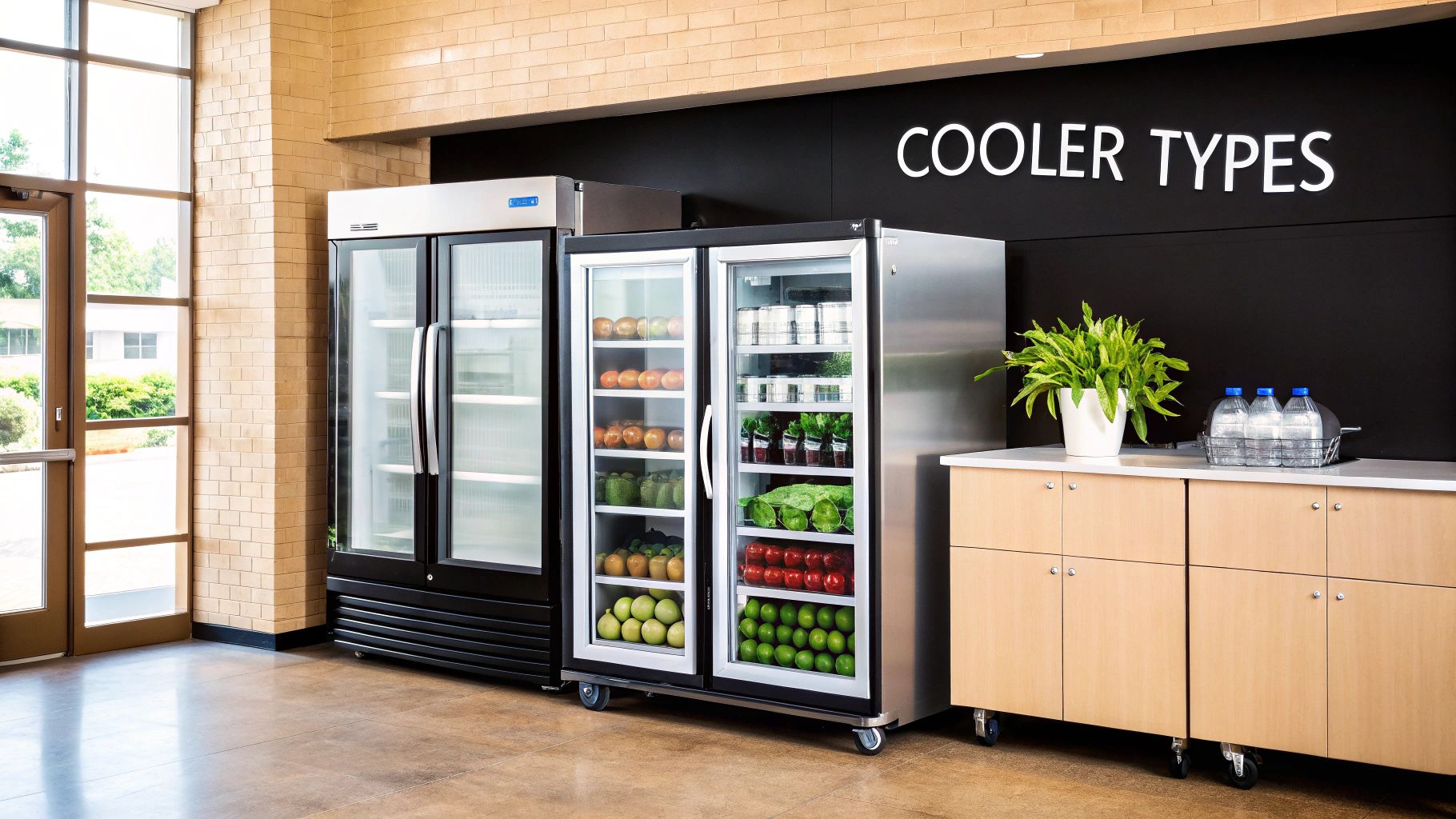
Stop thinking of it as just a hot plate. A commercial griddle is the heart of your kitchen's hot line—a versatile surface for everything from pancakes to smash burgers, perfectly cooked and ready for service. The right one makes everything smoother, especially when it’s supplied by a well-organized reach-in cooler.
Choosing the right griddle can feel overwhelming, but we’re here to break it down. A smart choice directly translates to faster service, better food quality, and a more efficient kitchen, whether you're running a restaurant, a food truck, or a ghost kitchen.
The Heartbeat of Kitchen Workflow
Every great kitchen runs on rhythm. The flow from cold storage to the hot line has to be seamless, and the commercial griddle is the key link in that chain. It gives chefs a powerful tool for rapid cooking, cutting down on wasted steps and saving critical seconds when every ticket counts.
This direct cooking power is what prevents bottlenecks at the pass. It keeps your cook station firing on all cylinders. Unlike an oven, which is used for baking or roasting, a commercial griddle is built for the action of a la minute service, not just long-term cooking processes.
More Than Just a Hot Surface
A commercial griddle does a lot more than just cook food. It's a fundamental tool for executing your menu and acing your service rush. It plays a few critical roles you might not have considered:
- Menu Versatility: Smart zoning on a large griddle allows you to cook different items at different temperatures simultaneously, which is huge for expanding your menu offerings.
- Cooking Consistency: These units are engineered to maintain even, reliable heat across the plate even when you're loading on cold food. This isn't just a feature; it's a requirement for quality.
- Operational Speed: Placing a griddle at the center of your hot line creates a natural, ergonomic flow that makes your entire team more productive.
It’s no surprise that the demand for these units is skyrocketing. The global market for commercial cooking equipment was valued at USD 10.9 billion in 2023 and is expected to climb significantly by 2032. That growth proves just how essential this equipment has become.
Comparing Commercial Griddle Types and Configurations
Picking the right commercial griddle isn't just about finding a hot surface; it's about matching a piece of equipment to the unique flow and demands of your kitchen. The differences between models can be the difference between a smooth service and a chaotic one, impacting everything from how you cook to how fast you get plates out.
At the most basic level, you're choosing between gas and electric. A gas commercial griddle is the workhorse of many kitchens. Built for power and responsiveness, it offers rapid heat-up times and precise control with manual knobs. These are the units you rely on for high-volume cooking where speed is everything.
On the flip side, an electric commercial griddle is all about precision and consistency. They're perfect for delicate items or kitchens where gas lines aren't available. They also have a place in open kitchens where precise temperature control is needed to prevent burning or undercooking.
As you can see, a commercial griddle isn't just a passive cooking unit. It's an active hub that links your kitchen's operations, quality standards, and overall efficiency.
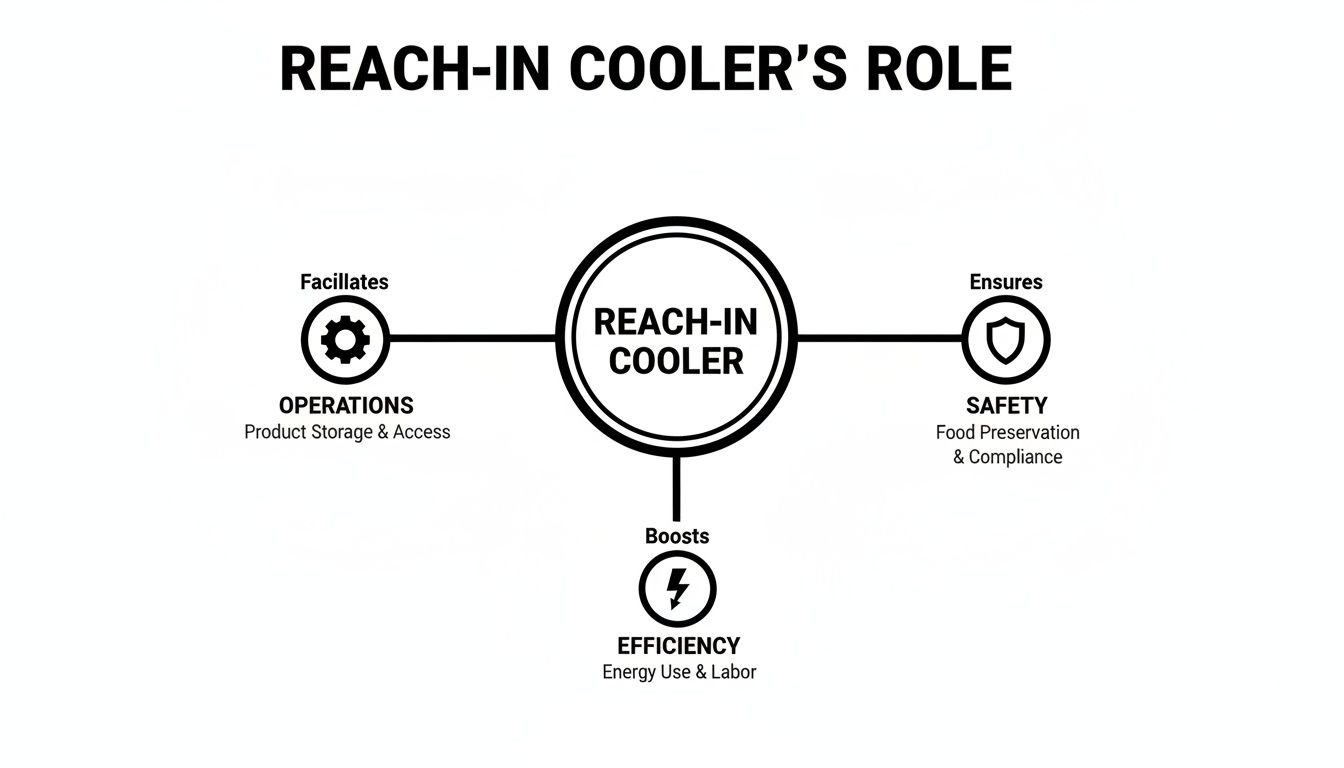
This really brings home the point that your griddle's configuration has a direct impact on your kitchen's speed, food quality, and energy use.
Control Type: The Critical Decision
Beyond the power source, how you control the temperature—the heart of your griddle—is one of the most critical choices you'll make. The two main setups are thermostatic and manual, and each one is built for a different kind of cooking environment.
Thermostatic vs Manual Control Showdown
Deciding between a thermostatic and a manual griddle really comes down to the specifics of your menu and workflow. A thermostatic unit is often the go-to for kitchens that need precise temperature holding, while a manual control shines in high-speed environments where cooks adjust heat by feel.
Here's a head-to-head comparison to help you weigh the pros and cons of each configuration.
| Feature | Thermostatic Controls | Manual Controls |
|---|---|---|
| Heat Management | Cycles burners on/off to hold a precise temperature. | Provides constant heat at low, medium, or high settings. |
| Best For | Delicate items like eggs, pancakes, or fish that require consistent heat. | High-volume items like burgers and steaks where cooks work by instinct. |
| Ease of Use | "Set it and forget it" operation, great for less experienced staff. | Requires more skill and attention from experienced line cooks. |
| Energy Efficiency | Generally more energy-efficient as burners aren't always on full blast. | Can use more energy as burners are continuously on. |
| Recovery Time | Can have slightly slower recovery when loaded with cold food. | Excellent recovery time, heat bounces back quickly. |
| Zoning | Allows for precise temperature zones across the griddle surface. | Heat is controlled in broader zones (e.g., left, center, right). |
Ultimately, both are solid choices. A thermostatic griddle is a lifesaver in a breakfast spot or a kitchen cooking delicate proteins, since it’s less likely to scorch food. And because it maintains a set temperature, your food quality will be more consistent.
A manual griddle, however, is a classic, powerful pick. It gives experienced cooks the direct control they love, allowing them to make micro-adjustments on the fly. They also tend to have faster recovery times in brutally busy kitchens, keeping up with the constant flow of cold food hitting the plate. For specialized uses, such as teppanyaki, options like built-in kegerators introduce their own unique configuration needs that are worth looking into for a modern setup.
More Than Just a Flat Top: Specialized Configurations
Sometimes, a standard griddle just doesn't cut it. That's where specialized griddles come in, designed to solve specific menu problems and make your line run like a well-oiled machine.
- Clamshell Griddles: These have a heated top plate that lowers onto the food. Think of them as a two-sided cooking machine. They cook food from both sides at once, slashing cook times for items like burgers and paninis.
- Countertop Griddles: These compact units sit right on your prep counters or equipment stands, adding cooking power exactly where you need it. They're perfect for adding a griddle station to a small kitchen or food truck.
- Teppanyaki Griddles: These are the ultimate front-of-house cooking tool. They're large, polished griddles designed so you can cook directly in front of customers, creating a "dinner-and-a-show" experience that saves space and steps.
Key Features of a Commercial Grade Griddle
So, what really separates a commercial griddle from a flimsy countertop model? It all comes down to purposeful engineering. These things are built from the ground up to handle the relentless chaos of a professional kitchen. They’re packed with non-negotiable features that guarantee durability, performance, and efficiency when the orders are flooding in.
Getting a handle on these core components is critical before you pull the trigger on a purchase. They're the difference between a trusty workhorse that keeps your kitchen humming for years and a piece of junk that dies on you during a Saturday night rush.
The demand for this tech isn't slowing down. The global market for commercial refrigeration is expected to jump from USD 51.26 billion in 2025 to a whopping USD 67.31 billion by 2030. That growth is all about the industry's need for reliable cooking equipment, a topic covered in this detailed commercial refrigeration market analysis.
Built Tough with Stainless Steel Construction
The first thing you’ll notice about a real commercial griddle is the metal. Stainless steel construction isn't just for show—it's essential for sanitation and survival in a kitchen. The material is non-porous, which means it fights off bacteria, smells, and corrosion from spills and the harsh chemicals you use to clean up.
Just picture the grease splattering from searing burgers or the inevitable sauce spill. With stainless steel, you can wipe it clean in a flash, helping you stay sanitary and sail through health inspections. It’s also tough as nails, built to take the daily bumps and bruises from carts, pans, and staff that would leave a residential unit looking like a crumpled can.
Stability and Safety with Heavy-Duty Legs
A commercial kitchen is never static; it needs to be cleaned constantly. That's where heavy-duty, adjustable legs come in. This simple feature is a game-changer, giving you the stability to keep the unit level and the clearance to clean underneath. This little trick prevents disgusting grime buildup and keeps pests from finding a place to hide.
Most quality units come with adjustable feet, so you get the best of both worlds. You can level it perfectly, then ensure it stays put during service. No shifting, no rocking, even when cooks are leaning on it to scrub it down.
Precision Temperature and Heat Distribution
Cooking food at a consistent, safe temperature is a griddle’s number one job. Your pan at home can have wild hot spots, but a commercial griddle is all about precision.
A must-have feature is the thermostatic control with clear markings. It lets your line cooks set the temp with a quick turn, all without guessing and burning food. This ensures everything cooks at the right temperature.
This accuracy is backed up by powerful heating elements or burners. They push heat evenly across the entire griddle plate, killing off the cold spots that cause food to cook unevenly. It guarantees that a burger on the corner is cooking just as fast as one in the center.
Smart Grease Management for Uninterrupted Performance
Grease buildup is the arch-nemesis of any griddle. It's a fire hazard, makes food taste bad, and can eventually cause a total mess. To combat this, commercial griddles have integrated grease management systems.
These smart systems are designed with a trough or channel to funnel grease away from the cooking surface and into a removable grease tray. It all happens automatically, keeping your griddle running cleanly and safely day after day. It’s a true set-it-and-forget-it feature that prevents flare-ups and lets you focus on the food.
How to Select the Right Commercial Griddle Size and Capacity
Picking the right size for your commercial griddle isn't just about finding a spot for it on the line. It’s a critical decision that has to line up with your kitchen's real-world pace and output. Go too small, and you're looking at an overcrowded cooktop and slow ticket times. Go too big, and you're just throwing money away on wasted space and energy.
The goal is to hit that sweet spot—a unit that handles your current menu without breaking a sweat, but still leaves you a little room to grow. Get this right, and you'll improve your kitchen's workflow, protect your food quality, and keep your utility bills in check.
Calculating Your True Capacity Needs
First things first: stop thinking about the number of burners and start thinking in square inches of cooking area. The griddle plate size is the only number that truly tells you how much you can cook. The width gives you a rough idea, but the usable space is what really counts.
Here's a quick breakdown of what those numbers mean in a real kitchen:
- 24-inch Models (approx. 576 sq. in.): Perfect for small cafes, coffee shops, or food trucks with a tight menu and limited hot line needs. They handle daily essentials right at arm's reach.
- 36-48 inch Models (approx. 864-1152 sq. in.): This is the workhorse for most small-to-mid-sized restaurants. It gives you enough flexibility to create multiple cooking zones and manage a more complex menu.
- 60-72 inch Models (approx. 1440-1728 sq. in.): Built for the big leagues. These are for high-volume restaurants, bustling ghost kitchens, and anyone needing massive cooking space to handle extensive menus and non-stop service.
To figure out what you need, take a hard look at your menu. How much griddle space do you actually need for burgers, pancakes, cheesesteaks, and veggies all together? Always plan for your busiest service, not your average Tuesday, and then add a buffer of at least 20% extra space. This prevents the overcrowding that chokes heat recovery and gives you room for big orders.
Measuring for More Than Just the Box
Once you've got your capacity dialed in, it's time to break out the tape measure. But you're not just measuring the footprint for the griddle itself—you have to account for the space it needs to breathe. A commercial griddle is a heat-producing engine, and it can't work if it's suffocating.
I can't tell you how many times I've seen a brand new griddle jammed into a line with no room to spare. The unit needs airflow to operate safely. Choke it off, and you're looking at overheating, a busted unit, and a serious fire hazard.
Follow these simple rules for placement:
- Sides: Leave at least 6 inches of clearance from other equipment.
- Back: You need 6 inches of space between the unit and any combustible wall.
- Top: This is the big one. Make sure you have a minimum of 24-36 inches of open space above the griddle for your ventilation hood to work properly.
And before you hit "buy," measure every single doorway, hallway, and tight corner the griddle has to pass through to get into your kitchen. You can usually find detailed spec sheets with exact dimensions on the manufacturer's product page.
Matching Your Griddle to Your Kitchen's Power
The final piece of this puzzle is your utility setup. Commercial griddles are power-hungry machines, and they absolutely need their own dedicated gas lines or electrical circuits to run safely. Just plugging a new griddle into the nearest outlet is asking for trouble.
Check the unit's spec sheet for its needs—specifically voltage and amperage for electric, or BTU rating and gas connection size for gas. Then, have a professional confirm your panel or gas lines can handle that extra load without constantly tripping breakers or starving other appliances, especially when the rest of the line is fired up during a dinner rush. If you're weighing different options, our guide on stainless steel commercial refrigerators dives deeper into their features and power requirements.
Installation and Maintenance Best Practices
How well your commercial griddle performs—and how long it lasts—doesn't just come down to its features. What you do after it arrives at your door is just as important. Think of proper installation and regular maintenance as the two pillars holding up your investment, making sure it pulls its weight day in and day out.
The whole process starts before you even think about plugging it in. It's like laying a foundation for a house; if it's not perfectly level, everything built on top of it will be off. An uneven griddle causes grease to pool in one spot, creating hot spots and making cleaning a nightmare.
Proper Placement and Initial Setup
Your first job is to scout out the perfect spot. A completely level surface is non-negotiable. Grab a carpenter's level to check the griddle plate, then tweak the adjustable legs until that bubble is dead center. This one simple step saves you from uneven cooking and ensures grease drains properly into the trap.
Just as crucial is giving the unit room to breathe. A griddle works by combusting gas or heating electric elements, pushing out a massive amount of heat. If you shove it into a tight corner or jam it against other equipment, it's essentially suffocating. This is a fast track to overheating, which happens to be one of the top reasons griddles fail.
Stick to these simple rules for good airflow:
- Sides and Back: Always leave at least 6 inches of breathing room between the griddle and any walls or equipment.
- Top: You need a minimum of 24-36 inches of clear space above the griddle for your hood system. This is an absolute must for fire safety.
Also, be smart about where you place it. Setting up your griddle right next to a reach-in cooler or freezer is asking for sky-high energy bills. The constant wave of heat forces the cooler's compressor to run nearly non-stop, which will drastically cut its lifespan short.
Creating a Proactive Maintenance Schedule
Once your griddle is in place and running, the secret to keeping it going for years is a simple but consistent maintenance routine. Skipping basic upkeep is the quickest way to find yourself on the phone for an expensive emergency repair. A little proactive care keeps your griddle running efficiently and, most importantly, keeps your food tasting great.
Think of daily cleaning like changing the oil in your car. A griddle caked in carbon and old grease can't transfer heat efficiently, causing inconsistent results and potentially making food taste burnt. This single task is the most important thing you can do for your griddle.
Here’s a simple checklist to get you started:
- End-of-Day Cleaning: Scrape the surface clean while it's still warm. Use a griddle brick and oil to remove any buildup, then wipe it down. Empty and clean the grease trap daily.
- Weekly Deep Clean: Check all gas connections or electrical cords for wear. Give the entire exterior a thorough wipe-down, including knobs and backsplash.
- Regular Seasoning (for steel plates): If you have a steel griddle plate, you'll need to re-season it regularly to maintain its non-stick surface. This involves applying a thin layer of oil and heating it until it polymerizes.
- Check Temperature Accuracy: Use an infrared thermometer every week to check the surface temperature against what the thermostat says. You want to see that it’s holding a steady, accurate temperature.
By making these practices a habit, you turn your commercial griddle from just another appliance into a reliable kitchen workhorse you can count on for years.
Optimizing Your Kitchen Layout With Your Cooler and Griddle
Think of a great kitchen as a finely tuned machine. Every part has its place, and your reach-in cooler is a major gear in that system. How it fits with your other core equipment, especially your commercial griddle, can make or break your kitchen's flow. This isn't just about looking organized; it’s the bedrock of a productive, less chaotic workspace.
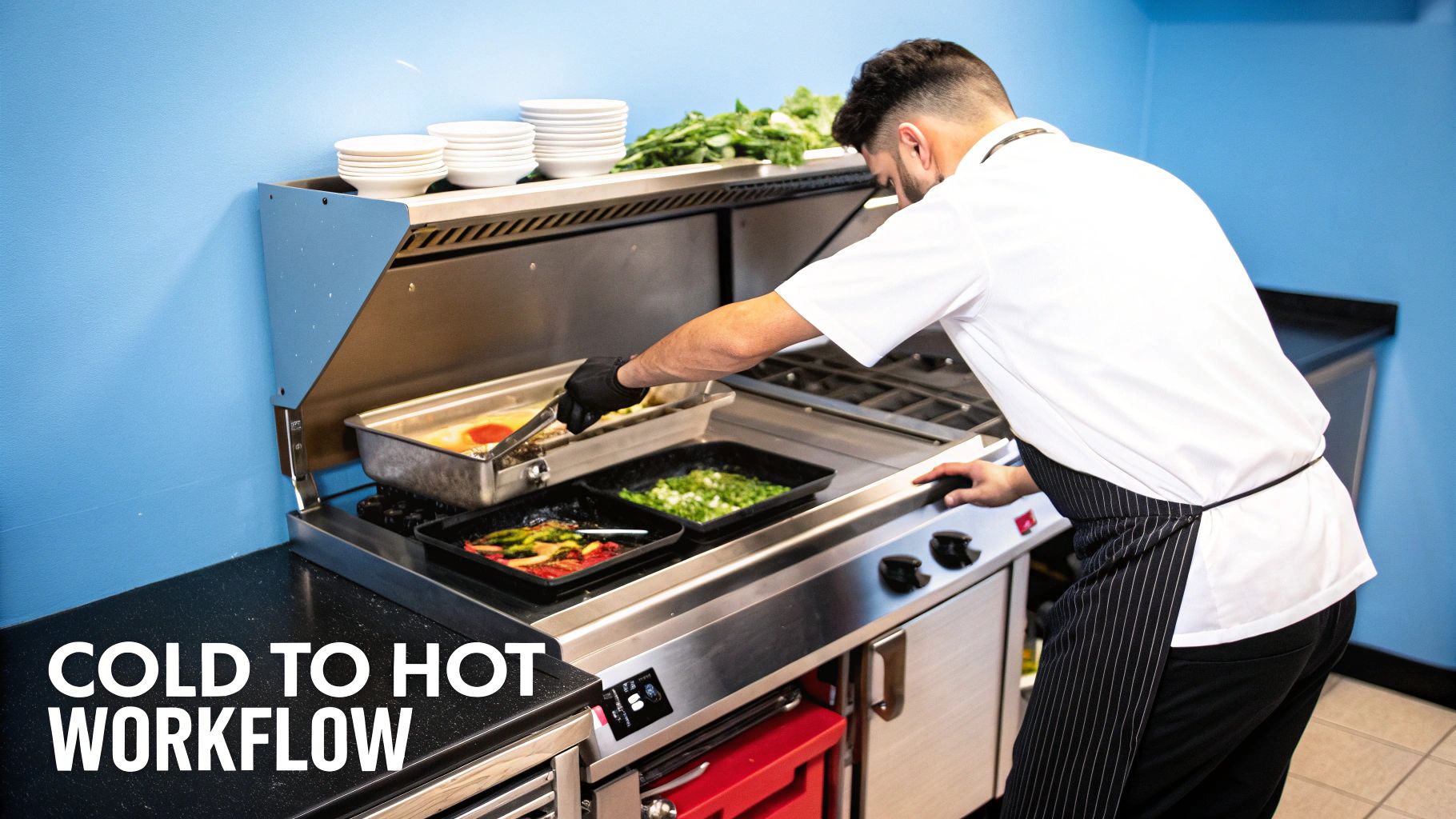
The magic word here is "cold-to-hot" workflow. It's a simple but powerful idea: keep your cold ingredients as close as physically possible to the station where they get cooked. During a dinner rush, every extra step a cook takes is a second wasted, and those seconds snowball into minutes.
Positioning your cooler right next to the griddle or an adjacent prep table creates a tight, efficient work cell. Your line cook can just turn, grab a tray of prepped burger patties or sliced onions, and slap them right on the griddle. No walking, no wasted motion. This is how you boost speed and keep the food consistent.
Creating an Efficient Work Triangle
A classic kitchen design concept is the "work triangle." The three points are your storage (the reach-in cooler), your prep area, and your cooking station (the griddle). The smaller and more intuitive you can make this triangle, the faster your team will be.
Getting this layout right pays off in several huge ways:
- Increased Speed: Fewer steps mean faster ticket times. Simple as that.
- Reduced Staff Fatigue: A smart, ergonomic layout means less physical strain on your crew, keeping them sharp and focused.
- Improved Safety: Less weaving through busy kitchen lanes drastically cuts the risk of collisions, spills, and accidents.
This strategic placement is a key piece of the puzzle. To see how it all fits together, check out our complete guide to restaurant kitchen layout design.
The goal is for a cook to pivot, not walk, to get what they need. This tiny bit of efficiency is what separates a good kitchen from a truly great one, especially when you're crammed into a food truck or ghost kitchen.
By really thinking through the relationship between your cooler and griddle, you’re not just placing two appliances—you're creating a single, high-output production line. To make sure your hard work isn't undone by fluctuating temperatures, it's also worth looking into solutions like air curtains for temperature control. Placing one near your cooler can be a game-changer for keeping things consistently cold, especially in high-traffic kitchens.
Frequently Asked Questions About Commercial Griddles
No matter how well you plan your kitchen, questions are bound to come up once your equipment is running day-in and day-out. We've gathered some of the most common questions we hear from restaurant owners and kitchen managers about their commercial griddles. Here are some straightforward, real-world answers to help you stay ahead of any issues.
What Is The Ideal Temperature For My Commercial Griddle?
The golden rule for griddle cooking is to match the temperature to the food. There's no single "ideal" temperature.
But if you want to get specific, here's a general guide. For breakfast items like pancakes and eggs, you want a lower temp around 300-325°F. For searing burgers and getting a good crust, you'll need to crank it up to 350-375°F. Just be sure you have a good infrared thermometer to verify the surface temp—don't just trust the knob, as they can sometimes be off.
Why Is My Griddle Not Getting Hot Enough?
It’s a classic kitchen nightmare: you turn on the griddle and it feels lukewarm. Before you panic and call a repair tech, run through a quick mental checklist, as it's often one of a few common culprits.
- Incorrect Gas Supply: For gas griddles, make sure the gas line is fully open and that you have the correct gas pressure. An undersized line can starve the unit for fuel.
- Faulty Thermostat or Element: The thermostat might be failing to signal for heat, or an electric heating element could be burned out.
- Improper Cleaning: A thick layer of carbonized grease can act as an insulator, preventing heat from properly transferring to the griddle plate and your food.
How Often Should I Clean The Griddle?
This is easily the most critical piece of maintenance you can do for your griddle. For any commercial kitchen, you should be scraping and cleaning the griddle surface after every single service. The grease trap should be emptied and cleaned daily.
A deeper clean with a griddle brick or screen should be done at the end of every day to prevent carbon buildup. It's a small task that pays huge dividends in food quality and equipment life.
A clean griddle plate is the lifeblood of your cooking line. Ignoring it can cause inconsistent cooking, give food a burnt flavor, and is one of the top reasons griddles fail years before they should.
Can I Place My Griddle Directly Next To My Cooler?
It might seem like a smart way to save space, but putting a heat-blasting piece of equipment like a commercial griddle right next to your cooler is a recipe for disaster. The constant heat radiating from the griddle forces your cooler's compressor into a never-ending battle to stay cold.
This doesn't just send your utility bills through the roof; it puts a massive strain on the refrigeration components, dramatically shortening the unit's lifespan. The best practice is to always leave at least several inches of breathing room between them. Better yet, stick a stainless steel prep table in between to act as a heat shield.
Ready to build a more efficient kitchen line? At Griddles.com, we offer a curated selection of commercial griddles and the refrigeration to match. Explore our full range of kitchen equipment today!