
Master Commercial Griddles for Professional Kitchens
In any commercial kitchen worth its salt, mastering the commercial griddle isn't just a suggestion—it's a requirement. This is how you get that consistent, edge-to-edge heat that delivers a perfect sear on steaks, beautifully cooked breakfast items, and flawlessly toasted buns. It's the go-to technique for professionals who need speed and a specific texture that regular stovetop cooking just can't touch.
Why Commercial Griddles Are a Kitchen Essential
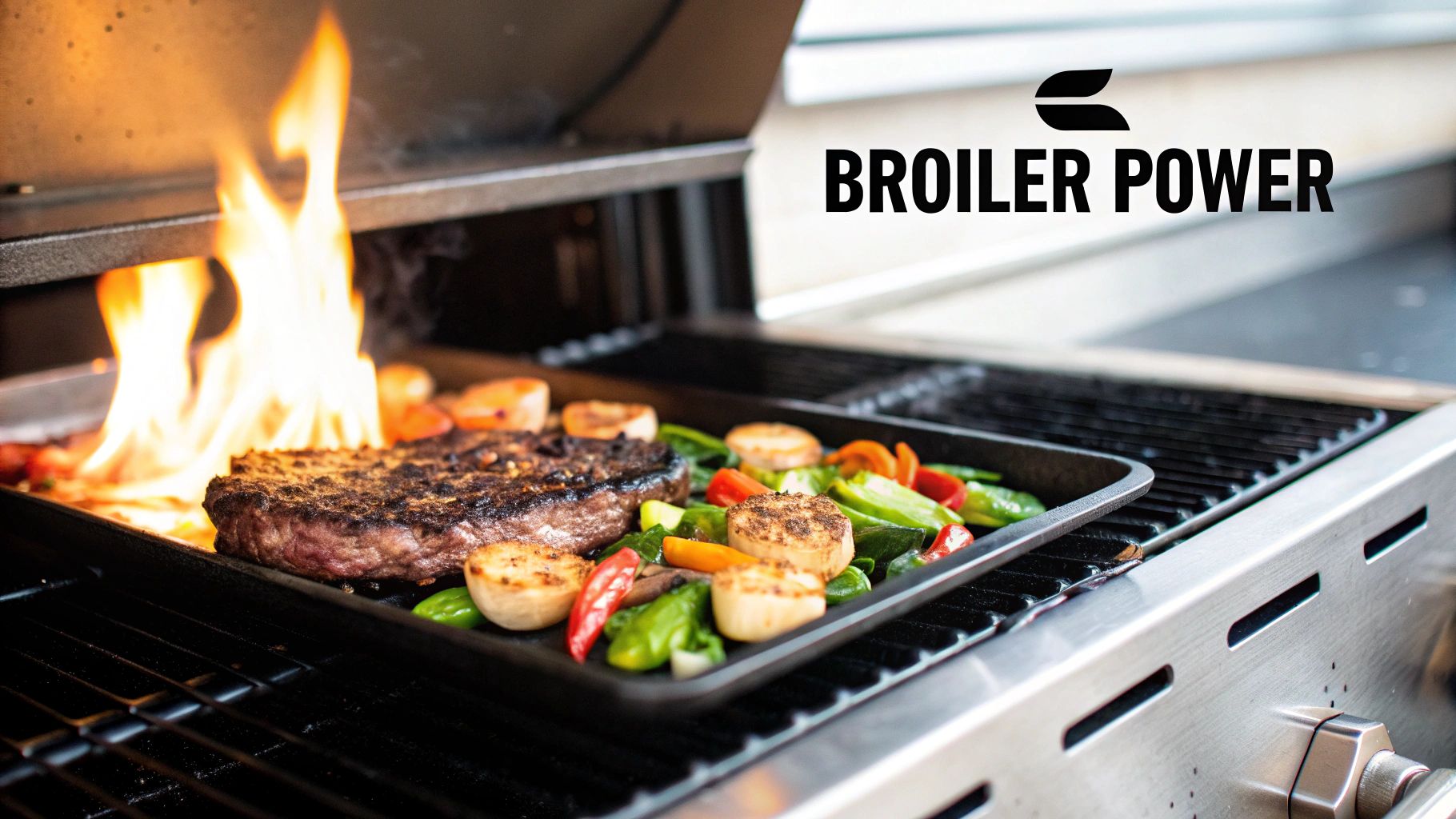
When the tickets are flying, efficiency is everything. Commercial griddles give you a massive, direct-heat cooking surface to handle high volume without cutting corners on quality. Think of it like a giant, open skillet. While pans on a range offer localized heat, a griddle provides a consistent temperature across its entire plate.
This unique heat transfer is precisely what creates the signature textures and flavors we look for. It's fantastic at kicking off the Maillard reaction on proteins, developing that deep, savory crust on a burger patty or a batch of scallops that’s simply impossible to get from individual pans alone.
Griddling vs. Pan-Searing At a Glance
To really get a feel for how different these two methods are, it helps to see them side-by-side. Both use direct heat, but they couldn't be more different in their approach and results.
| Attribute | Griddling | Pan-Searing |
|---|---|---|
| Heat Source | Direct, even heat from a large plate | Direct, concentrated heat from a burner |
| Cooking Speed | Very fast (high volume) | Slower (limited by pan size) |
| Primary Use | Searing, toasting, cooking multiple items | Searing single or few items, creating sauces |
| Best For | Burgers, pancakes, steaks, vegetables | Single cuts of meat, fish fillets, finishing |
| Resulting Texture | Consistent, even crust across the surface | Crispy, seared surface with pan variations |
Ultimately, the commercial griddle is your high-volume tool for speed and surface texture, while pan-searing is for smaller, individual orders.
The Power of a Large Cooking Surface
That direct, even heat from a commercial griddle is your secret weapon during a busy service. It gives chefs the power to create those craveable textures and finishes that keep customers coming back.
- Speed and Efficiency: Commercial griddles have fast recovery times and cook multiple orders at once, which is a lifesaver during the dinner rush.
- Superior Browning and Searing: The consistent heat puts a perfect sear on meats, caramelizes the sugars in vegetables, and creates that golden-brown finish on pancakes or French toast.
- Enhanced Flavor Profiles: The quick-cooking process locks in juices, keeping meats tender and flavorful while developing that distinct, savory crust.
Commercial griddles have been a staple in professional kitchens for decades. By 2023, the market for this equipment hit USD 4.5 billion, driven by the need for precise, high-heat control. A powerful griddle hitting 550°F can slash cooking times by 20-30% compared to traditional rangetops, a massive advantage in a high-volume setting.
This speed makes the griddle an indispensable partner to your other high-performance equipment. If you're serious about maximizing your kitchen's output, our guide on fast cooking ovens is a must-read.
Setting Up for Griddling Success
A perfect sear doesn't just happen when the food hits the plate. In a busy commercial kitchen, getting it right starts way before that—it's all about setting the stage for consistent, safe, and efficient results, even during the peak of service. Think of this initial setup as the foundation for everything that follows.
First things first, and this is non-negotiable: preheat the griddle. I’ve seen countless cooks make the mistake of throwing food on a cold griddle, and all you get is steamed, sad-looking food instead of a beautiful sear. You need to give that heating element a solid 5 to 10 minutes to get screaming hot. That’s what creates the intense, even heat you need for a powerful and consistent cook.
Choosing the Right Tools for the Job
On the griddle's intense surface, your choice of utensils is everything. Your standard plastic tools just aren’t built for this. You absolutely need heavy-duty, heat-resistant tools that won't melt or break under the direct heat.
- Metal Spatulas: These are my go-to for a killer crust on burgers and pancakes. They are strong enough to scrape and flip with precision.
- Griddle Scrapers: A heavy-duty scraper is designed for this job. It's a game-changer for cleaning between orders, which is crucial for preventing flavor transfer and flare-ups.
- Squeeze Bottles: A workhorse in most professional kitchens for a reason. They give you precise control over oil and water for cooking and cleaning without breaking a sweat.
Let me be clear: never, ever use plastic spatulas on a hot commercial griddle. The direct heat can cause them to melt, which is a massive food safety hazard. Most non-stick coated tools are also a no-go, as they aren't rated for commercial griddle temps and can be damaged.
Prepping Food for High Heat
A few small prep steps can make a world of difference in your final product and keep your kitchen running safely.
Always trim any excess fat from proteins like steak or pork chops. It’s a simple move that drastically cuts down on grease buildup in the trap. For that perfect browning, you have to pat proteins and vegetables completely dry with paper towels. Any moisture on the surface will create steam, and steam is the enemy of a good sear.
If you're working with marinades or sugary sauces, hold off on applying them until the last few minutes of cooking. Slathering them on too early is a surefire way to get a burnt, bitter crust before the inside even has a chance to cook. A light coat of a high-smoke-point oil is a better bet early on to prevent sticking and promote browning. To play it safe and avoid burning, you need to know your fats; check out a comprehensive cooking oil smoke point chart to pick the right one.
Proper setup isn’t just about the food. It's also about your gear. Before service, you should always be sure your gas connections are secure and working right—it’s a basic but critical safety check. For a closer look at this essential part of kitchen maintenance, our article on gas fittings and quick-connects has vital info every commercial kitchen needs.
Mastering Temperature Zones and Control
In a busy commercial kitchen, when you're using a commercial griddle, the game is all about temperature zones. That control over different sections of the griddle surface is your number one tool. It's how you can sear a steak hard on one side while gently warming buns on the other.
Since a lot of commercial griddles have multiple thermostat controls, you can create dedicated zones for different tasks. Mastering these zones is how you control the cooking intensity, turning a simple flat-top into a multi-tasking powerhouse.
Strategic Temperature Zoning
Every section of the griddle has a job to do. Once you know how to use them, you can handle almost anything that comes your way during a packed service.
- High-Heat Zone (Hottest Section): This is your sear zone. Think 400-450°F for intense, direct heat. It's perfect for thin cuts like steaks, pork chops, or burger patties that you want to get a deep crust on, fast.
- Medium-Heat Zone: Here, the heat is more moderate and balanced. This spot is ideal for items that need more time to cook through without burning—think pancakes, eggs, or dense veggies like onions and peppers.
- Low-Heat/Holding Zone (Coolest Section): Use this for gentle warming or holding. When you've got to melt cheese on a dozen burgers or keep finished items warm for plating, the low-heat zone gives you that slower, more diffused heat that won't overcook everything.
By mastering temperature zones, you essentially create different cooking stations on one surface. This skill is crucial for managing multiple orders simultaneously, ensuring each component is cooked to its exact specification without compromise.
Before any of that, though, you have to use the right tools for the job. This is non-negotiable for safety.
The takeaway here is simple: heavy-duty materials like steel spatulas are built for this kind of heat. Anything fragile or that can melt is a huge safety risk and has no place on a commercial griddle.
Managing Time as Your Secondary Control
Once you've set your temperature zones, time is the next lever you pull. The sweet spot for commercial griddles is always found in the combination of temperature and duration.
A thin smash burger on the high-heat zone might only need 2-3 minutes per side for a perfect crust. On the other hand, a batch of sliced bell peppers on the medium-heat zone could take 8-10 minutes, with a turn halfway through, to get that nice tender-crisp texture with a bit of char.
The intense direct heat of a commercial griddle gets the job done 25% faster than a conventional rangetop. Many commercial kitchens in Europe and North America rely on models that hold a steady temp between 500-600°F, which helps cut down on overcooking incidents by 18%. This kind of efficiency can boost throughput in diners and breakfast spots by as much as 40%. You can dig deeper into the numbers in this global market analysis of gas stoves.
At the end of the day, you have to cook with your eyes and ears. Look for the bubbling and browning, listen for the sizzle. Those cues will always be more reliable than just setting a timer.
Executing the Perfect Cook Every Time
Alright, this is where the action happens. All that prep comes down to these next few critical minutes. The process is fast, it's intense, and it demands your undivided attention. If there's one golden rule for commercial griddles in a pro kitchen, it's this: never walk away. I mean it. The line between a perfect sear and a burnt-to-a-crisp ticket is razor-thin.
Every line cook develops an internal clock, but you need solid baselines to keep things consistent when the orders are flying in.
- Pancakes/French Toast: You're looking for a steady cook on medium heat, maybe 2-3 minutes per side, just until it's bubbly and golden brown.
- Thick-Cut Proteins: For a solid burger patty or a nice steak, plan on 4-5 minutes per side. This usually gets you a beautiful medium-rare when your griddle is at a high temperature.
- Delicate Items: A delicate fish fillet is a different beast entirely. It might only need 5-6 minutes total, and you probably won't even need to flip it. Any longer and you risk drying it out.
Of course, these are just starting points. Your eyes and ears are your best tools here. You’ll learn to trust the sizzle and the color more than any timer.
Reading the Signs of a Perfect Finish
Knowing the exact moment to pull something from that intense heat is what separates the rookies from the veterans. It's about more than just avoiding burns; you have to factor in carryover cooking. The food keeps cooking from its own heat long after it leaves the griddle.
What you're looking for is a deep, even caramelization—not a collection of blackened spots. Listen for that energetic, steady sizzle; that's the sound of the Maillard reaction working its magic. The second you see the edges beginning to darken more than the center, that's your cue. Pull it. That residual heat will finish the job, leaving you with a juicy, perfectly cooked interior.
The sheer speed of a commercial griddle is a game-changer on a busy line. The direct heat can slash searing and finishing times by 30%. That's a huge efficiency boost. The market agrees, with the gas equipment segment growing from USD 4.5 billion in 2023 and a projected 5.6% growth rate. You can dig into more stats in this detailed gas stoves market report from univdatos.com.
The Art of the Flip and Managing Volume
When you're working with multiple items, your technique has to be locked in. Flipping isn't just about cooking both sides; it's about giving each piece equal time on the heat. Always use a pair of long, sturdy spatulas. Whatever you do, don't stab the meat with a fork—you're just letting all those delicious juices escape onto the plate.
If you have a full griddle of burgers or pancakes, efficiency is the name of the game. Don't flip them one by one in a random order. Work methodically from one side to the other, work quickly to turn every single piece, and move them to the correct temperature zone as needed. This keeps the heat loss to a minimum and ensures every burger on that order looks and tastes exactly the same. That's how you maintain quality when you're slammed.
Essential Safety And Cleaning Protocols
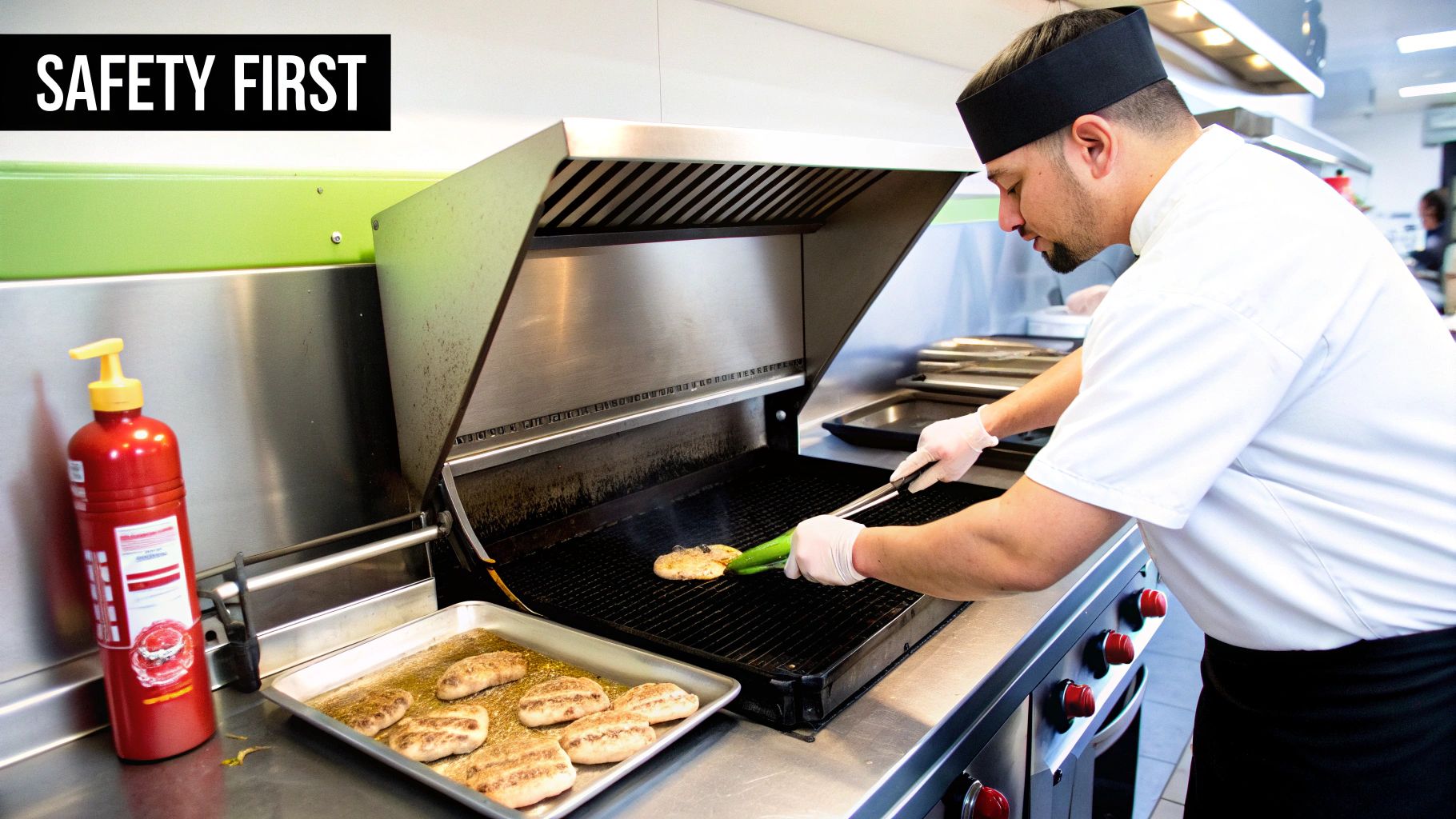
That intense, direct heat from a commercial griddle is a chef's best friend for searing and finishing, but it absolutely demands respect. In the controlled chaos of a commercial kitchen, an unmanaged griddle isn't just a breakdown waiting to happen—it's a serious fire hazard. The first line of defense is having non-negotiable safety protocols drilled into your team.
For starters, every kitchen needs a Class K fire extinguisher within arm's reach of the griddle station. Just as critical is your ventilation system. Make sure it's running at full blast. Griddling produces a ton of smoke and grease-laden vapor that can fill a kitchen in minutes, creating a dangerous environment. A clean, powerful hood system is a must-have for staff safety and air quality. If you want to dive deeper, we have a complete guide on commercial kitchen ventilation systems.
Preventing Flare-Ups and Fires
Let's be blunt: the number one cause of griddle fires is grease. When the grease trap overflows or excess fat builds up on the surface, it can ignite in a flash. This is why using the right gear and cleaning procedures isn't just a suggestion; it’s a safety mandate.
- Always Empty the Grease Trap: A proper griddle has a grease trap to collect rendered fat. This must be emptied regularly throughout and after service to prevent overflow and fire risk.
- Trim Excess Fat: Take a few seconds to trim any large, hanging pieces of fat off steaks, chops, or chicken before they go on the heat. It's a simple prep step that dramatically cuts down on the amount of grease rendering out.
- Never Leave the Griddle Unattended: Things happen fast under that kind of heat. A small flare-up can become a major fire in seconds. Someone needs to have eyes on the griddle at all times during service.
A clean griddle is a safe griddle. Think of grease buildup as fuel just waiting for a spark. Regular, meticulous cleaning is the single best fire prevention strategy you can have for any high-temp cooking equipment.
Post-Service Cleaning for Longevity and Safety
Once the last ticket is out the door, the cleaning routine begins. This isn't just about preventing dangerous grease buildup; it also stops flavor transfer. You don't want the delicate pancakes for table seven tasting like the ribeye from table four.
Let the griddle cool down to a manageable temperature. Scrape all food debris into the grease trap, then use a griddle brick or screen on the warm surface to remove baked-on grease. The entire surface needs a thorough cleaning and re-seasoning with oil.
This is just one piece of the puzzle. Overall kitchen hygiene is paramount. For a broader perspective, you can check out these general food safety and equipment cleaning tips. Staying consistent with your maintenance will not only extend the life of your equipment but also uphold the highest standards of food safety.
Troubleshooting Common Griddling Problems
Look, even the most buttoned-up kitchens run into issues. During a busy service, the griddle can throw you a curveball, and you need to know how to react fast to keep tickets moving. Knowing what to look for and how to fix it on the fly is a skill that separates the pros from the rookies.
One of the classic mistakes we see all the time? Food that’s absolutely torched on the outside but still cold and raw in the middle. Nine times out of ten, this is a simple temperature control problem. The heat is just way too high, searing the surface long before the inside gets a chance to cook.
Solving Uneven Cooking and Smoke Issues
Another headache is uneven cooking. You have a full griddle and half of it is perfectly browned while the other side looks like it barely got kissed by the heat. Every commercial griddle has its quirks, including hot spots where the temperature is just more intense. The fix for this is all about active cooking, not just setting and forgetting.
- The Problem: You notice food is cooking much faster on one part of the griddle.
- The Fix: Learn your griddle's hot spots and rotate your food accordingly. It's a simple move, but it guarantees everything gets an equal cook for a consistent finish.
Then there's the smoke. A little bit is expected, but when a plume starts billowing off the surface, you've got a problem.
The best way to deal with excessive smoke is to prevent it in the first place. It’s almost always caused by too much fat, the wrong type of oil, or food residue burning on the surface. Before it even goes on, trim any excess fat and use an oil with a high smoke point. Also, make sure your griddle surface is clean between orders.
This isn’t just about keeping the air clear in the kitchen; it’s a critical step in preventing a dangerous grease fire. By training your team to spot the symptom and immediately apply the right fix, what could have been a service-stopping disaster becomes just a minor blip.
Questions We Hear All the Time About Commercial Griddles
When you’re in the weeds during a busy service, the griddle can be your best friend. But this high-heat, high-speed cooking method definitely comes with a learning curve. We get a lot of questions from chefs trying to get consistent, safe results from their commercial griddles.
The most common one? "How do I keep food from sticking?" For almost any commercial griddle, you want to ensure it's properly seasoned and oiled. A well-seasoned griddle develops a natural non-stick surface. Always apply a thin layer of high-smoke-point oil before adding food.
Gas vs. Electric Griddles
Another big question is how gas and electric griddles stack up against each other. They both get the job done, but they deliver heat in very different ways.
- Gas Griddles: You get powerful, fast heat-up and recovery times. This is what creates that incredible steakhouse-level sear on meats. The heat is often more responsive, which is a huge plus for high-volume cooking.
- Electric Griddles: These use heating elements for a super consistent, even heat. If you're cooking delicate items like eggs or trying to maintain a precise temperature across the entire surface, electric is usually the better choice.
So which one is right for you? It really boils down to what you're cooking. For that powerful sear and high-volume performance, you can't beat the responsiveness of a gas griddle. For anything requiring more delicate, precise temperature control, an electric model often pulls ahead.
Finally, we get asked why griddling creates so much smoke. It’s almost always because of fat and drippings burning on the hot surface. The easiest fix is to scrape the griddle clean between orders and ensure your grease trap isn't overflowing. It’s a simple piece of maintenance that keeps the surface clean and ready for the next order.
At Griddles.com, we live and breathe the fast-paced world of commercial kitchens. If you need to round out your cooking line, we have the gear to keep service running without a hitch. Check out our full lineup of commercial cooking equipment and find the perfect fit.