
The Ultimate Guide to Commercial Griddles for Your Food Truck
Picking the right cooking equipment for a food truck is probably the biggest decision you'll make, and more often than not, the commercial griddle is the most important piece in that puzzle. Just think of it as the powerhouse at the heart of your mobile kitchen—it can handle everything from a breakfast rush of pancakes to a dinner service of smash burgers.
Why the Griddle Is Your Food Truck's MVP
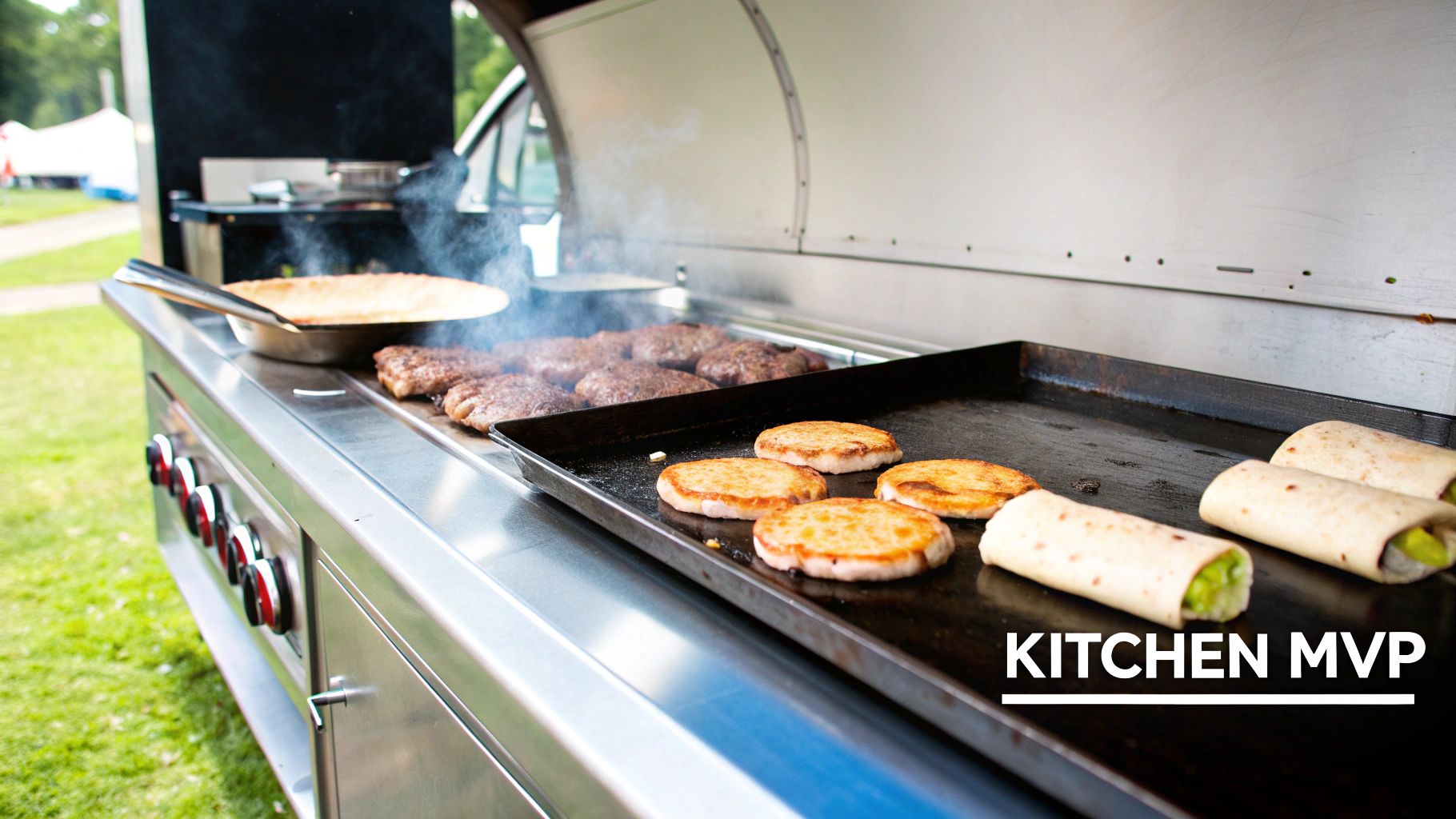
When you're working in the tight confines of a food truck, every single piece of gear has to earn its spot. The commercial griddle pulls its weight and then some, acting as a true workhorse by combining the jobs of several appliances into one flat-top surface. It's the engine that drives your speed, menu flexibility, and, at the end of the day, your profits.
Unlike a single-purpose appliance, a griddle is a master of multitasking. That huge, consistently hot cooking area is your best friend when the lunch rush hits. You can knock out multiple orders at once—searing burgers, toasting buns, and grilling onions all on the same surface. That kind of efficiency is pure gold when a line starts to form.
The Centerpiece of Your Mobile Kitchen
A griddle’s value goes way beyond just speed; it's what lets you get creative with your menu. Its reliable heat lets you nail all kinds of popular street food ideas with total precision.
- Breakfast Service: Easily juggle pancakes, eggs, bacon, and breakfast burritos all at the same time.
- Lunch Rush: Get that perfect sear on smash burgers, grill up sandwiches, and sling Philly cheesesteaks.
- Dinner Menu: Sizzle fajita vegetables, warm up tortillas, or even handle more delicate items like fish.
The global food truck market is blowing up, with some projections showing it will hit USD 4.17 billion by 2034. This boom means more demand for solid cooking equipment, especially the flat-top griddles that are a must-have for the popular box-style trucks you see everywhere. Those trucks have just enough room for commercial-grade griddles with thick plates for even heat, making them perfect for pumping out a ton of food. You can explore more data on the growing food truck market and see how it’s shaping equipment needs.
In a food truck, space is currency and speed is king. The griddle maximizes both, allowing you to produce more food in less space, faster than almost any other appliance. It’s not just a cooking surface; it’s your production line.
Choosing the right commercial griddle isn't just about buying another piece of equipment; it's a core business decision. It directly shapes your workflow, what you can put on your menu, and your ability to serve people quickly and consistently. Once you understand its central role, it’s easy to see why this one appliance is often the most valuable player in any successful food truck.
Choosing Your Power: Propane Versus Electric Griddles
When you're outfitting your food truck, one of the very first decisions you'll make is how to power your griddle. This goes way beyond just picking a plug or a tank. It’s a foundational choice that will shape your truck’s mobility, your cooking workflow, and even the events you can legally work. Your griddle is the heart of your mobile kitchen, and its fuel is the lifeblood.
A propane griddle is like a powerful, go-anywhere workhorse. It cranks out raw, immediate heat and runs completely off-grid. This makes it the undisputed king for festivals, remote catering gigs, or any spot where you can't count on finding a reliable outlet. It’s all about brute force for high-volume searing and lightning-fast recovery times.
On the flip side, think of an electric griddle as a precision instrument. It gives you incredibly accurate temperature control and is often the safer, cleaner choice for indoor markets or tightly packed food truck rallies. This is your go-to if you’re parking at an urban food court with shore power or running a beast of a generator.
The Power and Freedom of Propane Griddles
For most food truck operators, propane is the default choice, and for good reason: sheer power and total freedom. Propane burners deliver a massive blast of instant heat, getting your flat-top screaming hot in just minutes. That's a huge deal when a sudden lunch rush hits. You're not tethered to a cord, giving you the flexibility to serve customers practically anywhere.
Of course, that freedom comes with a few ground rules. You have to handle propane with respect and follow strict safety codes. This means planning for secure tank storage, ensuring you have proper ventilation to clear out combustion fumes, and doing regular checks on your gas lines and regulators. Every local fire marshal has their own specific rules for the size and placement of propane tanks on trucks.
The real magic of propane is its energy density and self-sufficiency. A single tank can keep a high-output griddle fired up for hours, delivering consistent heat that won't quit on you—unlike a generator that might trip a breaker right in the middle of service.
While we're talking griddles, it's smart to think about your truck's entire fuel ecosystem. Getting a handle on the logistics of different fuel types, like in this great breakdown of propane versus CNG fueling, can give you a better big-picture strategy for your whole operation.
The Precision and Simplicity of Electric Griddles
Electric griddles bring a different set of perks to the table, mostly centered around precision and ease of use. Their thermostats maintain an incredibly stable and even temperature across the entire cooktop. This is a game-changer for delicate foods like pancakes, eggs, or crepes, where a few degrees can make the difference between perfect and burnt.
Electric models also have zero combustion fumes, making them a much better fit for indoor farmers' markets or events with picky air quality standards. Plus, there are no tanks to haul and refill or gas lines to inspect for leaks, which can really simplify your daily setup and teardown.
But here’s the catch: electric griddles are serious power hogs. These things are hungry. They almost always need a 208/240V connection, leaving you with two options:
- Shore Power: You need guaranteed access to a high-voltage outlet at every single place you park.
- A Powerful Generator: We're talking a commercial-grade generator, often 7,000 watts or more, that is specifically wired to handle the massive electrical draw of the griddle.
If you don't plan for this massive power requirement, you're setting yourself up for a nightmare of tripped breakers, a griddle that never gets hot enough, and a whole lot of frustration.
Ultimately, choosing between propane and electric isn’t about which one is “better.” It’s about which one is better for your truck. Your menu, the types of venues you plan to work, and your truck's existing power setup will make the decision for you. A burger-slinging truck that lives for outdoor festivals will thrive on propane's raw power, while a gourmet grilled cheese setup at a permanent urban pod might be better served by the clean precision of electric.
How to Size Your Griddle for Maximum Sales
Picking the right size for your commercial griddle isn’t just about what fits in the truck. It's a strategic move that hinges on your menu, your sales goals, and your ambition. Think of your griddle surface as prime real estate; you want to get the most out of every square inch without causing a traffic jam during the lunch rush. A griddle that's too small is a direct cap on your income, but one that's too big is just burning fuel and wasting space.
So, how do you get it right? You have to move past guesswork and make a decision based on real numbers. Your menu is ground zero. Figure out which high-volume items will be living on that hot steel. For a taco truck, it's probably steak and chicken. For a breakfast spot, it's eggs, bacon, and pancakes. Each one has a physical footprint and a specific cook time—these are the core variables in your equation.
Calculating Your Required Cooking Surface
To nail down your perfect griddle size, you need to work backward from your peak hour. This simple calculation ensures your equipment won't fold under pressure when you've got a line down the block.
- Identify Peak-Hour Volume: Get real about how many griddled items you think you'll sell in your busiest hour. If you're just starting, a solid guess might be 50-75 orders.
- Calculate Item Footprint: Measure how much space your bestsellers occupy. A 4-inch smash burger patty needs about 16 square inches. A fluffy pancake might take up 25 square inches.
- Factor in Cook Time: How long does each item hog that space? A burger might cook in 5 minutes, but you can scramble eggs in just 2.
- Add Buffer Space: You can't just tile your food edge-to-edge. You need room to flip, move things around, and stage orders. A good rule of thumb is to add a 20-25% buffer to your total calculated cooking area.
When you multiply the footprint of your items by their cook time and expected volume, you get a clear picture of the "throughput capacity" you actually need. This method will point you to the right size griddle far more accurately than just measuring an empty spot on your service line.
Matching Griddle Size to Menu Concept
Different food truck concepts have completely different demands. A tightly focused menu can do wonders with a smaller, more efficient griddle, while a diverse, all-day menu is going to need a much larger and more versatile cooktop.
- 24-Inch Griddle: This is perfect for specialized menus with small-footprint items. Think gourmet grilled cheese, street tacos, or a hot dog concept where you're mainly toasting buns and grilling onions.
- 36-Inch Griddle: This is the workhorse for a reason. It's a popular, versatile size that gives a classic burger and fries truck or a breakfast concept enough room to cook eggs and bacon at the same time without things getting crowded.
- 48-Inch Griddle or Larger: You only need to go this big for high-volume, complex menus. If you're slinging pancakes, burgers, and cheesesteaks all at once, you'll need this kind of real estate. These larger units often come with multiple thermostatic controls, letting you create different heat zones for cooking various items at their perfect temperatures.
The food truck scene is booming. The U.S. market is projected to hit USD 1.02 billion by 2025, growing at a blistering 6.67% CAGR. This growth is fueled by city-dwellers, with mid-size trucks (16-25 feet) dominating over 50% of the market. These trucks have just enough room for the essentials, like propane griddles, which are the backbone of popular concepts like mobile breakfast joints. You can read the full research about the U.S. food truck market to dive deeper into these trends.
Choosing your griddle size is a big decision, but it's often preceded by an even more fundamental one: propane or electric? This chart breaks down the core differences.
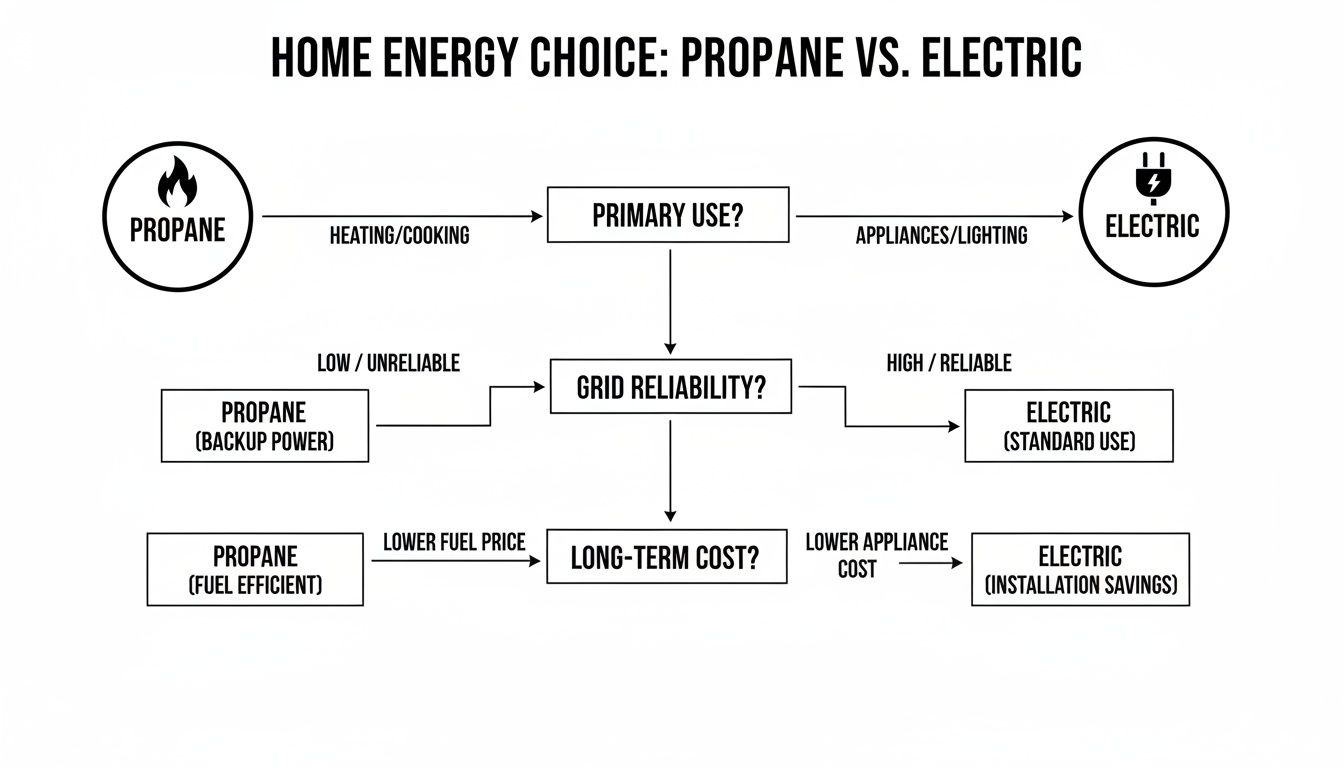
As you can see, propane gives you raw power and total mobility, while electric offers precision and the flexibility for indoor events. Your choice here will shape your entire operational strategy.
Choosing the right griddle size from the start helps you pick the right equipment for your menu and volume. This table breaks down common griddle sizes and connects them to real-world food truck concepts and their potential output.
Matching Griddle Size to Your Food Truck Menu and Volume
| Griddle Size (Width) | Best For Menu Types | Example Menu Items | Estimated Servings Per Hour (Peak) |
|---|---|---|---|
| 24 inches | Specialized, Low-Volume | Gourmet Grilled Cheese, Street Tacos, Hot Dogs | 40 - 60 |
| 36 inches | Classic, High-Volume | Burgers & Fries, Philly Cheesesteaks, Breakfast (Eggs/Bacon) | 70 - 100 |
| 48 inches | Diverse, All-Day Menu | Full Breakfast & Lunch (Pancakes, Burgers, Quesadillas) | 100 - 150+ |
| 60+ inches | Very High-Volume, Complex | Mobile Catering, Large Events, Multiple Concepts | 150 - 200+ |
This isn't about buying the biggest griddle you can afford; it's about matching the machine to your mission.
Your griddle size is a direct reflection of your business plan. A 24-inch model says you're focused and efficient. A 48-inch model says you're ready for high-volume, diverse service. Choose the size that supports the business you want to build.
At the end of the day, investing in the right size griddle from day one saves you from costly upgrades down the road and makes sure your most important piece of equipment can keep up with your success. Don't forget that your griddle's footprint affects your entire kitchen layout. Knowing the standard under-counter fridge sizes is just as important for mapping out a functional workspace.
Essential Griddle Features for a Mobile Kitchen
Alright, you’ve figured out the right size and fuel source for your griddle. Now comes the fun part—diving into the features that separate the workhorses from the headaches. These details aren't just bells and whistles; they’re what will keep you sane during a relentless lunch rush.
In a food truck, your equipment has to do more than just cook. It needs to be tough enough to handle the vibrations of the road and smart enough to produce consistent results, order after order. Getting these features right from the start is one of the smartest investments you can make in your cooking equipment for your food truck.
The Critical Role of a Thick Griddle Plate
Let’s get straight to the point: the single most important part of your griddle is the thickness of the cooking plate. Don't even consider anything less than a steel plate that is at least 1-inch thick. This isn't just a suggestion; it's the golden rule for high-volume cooking.
Think of that thick plate as a heat battery. It soaks up energy and holds it, giving you a consistently hot surface. When you throw a dozen frozen burger patties on a flimsy, thin plate, the temperature crashes. The meat starts to steam instead of sear, cook times drag on, and your ticket times go through the roof.
A 1-inch thick steel griddle plate provides superior heat retention, ensuring rapid temperature recovery even when you load it with cold food. This allows you to cook batch after batch without losing that perfect searing capability, turning tables faster and keeping your line moving.
This is what gives you that perfect golden crust on pancakes and a beautiful sear on burgers. A thin plate, on the other hand, is a map of hot and cold spots, forcing you to constantly play shuffleboard with your food. In a food truck, that kind of inefficiency is a profit-killer.
Thermostatic Controls: The Key to Consistency
Next up is temperature control. You'll see two main types: manual and thermostatic. For any serious food truck operator, the choice is clear.
-
Manual Controls: These are your basic "High-Med-Low" knobs, like on a home stove. They just control the size of the flame, not the actual temperature of the steel, which will fluctuate like crazy depending on what you’re cooking.
-
Thermostatic Controls: This is the pro setup. You set a precise temperature—say, 350°F—and a thermostat inside the griddle does the rest. It constantly measures the plate's heat and adjusts the flame automatically to keep it right where you want it.
Thermostatic controls are your secret weapon for consistency. They take all the guesswork out of the equation, so every burger gets the same sear and every pancake is perfectly golden. This frees you up to focus on assembling orders and talking to customers instead of constantly babysitting your griddle.
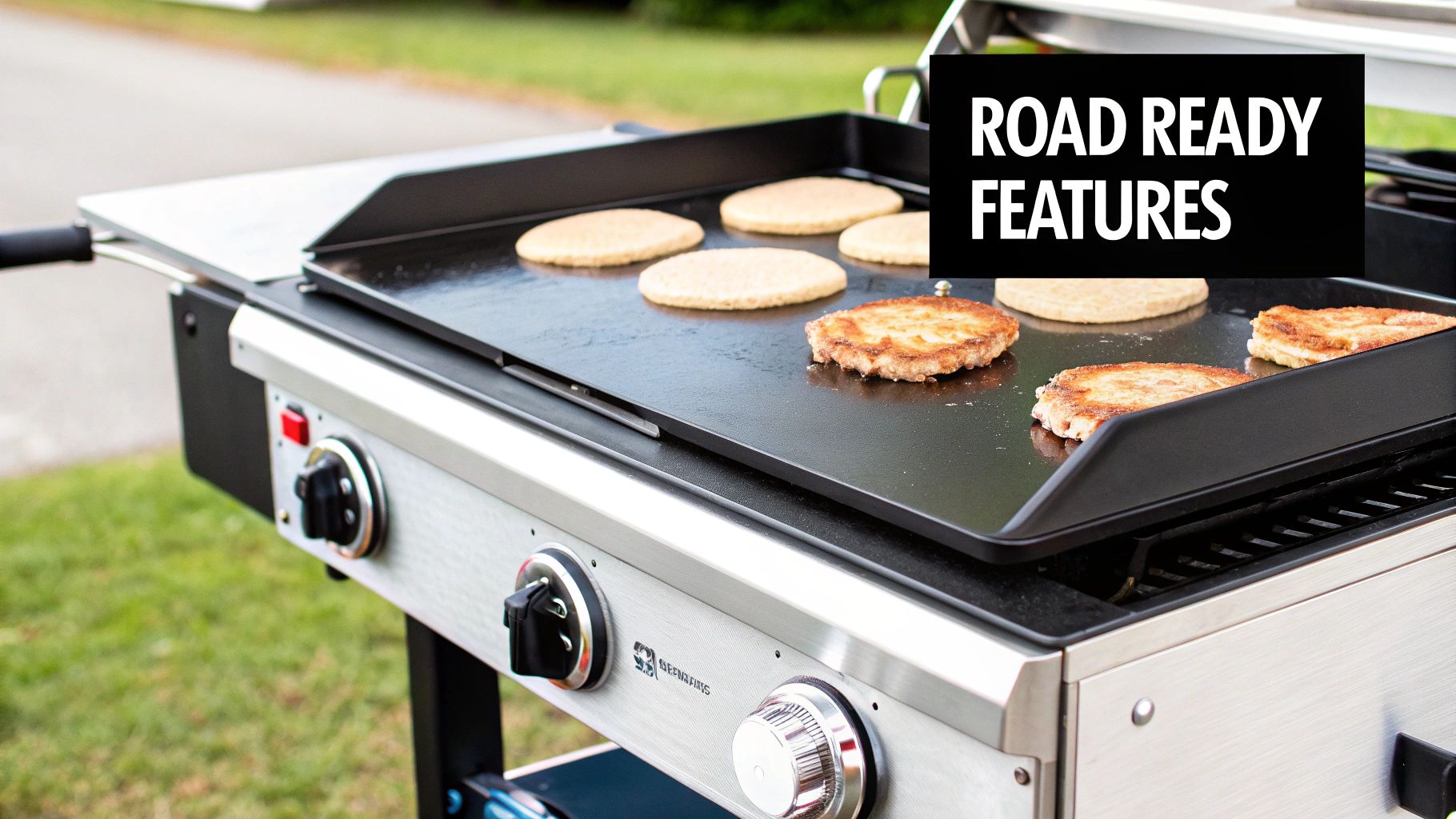
Road-Ready Design Features
Finally, let's talk about the small-but-mighty features that make a griddle truly ready for life on the road. These are the details that ensure your investment can handle the unique abuse of a mobile kitchen.
-
Durable Construction: Look for fully welded stainless steel. It’s tough enough to handle potholes and daily vibrations without rattling apart, and it won't rust when things inevitably get spilled or humid.
-
Tall Splash Guards: In a tight space, grease splatter is a nightmare. It creates a greasy mess and a dangerous slip hazard. Tall, welded splash guards on the back and sides are non-negotiable for containing the mess and keeping your truck safe and clean.
-
Oversized Drip Tray: There's nothing worse than a grease tray overflowing in the middle of a festival rush. A large, easy-to-remove drip tray can handle a full day's service without drama and makes cleanup at the end of a long night that much faster.
Installation, Ventilation, and Safety Requirements
Getting your new griddle installed isn't the finish line—it's the first step to making sure your food truck runs safely, legally, and without a hitch. Proper installation is the non-negotiable bedrock of your mobile kitchen. It protects your crew, your customers, and the hard-earned money you just spent on a quality commercial griddle for a food truck. This is about way more than just hooking up a fuel line; it's about carefully integrating a powerful appliance into your truck's safety systems.
First things first, you have to physically lock that griddle down. Your kitchen is constantly moving, and a 300-pound griddle can become a battering ram during a sudden stop or a sharp turn. The unit must be securely bolted or welded to its countertop or stand so it can handle the daily reality of road vibrations.
Next up is clearance. Commercial griddles throw off a ton of ambient heat. To prevent a fire, you absolutely must follow the manufacturer's specified clearance—usually at least 6 inches—between the unit and any combustible surfaces like walls or other equipment. Don't eyeball it; measure it.
Mastering Ventilation and Fire Suppression
Your ventilation system is arguably the single most important safety feature in the entire truck. Any appliance that pumps out grease-laden vapor—and that definitely includes your griddle—is required by law to sit under a commercial-grade Type 1 exhaust hood. This isn't just a simple fan; it’s a full-blown system engineered to suck smoke, intense heat, and flammable grease particles straight out of your kitchen.
Think of the hood as your first line of defense against both fires and awful air quality. A good one keeps the air clean for your staff and stops dangerous grease from coating every surface inside your truck. When you're setting up propane gear, knowing how all the pieces fit together is critical. This guide to RV propane gas regulators is a fantastic resource for ensuring your fuel setup is safe and efficient, which is a huge part of the overall safety puzzle.
The exhaust hood and your automated fire suppression system are a team. The suppression system has nozzles aimed right at your cooking equipment, ready to automatically blast fire-retardant chemicals if a flare-up ever happens.
Your ventilation and fire suppression systems aren't two separate things—they are a single, integrated safety unit. The installation has to be planned so the suppression nozzles have a clear shot at the griddle surface and the hood can effectively capture every bit of smoke and vapor.
Fuel Lines and Final Checks
If you've got a propane griddle, the gas line connection is a major weak point if it's not handled by a pro. After installation, every single connection has to be tested for leaks with a simple soap and water solution. Never, ever use a lighter or a match to check for leaks.
- Go with a Pro: Always have a licensed professional install and connect your gas lines. They know the local codes inside and out.
- Do the Bubble Test: With the gas on, apply the soapy water to every fitting and connection. If you see bubbles forming, you have a leak that needs to be fixed immediately.
- Inspect It Daily: Make a quick gas line check part of your opening and closing routine. Every single day.
When all is said and done, the final stamp of approval comes from your local fire marshal. They will inspect your entire setup, from how the griddle is secured to the certification tag on your fire suppression system, before you can legally open for business. A pro tip? Talk to them before you finalize the layout. It could save you from thousands of dollars in fixes down the road.
If you want to really get into the weeds on this topic, you can learn more about commercial kitchen ventilation systems in our detailed guide.
Your Top Food Truck Griddle Questions Answered
Once you get past the big decisions on fuel and size, the real-world questions start popping up. These are the details you live with day-in and day-out, the little things that separate a smooth service from a chaotic one. Nailing these common griddle issues will help you work smarter and protect the most important piece of cooking equipment for a food truck.
This is where the rubber meets the road—or in this case, the spatula meets the steel. Let's dig into the practical side of owning and operating your flat-top, from day one to year five.
How Do I Properly Season a New Commercial Griddle?
Think of "seasoning" a griddle like creating a natural, bulletproof suit of armor for it. You're basically baking microscopically thin layers of oil right into the steel plate. This process creates a slick, non-stick surface that makes flipping burgers a joy and cleanup almost effortless. Skip this, and you're signing up for stuck food and a constant battle with rust.
First things first, give your new griddle a good scrub with warm, soapy water to get rid of any protective oils from the factory, then dry it completely. Now, crank the heat up to medium-high, somewhere in the 350-400°F range. Drizzle on a little high-smoke-point oil (canola or vegetable oil works great) and use a clean, lint-free cloth to spread it into a paper-thin layer.
Let that oil cook until it completely stops smoking, which takes about 15-20 minutes. You'll see the surface start to darken as the oil polymerizes and bonds with the steel. Kill the heat, let it cool down slightly, and carefully wipe off any thick, sticky patches. You'll need to repeat this whole process at least three or four times to build up a solid, dark patina. It’s some work upfront, but trust me, it’s the foundation of a great cooking experience.
What Is the Best Way to Clean My Griddle After Service?
The golden rule of griddle cleaning is simple: do it while it's still warm. Trying to chisel off cold, solidified grease is a nightmare you don't want to live through. Speed and the right tools are everything.
As soon as the last order is out, grab a bench scraper or griddle scraper and push all the leftover food bits and grease into the drip tray. That's 90% of your work done in less than a minute.
For those stubborn, caked-on spots, here's the trick:
- Pour a little warm water or club soda right onto the hot surface.
- The instant blast of steam will loosen up whatever's stuck.
- Scrape the now-loose gunk away into the drip tray.
Once the surface is clear, just give it a final wipe with a dry cloth. And this is critical: never use soap on a seasoned griddle. It will destroy that beautiful non-stick layer you worked so hard to create. Finish by wiping on a super-thin coat of cooking oil to protect the steel from moisture and rust overnight. And please, don't forget to empty and clean that drip tray daily.
Should I Get a Countertop or Freestanding Griddle?
For a food truck, this is probably the easiest equipment decision you'll make. Countertop griddle, every time. Space is the most valuable currency you have in a mobile kitchen, and countertop units are built to maximize it.
Countertop griddles pack all the cooking power of a full-size unit into a compact footprint. The ultimate setup is placing one directly on top of a refrigerated chef base. This creates a killer workstation where your cold prep is literally inches below your cooktop.
This layout is the undisputed champion of food truck efficiency. You can grab burger patties, cheese, and veggies without taking a single step, which shaves precious seconds off every single order. Freestanding griddles, with their bulky legs and cabinets, are just too big and clunky for the tight quarters of a truck. They're a waste of precious floor space.
What Are the Power Needs for an Electric Griddle?
Electric griddles are beasts. They pump out incredible heat, but they are incredibly hungry for power, and this is something you absolutely must plan for. You can't just plug one of these into a normal outlet like a coffee maker.
Nearly every commercial electric griddle requires a 208/240V connection to run. That high voltage means you need a serious power source. We're talking about a beefy commercial generator, often 7,000 watts or more, just to handle the griddle itself, let alone your other appliances.
Your truck's entire electrical system has to be built to handle that kind of load, with professional-grade, heavy-duty wiring and dedicated breakers. Before you even think about buying an electric griddle, look at the manufacturer's spec sheet. Find the exact voltage, phase, and amperage it requires and confirm that your truck's power setup can support it. Getting this wrong is a recipe for constantly tripped breakers or, worse, a fire hazard during a slammed service.
At Griddles.com, we specialize in providing the durable, high-performance commercial griddles that food trucks depend on. Find the perfect model to power your mobile kitchen and benefit from free shipping and expert support. https://griddles.com