

Commercial Griddle Sizes: Find Your Ideal Kitchen Dimensions
When you're looking at standard commercial griddles, you'll generally find widths ranging from 24 to 72 inches. They're designed to fit neatly on most commercial counters or equipment stands, which are typically 34 to 36 inches high. Inside, you're looking at a cooking surface area of anywhere between 3 and 12 square feet, giving you a solid amount of cooking space right where the action is.
Matching Your Griddle Size to Your Kitchen Workflow
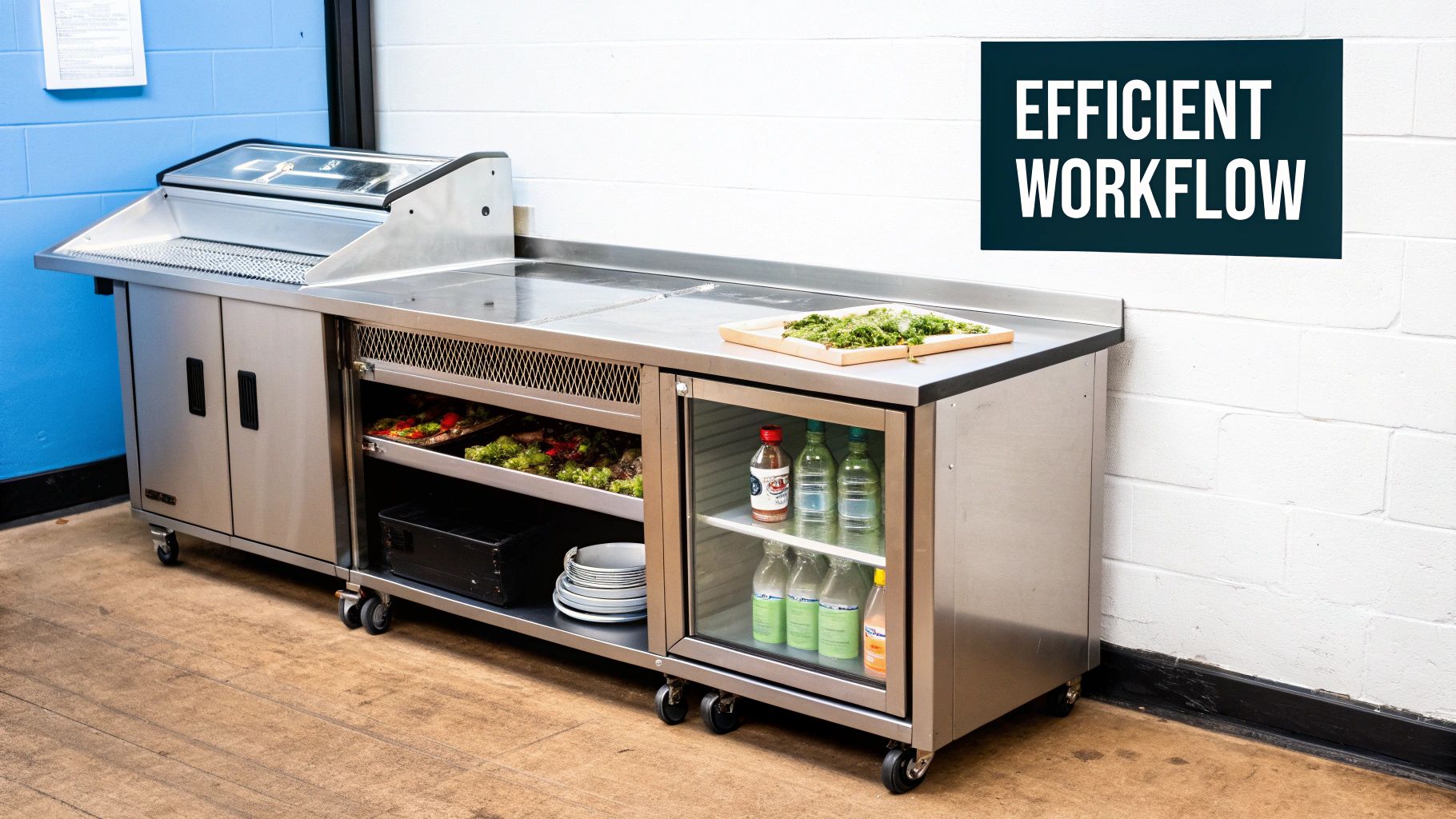
Picking the right commercial griddle isn’t just about filling a gap in your line. It's about building a smarter, faster kitchen. When your commercial griddles are running full tilt during a dinner rush, the last thing a cook needs is to run out of space. A properly sized griddle turns a simple prep area into a high-efficiency workstation where every order can be fired without delay.
This simple change completely transforms your kitchen’s rhythm. Instead of a chef juggling pans on a cramped range, they can manage multiple orders on a large, consistent cooking surface. Those few seconds saved on every single order pile up fast, leading to huge time savings and a smoother service.
Why Size Directly Impacts Efficiency
Think of your commercial griddle as the foundation of a cooking station. It's not just a flat top that gets hot. When you place a 36-inch griddle directly on top of a matching 36-inch refrigerated chef base, you've created a perfectly integrated system.
This setup keeps your most critical items—burger patties, cheese slices, prepped veggies—at a safe temperature, literally inches below the cooking surface. It’s this direct link between equipment size and workflow that defines great kitchen design. The whole point is to create a seamless path from cold storage to the hot line, cutting out wasted steps and preventing service from grinding to a halt.
By placing your griddle directly over refrigeration, you’re not just saving space; you're engineering a more logical and productive cooking process. Every saved step is a step toward faster ticket times and a less chaotic kitchen.
Quick Guide to Common Commercial Griddle Sizes and Uses
To make sense of the options, here’s a quick breakdown of common sizes and where they fit best. This table can help you match a unit's dimensions to its most effective role in your kitchen.
| Standard Width | Typical Cooking Area (Sq. Ft.) | Best For (Use Case) | Pairs Well With |
|---|---|---|---|
| 24 inches | 3 - 4 | Small cafes, food trucks, appetizer stations | 24" chef base, countertop fryer |
| 36 inches | 5 - 6 | Burger and sandwich stations, diner lines | 36" chef base, charbroilers |
| 48 inches | 7 - 8 | High-volume breakfast spots, pizzerias | 48" chef base, prep tables |
| 60-72 inches | 9 - 12+ | Large kitchens, catering operations, central prep | Multiple chef bases, large ranges |
This chart isn't exhaustive, but it gives you a solid starting point for figuring out what will work for your specific needs, whether you're outfitting a compact food truck or a sprawling restaurant kitchen.
Finding the Sweet Spot in Cooking Surface
As you shop around, you'll see cooking surface measured in square feet. Bigger isn't always better. In fact, most kitchens find a perfect balance in the mid-range. The 36-48 inch width range is king in the commercial griddle world, accounting for a huge portion of the market. Why? Because it hits that sweet spot between having enough cooking space and saving precious hood space.
This size is especially popular in spots from diners to ghost kitchens where every inch counts. As you can find in these undercounter refrigerator market trends, this range offers plenty of room for high-turnover items without dominating the kitchen layout. Getting familiar with these common sizes and their best uses is the first step to designing a kitchen that works for you, not against you.
Understanding Commercial Griddle Dimensions
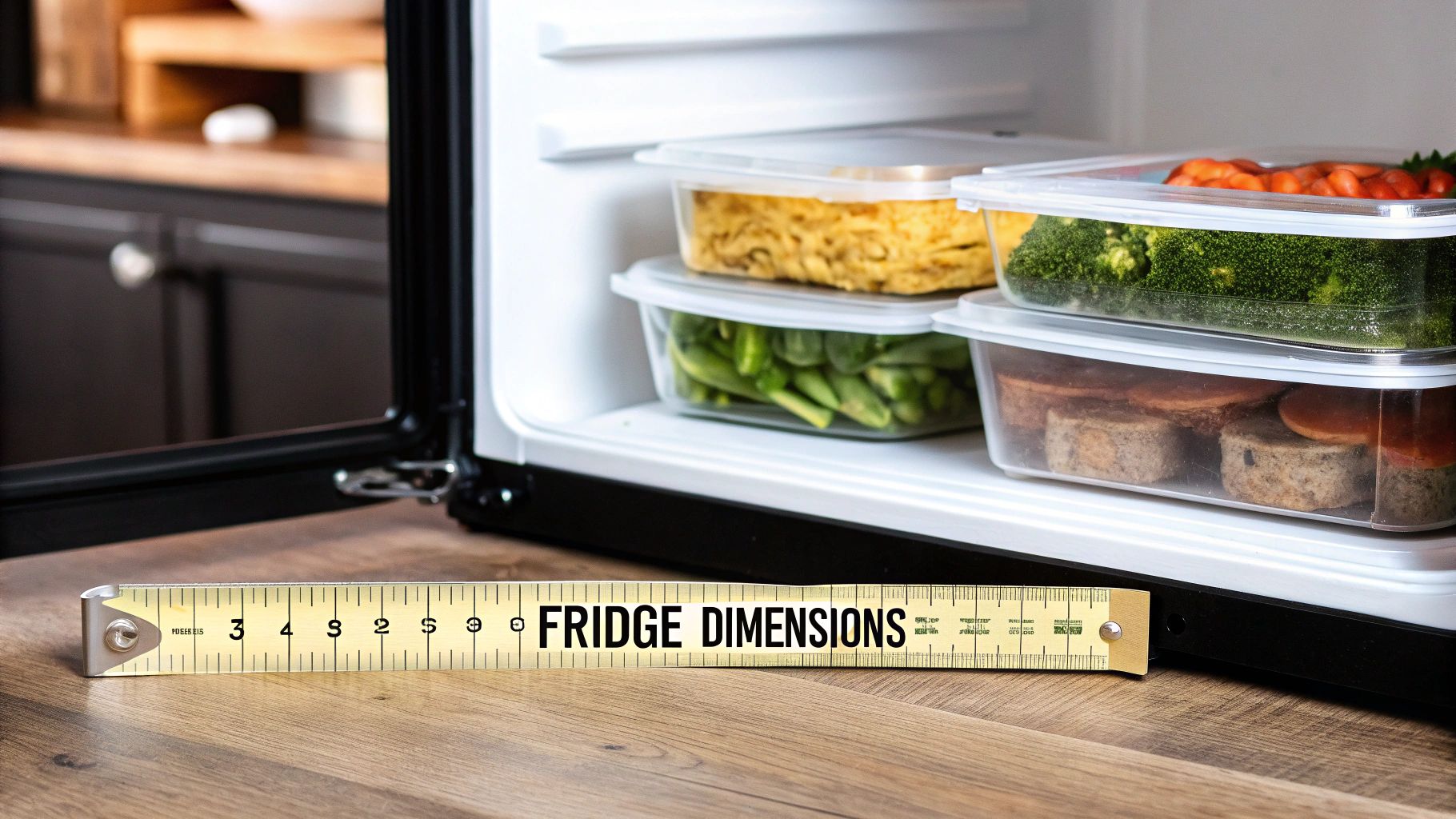
It’s easy to get lost in spec sheets, but the real story of a commercial griddle isn’t just about numbers. The width, depth, and height of a unit dictate how it slots into your kitchen, impacting everything from the flow of your cookline to how efficiently your team can work. These aren't just measurements; they define the physical footprint and workflow of your entire operation.
When you're looking at different models, you'll see widths ranging from a slim 24 inches to a massive 72 inches. The key here is consistency. Most commercial kitchen equipment, from prep tables to chef bases, is built with standard depths. This allows you to create a clean, flush line of equipment, which is both safer and much easier to clean.
Translating Dimensions into Practical Capacity
The true value of any piece of equipment is what it lets you produce. Don't just think in inches—think in terms of real-world output. This is how you can look at a spec sheet and actually visualize how the unit will perform when things get busy.
A smaller 24-inch griddle, for instance, might be perfect for a small café's sandwich station, handling just enough orders for the lunch rush. Step up to a 48-inch model, and you’ve got a workhorse capable of cooking dozens of burgers at once, making it a perfect fit for a high-volume diner or prep line.
Think of griddle capacity in terms of throughput. A smaller unit might handle what you need for a handful of orders, while a larger one can support a full service without creating a bottleneck. This mindset helps you cut through the technical jargon and pick a size that actually matches your kitchen's demands.
Key Dimensions and Their Impact
Every single measurement plays a role in how your kitchen functions. Getting a handle on them is crucial before you make a purchase. If you want to see how this applies across different types of equipment, our guide on commercial refrigerator sizes offers some great insights on kitchen integration.
- Width: This is the big one for cooking volume. A wider griddle offers more surface area, letting you manage more orders and reduce the time your customers spend waiting for food.
- Depth: Standard depths are your best friend. They ensure your griddle lines up perfectly with the rest of your equipment, creating a seamless and safe workspace without awkward or dangerous gaps.
- Height: The standard height of a countertop griddle is designed to sit on a 36-inch stand or chef base. This creates an ergonomic surface that reduces strain on your chefs during long, demanding shifts.
By looking at commercial griddle sizes through this practical lens, you can design a kitchen that’s not just well-equipped, but intelligently laid out for peak productivity. Every piece of equipment, from your griddle to your refrigeration, should work in harmony to support your team.
How to Measure Your Space to Ensure a Perfect Fit
A simple measurement mistake can send you spiraling into a world of costly returns and installation nightmares. Getting your dimensions right from the very beginning is the single most important thing you can do to make sure the commercial griddle you choose actually works for your kitchen.
This isn't just about whether the unit can slide into the opening. It’s about making sure it has the room to be operated safely for years to come. Think of it like pouring a foundation for a house—if you're off by even half an inch, everything you build on top of it will be a struggle. Get your tape measure, and get ready to be precise.
The Triple-Check Measurement Method
Your counter space might look perfectly square, but trust me, they rarely are. Floors settle, walls bow, and cabinetry can have subtle imperfections. To account for the real world, you need to measure each dimension at three different points.
- Height: Measure the available vertical space, especially under a hood.
- Width: Measure across the top, middle, and bottom of the installation space.
- Depth: Measure from the back wall to the front edge of the counter on both the left and right.
Here's the key: always use the smallest of the three measurements for each dimension. This is your safe number. It guarantees that no matter what quirks your space has, your new griddle will fit without any last-minute surprises on delivery day. This concept is crucial for all kitchen installations, as detailed in this guide on templating for a perfect fit.
Don’t Forget Ventilation Clearance
This is the step everyone forgets, and it’s a big one. Your commercial griddle works hard, and it generates heat and grease-laden vapor. To manage this safely, it needs room to breathe under a proper ventilation hood. Without proper airflow, you risk fire hazards and poor air quality.
Always leave at least 6-12 inches of clearance around the sides of the unit from any combustible surfaces. This simple buffer is the best insurance you can buy for the safety of your kitchen.
The commercial cooking equipment market is massive, and griddles are a cornerstone. This isn't just trivia; it shows how essential these units have become for modern kitchens building out prep lines with chef bases and other equipment. As you see in these market insights on undercounter refrigerators, integrated stations are key. Before you buy anything, find the manufacturer's spec sheet and check their specific clearance requirements. It’s the final step to ensuring a perfect, long-lasting fit.
Sizing Recommendations for Your Kitchen Type
Picking the right commercial griddle isn’t just about finding one that fits the gap in your line. It's about choosing a tool that solves a real-world problem in your kitchen. The perfect size for a busy diner would be a total waste of space in a food truck, and vice-versa.
This is where your kitchen's workflow dictates the right choice. When you match standard griddle dimensions to your actual daily grind, it becomes clear how a particular unit can either speed up your team or slow them down. You're not just buying a hot surface; you're investing in a faster, smoother service.
Food Trucks and Concession Stands
In a food truck, every single inch has to earn its keep. There's no room for bulky equipment that doesn't pull its weight. That's why a compact 24-inch commercial griddle is usually the hero here. It gives you just enough cooking surface for your fastest-moving items without eating up the counter space you need for a fryer or prep area.
This small footprint lets you create a focused, self-contained workstation. Key menu items can be cooked quickly and efficiently. This means one person can run the griddle and assemble orders without walking around, which is everything when you’re trying to pump out orders in a tight space.
To make sure you nail this critical measurement, here’s a quick visual guide to getting it right.
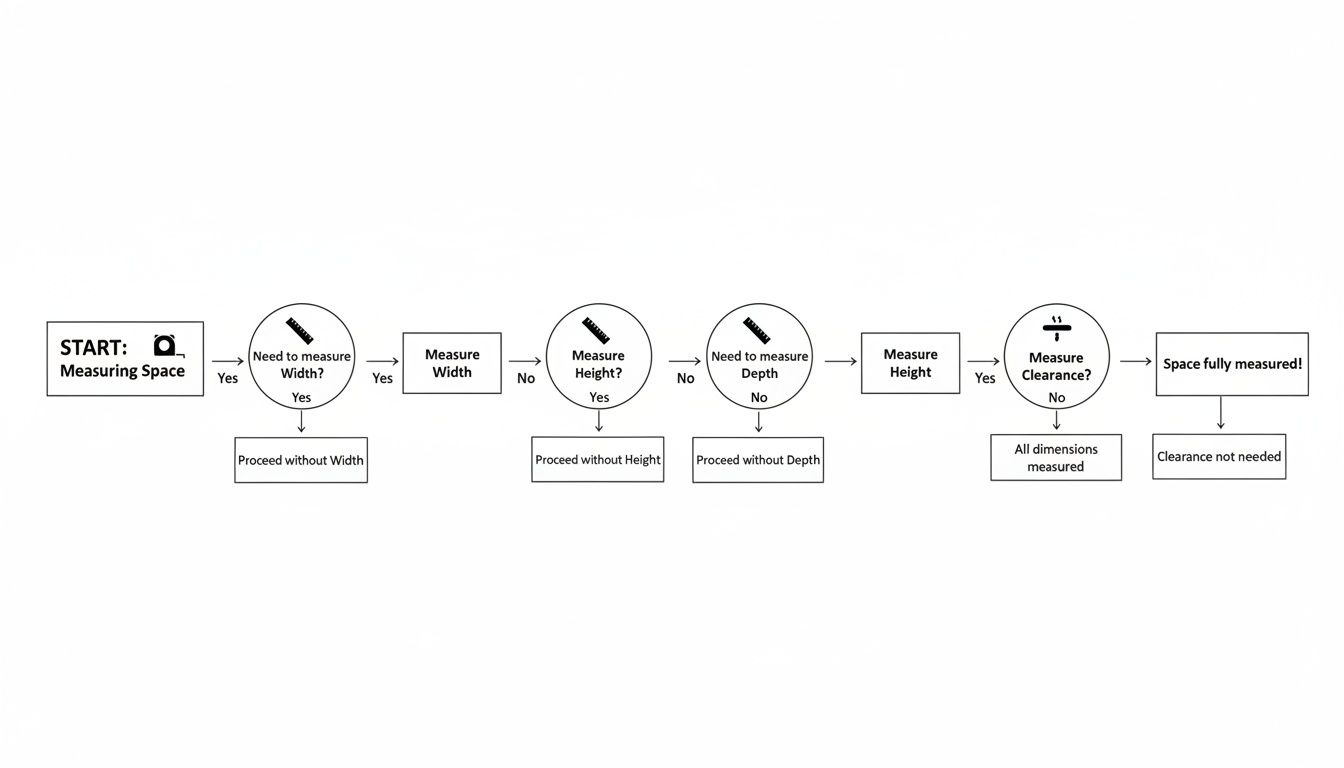
This flowchart walks you through the simple but essential steps of measuring width, height, and depth, plus the crucial reminder to leave room for ventilation.
Bustling Diners and Prep Lines
The prep line is the engine of any busy diner. This is where a 48-inch commercial griddle truly proves its worth. It offers plenty of room to support multiple cooks, handling everything from pancakes and eggs to burger patties. A unit this size can cook enough food to get you through a chaotic dinner rush without creating a bottleneck at the main cooking station.
The larger surface is also a huge plus for organization and menu diversity. You can designate different temperature zones for different foods, helping cooks manage multiple orders at once without a second thought.
For a busy line, think of your commercial griddle as a shared resource. A wider, two- or three-control unit prevents bottlenecks by giving multiple chefs space to work simultaneously, keeping the entire line moving smoothly.
Bars and Taverns
Behind the bar or in a small tavern kitchen, it's all about speed and simplicity. A 36-inch commercial griddle is the perfect fit for this environment. It's large enough to handle a bar menu of burgers, quesadillas, and appetizers, but compact enough that it doesn't take over the entire kitchen.
These mid-sized units show just how vital griddles have become. In 2024, the global undercounter refrigerator market ballooned to USD 3.42 billion, proving that workhorse equipment for compact spaces is indispensable in high-volume businesses. You can read more about these market insights on undercounter refrigerators to see just how big their impact is. Getting the right griddle isn't just a purchase—it's a smart play for a more efficient kitchen.
Commercial Griddle Sizing by Kitchen Type
To make it even clearer, let's break down which sizes and features work best for different commercial kitchens. This table connects the dots between the type of operation you run and the ideal commercial griddle to support it.
| Kitchen Type | Recommended Size (Width) | Key Feature Focus | Example Application |
|---|---|---|---|
| Food Truck/Concession | 24-inch | Maximum space efficiency, quick heat-up | Cooking burgers, cheesesteaks, and hot dogs in a limited space. |
| Diner/Breakfast Spot | 48-inch | High capacity, multiple temperature zones | Handling large breakfast orders with eggs, bacon, and pancakes all at once. |
| Bar/Tavern | 36-inch | Versatility, fast recovery time | Firing appetizers, burgers, and sandwiches for a busy bar crowd. |
| Small Cafe/Bakery | 24-36 inch | Compact footprint, energy efficiency | Preparing grilled sandwiches, breakfast items, and heating pastries. |
| Large Restaurant Line | 60-72 inch | Massive capacity, multi-chef accessibility | Supporting several stations (sauté, grill, garde manger) along a long prep line. |
Ultimately, the goal is to find a griddle that fits seamlessly into your workflow. Whether it's a small unit for a mobile kitchen or a three-foot giant for a high-volume restaurant, the right size will make your entire operation run smoother.
Pairing Your Commercial Griddle with Refrigeration
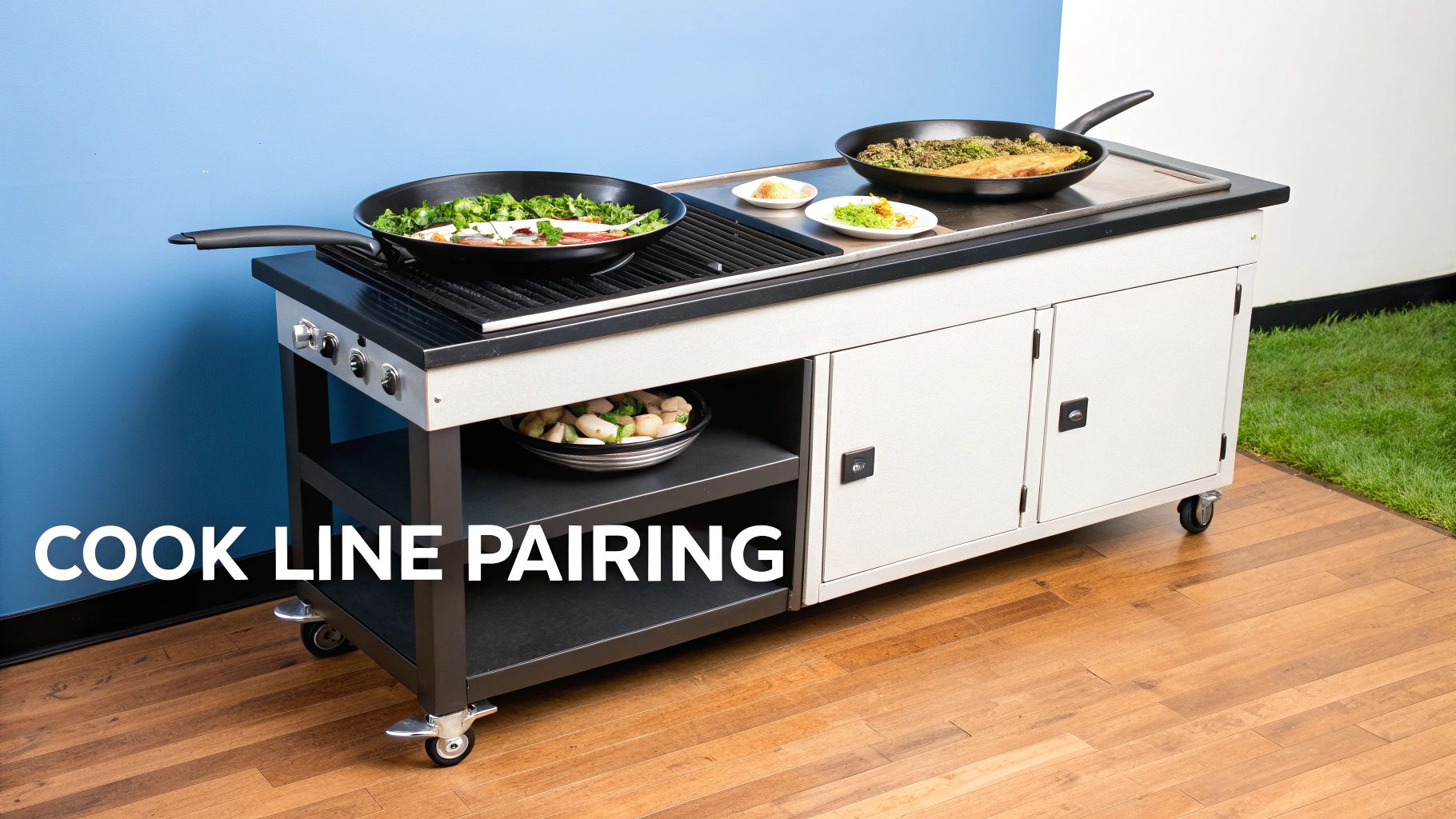
A truly efficient cook line is like a well-choreographed dance, where every piece of equipment works in perfect sync. In a high-volume kitchen, one of the most powerful partnerships you can create is between your commercial griddle and the right undercounter refrigeration. This isn't just about saving a bit of floor space; it's about building a completely self-contained, high-output workstation.
Picture this: a 48-inch griddle sitting directly on top of a matching 48-inch refrigerated chef base. Instantly, your cook has everything they need right at their fingertips. Burger patties, cheese, bacon, and prepped veggies are all perfectly chilled and just inches below the cooking surface.
This kind of setup means your chef never has to walk away from the griddle during a hectic dinner rush. Every step saved is time gained, which translates to faster ticket times and a much calmer, more organized kitchen. It effectively turns a simple cooking station into a powerhouse of productivity, with ingredients moving seamlessly from cold storage to the hot line.
Creating the Perfect Workstation
The real magic of this pairing comes down to its smart, logical design. A chef base is a special type of undercounter fridge built with a reinforced, heat-resistant top. It's specifically engineered to support heavy cooking equipment like griddles, ranges, and charbroilers, making it the ultimate foundation for a cooking station.
When you match the sizes of the chef base and the commercial griddle, you create a flush, stable surface. For example, a 36-inch chef base is the perfect partner for a 36-inch griddle. This precise alignment not only ensures stability but also makes the entire unit much easier to clean and maintain. To explore other ways refrigeration can support your main line, check out our guide on countertop refrigeration options.
Managing Heat and Ventilation
But wait—placing a hot griddle directly on top of a refrigerator creates an obvious challenge: managing the heat. The heat radiating down from a griddle can force the fridge's compressor to work overtime. If not handled correctly, this will lead to poor performance, higher energy bills, and eventually, equipment failure.
Proper ventilation isn't just a suggestion; it's absolutely essential for protecting your investment. Without enough airflow, the heat from your griddle will kill your refrigerator's performance and drastically shorten its lifespan.
To solve this problem, manufacturers design chef bases with heavy-duty insulation and powerful, front-breathing ventilation systems. These systems are designed to pull in cool air from the front of the unit and push hot air back out the front, keeping it away from the compressor and the griddle's intense heat.
When installing, you must follow the manufacturer's specified clearance requirements for the back and sides. Giving the unit enough breathing room is critical to making sure this system works as intended. This bit of careful planning ensures your hot and cold equipment can work side-by-side without any issues, keeping your line running smoothly for years to come.
Your Final Checklist Before Buying
Alright, this is the final check before you pull the trigger. Making the right call on a big piece of equipment like this feels good, and running through these last few points will make sure you get a unit that slots right into your kitchen and starts working for you from day one.
Think of this as the last step. You've done the research, and now you're about to become the satisfied owner of a commercial griddle that actually fits your space and your workflow.
Verifying Space and Power
First things first, grab that tape measure one last time. You know the drill: measure the height, width, and depth of the space and always use the smallest number for each. It’s the oldest trick in the book for a reason.
- Final Measurements: Have you locked in the absolute smallest height, width, and depth of your installation spot?
- Ventilation Clearance: Did you remember to leave that crucial breathing room? Most griddles need 6-12 inches from combustible walls for safety.
- Electrical/Gas Setup: Is the outlet or gas line in your kitchen the right match for the griddle's requirements? A simple mismatch here is a classic rookie mistake that can cause a massive headache on installation day.
Aligning Features with Your Workflow
Now, picture a chaotic dinner rush. How will this griddle perform? The right setup isn't just a convenience; it's a game-changer for your team's speed, especially if it's sitting on a chef base.
The goal isn't just to buy a griddle; it's to invest in a solution that makes your entire cook line faster and more organized. The right features will support your team when the pressure is on.
Ask yourself these final questions about your daily grind:
- Gas or Electric? Do you need the raw power and responsiveness of gas, or the consistent, even heat of an electric model?
- Thermostatic or Manual? Do you need precise temperature control for delicate items, or simple high/medium/low settings for burgers and breakfast?
- Plate Thickness: Does your menu demand a thicker plate that retains heat for high-volume searing, or will a standard thickness suffice?
And if you want to zoom out and look at the bigger picture, our commercial kitchen equipment checklist is a great resource. Nailing these final questions ensures the commercial griddle sizes and features you settle on are the perfect wingman for your kitchen's unique rhythm.
Frequently Asked Questions
When you're trying to fit a new commercial griddle into a busy cook line, a few questions always pop up. Let's clear up some common points, especially when you're pairing a griddle with refrigeration.
Undercounter Refrigerator vs. Chef Base
You might see a standard undercounter fridge and a chef base and think they're the same thing. They look similar, but they have completely different jobs. Your regular undercounter fridge is purely for cold storage. A chef base, on the other hand, is a tough piece of equipment built with a reinforced, heat-resistant top made to hold heavy, hot cooking gear like a griddle or charbroiler.
It’s best to think of a chef base as two pieces of equipment in one: a refrigerator and a heavy-duty equipment stand.
A chef base is designed to take the heat. You can put a 600°F griddle right on top without a problem. Try that with a standard undercounter fridge, and you'll have a melted, broken unit in no time.
Placing a Griddle on an Undercounter Fridge
So, can you just put a commercial griddle on any undercounter fridge you have? Absolutely not. This is a critical safety and equipment issue. Only a unit specifically sold as a chef base is built to handle the intense, non-stop heat coming off a griddle.
Putting a hot appliance on a standard undercounter refrigerator will wreck its cooling system and create a serious safety hazard in your kitchen. Don't do it.
Ventilation Clearance for Commercial Griddles
"How much breathing room does my griddle need?" This is one of the most important questions you can ask during installation. For most commercial griddles, especially those squeezed in next to fryers, you'll need at least 6-12 inches of clearance on the back and sides from any combustible surfaces.
This isn't just a suggestion—it's essential for fire safety. That space prevents heat from building up and igniting nearby materials. Always, always check the manufacturer's spec sheet for the exact clearance your model requires to keep your kitchen safe and compliant with local codes.
Ready to build the perfect cooking station with the right equipment? Griddles.com has a full range of commercial griddles and chef bases designed to work seamlessly together. Find the perfect match for your kitchen at Griddles.com.