
How to Master Your Commercial Griddle for Buffet Service
It's actually pretty simple: cook your food to perfection on the griddle, transfer it to a holding pan, and ensure it stays hot for service. That's the core of it. Using a commercial griddle correctly is the professional's secret to creating delicious, safe, and appealing food for hours on end—a must-have for any buffet service.
Keeping Food Perfectly Hot The Professional Way
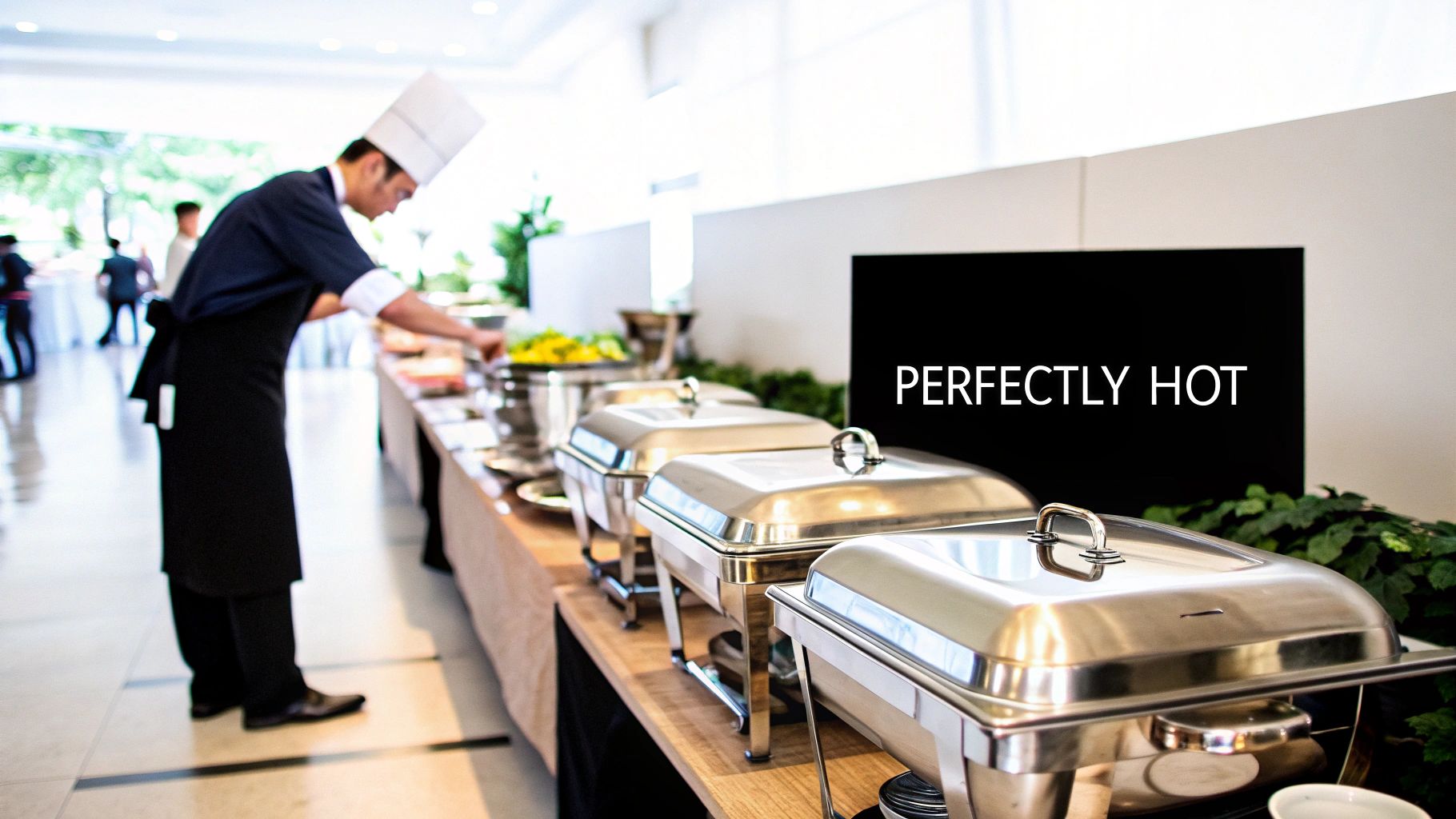
Ever been to a catered event and wondered how they produce such a high volume of perfectly cooked food for the buffet line? The answer isn't magic; it's the versatile commercial griddle, used with professional precision.
These workhorses are the unsung heroes of any high-volume kitchen or catering gig. They ensure that the incredible food you just perfected doesn't get cold and sad by the time it reaches the guest. This guide isn't just about the basics of griddle cooking—it's about the pro techniques that make the difference between an amateur setup and a flawless buffet service that relies on perfectly cooked components.
The Foundation of Professional Buffet Service
Think of a commercial griddle as your primary production station for buffet items. It uses a large, flat, heated surface to cook large batches of food evenly and efficiently, a process far superior to cooking in small pans. Every commercial griddle is built around a few key components working together:
- A Griddle Plate: This is the main cooking surface, typically made of steel, providing consistent heat distribution.
- A Heat Source: This is usually a series of gas burners or electric elements underneath the plate.
- Temperature Controls: These allow you to create different heat zones on the griddle surface for cooking multiple items at once.
- A Grease Trough: This collects excess fats and oils, keeping your cooking surface clean and safe.
Once you get how these parts interact, you can make sure every dish holds its intended texture and flavor from the first serving to the last. For a deeper dive into all kinds of warming equipment that holds griddled food, check out this ultimate guide to catering food warmers.
Key Takeaway: A commercial griddle is for cooking, not for holding. Your food needs to be fully cooked and heated to a safe internal temperature on the griddle before it ever goes into a holding pan for service.
We're going to cover everything from picking the right commercial griddle for your business to the nitty-gritty of setup, temperature control, and cooking techniques. You'll learn the real-world tricks for food production, crucial safety rules, and the cleaning routines that will make your equipment last for years. And if you're exploring options for holding the food you've cooked, you might find our breakdown of different food warmer pans useful, too.
Choosing Your Commercial Griddle: Gas Vs. Electric
Right out of the gate, your biggest decision is how you're going to heat your griddle. Are you team traditional gas or team modern electric? This choice trickles down to affect everything—heat-up time, temperature control, and even utility costs. Both have their place in a busy commercial kitchen, but they excel in very different situations.
Electric commercial griddles are a common sight, especially in venues where gas lines aren't available. Their main draw is the precise thermostatic control. You just set the dial to the exact temperature you need for consistent results. That kind of reliability is a lifesaver for cooking delicate items like pancakes or eggs, and for ensuring proteins from your commercial griddle are cooked perfectly every time.
This "set it and forget it" convenience is a big reason the market for electric models is growing. Think about it: getting the temperature wrong can spike food waste by over 30%, and that’s a costly error electric units help you sidestep. You can dig into some of the market trends and their impact on the broader food service equipment industry if you're curious about the numbers.
When Gas-Powered Griddles Reign Supreme
For all the perks of electric, gas-powered griddles have one killer feature: rapid heat response. If you're running a busy kitchen that needs to switch between high-heat searing and lower-temp cooking quickly, gas is your best friend. These units heat up faster and allow for instant temperature adjustments, giving chefs superior control.
That power and responsiveness is exactly why they're still so popular in high-volume settings. You're not waiting for an element to heat up or cool down, which means faster production for your buffet line.
Pro Tip: When you're working with a gas griddle, create heat zones. Set one section to high heat for searing meats, a middle section to medium for cooking vegetables, and a third section to low for holding finished items for a few moments before plating.
A Head-to-Head Comparison
So, how do you make the final call? It's not just about cooking food; it's about matching the gear to your menu, your kitchen, and your service style. Let's break down the key differences to see which one fits your operation.
Commercial Griddle Heat Source Comparison
Choosing the right griddle is a practical decision based on your most common cooking scenarios. Here’s a quick look at how electric and gas-powered options stack up against each other.
| Feature | Electric Commercial Griddle | Gas-Powered Commercial Griddle |
|---|---|---|
| Temperature Control | Excellent: Thermostatic controls offer precise, consistent heat. | Good: Manual controls offer rapid changes but are less precise. |
| Best Use Case | Breakfast items, delicate foods, kitchens without gas hookups. | High-volume restaurants, fast-paced cooking, searing. |
| Heat-Up Time | Slower to heat up and cool down. | Heats up very quickly and responds instantly to changes. |
| Portability | Limited: Requires a high-voltage electrical outlet. | More Flexible: Countertop models can connect to propane tanks. |
| Operating Cost | Higher initial cost but can be more energy-efficient. | Lower initial cost, but gas prices can fluctuate. |
Ultimately, many high-volume operations find their choice depends on their menu. Having a precise electric griddle for breakfast service and a powerful gas griddle for the dinner rush gives you the flexibility to handle any culinary task.
A Practical Guide to Griddle Setup and Seasoning
Getting your commercial griddle setup right is the bedrock of a smooth service. A little prep work here saves you from scrambling later and ensures everything is cooked safely and efficiently.
First things first, find a good spot for the griddle. It needs to be on a stable, completely level surface under a proper ventilation hood. Keep it far from anything flammable and ensure there is adequate clearance around it. This simple step is your best defense against kitchen fires and accidents.
Once the griddle is in place, ensure it is properly connected to its gas or electric source by a qualified professional. Do not attempt to install it yourself.
Prepping the Cooking Surface
Before you cook anything, a new griddle must be seasoned. This process creates a non-stick surface and protects the steel. Start by washing the factory-applied coating off the griddle plate with soap and water, then dry it completely.
Turn the griddle on to a medium-high heat (around 300-350°F) and let it heat for 15-20 minutes. Apply a thin layer of cooking oil over the entire surface with a cloth. Let the oil smoke and burn off. Repeat this process 3-4 times until the surface develops a dark, slick patina. This is your natural non-stick coating.
Deciding between electric and gas often boils down to your kitchen's infrastructure and menu needs. Are you inside with easy access to high-voltage power, or do you have a robust gas line ready to go? This chart breaks down the decision pretty clearly.
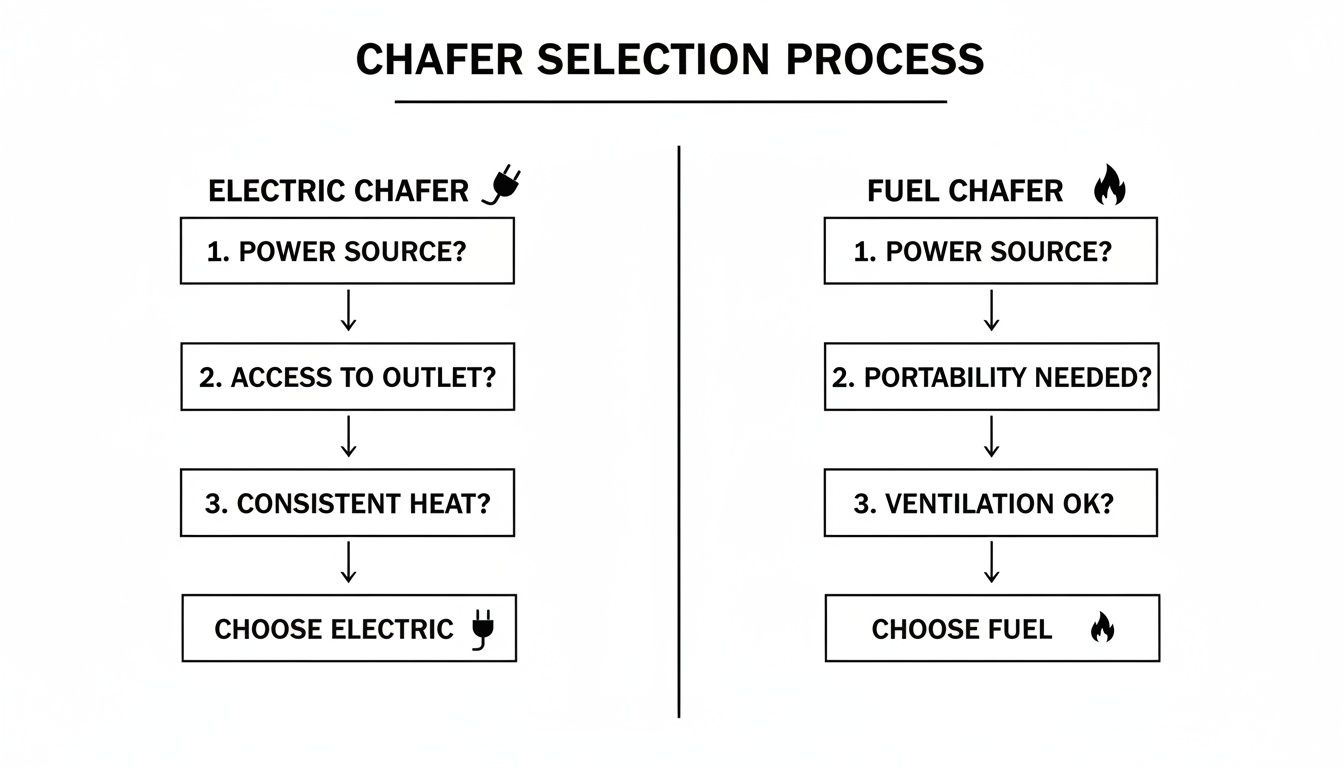
As you can see, electric is your best bet for precise temperature control. For everything else, especially high-heat searing and quick response, gas is the way to go.
The First Cook
Alright, now for cooking. Preheat your griddle to the desired temperature. A commercial griddle can hold food safely for short periods, but its main job is cooking. Food cooked on a griddle at 350°F reaches a safe internal temperature quickly, slashing bacteria risk by 90%. In fact, commercial griddles are a cornerstone of the food service equipment market, which hit USD 1.26 billion in 2024. You can discover more insights about these industry trends to see how the market is growing.
Crucial Tip: Never shock your griddle plate. Pouring cold water or placing frozen food on a hot griddle can cause the metal to warp. Always thaw ingredients and use room temperature liquids for deglazing.
Finally, you’re ready for production. Once your food is perfectly cooked, transfer it immediately to a holding pan for service. Never let cooked food sit on a turned-off griddle to cool. Transferring it to a holding unit is essential for maintaining food quality and safety before it goes to the buffet, which is where your perfectly cooked food from your commercial griddle shines.
Mastering Temperature Control for Food Safety
Let's get one thing straight: cooking food on a commercial griddle isn't just about getting a good sear. It's a non-negotiable part of food safety. Any hot food you serve absolutely must be cooked to a safe internal temperature, often above 165°F (74°C) for items like poultry, before being held at or above 140°F (60°C). This isn't a friendly suggestion—it's the critical line separating safe food from the "temperature danger zone" where bacteria throw a party.
Your reputation, and more importantly, your guests' health, hinges on nailing this every single time. A commercial griddle is your first line of offense, making sure that the beautiful food you produce is safe from the moment it leaves the cooking surface.
Adjusting Heat for Different Griddle Types
How you dial in the heat completely depends on whether you're using a classic gas griddle or a modern electric unit. With traditional gas griddles, your control comes from the burner knobs. It's a surprisingly effective system for creating heat zones.
- High Heat Zone: Set one section of burners to high. This lets you get a perfect, fast sear on steaks, burgers, or chicken, locking in juices.
- Medium/Low Heat Zone: Set other burners lower. This is perfect for more delicate items like vegetables, fish fillets, or a pan of scrambled eggs that need gentle, even cooking.
Electric commercial griddles, on the other hand, offer push-button simplicity. The built-in thermostat lets you set a precise temperature and walk away, ensuring even cooking across the entire surface. A good rule of thumb is to start low for sensitive foods like eggs and crank it higher for dense items like sausages that really need the extra power to cook through.
Expert Insight: Here's a pro tip that can save you a world of trouble: Always, always use an infrared thermometer to check the surface temperature of your griddle and a probe thermometer to check the internal temperature of your food. A griddle's dial is a guide, but real-world temperatures can vary.
Maintaining Consistent Temperatures During Service
Getting the temperature right at the beginning is just the start. During a long service, you have to manage your griddle surface to keep things consistent. Don't just set it and forget it.
Make it a habit to periodically check your surface temperature, especially after adding a large batch of cold food, which can temporarily drop the temperature. Always cook to the proper internal temperature, probing the thickest part of the food.
Another simple but crucial trick is to keep your griddle surface clean between batches. Use a scraper to push excess food bits and grease into the trough. This prevents flare-ups, cross-contamination of flavors, and ensures even heat transfer to the next batch of food. Getting a handle on heat management is key to great cooking, and our griddle cooking temperature chart is a fantastic resource for diving deeper.
Smart Batch Cooking and Plating Techniques
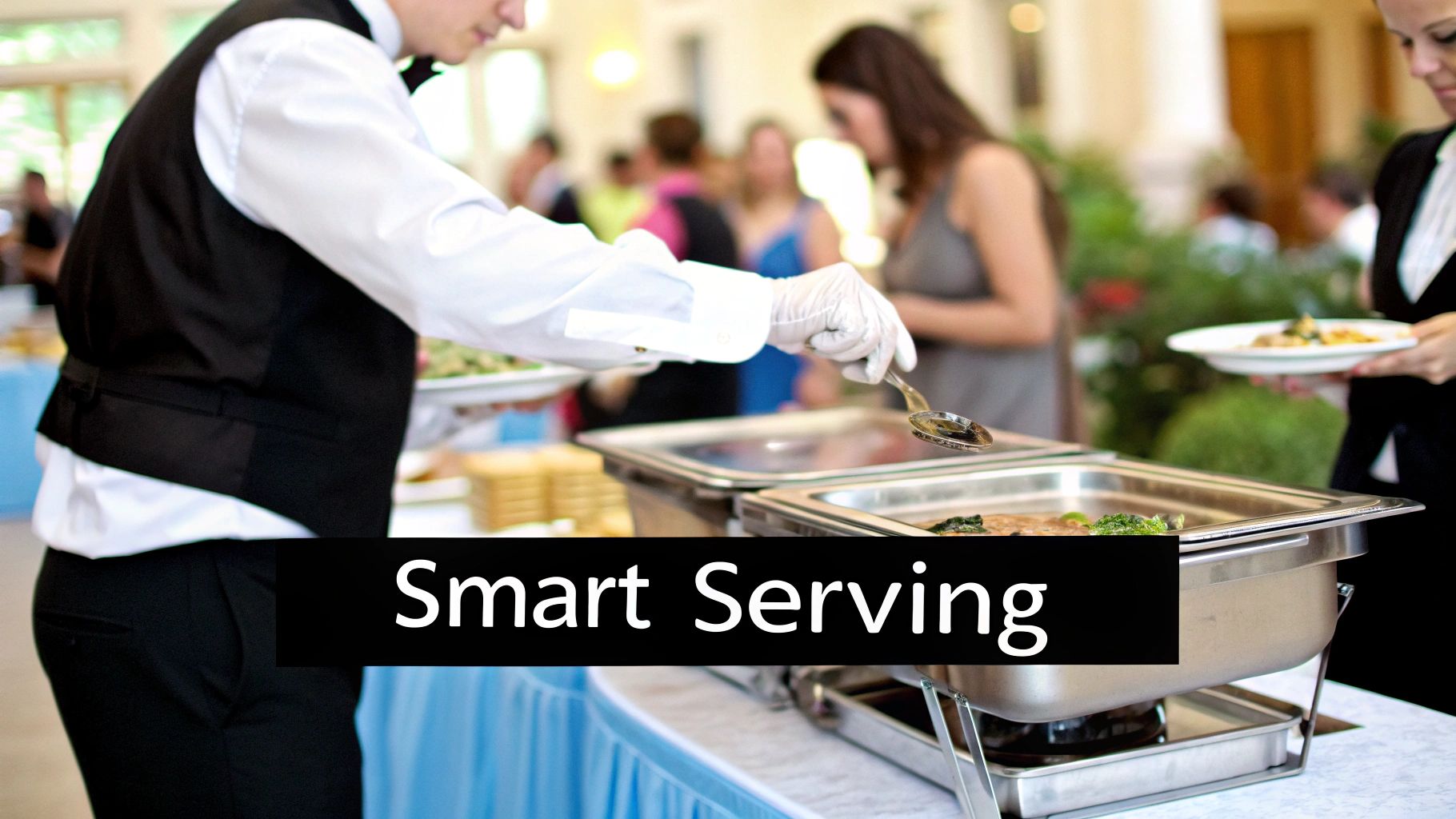
A busy service is what we all want to see—it means a successful kitchen. But it’s also where your cooking flow gets put under a microscope. Keeping guests happy and the buffet line full comes down to having a smart strategy for batch cooking and plating. This is what separates the pros from the amateurs.
It all starts with your griddle layout, or mise en place. You want to arrange your raw ingredients in a way that makes sense for your workflow, with proteins, vegetables, and oils all within easy reach. But here's the real pro tip: use your griddle's heat zones to cook multiple items at once. Sear proteins on the hot zone while gently cooking vegetables on the medium zone. This lets you be proactive, finishing entire plates at once.
Executing the Perfect Batch Cook
When one holding pan on the buffet is getting low, the last thing you want is a long delay. The goal is to have the next batch coming off the griddle just in time. The secret? Always stage your raw ingredients for the next batch so they are ready to go.
Train your cooks to fire the next batch when the pan on the line is at 25% full. This quick turnaround keeps the buffet looking full and, more importantly, keeps the food fresh and at a consistent, safe temperature. A well-rehearsed cooking flow takes practice but makes a huge difference in the guest's eyes.
Here are a few things we always drill into our teams for a smooth service:
- Communicate, Communicate, Communicate: Your front-of-house staff needs a simple, discreet way to alert the kitchen that a pan is getting low. Hand signals, a quick call—whatever it is, have a system.
- Always Have Backups Ready: For the crowd-pleasers like sausages or the main protein, you should have ingredients prepped and portioned for the next several batches.
- Map Your Route: Figure out the clearest, safest path for cooks to move around the griddle station and for servers to carry hot pans from the kitchen to the buffet.
The Golden Rule of Food Production: Never, ever rush the cooking process. Trying to cook on a griddle that is too hot will burn the outside while leaving the inside raw. This is a massive food safety risk. Always cook food to its proper internal temperature, no matter how busy the line is.
Maintaining a Clean and Professional Cooking Station
Cooking delicious food is only half the battle; presentation and safety are everything. A spotless cooking station tells your team that you care about quality. Make sure your cooks have scrapers and clean cloths handy to wipe down the griddle surface and surrounding areas between batches.
It’s also crucial that every raw ingredient has its own container and tongs. No exceptions. This prevents cross-contamination and just keeps things looking neat and organized. Remember, a messy cook line makes people wonder about the safety of your food. Keeping the station pristine is one of the easiest ways to build trust and show your professionalism.
Proper Cleaning and Storage to Protect Your Investment
When the last order has been fired, the job isn't quite done. The post-service breakdown and cleaning are just as important as the initial setup. Think of it this way: your commercial griddle is a serious investment, and a solid cleaning routine is the only way to protect that investment, keeping it cooking perfectly for the next event.
First things first: safety. Before you even think about grabbing a scraper, make sure the griddle is turned off. Then, and this is non-negotiable, let it cool down to a warm, but not scorching, temperature. Cleaning a piping hot griddle is a recipe for a nasty burn.
The Cleaning Process for a Steel Griddle
Once it's safe to handle, it's time to get cleaning. The number one rule is to scrape the surface while it's still warm. Use a griddle scraper to push all food debris and grease into the grease trap. Avoid using water on a very hot griddle as this can cause it to warp.
For a deeper clean, you can use a griddle brick or screen on the warm surface to scrub away any stubborn, carbonized bits. Work in the direction of the metal grain. Once scraped, wipe the surface with a cloth and a small amount of oil to re-season it and prevent rust. It really helps to know what makes a good cleaner for stainless steel to protect your gear and keep things hygienic, and you can learn more in our comprehensive guide on how to clean a commercial griddle.
Key Takeaway: The last step is just as critical as the cleaning itself: you have to apply a thin coat of cooking oil to the clean, dry surface. This protects the steel from moisture and rust, ensuring it's seasoned and ready for the next service.
Smart Storage and Maintenance
How you maintain your griddle is just as important as how you clean it. Good maintenance habits will protect your equipment from damage and ensure its longevity. A few smart moves now will save you from costly replacements down the road.
- Empty the Grease Trap: After every single use, empty and clean the grease trap. A full trap is a serious fire hazard.
- Cover the Surface: If the griddle won't be used for a day or two, cover the oiled surface. This protects it from dust and debris in the kitchen.
- Regular Inspections: Periodically have a professional inspect your griddle's gas lines or electrical connections. There's nothing worse than equipment failure minutes before service. This makes sure your griddle is always ready for the next event.
Common Questions About Using Commercial Griddles
Even if you've been in the business for years, you'll still run into little questions when setting up for a big service. Let's tackle some of the most common things we hear from chefs about getting the most out of their commercial griddles.
One of the first questions that always comes up is how hot the griddle should be. The magic number depends on what you're cooking, but a range of 350-400°F is the sweet spot for many items, from searing meat to cooking pancakes.
Another big one is whether you can use soap to clean the griddle surface. While you need to wash a brand new griddle with soap, you should never use soap on a seasoned griddle. Soap will strip away the non-stick patina you've worked so hard to build. Scrape, scrub with a griddle brick, and re-oil instead.
Cooking, Safety, and Food Prep
Now let's get into the nitty-gritty of food prep. Do you have to cook the food completely on the griddle? Yes, absolutely. This is probably the most critical point. A griddle is a primary cooking appliance. All your food needs to be brought up to its final safe internal temperature on your commercial griddle or in the oven first before being moved to a holding unit.
The right technique is also a game-changer for safety and performance. Griddles now power around 70% of US restaurant breakfast services that need to produce high volumes of food quickly. Modern gas griddles are fantastic—they offer instant heat control, are about 90% more responsive than electric models, and produce enough consistent heat to meet NSF standards. This alone can cut the risk of undercooked food by up to 85%. If you want to dive deeper into equipment, you can review detailed market research on chafing fuel and other food service supplies.
Crucial Reminder: Think of your griddle as a "primary cooking station," not a "food warmer." Trying to hold food on a griddle for extended periods will lead to overcooking. Cook food to perfection, then immediately transfer it to a proper holding unit to maintain quality and temperature.
Mastering these details is what separates a smooth, professional service from a chaotic one. Get these basics right, and you'll deliver safe and high-quality food every single time.
Whether you're searing off chicken or sautéing vegetables for your buffet line, Griddles.com has the high-performance commercial griddles and cooking equipment to build out your entire line. Get the reliable gear you need with free shipping and fast delivery. https://griddles.com