
Your Ultimate Food Truck Equipment List: A Commercial Griddle Guide
When you're building out your food truck equipment list, there's one piece of gear that stands as the heart of your entire mobile kitchen: the commercial griddle. It's not just a flat-top cooking surface; it's the engine that powers your menu, dictates your service speed, and ultimately, drives your profits. This guide is dedicated to helping you make the most critical equipment decision for your food truck business.
The Griddle: Your Food Truck's Profit Engine
Think of your food truck as a high-performance machine. If your menu is the destination, your commercial griddle is the engine that gets you there, fast. It is the undisputed workhorse for any high-volume, fast-paced service, letting you jump from flipping breakfast tacos to sizzling smash burgers on one continuous surface. This raw adaptability is what makes the griddle the central stage for your entire culinary concept.
The food truck business is built on speed and efficiency. The commercial griddle you choose directly shapes your workflow, what you can realistically offer on your menu, and your chances of success. It’s not just about cooking; it’s about pumping out consistently great food, fast, to capitalize on those profitable lunch rushes.
Why the Griddle Is the MVP of Food Truck Equipment
A commercial griddle's true value lies in its unmatched versatility and sheer output capacity. A grill has grates, and a range has separate burners, but a griddle provides a huge, uniformly heated canvas. This is critical in the tight quarters of a mobile kitchen, allowing a small crew to juggle multiple orders at once—a make-or-break factor for profitability.
Consider these advantages:
- Menu Flexibility: Pancakes, eggs, cheesesteaks, quesadillas... a quality commercial griddle can handle a massive range of the most popular street food items.
- Speed of Service: The large, hot surface means you can cook and turn food incredibly quickly, slashing ticket times and serving more paying customers.
- Consistent Results: With even heat across the plate, you can be confident that every single burger or pancake comes out perfectly, building a reputation for quality.
Connecting Your Griddle to Profitability
Choosing the right commercial griddle isn't just an operational choice; it's a direct investment in your business's bottom line. The U.S. food truck industry is booming, supporting around 92,257 businesses, which proves how profitable a well-equipped mobile kitchen can be. With the average truck pulling in annual revenues of $346,000, it's clear that the right equipment is a cornerstone of that success. For more on the industry's financial side, check out the data over on FoodParks.io.
A powerful, reliable commercial griddle isn't an expense; it's a revenue-generating machine. By enabling you to serve more customers in less time with a diverse menu, it directly boosts your daily earnings and return on investment.
This model is so effective it’s even inspiring other parts of the food industry. The whole idea of a compact, high-output kitchen is the foundation for many modern food businesses. You can see how these principles are applied by learning more about what is a ghost kitchen in our detailed article. Starting with the right commercial griddle is the foundational step toward building a profitable food truck that can truly compete.
Choosing Your Power Source: Gas Versus Electric Griddles
One of the first major decisions you'll make when selecting a commercial griddle for your food truck is the power source. This isn’t a small detail—it affects your truck's initial build-out, your daily kitchen workflow, and your ongoing energy costs. The choice boils down to two main options: gas and electric.
Gas griddles, which almost always run on propane in a food truck setting, are a long-standing favorite for a reason. They provide raw, responsive heat that kicks in instantly, which is exactly what you need for a perfect sear during a chaotic lunch rush. A gas griddle offers pure power and immediate throttle response.
However, this power requires careful management. You'll be handling heavy propane tanks, ensuring they are securely fastened for travel, and installing a proper ventilation system to meet local fire codes. It’s a constant trade-off: incredible cooking power versus the logistics of managing fuel.
The Case for Gas Griddles
Many seasoned food truck chefs swear by propane. It delivers a familiar, intense heat that you can control in a split second. A quick turn of the knob provides instant feedback, perfect for juggling different items on a varied menu.
- Rapid Heat-Up: Gas griddles get hot fast, so you can start cooking almost immediately.
- High-Temperature Searing: The direct flame creates the perfect crust on a smash burger or seared steak.
- Off-Grid Capability: Since you're running on self-contained propane tanks, your primary cooking tool isn't completely dependent on a generator.
If you want to get deeper into the details of gas types, our guide comparing natural gas vs propane griddles has all the information.
The Precision of Electric Griddles
On the other hand, electric commercial griddles bring a different superpower: unbelievable consistency. They are masters at maintaining a steady, even temperature across the entire cooktop. This eliminates annoying hot and cold spots, ensuring every pancake is perfectly golden and every egg is cooked just right.
This precision comes at the cost of a significant electrical draw. You’ll need a powerful generator and a robust electrical system wired into your truck to handle the demand, which can increase your initial setup costs.
An electric griddle is like a high-tech convection oven; it delivers precise, repeatable results, every single time. It's the perfect tool for delicate foods where pinpoint temperature control is more important than raw, blistering heat.
This decision is fundamental to mapping out your mobile kitchen. As shown below, your menu vision directly dictates your equipment choices.
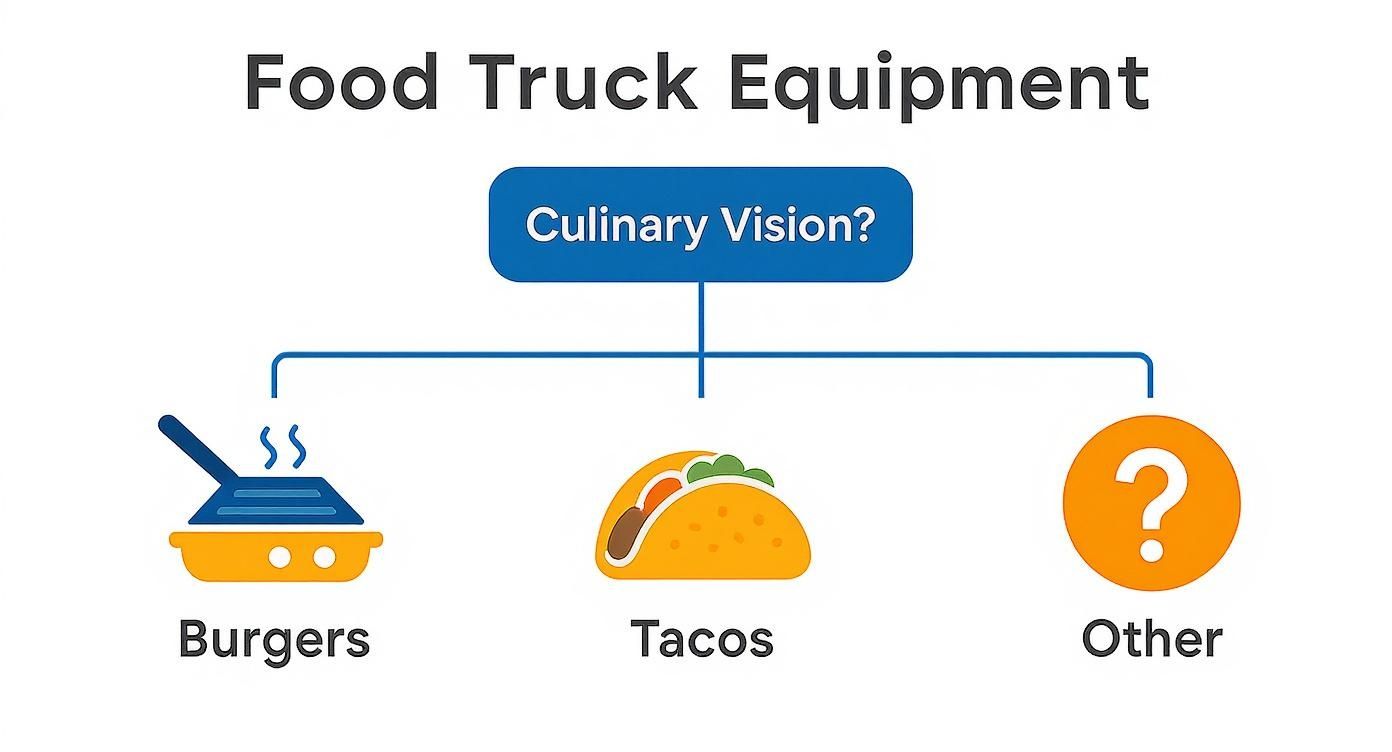
As the chart illustrates, if your brand is built on burgers or tacos, the griddle is your cornerstone, making the power source a critical first decision. The global food truck market is expected to hit USD 10.9 billion by 2035, a growth fueled by increasingly sophisticated mobile kitchens.
Gas Vs Electric Griddles: A Food Truck Showdown
To simplify your choice, we've broken down the key differences between gas and electric commercial griddles.
| Feature | Gas (Propane) Griddles | Electric Griddles |
|---|---|---|
| Heat Response | Instant. Quick adjustments to flame provide immediate temperature changes. | Slower. Takes more time to heat up and cool down; not ideal for rapid temp shifts. |
| Heat Consistency | Can have hot and cold spots, requiring more skill to manage. | Excellent. Delivers very even, consistent heat across the entire surface. |
| Power Source | Propane tanks. Independent of a generator for the primary cooking surface. | Requires a powerful generator and robust electrical system, adding to initial cost. |
| Best For | Searing meats, high-volume cooking (burgers, cheesesteaks), and fast-paced service. | Delicate items (pancakes, eggs, crepes), or when precise temperature control is critical. |
| Installation/Safety | Requires secure tank storage, proper ventilation, and adherence to fire codes. | Simpler installation, but the electrical system must be professionally installed to be safe. |
| Portability | Heavier due to tanks, which need to be refilled or swapped out regularly. | Generally lighter and more streamlined, but totally dependent on your generator's output. |
Ultimately, there is no single "best" answer. The raw power of gas is a winner for many high-volume trucks, while the steady precision of electric is perfect for others. The right choice depends on your menu, workflow, and cooking style.
Getting the Right Size and Plate Thickness for Your Commercial Griddle
Once you’ve decided on a power source, the next critical specifications for your commercial griddle are its width and the thickness of the cooking plate. These are not just numbers; they are choices that will directly impact your kitchen's speed and the quality of your food.
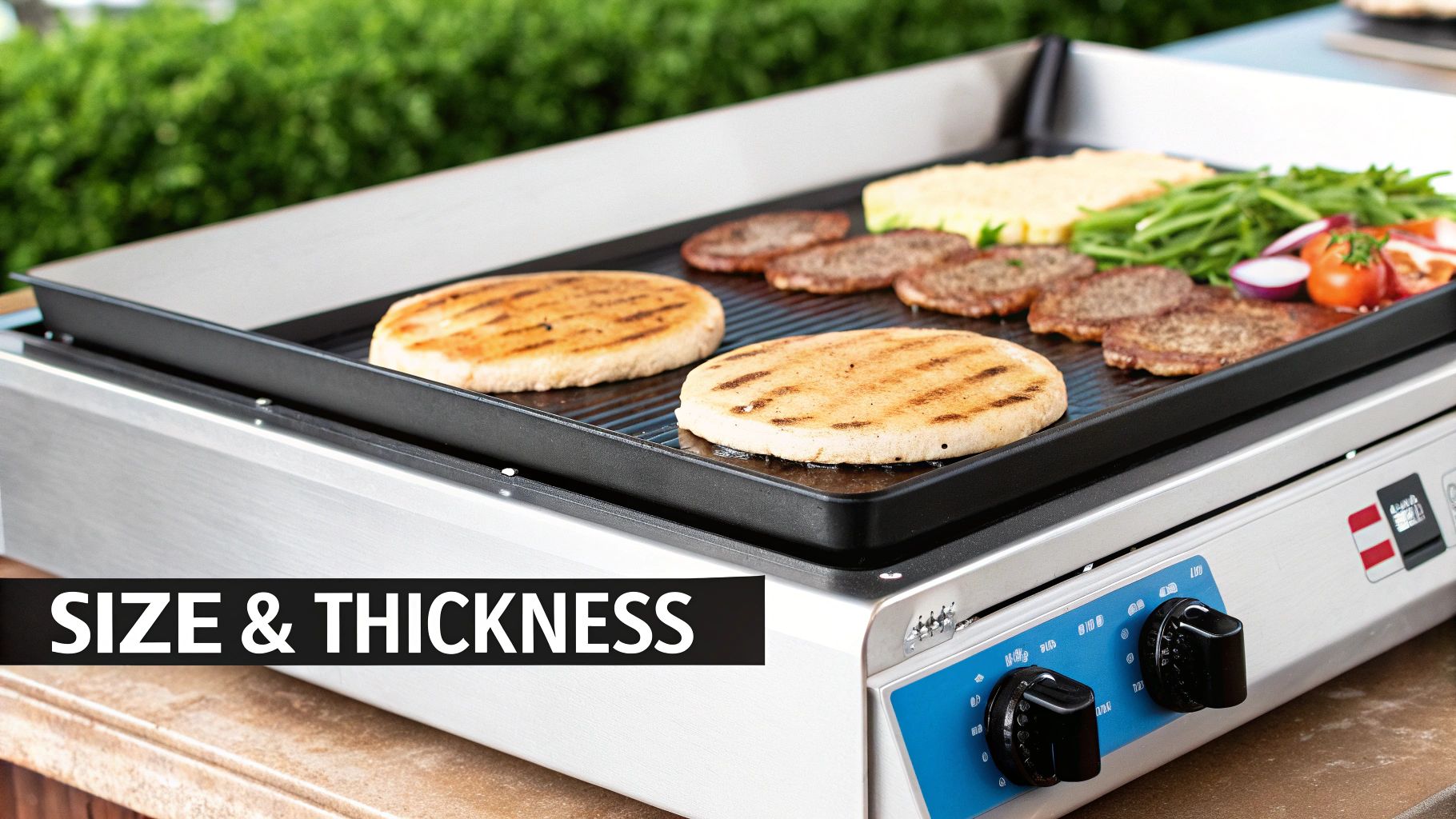
Choosing the right size is about more than just cooking capacity. It's about creating a smooth, logical workflow in the cramped space of a food truck. You must match your griddle width to your menu.
Mapping Menu to Griddle Width
The width of your commercial griddle dictates how many items you can manage simultaneously. A wider surface usually means more independent temperature controls, effectively giving you multiple cooking stations in one piece of equipment.
For example, a 24-inch griddle could be perfect for a simple, focused menu like gourmet grilled cheese or breakfast tacos. It’s compact, heats up quickly, and is ideal for a one-person operation. However, if you're serving burgers to a long line of customers, a 48-inch model is a game-changer. That extra space allows you to set up dedicated heat zones: one side for searing, a middle zone for cooking patties, and the other end for toasting buns.
Here’s a quick guide:
- Simple Menu (1-3 core items): A 24 to 36-inch griddle is your sweet spot. You get enough space without wasting fuel or power on an unused surface.
- Complex Menu (Multiple items, different temps): You’ll definitely want a 36 to 48-inch griddle. The ability to manage several heat zones is crucial for firing off different proteins, veggies, and breads simultaneously.
The Secret Weapon: Griddle Plate Thickness
While size determines workflow, the griddle plate's thickness is your key to thermal performance. A thick plate acts like a thermal battery, absorbing a huge amount of heat and releasing it steadily.
This heat retention is essential in a food truck. You're constantly placing cold or frozen food onto the cooktop, and a thin plate will lose its temperature quickly, leading to steaming instead of searing.
A thick griddle plate is the key to consistency during a rush. It maintains its temperature under pressure, ensuring the last burger you cook is just as perfectly seared as the first. This thermal stability is non-negotiable for high-volume service.
Most commercial griddles offer different plate thicknesses. A standard 3/4-inch plate is a solid all-rounder suitable for most menus. It holds heat well without taking too long to pre-heat.
However, if your menu is heavy on frozen items like burger patties, invest in a heavy-duty 1-inch thick plate. It can handle the thermal shock of a dozen frozen patties without losing its searing power, resulting in faster cooking and quicker ticket times. Conversely, a crepe truck might prefer a thinner plate for more responsive temperature changes.
Must-Have Features for a Food Truck Commercial Griddle
A modern commercial griddle is much more than a hot slab of steel. The right features can transform a basic cooking surface into a high-performance workhorse, producing better food faster and making your life easier in a cramped truck. This is your buyer's checklist for features that truly matter on the road.
Knowing what to look for is the difference between simply cooking and consistently producing top-quality food, rush after rush. When putting together your food truck equipment list, these details separate professional-grade griddles from the rest.
Precision Temperature Control Is Non-Negotiable
If there's one feature you absolutely cannot compromise on, it's the ability to hold a steady, reliable temperature. The technology behind this is thermostatic controls. This isn't a basic low-to-high knob; a thermostat allows you to set a specific temperature, say 350°F, and it maintains it.
This is a game-changer for food quality and consistency. It’s how you get every pancake golden-brown or cook every burger patty perfectly without scorching it. During a chaotic service, you need results you can count on every time.
In the world of high-volume cooking, consistency is currency. A commercial griddle with precise thermostatic controls acts as an insurance policy against burnt, undercooked, or inconsistent food, protecting your reputation with every order.
Burner and Element Design for Even Heating
A hot griddle is useless if it's full of cold spots. The design underneath the plate makes all the difference.
Here's what to look for:
- For Gas Griddles: Always choose models with U-shaped burners. A simple straight burner creates hot and cool stripes. U-shaped burners are engineered to spread the flame over a wider area, eliminating frustrating cold spots.
- For Electric Griddles: The gold standard is embedded elements. This means the heating elements are built directly into the griddle plate, not just clamped to the bottom. This design provides superior heat transfer, quicker recovery times, and greater energy efficiency.
Essential Features for Safety and Sanitation
A food truck kitchen must be safe and easy to clean. Two key features make a massive difference in daily cleanup and health inspections.
First, high splash guards. These raised metal walls around the back and sides contain grease splatter, keeping your workspace cleaner and preventing slippery, dangerous floors.
Second, a smart, high-capacity grease trough and drawer. Grease accumulates quickly during a rush. A deep, wide trough channels it away from your food, and a large, easy-to-remove drawer allows you to empty it in seconds without shutting down the line.
As the street food scene continues to grow, customer expectations are rising. To learn more about these trends, you can learn more about food truck marketing statistics. Choosing a commercial griddle with these key sanitation features shows you are serious about meeting the demand for quality.
Commercial Griddle Installation and Maintenance Best Practices
Your commercial griddle is a significant investment, and it needs to be treated as such from day one. Proper installation and a consistent maintenance routine are the secrets to performance and longevity. This is your playbook for keeping your griddle operating at peak condition for years.
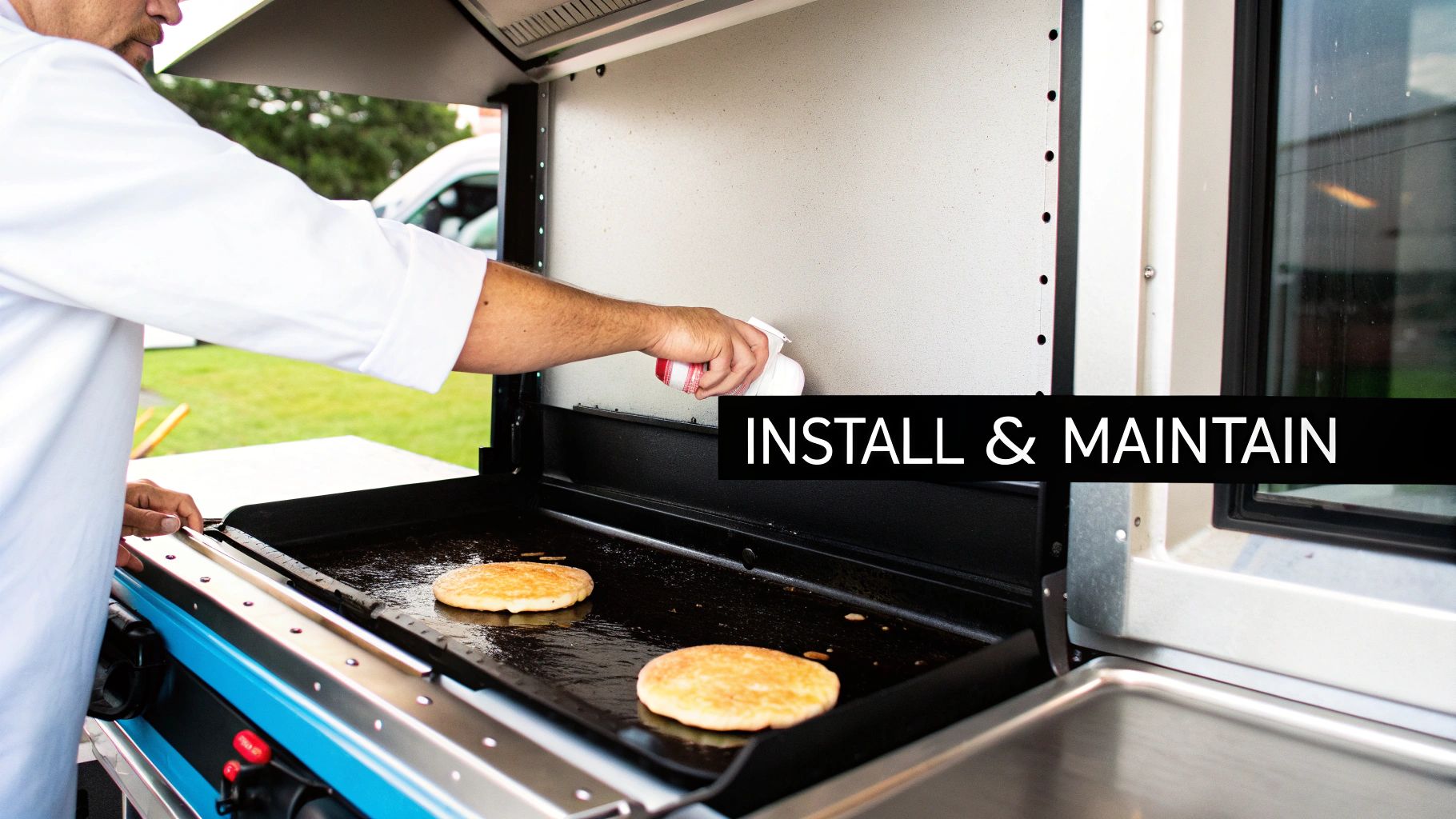
The initial setup is like laying the foundation for a house. A rock-solid installation is essential for safety and function in a food truck that is constantly in motion.
Nailing the Installation Process
Before you cook your first meal, the installation must be perfect. This involves more than just placing the griddle on a counter; you are creating a safe, stable cooking station that can withstand the vibrations of a mobile kitchen.
A wobbly griddle is a major hazard. It must be bolted down to a heavy-duty stainless steel work table to prevent movement.
Your griddle installation is a massive safety checkpoint. You must follow local fire and health codes, which dictate specific clearances from walls and require professional utility hookups. Cutting corners here is not just risky; it’s a surefire way to fail an inspection.
These are the non-negotiable installation steps:
- Ensure Proper Clearance: Maintain adequate space between the griddle and any walls or other equipment to prevent heat damage and reduce fire risk.
- Secure Mounting: Fasten the griddle securely to its stand to prevent it from shifting during travel, protecting vital connections.
- Professional Utility Hookups: Always hire a licensed professional for gas or electrical connections. Faulty installations are a primary cause of fires in food trucks.
Creating a Bulletproof Maintenance Schedule
Once your griddle is installed, daily and weekly care will keep it at peak performance. The first step is to season the griddle plate. This creates a natural, non-stick surface by applying a thin layer of oil and heating it past its smoke point, which protects the steel from rust.
For a comprehensive guide on equipment care, check out our article on commercial kitchen equipment maintenance.
Daily and Weekly Griddle Care
Consistency is key. Integrate these simple steps into your daily routine.
Daily Cleaning Routine (End of Shift):
- While the griddle is still warm, scrape off all food debris and grease.
- Pour warm water or club soda on the surface to deglaze it, and use a griddle pad to scrub away stuck-on bits.
- Wipe the surface clean with a dry cloth and apply a thin coat of cooking oil to prevent rust.
- Empty and wash the grease trap to maintain sanitation and prevent fires.
Weekly Inspection Checklist:
- Check gas line connections for leaks using soapy water.
- Inspect electrical cords for any fraying or damage.
- Calibrate thermostats to ensure accurate temperatures.
- Deep clean the surface with a grill stone to remove carbon buildup.
Sticking to these practices will ensure your commercial griddle remains a reliable workhorse, helping you pass health inspections and create a safer, more efficient kitchen.
Your Top Commercial Griddle Questions Answered
You've made the big decisions on power, size, and features. Now, let's address a few common questions to ensure you buy your commercial griddle with complete confidence.
What Is the Best Griddle Surface for a Food Truck?
For the demanding environment of a food truck, polished steel is the undisputed champion. It's durable, heats evenly, and is easy to maintain.
While chrome tops offer excellent non-stick properties, they are too delicate and expensive for mobile kitchens. A single bad scrape can ruin the surface.
For a food truck, a 3/4-inch to 1-inch thick polished steel plate offers the perfect balance of rugged performance and resilience. It can handle aggressive scraping and builds a beautiful seasoning over time.
How Many Burners or Heat Zones Do I Need?
This depends entirely on your menu. If you need to sear a burger on one side while toasting buns on the other, multiple heat zones are essential.
A good rule of thumb is to have at least one independent control knob for every 12 to 15 inches of griddle width. A 36-inch griddle with three controls, for example, allows you to create three different temperature environments on a single surface.
Should I Get a Countertop or Freestanding Griddle?
For a food truck, a countertop commercial griddle is the only practical choice. These units are designed to sit on a heavy-duty stainless steel work table or equipment stand, maximizing your limited space.
Freestanding models with their own legs consume valuable floor space that could be used for refrigeration or movement. Always choose a sturdy countertop model that can be securely bolted down.
How Much Propane Will a Gas Griddle Use?
This varies based on your griddle's BTU output and usage. A common 36-inch gas griddle with a 90,000 BTU/hour rating and a standard 20 lb propane tank (approx. 430,000 BTUs) might seem to last 4-5 hours at full power.
In reality, the griddle's thermostat cycles the burners, so they aren't firing constantly. One 20 lb tank might last one or two busy services. To avoid running out mid-rush, most food trucks are equipped with much larger 40 lb or 100 lb tanks.
Ready to build the heart of your mobile kitchen? At Griddles.com, we specialize in high-performance, commercial-grade griddles designed for the demands of a food truck. Explore our selection of durable, efficient models and find the perfect fit for your menu at https://griddles.com.