
Commercial Griddles: Elevate Your Kitchen with Expert Tips
You're aiming to serve a sizzling, perfectly seared burger. But without the right equipment, all that hard work is for nothing. A commercial griddle is the heart of your service line, making sure every item has that just-cooked quality and flavor. They’re not just flattops; they’re strategic tools that define your food.
The Foundation of Your Commercial Kitchen
The second food hits that hot, seasoned griddle plate, the magic begins. For any kitchen that lives and breathes by its flattop—from classic diners to lean ghost kitchens—the griddle is where consistency is born. Poor temperature control, uneven heating, and the final dish can easily miss the mark.
This is exactly where a high-quality commercial griddle proves its worth. It acts as the primary cooking surface that defines the integrity of your food. Think of it less like just another piece of equipment and more like the engine of the kitchen itself, creating the quality you'll build your reputation on.
Protecting Your Profits and Reputation
Every dish that comes off the griddle undercooked or unevenly seared is money down the drain. A well-chosen commercial griddle is your best defense against waste and lost profit. By cooking food at the perfect temperature, you guarantee every customer gets a great meal, every single time.
That consistency is what builds trust and keeps people coming back. When customers know their order will be hot and perfectly cooked—whether they're first in line or the last one of the rush—you lock in your reputation for quality.
A commercial griddle isn’t just an equipment purchase; it's an investment in consistency. It ensures the last burger served is just as delicious as the first one, protecting both your food quality and your brand's reputation.
With the US foodservice market expected to hit USD 1.67 trillion by 2031, efficiency is everything. For kitchens pumping out high volume, a reliable griddle can slash food waste by improving cooking accuracy and portion control. That makes a commercial griddle a profit engine, not just another expense. You can dig deeper into this growing market in this report on the foodservice vending sector.
To truly nail that handoff from cook to customer, you have to think about the entire cooking process. This includes planning for your prep station with the right containers for food packaging. Good prep and a great griddle work together to deliver an unbeatable final product, especially if you’re running a takeout or delivery operation built around a griddle menu.
Choosing the Right Commercial Griddle for Your Menu
Not every commercial griddle is created equal, and the right one for your kitchen comes down to what you’re cooking. Think of it like this: you wouldn't use a wrench to hammer a nail. The same logic applies here—the griddle must be perfectly suited for the food you’re serving.
This all starts with one fundamental decision: gas or electric. Getting this right is the secret to unlocking the texture and quality you want to create on the griddle top.
Gas vs. Electric: The Key to Cooking Power
Imagine those perfectly seared steaks coming fresh off your griddle. To get that crust, you need powerful, responsive heat. This is exactly where gas commercial griddles are indispensable. They heat up quickly and allow for instant temperature adjustments, giving chefs the control they need for high-heat searing.
- Best for: Steaks, burgers, high-volume breakfast service, and any food needing rapid temperature changes.
- How it works: These units use burners to heat the griddle plate, providing immediate heat and recovery, which is key to preventing temperature drops during a rush.
Now, flip the scenario. You're cooking delicate items like pancakes or fish that require steady, even heat. A gas griddle with hot spots could be a disaster, leading to burnt and undercooked food in the same batch. For these items, electric commercial griddles are an absolute must.
- Best for: Pancakes, eggs, seafood, and items requiring precise, consistent temperature control across the entire surface.
- How it works: These units rely on heating elements embedded beneath the plate. This design provides exceptionally even heat distribution, eliminating hot and cold spots.
Matching the Griddle Type to Your Kitchen Operation
Once you know whether you need gas or electric, you can start looking at the physical style of the unit. The form factor of your commercial griddle needs to fit seamlessly into your kitchen’s layout and workflow.
To make it easier, here's a quick breakdown of the most common types and how they pair with different menus.
Commercial Griddle Types and Best Menu Pairings
| Griddle Type | Heating Method | Best For Items Like... | Ideal Kitchen |
|---|---|---|---|
| Countertop Griddle | Gas or Electric | Burgers, breakfast items, sandwiches, stir-fry. | Food Trucks, Cafes, Concession Stands |
| Drop-In Griddle | Gas or Electric | Pancakes, eggs, teppanyaki-style cooking where presentation matters. | Custom Service Lines, High-End Buffets |
| Range with Griddle Top | Gas | Anything from searing proteins to simmering sauces on adjacent burners. | Full-Service Restaurants, Diners |
| Teppanyaki Griddle | Electric | Japanese-style grilled meats, seafood, and vegetables. | Exhibition Cooking, Japanese Steakhouses |
Choosing the right combination ensures your food tastes just as good as you intended, every single time.
A bit more on the most common styles:
Countertop Griddles These are your versatile, all-purpose workhorses. They're a godsend for tight spaces like food trucks or small cafes. They are available in a huge range of sizes and power options to suit any need. Their small footprint lets them sit right on a prep line next to your other gear. You can see how these units fit into a workflow by checking out our guide on choosing a sandwich prep table, a classic partner for a griddle setup.
Drop-in Griddles If you’re going for a clean, built-in look, drop-in griddles are the answer. They get installed directly into your countertop, creating a seamless cooking station. Available in both gas and electric, they’re a top choice for custom buffet lines where presentation is just as important as function.
The goal is to create a system where your commercial griddle is the star of the show. The griddle shouldn't just be an afterthought; it should be the planned centerpiece of your production line that defines food quality from the moment it starts cooking.
This integrated thinking is what separates the pros, especially in high-volume kitchens. Quick-service restaurants (QSRs), which are on track to hold 49.74% of the market share in 2025, live and die by this efficiency.
Commercial griddles are often available in sizes from 12-inch models for small spaces up to massive 72-inch units for high-volume production. Top manufacturers build their units to meet strict NSF standards, using stainless steel and easy-to-clean designs to keep hygiene standards high. You can dive deeper into market trends in this foodservice equipment industry forecast.
Understanding the Features That Truly Matter
When you're staring at spec sheets for different commercial griddles, it's easy to get lost in the alphabet soup of BTUs, watts, and plate thickness. But don't sweat it. All that technical jargon really just boils down to a few key things that directly affect the food you serve and how smoothly your kitchen runs.
Let's cut through the noise and focus on what will actually make a difference in your kitchen.
Decoding Power: Gas vs. Electric
First up is the engine of the unit: its power source. Whether you go with gas or electric, the output is everything when it comes to performance.
For gas units, power is measured in BTUs (British Thermal Units). Think of it like horsepower. A higher BTU rating means the unit heats up faster and recovers its temperature more quickly after you drop on a batch of cold food. That raw power is what keeps you from falling behind during a chaotic lunch rush.
Electric griddles, on the other hand, are measured in Watts. More wattage means more heating muscle, simple as that. A high-wattage electric model will easily outperform a weaker one, especially when you're trying to cook delicate items that need a perfectly consistent temperature.
Getting the power right is a balancing act. An underpowered unit will constantly struggle to keep up, slowing down ticket times and killing customer satisfaction. Go too big, though, and you’re just burning money on your utility bills.
Temperature and Control: The Secret to Perfect Texture
Beyond raw power, the real magic lies in precise temperature controls and the griddle plate itself. Let's be honest, not all griddled food is created equal, and each item needs a different environment to cook perfectly.
-
For Searing: That Philly cheesesteak with the perfectly browned beef? Or a fresh batch of crispy bacon? They need a hot, responsive surface to get that perfect texture. For these items, you'll want a griddle with powerful burners and manual controls that allow for quick adjustments.
-
For Delicate Foods: On the flip side, things like fluffy pancakes or scrambled eggs will burn in seconds if the heat is uneven. This is where thermostatic controls, which maintain a set temperature, become your best friend. These controls ensure consistent heat across the plate, so every pancake is golden brown.
This little guide can help you figure out what to prioritize based on your menu.
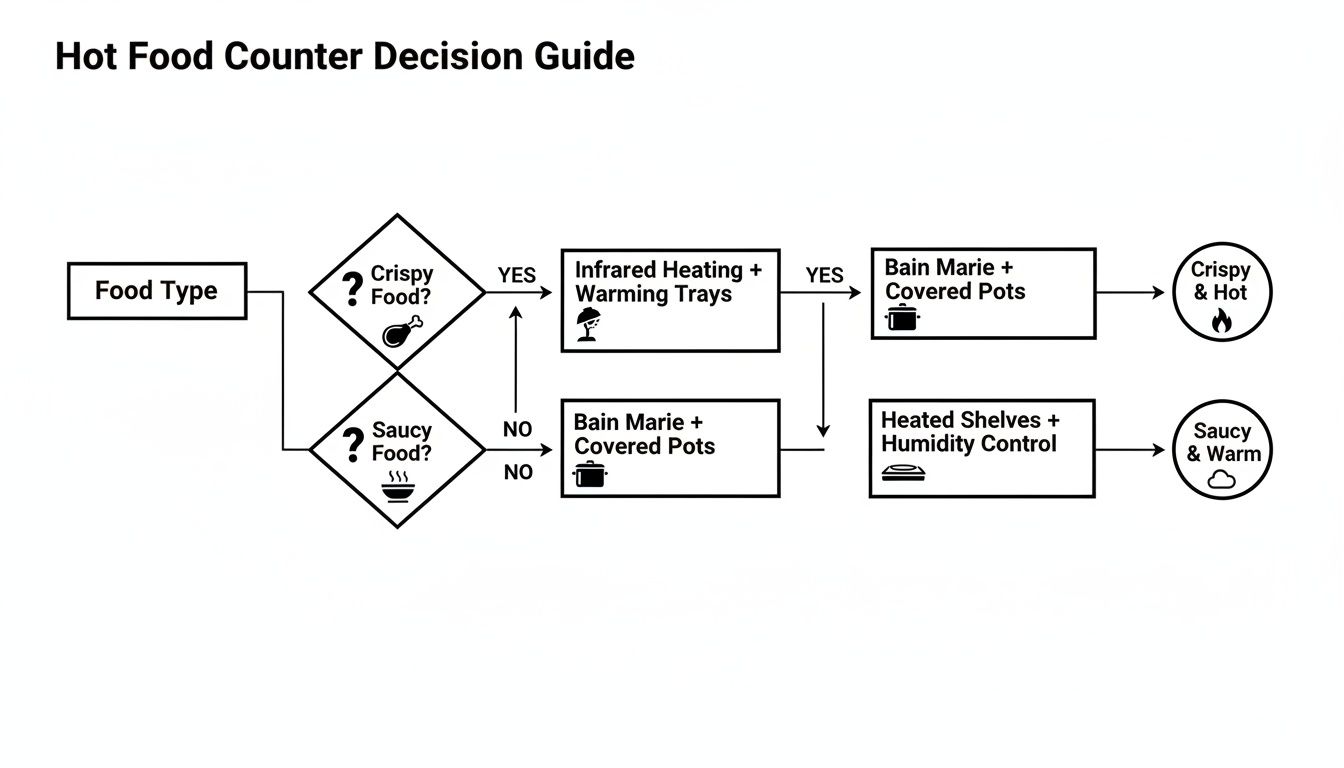
The takeaway is simple: if you're searing and charring, focus on high BTUs. But if your menu is full of delicate dishes, precise thermostatic control is an absolute must.
Construction and Griddle Plate Thickness
The physical build of a commercial griddle is just as important as what's under the hood. Always look for units built from high-quality stainless steel (304-grade is the gold standard). It’s not just for looks; stainless steel is tough, doesn't harbor bacteria, and is a breeze to sanitize, which will keep the health inspector happy.
While the basic concept has been around since the post-WWII diner boom, today's models are worlds apart. We're talking about a global market projected to hit USD 980.73 million by 2025. Modern units from top brands often incorporate energy-saving designs that can slash power usage by 15-20%. Many use thermostatic plates, and the thickness of the plate itself is critical. A thicker plate (like a 1-inch thick plate) offers incredible heat retention and recovery. Sticking to equipment with NSF compliance can also cut your risk of health code violations by up to 40%.
Finally, don't overlook the griddle plate material. Steel is the most common and versatile, but chrome tops offer a non-stick surface that's great for delicate items like eggs and prevents flavor transfer. Making sure your griddle's specs work with your menu's demands is the key to a seamless service line.
For a deeper dive into kitchen equipment, check out our guide on how to select food warmer tables.
Designing a Seamless Kitchen Workflow
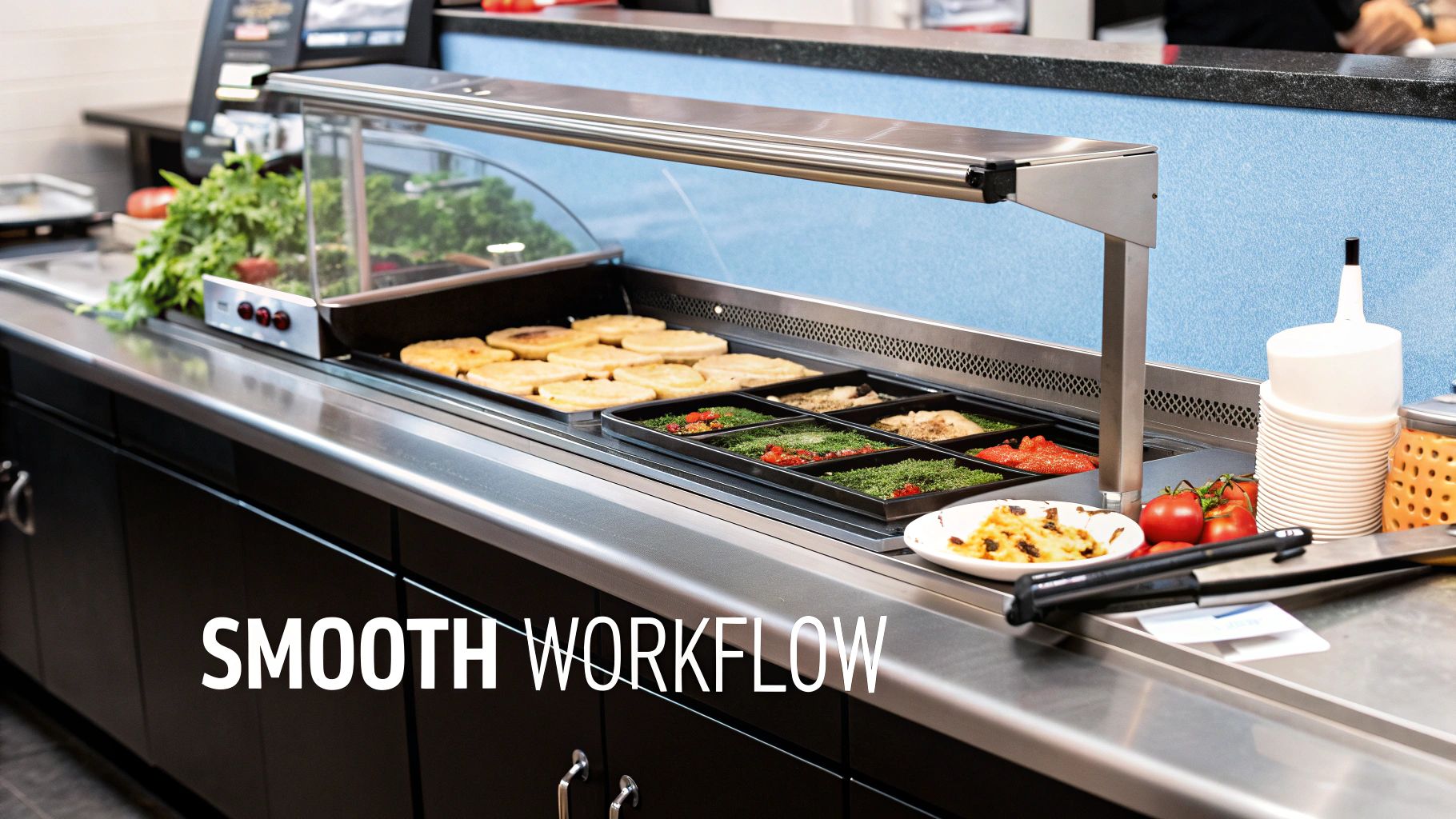
A profitable kitchen is an efficient one. And the layout around your commercial griddle is exactly where speed is either won or lost. A clunky, disorganized layout creates bottlenecks, forces your cooks to take extra steps, and flat-out slows down service. The real goal is to create a fluid path where ingredients move effortlessly from prep, to the griddle, and out to the customer.
Think of it as a well-rehearsed dance. Every pivot, reach, and step should be deliberate. When a cook has to walk across the line or make an awkward turn, seconds get wasted. Over a busy dinner rush, those seconds turn into minutes, hitting your ticket times and your bottom line.
Proven Layouts for Griddle Stations
The perfect layout really comes down to your kitchen's size and how you operate. A big, sprawling diner has a lot more room to play with than a tight food truck. But the core ideas of smart, ergonomic design are the same no matter what.
For mobile businesses, figuring out the kitchen flow is a whole other level of tricky. You can see some of the common food truck workflow challenges and how creative operators solve them when space is at a premium.
Here are a few time-tested setups that just plain work for griddle-heavy kitchens:
-
The Linear Setup: This is your classic assembly line. The prep space, griddle, and expo window are all lined up in a row. It kills wasted movement, letting cooks simply slide finished food from one station to the next. It's a lifesaver for high-volume spots where speed is everything.
-
The L-Shaped Configuration: If you've got a corner to work with, this layout is fantastic. The griddle sits on one leg of the "L" and the prep station on the other. This setup creates a super-compact work triangle, keeping everything within a single pivot or step.
-
The Parallel Layout (Galley): You'll see this a lot in narrow kitchens or food trucks. It puts the griddle and prep station on opposite walls. While it means a full 180-degree turn, it keeps the whole process contained in a tight corridor, which stops other kitchen traffic from getting in the way.
No matter which layout you choose, the golden rule is simple: keep the path from prep to the griddle as short and direct as humanly possible. An efficient workflow isn’t a luxury—it’s a core part of a profitable kitchen that keeps staff fresh and gets food out fast.
Essential Accessories That Boost Functionality
Beyond the basic layout, a few key accessories can turn a standard commercial griddle into a high-octane cooking machine. These aren't just bells and whistles; they are tools designed to improve food quality, make cooking easier, and smooth out communication within the kitchen.
Think about bolting on these must-haves for your griddle setup:
-
Splash Guards: For any high-volume griddle station, these are non-negotiable. Welded stainless steel guards around the back and sides contain grease splatter, keeping your kitchen cleaner and safer. It's an instant sanitation-booster.
-
Equipment Stands: Having a dedicated, heavy-duty stand built for your griddle is a game-changer. It places the cooking surface at the perfect ergonomic height and often includes an undershelf for storing essential tools and supplies.
-
Warming Shelves: An over-shelf mounted above the griddle is indispensable. It gives you a perfect spot to warm buns, melt cheese, or temporarily hold finished items, keeping the griddle surface free for the next order.
By mapping out your layout and picking the right add-ons, you create a system that just flows. Your commercial griddle and prep station stop feeling like two separate pieces of gear and start working together like a single, powerful production line.
Mastering Daily Maintenance and Sanitation
A sparkling clean commercial griddle is more than just good looks—it’s a non-negotiable part of food safety and keeping your gear in top shape. A neglected unit is a flavor killer waiting to happen, but it also performs poorly, leading to uneven cooking and, eventually, a total breakdown. The single best way to protect your investment is to lock in a simple, consistent cleaning routine.
Think of it this way: a perfectly seasoned griddle is crucial for cooking, and a clean griddle is essential for preserving the quality of every dish. Spills, grease, and carbonized food build up fast, creating a perfect home for bacteria. Daily, weekly, and monthly cleaning tasks are the bedrock of a sanitary and efficient kitchen.
Building Your Daily Cleaning Checklist
Your end-of-day cleaning routine has to be automatic, like flipping the "closed" sign. It should be quick, efficient, and thorough enough to hit the reset button for the next day's service. This is your first line of defense against grime and health code dings.
Your daily shutdown procedure should always cover these bases:
- Scrape While Warm: Always scrape the griddle surface down while it's still warm (but not scorching hot). Use a griddle scraper to remove all food debris and grease.
- Clean with Griddle Stone/Screen: Use a grill brick or screen with a small amount of oil to polish the surface and remove any stubborn, carbonized bits.
- Wipe Down All Surfaces: Grab a soft cloth and a food-safe degreaser and give every surface a thorough wipe-down. That means the stainless steel body, the splash guards, and all the control knobs.
- Season the Plate: After cleaning, apply a very thin layer of cooking oil to the surface to protect it from rust and maintain the seasoning.
For all griddles, you've got one extra, can't-skip step: empty, clean, and sanitize the grease trap every single day. An overflowing grease trap is a fire hazard and a sanitation nightmare, so this isn't optional.
Weekly and Monthly Deep Cleaning Tasks
While the daily scrape-down handles the obvious messes, you need a deeper clean to get the gunk hiding in the nooks and crannies. Scheduling these tasks will keep your commercial griddle running like a champ for years to come.
Regular, deep sanitation isn't just about passing inspections; it’s a core business practice that extends the life of your equipment. A well-maintained commercial griddle can see its operational lifespan increase by 25-40%, saving you thousands in premature replacement costs.
Your weekly deep clean needs to dig a little deeper:
- Thorough Degreasing: On all models, give the backsplash, sides, and front a deep clean with a commercial degreaser to remove any built-up grease that daily cleaning might miss.
- Inspect Burners/Elements: For gas griddles, check the burner ports to ensure they are clear of debris. For electric models, check the connections for any signs of wear.
Once a month, take a minute to check gas lines and electrical cords for any fraying and make sure all your control knobs and thermostats are responding correctly. This proactive check-up helps you spot small problems before they turn into big, expensive emergencies. Your griddle is your main cooking line, and it deserves the best care. For more tips on maintaining your cook station, check out our guide on how to clean a commercial griddle. Applying a strict cleaning regimen to all your equipment builds a culture of cleanliness that protects your customers, your reputation, and your bottom line.
Your Top Questions About Commercial Griddles, Answered
When you're building out a kitchen, a few questions about commercial griddles always pop up. Getting the right answers makes all the difference for your workflow, the quality of your food, and even your bottom line. Let's dig into the most common ones.
What Is the Best Temperature for a Commercial Griddle?
There's no single "perfect" number, but different foods thrive at different temperatures. A good starting point is to set your griddle to 350°F (177°C) for general cooking.
From there, you'll want to fine-tune the temp based on what you're cooking.
- Pancakes & Eggs: These delicate items do best at a lower temperature to prevent burning. Think 300-325°F (149-163°C).
- Burgers & Bacon: For a good sear and crispy texture, you need higher heat. Aim for 350-375°F (177-190°C).
- Steak & Searing: To get a deep crust on steaks, you'll need the highest heat your griddle can safely provide, often around 400-450°F (204-232°C).
How Much Energy Do These Things Use Anyway?
The energy draw really depends on the unit's size, whether it's gas or electric, and how often you're turning it up and down. A small electric countertop griddle might pull between 2,000 to 5,000 watts, but a big, multi-zone gas griddle will be a much bigger drain on your gas line.
Want to keep that utility bill in check? Look for units with thick plates that retain heat well. More importantly, don't run it hotter than you need to. Knocking the temperature down by just 25 degrees during slow periods can add up to real energy savings over the year.
Can You Really Keep Foods From Sticking?
Absolutely, but you need the right technique. The #1 enemy of a non-stick surface is improper seasoning and cleaning.
The secret is a well-seasoned griddle. This is a layer of polymerized oil that builds up on the steel surface, creating a natural non-stick coating. Clean the griddle properly after each use and apply a thin coat of oil to maintain this layer. Never use harsh abrasives or soap on a seasoned steel griddle, as it will strip the seasoning off.
What Kind of Plate Should I Get?
The industry standard for a reason is a polished steel griddle plate. They're tough as nails, a breeze to season, and they hold and transfer heat like a champ.
To get the most out of them:
- Match Plate Thickness to Your Volume: Use a thinner plate (1/2-inch) for quick heat-up in low-volume settings. For high-volume kitchens that need excellent heat retention during a rush, go for a thicker plate (3/4-inch to 1-inch).
- Consider Chrome: For cooking delicate items like eggs and fish, a chrome griddle plate offers a superior non-stick surface and prevents flavor transfer between foods. However, they require special, non-abrasive tools to avoid scratching the surface.
Nailing these details means you can operate your commercial griddle like a pro, making sure the food you worked so hard to source is cooked to perfection every single time.
Ready to build the perfect griddle station? At Griddles.com, we specialize in high-performance commercial griddles and all the essential line equipment to create a seamless, profitable kitchen workflow. Find the right gear to match your menu and volume by exploring our full catalog at https://griddles.com.