

How to Clean a Commercial Griddle: Fast, Safe, and Deep-Clean Guide
The secret to cleaning a commercial griddle isn't complicated. It boils down to one core habit: scrape off the food debris and grease while the surface is still hot—somewhere in the 300-350°F range. From there, you just use a griddle brick or a food-safe cleaner to lift off any stubborn bits, wipe it down, and finish with a thin coat of oil. That simple daily ritual is the cornerstone of keeping your commercial griddle in prime condition.
Why a Clean Commercial Griddle Is Your Kitchen’s Best Asset
Think of a spotless commercial griddle as the heart of a high-performing kitchen. It’s not just about looking good for the health inspector; it directly impacts food quality, safety, and ultimately, your bottom line.
A dirty griddle is an inefficient one. All that caked-on carbon and old grease acts as an insulator, blocking heat from getting to the food. This is what causes those frustrating hot and cold spots, leading to inconsistent cook times and a subpar final product. It’s the difference between a perfectly seared burger and one that’s cooked unevenly.
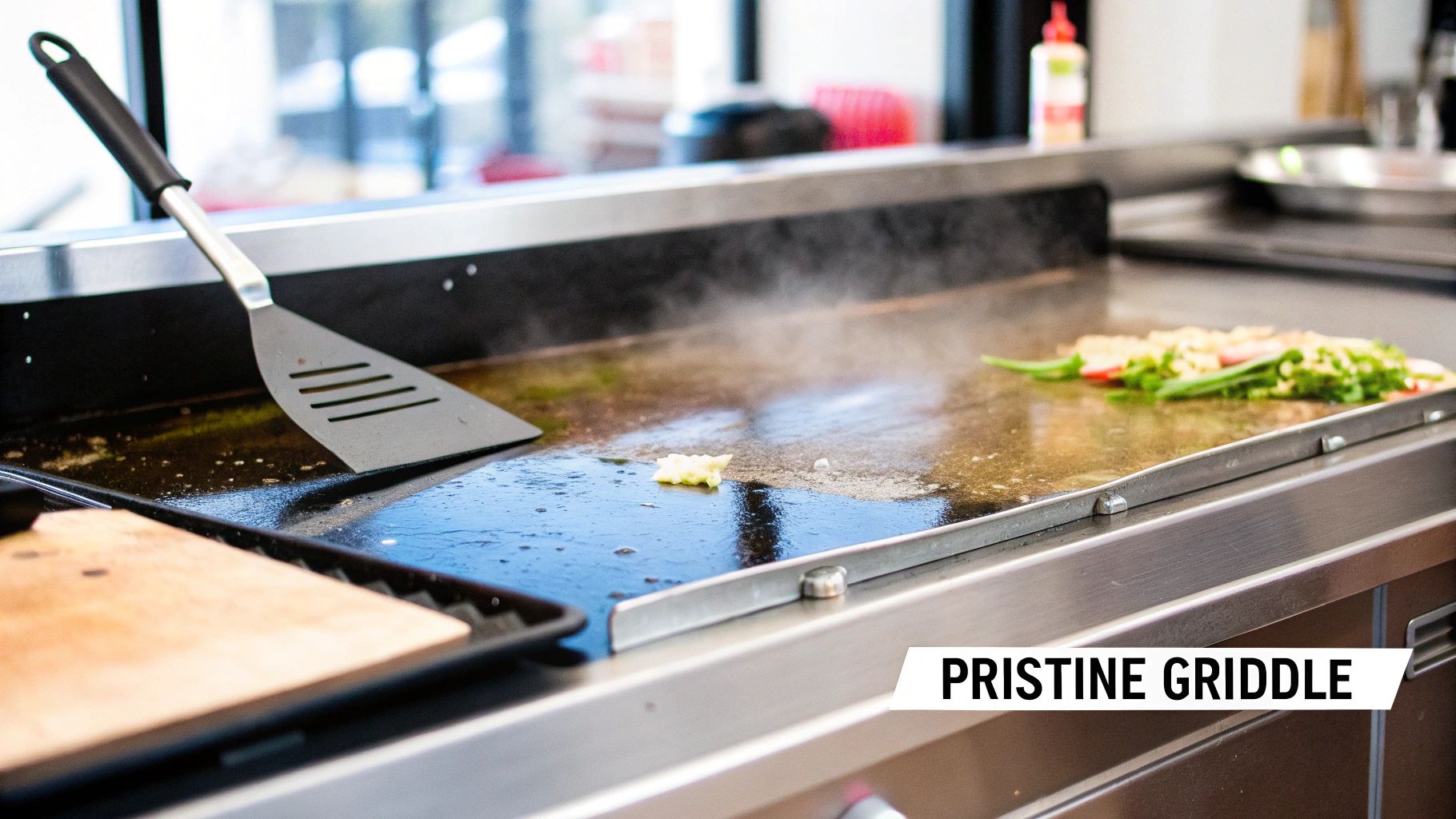
The Business Case for Daily Cleaning
Beyond just performance, a disciplined cleaning routine is a smart financial move. In a busy commercial kitchen, sticking to a daily schedule can slash maintenance costs by up to 30% over time. It prevents the kind of heavy carbon buildup that forces you to call in a repair tech.
That quick daily scrape-down—done at 300-350°F—takes just 5-10 minutes but gets rid of 80-90% of the day's residue. That’s your ticket to even cooking and food that doesn't stick.
A well-maintained griddle surface prevents flavor transfer. No customer wants their pancakes to taste like last night’s onions. This small detail is a mark of professionalism that sets a kitchen apart.
What This Guide Covers
This guide gets straight to what works. We'll walk you through the proven daily, weekly, and deep-cleaning rhythms that successful kitchens swear by. You'll get to know the essential tools of the trade, from heavy-duty scrapers to pumice griddle bricks, and understand why the griddle's temperature is your most powerful cleaning ally.
To get started, it's a good idea to check out this overview of essential cleaning supplies for restaurants.
Think of this as your roadmap to a perfectly maintained flat top. A few minutes of daily care will save you hours of future labor and protect you from costly equipment failures. We’ll cover:
- The non-negotiable end-of-day shutdown ritual.
- Step-by-step instructions for weekly and monthly deep cleans.
- Specific techniques for steel, stainless, and chrome surfaces.
- Solutions for common problems like rust and stubborn carbon.
The End-of-Day Griddle Shutdown Ritual
Your daily shutdown clean is hands-down the most important thing you'll do to keep your commercial griddle in top shape. It’s the one habit you can't skip. This is what stops that stubborn, baked-on carbon from building up into a nightmare you'll be scraping for hours. Think of it as the last and most critical task in any kitchen.
Picture a busy burger joint at closing. The grill cook’s final job isn't just flipping a switch; it's this exact ritual. This is what gets the griddle ready for the next day's rush, guaranteeing consistent cooking and making sure last night's bacon grease isn't flavoring this morning's pancakes.
This isn't a deep scrub. It's a smart, fast process. By tackling the griddle while it's still hot, you let the heat do most of the hard work for you.
Scrape While It’s Hot
First thing's first: scrape that surface while it's still hot. The sweet spot is right around 300-350°F. At this temperature, grease is still liquid and food bits haven't had a chance to fuse into that black, concrete-like layer we all dread.
Trying to clean a cold griddle is just asking for a bad time. The grease turns solid, and all that debris basically glues itself to the steel. You'll end up using way more elbow grease and harsher chemicals than you need to. Working hot is working smart.
Grab a long-handled scraper with a sharp, straight blade. You want to hold it at a low angle, maybe about 30 degrees, and use firm, steady pressure. Push everything away from you and down into the grease trough. That low angle is crucial—it lets the blade slide right under the gunk without digging into or scratching the griddle plate. Just work your way across the whole surface until all the loose stuff is gone.
Using Steam to Your Advantage
With the heavy debris out of the way, it's time to deglaze. This trick uses a quick burst of steam to lift off anything still clinging to the surface. It's a simple technique you'll see in pro kitchens everywhere because it just plain works.
While the griddle is still in that 300-350°F range, carefully pour a little room-temperature water or club soda on top. Get ready for a big cloud of steam—that's the magic happening. This thermal shock is what breaks the bond between the griddle and any leftover food particles.
Safety First: Never, ever throw ice or ice-cold water on a hot griddle. That extreme temperature change can cause thermal shock, which can warp or even crack the steel plate. That's an expensive mistake to make. Stick with room-temp liquids.
Right as the steam billows up, get back in there with your scraper or a heat-resistant squeegee. Guide all that dirty water and loosened grime straight into the grease trap. You'll be amazed at how easily the last of the mess lifts right off. For an even more thorough daily routine, check out our complete guide on how to clean a flat top grill.
The Final Wipe-Down and Protective Oiling
The surface is clean, and the griddle is still warm. Now it’s time to dry and protect it for the night. Use a thick, folded towel or a griddle pad on a holder and wipe the entire surface completely dry. Don't skimp here—any leftover moisture can lead to rust, especially on a standard steel top.
The last part of the ritual is laying down a thin, protective coat of oil. Pour a small amount of food-safe cooking oil onto the warm surface. A tablespoon is usually all you need for a standard-sized griddle.
With a clean, dry cloth, spread that oil into a super-thin, even layer across every inch of the cooking surface. This light coat does two critical things:
- It seasons the griddle: This fills in the tiny pores in the metal, building up that beautiful non-stick surface that only gets better over time.
- It prevents rust: The oil acts as a barrier, sealing the metal off from oxygen and moisture in the air overnight.
This final step takes less than a minute, but it's absolutely vital for the long-term health and performance of your griddle. It means you walk in the next morning to a clean, protected surface that’s ready to fire up for another day.
Mastering the Weekly and Monthly Deep Clean
Your daily shutdown routine is great for handling the fresh grease and food debris from a busy shift, but the real preventative maintenance happens with your weekly and monthly deep cleans. This is where you go to war against the stubborn, layered carbon that builds up over time. Getting this right isn't just about appearances; it's about protecting your investment and making sure that griddle performs at its peak for years to come.
This isn't just busy work. A disciplined cleaning schedule is a critical part of kitchen sanitation. In fact, improper griddle cleaning is a factor in 45% of food safety violations found in U.S. restaurant inspections each year. That heavy grease buildup is a perfect breeding ground for bacteria like E. coli, so keeping that surface pristine is non-negotiable.
The daily habits you build are the foundation for these deeper cleaning sessions.
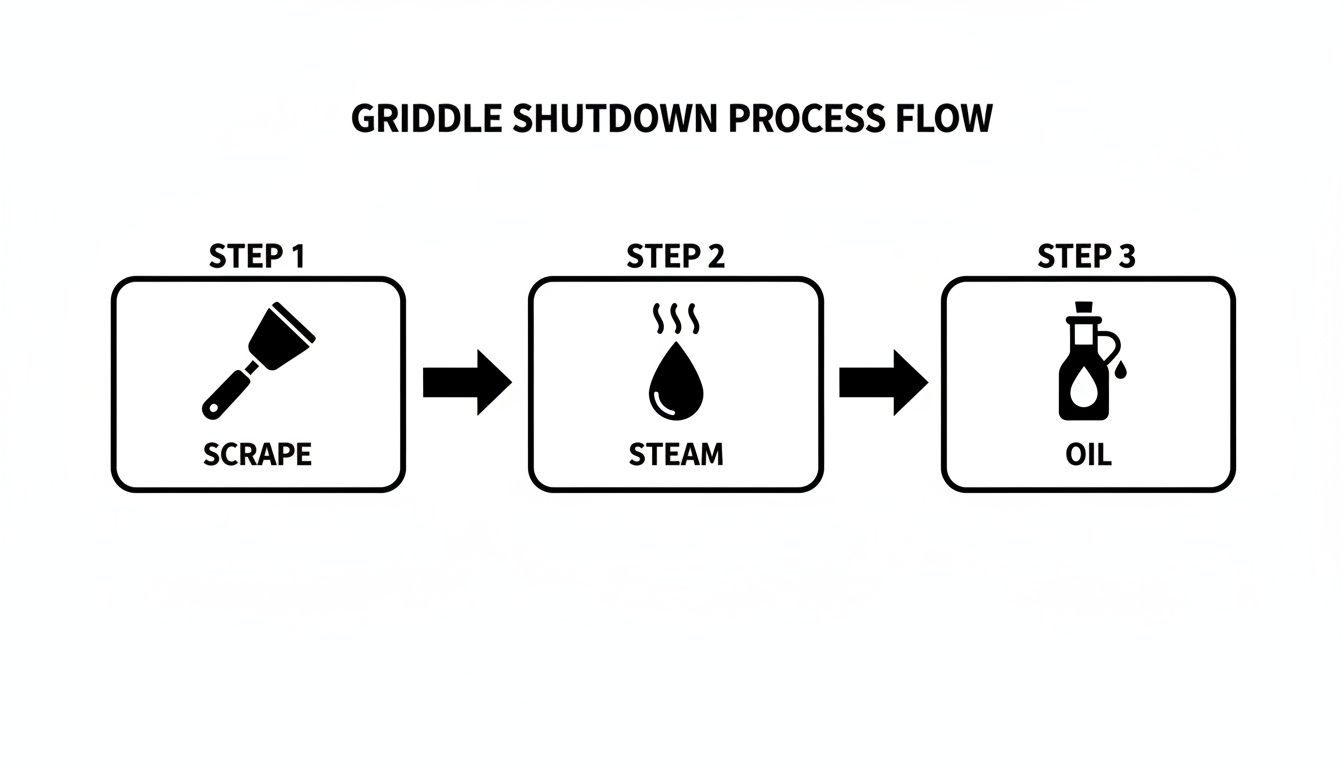
When you consistently scrape, steam, and oil the griddle every day, you're preventing the minor buildups from turning into major headaches. This makes your weekly and monthly tasks far more manageable.
The Weekly Griddle Reset
Think of your weekly clean as a more aggressive version of the daily shutdown. The primary goal here is to polish the surface and tackle any minor carbonization that your daily scrape couldn't handle. Your go-to tools for this job are a griddle brick (also known as a pumice stone) or a griddle screen with a proper holder.
First, get the griddle warmed up to about 300°F. This is the sweet spot—it’s hot enough to keep any grease soft and workable but not so hot that it’s a safety hazard or will destroy your cleaning tools.
Apply a light coat of cooking oil to the surface; this acts as a lubricant and makes the process much smoother. Now, grab your griddle brick or screen and start working in small, circular motions with firm, even pressure. If you can see the grain of the metal, always work with it, not against it, to avoid creating scratches. Pay special attention to the corners and edges, as this is where carbon loves to hide.
Pro Tip: You don't need to put all your weight into it. The abrasive tool is designed to do the heavy lifting. The idea is to lift the carbon off the surface, not gouge the steel plate. Consistent, moderate pressure will always be more effective and safer for your equipment.
After you've polished the entire surface, use your bench scraper to push all the residue and dark, dirty oil into the grease trough. Wipe the surface clean with a damp, lint-free cloth, dry it thoroughly, and then finish by applying a fresh, thin layer of seasoning oil.
The Monthly Deep Dive
Once a month, it's time to roll up your sleeves and go deeper. This isn't just about the cooking surface anymore; you're going to address all the nooks and crannies that are crucial for fire safety and overall kitchen hygiene. For this, you'll need a high-quality, food-safe chemical griddle cleaner specifically designed to dissolve heavy, baked-on carbon.
For the monthly deep clean, you'll usually work on a cooler griddle, typically around 200°F, but always check the cleaner's instructions first. Turn the griddle off and carefully apply the cleaning solution across the entire plate. Let it sit and do its thing—you'll see it start to bubble and lift away years of grime. The dwell time is critical here, so follow the product label's directions exactly.
Once the chemical has had time to work, it's time to scrub. Use a non-abrasive pad or a dedicated griddle polisher to work the solution into any remaining tough spots. You’ll see the carbon and grease lift away into a dark slurry.
Next, scrape everything into the grease trap. The most important final step is to completely neutralize and rinse the surface. Use a 50/50 vinegar-and-water solution or just plain hot water to flush the griddle plate multiple times. A good squeegee is your best friend for this part. Keep rinsing until you're absolutely certain all the chemical residue is gone.
Don't Forget the Supporting Cast
A deep clean isn't truly finished until you've taken care of the griddle's other components. These areas are magnets for grease spatter and can become serious fire and sanitation hazards if you ignore them.
- Splash Guards: Grab a good degreaser and a scouring pad to scrub down the back and side splash guards until they shine.
- Grease Trough: Scrape out any hardened gunk from the trough itself.
- Grease Trap: Once it's cool enough to handle, remove the grease trap. Pour the old grease into a designated disposal container—never down the drain. Wash the trap in your three-compartment sink with hot, soapy water, then rinse, sanitize, and let it dry completely before sliding it back into place.
By dedicating some time to these components, you ensure your entire griddle station is clean, safe, and ready for another month of service. If you're cleaning stainless steel parts, you might find our guide on choosing the right commercial stainless steel cleaner helpful.
Cleaning Different Griddle Surfaces Correctly
You wouldn't use a sledgehammer to tap in a nail, right? The same logic applies to your commercial griddle. Using the wrong tool or technique for your specific griddle surface isn't just ineffective—it can cause permanent damage. A heavy-duty scraper that works wonders on seasoned steel will absolutely destroy a chrome top.
Knowing your surface is half the battle. Let's break down the right way to clean each type.
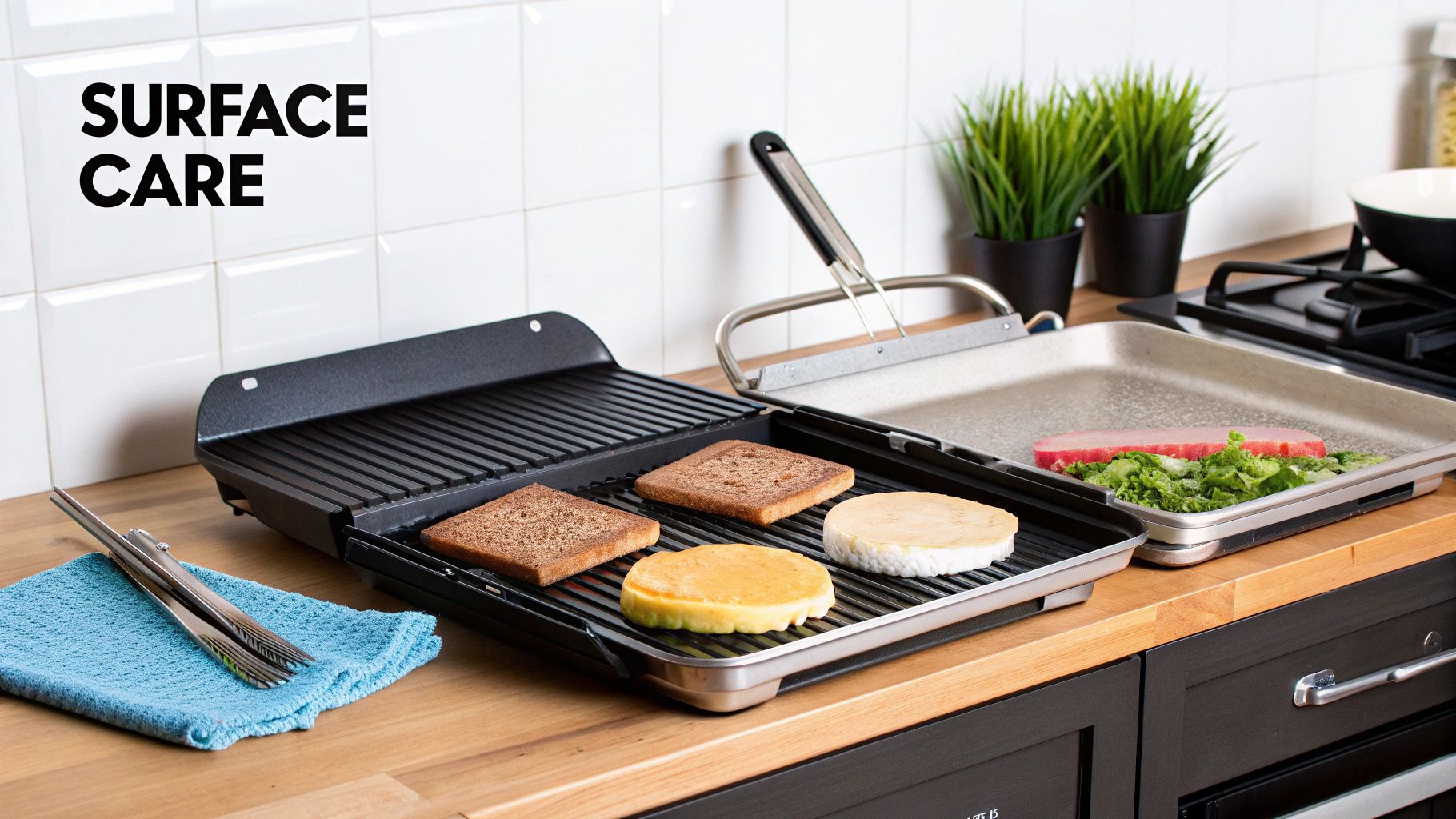
Taking Care of Standard Steel Griddles
Your classic steel griddle is a workhorse, but its non-stick power comes from that beautiful, dark layer of seasoning you've built up over time. The goal is to clean off the gunk without stripping away your hard work.
The trick is to clean it while it's still warm—think 300-350°F. At this temp, grease and debris lift off easily.
- Grab a sharp griddle scraper and hold it at a low, almost flat angle to shear off the big stuff.
- For anything stubborn, a griddle brick or pumice stone is your best friend. Just be sure to scrub with the grain of the metal, not against it.
- Finish with a food-safe degreaser, then rinse with room-temperature water. A blast of cold water on a hot surface can cause warping.
This whole process should get rid of 85-90% of the daily buildup without touching that precious seasoning. Always finish by wiping on a very thin layer of cooking oil to protect the surface and keep that non-stick magic alive.
Keeping Stainless Steel Surfaces Looking Sharp
Stainless steel is tough and won't rust on you, but it scratches and discolors like nobody's business. Aggressive scrubbing is a one-way ticket to a dull, hazy finish. You need a gentler approach here.
Let the griddle cool down until it's just warm to the touch. Then, it's a simple three-part process:
- Mist the surface with a mild, pH-neutral cleaner.
- Wipe it down with a non-abrasive microfiber pad, using smooth, circular motions.
- Rinse it off completely and—this is key—buff it dry with a clean, soft cloth to prevent water spots and streaks.
In a high-volume spot, a quick wipe-down like this mid-shift is all it takes to keep that stainless surface looking brand new. It prevents the buildup that leads to tough stains later.
Protecting That Mirror-Finish Chrome
If you've got a chrome-plated griddle, especially in an open kitchen, you know it's a showpiece. That brilliant, mirror-like surface looks amazing, but it's incredibly delicate. A griddle brick will permanently scratch and ruin it on the first try. Don't do it.
Instead, treat it with care:
- Only use a razor-style scraper specifically designed for chrome surfaces.
- Apply a food-safe chrome polish and give it a minute to work its magic.
- Use a soft, lint-free towel to buff the polish off until the surface gleams.
Beyond looking great, chrome plates are fantastic at even heating and don't radiate as much heat into the kitchen. A little TLC goes a long way in preserving both their look and performance.
Commercial Griddle Surface Cleaning Cheat Sheet
It's easy to get the methods mixed up during a chaotic shift. This quick table breaks down the essentials for each surface so your team always has the right game plan.
| Surface Type | Approved Tools | Recommended Cleaners | Critical Do's and Don'ts |
|---|---|---|---|
| Steel | Scraper, griddle brick | Food-safe degreaser | Do: Season after cleaning. Don't: Use harsh soaps that strip seasoning. |
| Stainless Steel | Non-abrasive pad, scraper | pH-neutral cleaner | Do: Buff dry to a shine. Don't: Ever use steel wool. |
| Chrome | Razor scraper, soft towels | Chrome-safe polish | Do: Use a dedicated polish. Don't: Use any grit-based abrasives. |
Using the right approach for your specific griddle isn't just about looks—it's about protecting your investment and ensuring you get consistent cooking results every single day.
Real-World Scenarios from the Line
Wondering how this plays out in a real kitchen?
Think of a classic breakfast diner with a steel griddle running non-stop. After a big rush of pancakes, the line cook takes 30 seconds to scrape down the batter residue. This quick action prevents it from burning on and becoming a major cleaning headache later.
Over at a trendy food truck, the team keeps their stainless steel griddle looking pristine for customers. They keep a small spray bottle of diluted cleaner and a stack of microfiber cloths handy for a quick wipe-down between orders. It takes almost no time but makes a huge difference.
"Our chrome top in the open kitchen still sparkles after months thanks to a weekly polish," says Chef Maria. "Customers comment on how clean our kitchen is, and that griddle is front and center."
At a high-volume ghost kitchen, the manager put a simple system in place: red-handled scrapers for steel griddles, blue for chrome. It's a foolproof visual cue that prevents costly mistakes, especially when training new hires.
A Few Quick Tips:
- Color-code your tools (scrapers, pads) to match the griddle surface.
- Schedule a quick surface inspection during the slow period between lunch and dinner.
- Make griddle-specific cleaning part of your training for every new cook.
Simply choosing the right tools and methods can cut your cleaning labor by up to 25%. It's about working smarter, not harder.
If you need the right tools for the job, you can visit Griddles.com to find specialized cleaning accessories and get expert support for maintaining your commercial griddle.
Troubleshooting Common Commercial Griddle Cleaning Headaches
Even the most meticulously cleaned commercial griddle will act up now and then. In a busy kitchen, it's just a matter of time before you run into stubborn carbon deposits that mock your scraper, frustrating rust spots that seem to pop up overnight, or hot spots that cremate one pancake while leaving its neighbor pale and sad.
Don't sweat it. These are all common headaches in high-volume kitchens, and they're all fixable. Knowing how to handle them on the fly can mean the difference between a minor hiccup and an expensive service call. This is where a little hands-on knowledge really pays off.
Battling Baked-On Carbon Buildup
Every so often, you'll hit a patch of carbon buildup that feels more like concrete than leftover hashbrowns. This stuff loves to hide in the corners or along the edges—the spots that get a quick pass during the end-of-night scrape-down. Your first instinct might be to just put more muscle into it, but attacking it with brute force is a great way to gouge your griddle plate, creating a new problem where food will stick forever.
The real secret is to work smarter, not harder. Let the right tool do the heavy lifting.
- First, get the griddle warm, somewhere in the 200-250°F range. Just warm enough to open up the pores of the metal.
- Apply a good, thick layer of a food-safe griddle cleaner right onto those carbonized patches.
- Now, walk away. Let the chemical do its thing for about 10-15 minutes (always double-check the product's directions). You’ll literally see the gunk start to soften and lift.
- Grab a griddle brick or a heavy-duty scouring pad—never, ever steel wool—and scrub the softened carbon away. It should lift off in a dark, sludgy mess without you needing to break a sweat.
- Rinse it all down with hot water and a squeegee until every last trace of the chemical is gone. Dry it completely and get a new layer of seasoning on there right away.
Banishing Rust Spots for Good
Rust is public enemy number one for any steel griddle. It usually shows up when the surface is left damp or after cooking acidic foods like tomato sauce or citrus that strip away that beautiful, protective seasoning. This leaves the raw metal exposed to air and moisture, and rust is the inevitable result.
Getting rid of it is pretty simple, but it’s the last step that counts the most.
Start by gently scraping off any loose, flaky rust. Then, pour a little cooking oil on the spot and use a griddle brick to scrub in a circular motion. The oil acts as a lubricant, and the brick's gentle abrasion will lift the rust right off. Wipe the dark gunk away with a paper towel. If you're dealing with a more serious case, exploring different rust removal methods can give you more firepower.
Here’s the critical part: re-seasoning. Once you've scrubbed the rust away, you're looking at bare, vulnerable metal. You must apply a thin coat of oil and heat the griddle to its smoke point to build a fresh, non-stick barrier. If you skip this, that rust will be back to greet you in the morning.
Solving Uneven Heating and Hot Spots
Noticing that one side of your griddle is a speed demon while the other is lagging behind? That's a classic sign of uneven heating. The culprit is almost always hiding where you can't see it: caked-on grease on the underside of the griddle plate. This gunk acts as an insulator, blocking the burners from transferring heat properly.
Fixing this is a game-changer for your griddle's performance. Make absolutely sure the griddle is cool to the touch and disconnected from its power or gas line. Then, get in there with a putty knife or scraper and carefully remove all the grease and carbon buildup from the bottom of the plate and around the burners. A shop vac is great for sucking up all the loose bits from those tight spaces.
This is one of those maintenance tasks that gets overlooked, but its impact is huge. Sticking to a schedule for this kind of deep clean can extend a commercial griddle's lifespan by 50-100%. We're talking about taking a unit that might last 7 years and pushing it to 15 years or more in a well-managed kitchen. Restoring that even heat transfer doesn't just make your food better—it protects the investment you made in your equipment.
Answering Your Top Commercial Griddle Questions
Even with the best cleaning system, questions are going to pop up. Whether you’re in the middle of a chaotic dinner rush or doing a weekend deep-clean, you need clear, no-nonsense answers. Let's dig into some of the most common questions we hear from kitchen crews about keeping their commercial griddles in top shape.
How Often Should I Season My Commercial Griddle?
When a commercial griddle is fresh out of the box, it needs a really good initial seasoning. This isn't just a quick wipe-down; you're building the foundational non-stick layer that will protect the steel and make your life easier for years to come.
After that, it's all about maintenance. That light coat of oil you add after the daily clean? That's what keeps the seasoning strong. The only time you'll need to do a full, from-scratch re-seasoning is if the surface gets stripped down to bare metal—maybe from scrubbing off a nasty rust spot or using a cleaner that was way too harsh.
Is It Ever Okay to Use Soap on a Commercial Griddle?
This is a huge point of confusion, and the answer is: it completely depends on your griddle.
For a classic seasoned steel griddle, soap is the enemy. It's a hard "no." Soap is designed to break down and strip away grease and oil, which is exactly what your seasoning is made of. A quick wash with soap can undo all your hard work.
But the game changes for different surfaces:
- Stainless Steel: These are non-porous and don't have a seasoning layer to protect. Feel free to use mild soap and hot water—you won't hurt a thing.
- Chrome: Absolutely not. Stick to the cleaners and polishes recommended by the manufacturer. Soap can leave a weird film or residue on that mirror finish, making it look dull and streaky.
What Is the Perfect Temperature for Cleaning a Commercial Griddle?
The magic number for griddle cleaning is right between 300-350°F. This is the sweet spot where the griddle does half the work for you.
At this temperature, grease is still liquid and easy to manage, and bits of food haven't yet been incinerated into rock-hard carbon. Scraping is a breeze and you won't have to put your back into it.
Trying to clean a cold griddle is an exercise in frustration; the grease congeals and acts like superglue. On the flip side, cleaning a griddle that's scorching hot (over 400°F) is just dangerous. Cleaners and water will flash-evaporate on contact, creating a steam hazard before they can even start working.
How Do I Clean the Grease Trap the Right Way?
Don't neglect the grease trap. It's a critical job for both sanitation and fire safety. The trick is to empty it when the grease has cooled down enough to handle safely but hasn't solidified completely.
Carefully slide the trap out from its housing. Pour the liquid grease into a designated, heat-proof container for disposal. And whatever you do, never pour grease down the drain. It will harden in your pipes and create a plumbing nightmare.
Once it's empty, take the trap over to your utility sink. Give it a good scrub with hot, soapy water and a stiff brush to get all the gunk out. Rinse it well, let it air dry completely, and pop it back in place. A clean trap is a sign of a well-run station.
Keeping your commercial griddle in peak condition is a cornerstone of any successful kitchen. For everything from heavy-duty griddles to the specialized tools you need to maintain them, Griddles.com is your trusted partner. Find the perfect equipment for your operation and get expert advice at https://griddles.com.