

A Chef's Guide to Commercial Stainless Steel Cleaner for Griddles
When you're running a high-volume kitchen, a proper commercial stainless steel cleaner isn't just nice to have—it's essential. This isn't about regular soap and water; we're talking about tackling the intense, baked-on grease and carbon that builds up on your griddle after hundreds of orders. Using a specialized formula is the difference between a pristine, high-performance cooking surface and a damaged, inefficient griddle that ruins food quality.
Why Your Commercial Griddle Needs the Right Cleaner
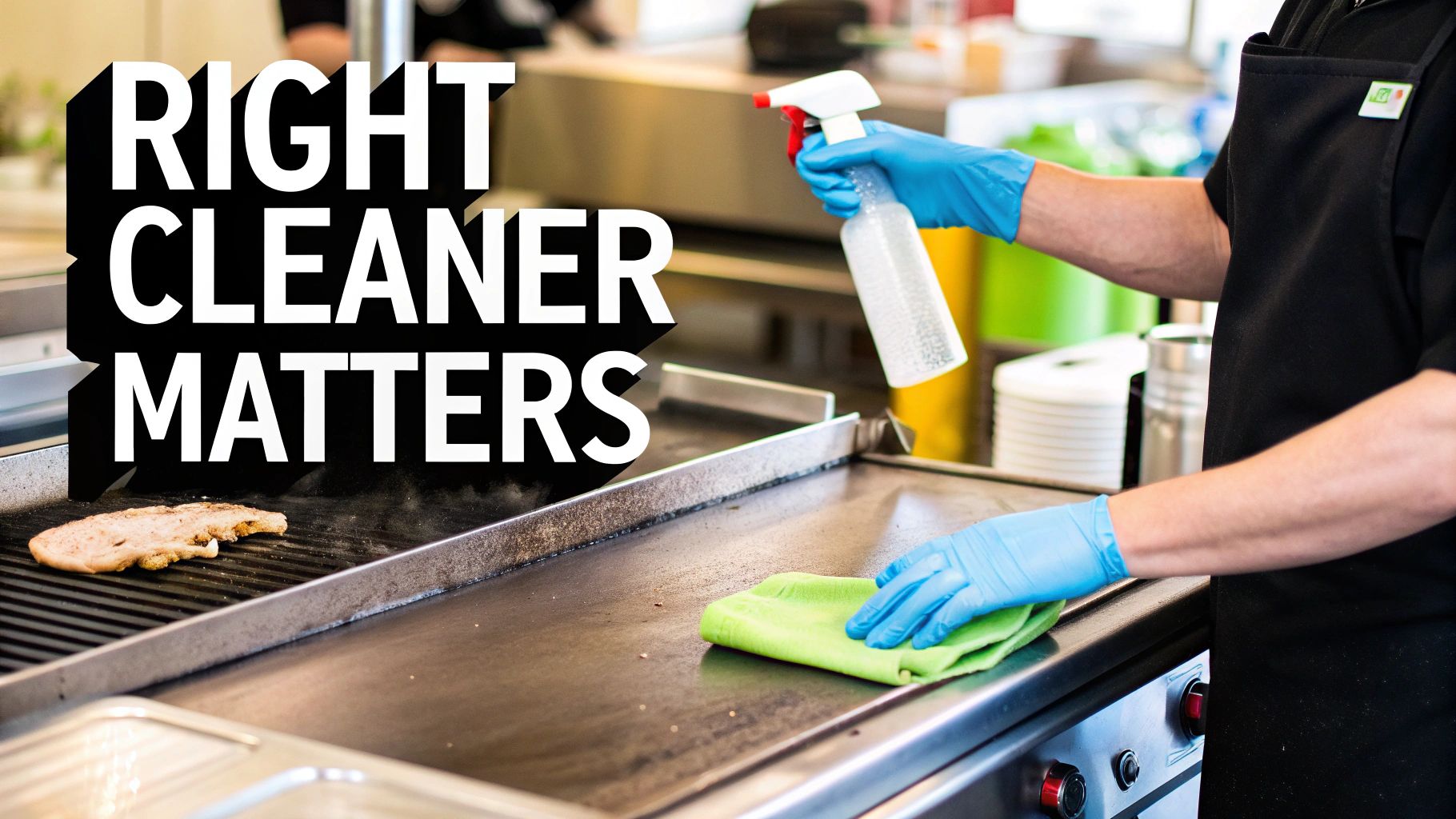
In a busy professional kitchen, your griddle is the undisputed workhorse. It endures a relentless cycle of grease, food particles, and extreme heat from morning pancakes to late-night burgers. This constant use creates a stubborn, carbonized layer of gunk that your average cleaner can't even touch.
That buildup does a lot more than just look bad. It actually acts as an insulator, creating hot and cold spots across the cooking surface. The result? Unevenly cooked food, longer ticket times, and frustrated chefs trying to work around a griddle that can't hold a consistent temperature.
Protecting Your Investment and Ensuring Food Safety
Using the wrong cleaner on your griddle can be just as damaging as not cleaning at all. I've seen kitchens where staff used steel wool or harsh chemicals not meant for stainless steel griddle plates, and it just wrecks the surface. These tools cause microscopic scratches and pitting that become breeding grounds for bacteria—a serious food safety risk. Plus, those imperfections trap even more grease, making every future cleaning session a nightmare.
Choosing a cleaner specifically formulated for commercial griddles isn't just a best practice—it's a critical step in preserving the lifespan of your equipment and upholding health standards.
Specialized formulas are engineered to dissolve that polymerized grease without harming the griddle’s surface. This is serious business, and the market reflects that. The global demand for specific commercial griddle cleaners is growing fast, hitting USD 2.4 billion in 2024 and projected to reach USD 4.1 billion by 2033, all driven by the needs of busy kitchens like yours.
The True Cost of Neglect
Putting off proper griddle care with a dedicated commercial stainless steel cleaner only leads to a snowball of problems. Here's what you're really looking at:
- Reduced Efficiency: That carbon buildup forces your griddle to work harder, burning more energy just to maintain the right temperature.
- Flavor Transfer: Nobody wants their pancakes to taste like last night's onions. Lingering residue from previous orders will absolutely taint the flavor of freshly cooked food.
- Costly Replacements: Eventually, the surface damage from improper cleaning becomes irreversible. That means you're forced into a premature and very expensive equipment replacement.
A well-maintained griddle is the heart of your kitchen's operations. To learn more about extending the life of all your equipment, check out our comprehensive guide on commercial kitchen equipment maintenance.
How to Select the Best Griddle Cleaner
Let’s be honest, picking the right cleaner for your commercial griddle isn’t like grabbing a bottle of all-purpose spray at the grocery store. What works for a high-volume diner churning out burgers and bacon all day is completely different from what a food truck specializing in delicate crepes might need. The cleaner you choose has a direct impact on your griddle's performance, how long it lasts, and—most importantly—the safety of the food you serve.
Make the wrong choice, and you could end up with a scratched, pitted surface that cooks unevenly and becomes a breeding ground for bacteria. A griddle isn't just a single slab of metal; it’s a system. You've got the heavy-duty cooking plate and the polished exterior. Each needs a different kind of care.
Decoding Cleaner Types for Specific Griddle Zones
The first rule is to match the cleaner to the job. Using a powerful degreaser designed for baked-on carbon will absolutely ruin the finish on your griddle’s shiny exterior. Understanding the difference is everything.
- Heavy-Duty Degreasers: These are your workhorses, built for the main griddle plate. They use potent alkaline agents to dissolve that tough, blackened, polymerized grease that builds up from constant use.
- Gentle Polishes: These are for the stainless steel body, splash guards, and control panel. Their job is to wipe away fingerprints and light splatter, leaving behind a protective, streak-free shine. Never use these on the hot cooking surface.
- Food-Safe Sanitizers: This is the final, non-negotiable step for the griddle plate. After all the gunk is gone, a food-safe sanitizer wipes out any lingering bacteria, making the surface safe and ready for the next service.
This need for specialized cleaners is a big reason the U.S. commercial cleaning products market, valued at USD 33.23 billion in 2024, is projected to hit USD 51.34 billion by 2030. Real-world data shows that restaurants using specialized griddle cleaners can achieve 40% faster sanitation compared to generic products, which means less downtime and more cooking time.
To help you find the right tool for the job, here's a quick comparison of common commercial cleaner types.
Commercial Griddle Cleaner Comparison
Choosing the right cleaner comes down to your daily menu and cleaning routine. This table breaks down the most common options for commercial griddles to help you decide.
| Cleaner Type | Primary Griddle Use | Key Ingredients | Best For | Avoid On |
|---|---|---|---|---|
| High-Temp Degreaser | Heavy-duty, daily cleaning | Sodium Hydroxide, Surfactants | Thick, carbonized grease on steel griddle plates | Polished exteriors, aluminum, non-stick surfaces |
| Griddle Stone/Brick | Manual, abrasive cleaning | Pumice stone | Removing tough, built-up residue on griddle plates | Delicate surfaces, polished stainless steel exteriors |
| Stainless Steel Polish | Exterior surfaces only | Mineral Oil, Silicone | Removing fingerprints, water spots, light grease | The hot cooking surface (will smoke and burn) |
| Food-Safe Sanitizer | Final sanitization step | Quaternary Ammonium Compounds | All food-contact surfaces after cleaning | N/A (must be used as the final step) |
Ultimately, the best cleaner is the one that fits seamlessly into your workflow, keeps your griddle in prime condition, and ensures you're always health-code compliant.
The Non-Negotiable Role of NSF Certification
If you see the NSF (National Sanitation Foundation) logo on a cleaning product, it means one thing: it’s been rigorously tested and certified as safe for a commercial kitchen. This isn't just a "nice-to-have." It’s often a requirement for passing health inspections and gives you peace of mind that you aren't leaving toxic chemicals on your griddle's cooking surface.
An NSF-certified cleaner guarantees that any residue left after rinsing is non-toxic and won't contaminate your food. For any cleaner that touches your griddle plate, this certification is the absolute minimum standard.
Using uncertified cleaners is a massive gamble—with your customers' health and your restaurant's reputation. Always flip the bottle and look for that NSF mark before you buy anything for a food-contact surface like your griddle. To learn more about what to look for, this guide on what makes a good cleaner for stainless steel is a great resource.
Ingredients to Look For and What to Avoid
The ingredient list on a cleaner tells you everything you need to know about what it's designed for and what it might damage. Knowing what helps and what harms is key to keeping your griddle in peak condition.
Effective Ingredients for Griddle Plates:
- Alkaline Agents (like Sodium Hydroxide): These are the power players that dissolve carbonized grease and fats.
- Surfactants: They work to lift and suspend grease, making it easy to wipe away.
- Solvents (like Glycol Ethers): These cut through the really tough, baked-on grime that water can't touch.
Harmful Ingredients to Avoid on Griddles:
- Chlorides (Bleach): This is a huge no. Bleach is extremely corrosive to stainless steel and will cause pitting and rust over time on your griddle.
- Harsh Abrasives: Things like scouring powders or gritty cleaners will permanently scratch and damage your griddle surface.
- Acidic Cleaners: These can cause ugly discoloration and even etch the surface of stainless steel.
A busy diner fighting a constant war against grease buildup needs a high-foaming alkaline degreaser. For your griddle's exterior, a simple, non-abrasive polish is perfect. To build out your kitchen's full cleaning kit, check out our detailed list of essential cleaning supplies for restaurants.
The End-of-Shift Griddle Cleaning Method
The end-of-shift clean isn't just another task on the closing checklist; it's a non-negotiable ritual that separates the pros from the amateurs. I've seen it time and time again: a consistent, daily cleaning routine is the single most important thing you can do for your griddle's performance and lifespan. This isn't just about wiping down a surface. It's about systematically stripping away the day's grease and grime so you can start fresh tomorrow.
Getting this right means even heat transfer, no flavor bleed between dishes, and staying on the right side of the health inspector. From a chef's point of view, it means the closing crew can shut down efficiently and walk out the door knowing their griddle is ready to rock.
The Initial Scrape Down While It Is Warm
Here’s the golden rule: start cleaning while the griddle is still warm. The sweet spot is typically between 300°F and 350°F. Trying to clean a cold griddle is a nightmare—like chipping hardened cement. The residual heat keeps all that grease and gunk loose and easy to manage.
Grab a long-handled griddle scraper with a sharp, straight blade and push all the food debris and heavy grease into the drip tray. I always teach my crew to work systematically from back to front with firm, even strokes. This first pass should clear about 80% of the mess, making the next steps a whole lot easier. Whatever you do, don't throw ice on it to cool it down. That sudden temperature change—thermal shock—can warp or even crack a thick steel plate in an instant.
Applying the Right Commercial Stainless Steel Cleaner
With the heavy debris gone, it’s time to bring in a commercial stainless steel cleaner. A high-quality, food-safe degreaser is your best friend here. Apply it evenly across the warm surface, and you'll see it start bubbling and lifting the cooked-on carbon right away.
Let the cleaner sit for a few minutes. That dwell time is crucial. It gives the active ingredients a chance to break down the polymerized grease that scraping alone can’t touch, saving you a ton of elbow grease.
This simple flow chart breaks down the three essential stages for a complete griddle surface treatment.
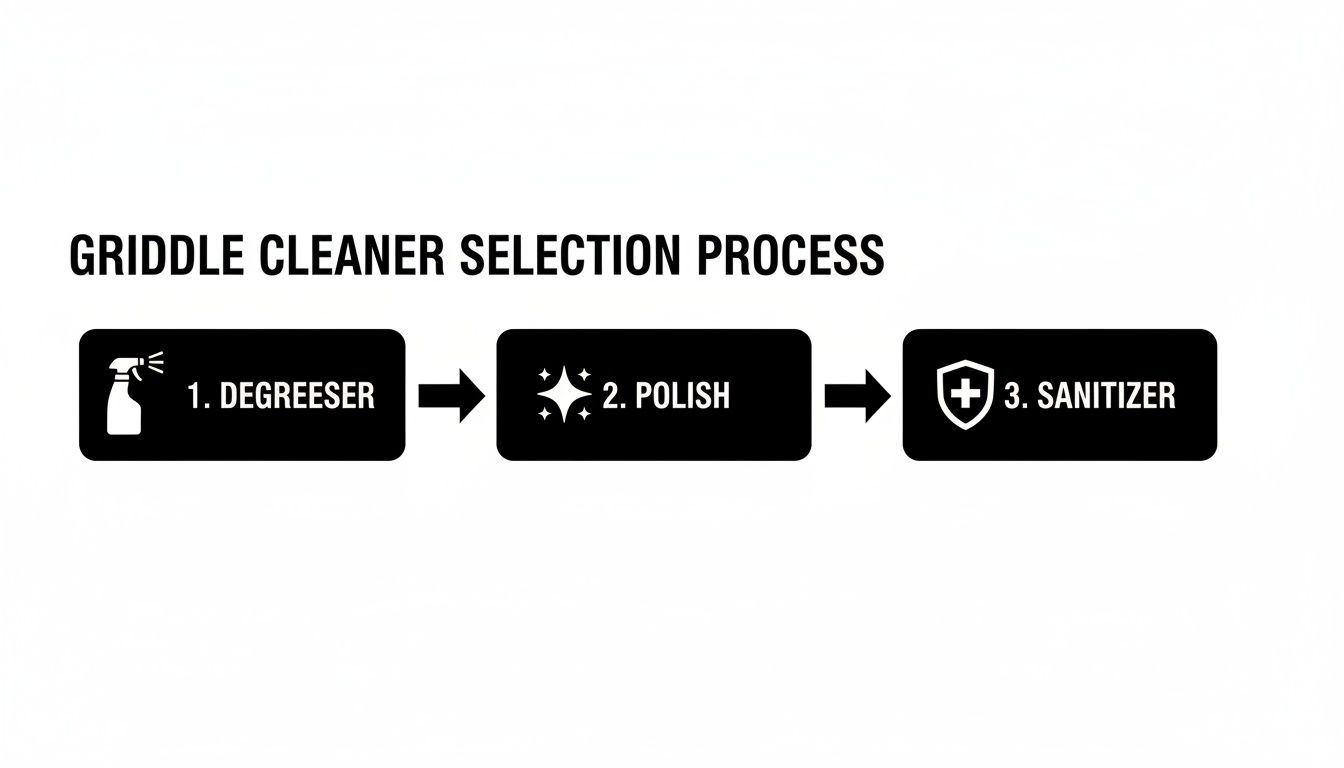
As you can see, a truly clean griddle isn't just degreased. It's polished and sanitized, ensuring the surface is fully maintained and safe for the next service.
Using a Griddle Brick Correctly
While the cleaner is still on the griddle, it's time for the griddle brick. Always scrub with the grain of the steel to avoid scratching up the surface. Here's a pro tip: put a little bit of cooking oil on the surface first. It acts as a lubricant, helping the brick glide smoothly without gouging the plate.
A griddle brick is a powerhouse tool, but it belongs on the cooking plate only. Never, ever use it on the polished stainless steel exterior, splash guards, or control knobs. It will leave permanent, ugly scratches instantly.
After scrubbing, use your scraper and a squeegee to push all the slurry of loosened grime and cleaner into the grease trap. The griddle plate should be looking nearly brand new at this point. If your team needs more visual guidance, we've got a detailed article covering how to clean your flat top griddle.
Rinsing and Final Touches for a Complete Clean
You absolutely cannot skip the rinse. Leftover cleaner residue will give your food a nasty chemical taste and can damage the steel over time. Pour a little warm water on the surface and squeegee it into the drip tray. Do this two or three times, until the water runs completely clear.
Now, let's finish the job by hitting the spots people often forget:
- Splash Guards: Wipe down the back and sides with a gentle stainless steel polish to get rid of any splatter.
- Drip Tray: Pull the drip tray, empty it into your grease disposal bin, and give it a thorough wash in the three-compartment sink.
- Exterior Surfaces: Use a clean microfiber cloth and a good stainless steel polish to wipe down the front and sides of the griddle, getting rid of fingerprints and smudges.
Last step: dry the griddle plate completely with a clean cloth and wipe on a very thin layer of cooking oil. This quick seasoning pass protects the steel from moisture and rust overnight and makes it ready for service the next morning. Once you get this routine down, creating a simple guide for your staff is easy. For some great tips, check out this advice on documenting cleaning processes quickly.
Restoring Your Griddle with a Deep Clean
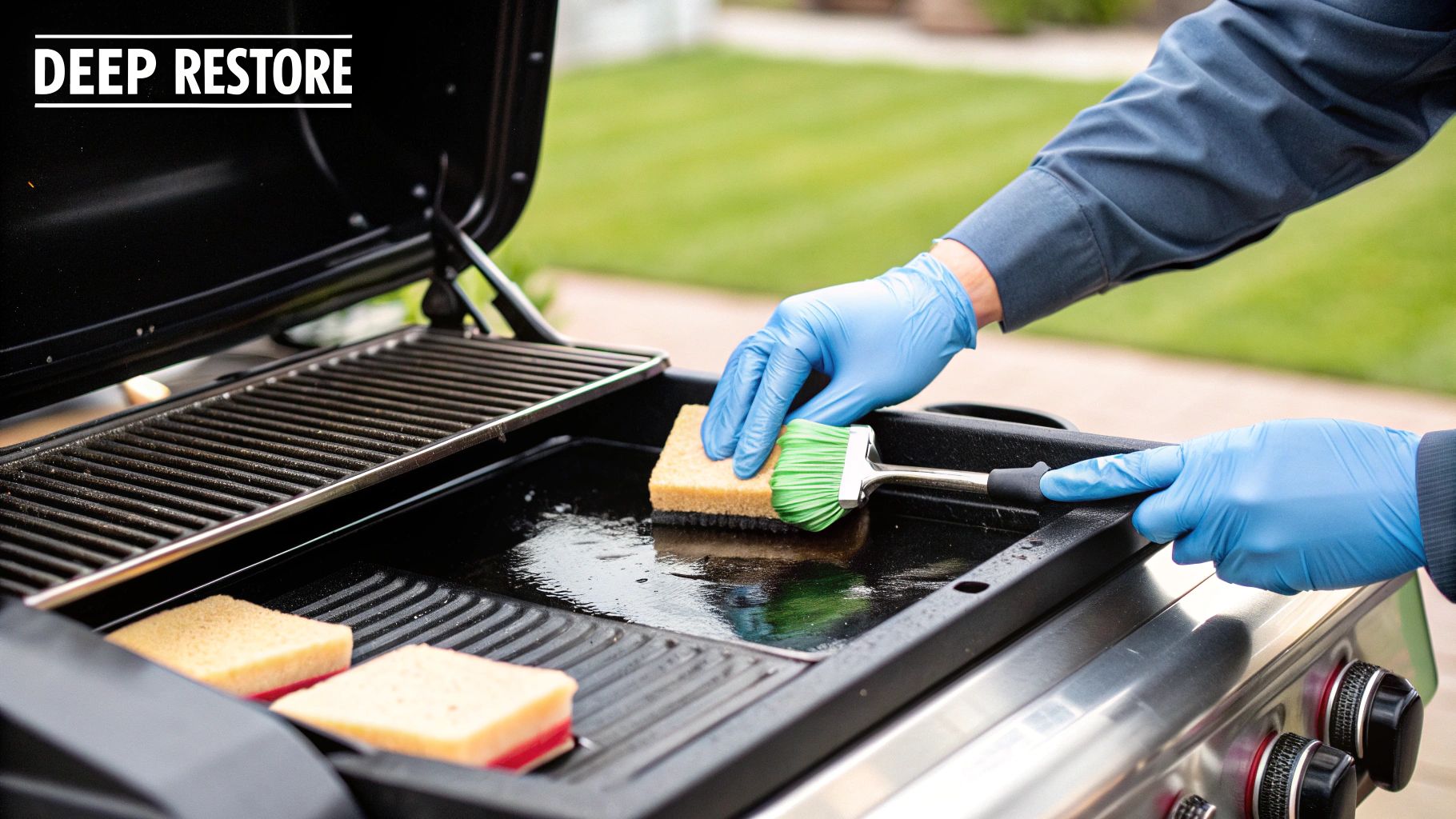
Even with a killer end-of-shift routine, every griddle eventually hits a wall. After weeks of relentless service, you’ll start to see a stubborn, blackened layer of carbonized grease that your daily degreaser just can't touch. Don’t sweat it—this isn't a sign you're doing something wrong. It's just the reality of a hard-working griddle.
When you notice pancakes starting to stick or see that tell-tale uneven browning that screams "hot spots," it's time to roll up your sleeves for a restorative deep clean. This isn't your average wipe-down. We're talking about stripping away layers of baked-on gunk to get your griddle performing like it’s brand new again.
Safety First Before You Begin
Okay, before you even grab a scraper, let's talk safety. This is a much more intensive process than the daily clean, so you have to take it seriously. Never, ever try to deep clean a hot or even warm griddle. The surface needs to be completely cool to the touch.
And the most important step of all: completely disconnect the griddle from its power source. If it's electric, pull that plug right out of the wall. For a gas model, shut off the main gas supply line. This simple step eliminates any chance of the unit kicking on while you’re in the middle of cleaning it.
Gathering Your Deep Cleaning Arsenal
To bring a griddle back from the brink, you’ll need some bigger guns than your daily cleaning kit. The idea is to obliterate the buildup without scratching or gouging the griddle plate itself.
- Griddle Screens: These abrasive screens are your secret weapon for heavy-duty carbon removal. They’re more aggressive than a griddle brick and are absolute champs at slicing through thick, baked-on grime.
- Screen Holder: This simple tool gives you a solid grip on the screen, letting you apply serious, even pressure without tearing up your hands.
- Heavy-Duty Degreaser or Griddle Cleaner: This is where you bring in a powerful commercial stainless steel cleaner made for the tough jobs. These formulas are designed to sit and soak, breaking down that polymerized grease that laughs at regular cleaners.
- Polishing Compound: After all the heavy scrubbing, a food-safe polishing paste is the final touch. It helps restore that smooth steel finish, filling in tiny imperfections and making the surface less likely to stick in the future.
A deep clean isn't just about appearances. It directly restores heat transfer efficiency. That means more consistent cooking and can even lower your energy bill over time.
Stainless steel griddles are king in foodservice for a reason, and the market for cleaners has grown right along with them. Letting carbon build-up on a griddle can cause a 20-30% loss in heating efficiency. On the flip side, keeping that steel in top shape can extend its lifespan by up to 50%, which is a huge saving on replacement costs. You can see more data on the growing stainless steel market and its impact on related industries.
The Restoration Process Step-by-Step
Got your tools? Safety checks done? Let's get to work.
First, grab your standard scraper and get rid of any thick, loose gunk. This just clears the deck for the real work.
Now, generously apply your heavy-duty degreaser across the entire cool griddle plate. Let it sit. Seriously, walk away. The manufacturer will recommend a dwell time, usually somewhere between 10 to 30 minutes. Don't rush this part—the chemical needs time to penetrate and do its job.
Once it's soaked in, attach a griddle screen to its holder and start scrubbing in a circular motion. Use firm, steady pressure and tackle the griddle in sections to make sure you hit every spot. You'll start to see the black carbon lift right off, revealing that beautiful steel underneath.
After you've scrubbed the whole surface, use your scraper again to push all that dark, greasy slurry into the grease trap. Now it's time to rinse, and rinse well. Use warm water and a squeegee to get all the chemical residue off. Do it two or three times just to be safe.
Finally, apply a small dab of food-safe polishing compound and work it into the griddle plate with a clean cloth. This last step buffs the surface, creating a smoother, slicker finish. Wipe off any excess, and your griddle is officially restored. All that's left is to re-season it before you fire it up for the next service.
Common Griddle Cleaning Mistakes to Avoid
Even the most seasoned kitchen crew can slip into bad habits that slowly destroy an expensive griddle. A simple mistake during the nightly clean-up can spiral into costly repairs, food that cooks unevenly, and even potential health code violations. Honestly, knowing what not to do is just as important as knowing the right way to use a commercial stainless steel cleaner.
These common slip-ups are easy to prevent with a little training and awareness. Steering clear of these pitfalls protects your investment and ensures your griddle is a reliable workhorse your chefs can count on, day in and day out.
Using the Wrong Tools for the Job
I've seen it happen a hundred times in a busy kitchen: someone grabs steel wool or a heavy-duty scouring pad to blast away a tough spot on the griddle plate. It might look like it’s working, but it's one of the fastest ways to ruin a perfectly good griddle.
Those aggressive tools will permanently scratch and gouge the steel surface. And those aren't just cosmetic blemishes—they become tiny traps for grease and food bits. This makes every future cleaning harder and creates hotspots that prevent even cooking. Stick to the right tools for the job: griddle bricks (for steel plates only), griddle screens, and soft cloths.
Applying Cleaner at the Wrong Temperature
Patience is key when it’s time to clean a commercial griddle. A common mistake, usually made with good intentions, is pouring water or cleaning solution onto a blazing hot surface. This triggers thermal shock, a sudden temperature drop that can warp or even crack the thick griddle plate.
The sweet spot for cleaning is between 300°F and 350°F. In this range, the surface is hot enough to keep grease melted and easy to lift, but cool enough that it won't instantly vaporize your cleaner or create a safety hazard. And please, never use ice to cool down a griddle. Just let it cool down naturally to the right temperature.
A griddle is a major investment. The few minutes it takes to let it cool properly can save you thousands in repair or replacement costs down the line. Protecting it from preventable damage like thermal shock is non-negotiable.
Forgetting to Re-Season After a Deep Clean
A deep clean strips away everything—the good along with the bad. While you’ve successfully removed all that burnt-on carbon, you’ve also removed the slick layer of seasoning that gives you that beautiful non-stick surface. Skipping the re-seasoning step is just asking for a frustrating, sticky service the next day.
Once you’ve deep-cleaned and thoroughly rinsed the griddle, always finish by applying a thin, even layer of cooking oil to the clean, dry plate. Heat the griddle until the oil starts to polymerize and you've got that perfect, ready-to-cook finish. It’s a simple step that prevents sticking, protects the steel from rust, and makes the next shift’s cleanup a whole lot easier.
Sometimes, even when you do everything right, problems pop up. This quick guide can help you figure out what’s going on with your griddle.
Griddle Cleaning Troubleshooting Guide
Even with the best practices, you might run into some stubborn issues. This table is a quick reference for identifying and solving the most common griddle cleaning headaches.
| Problem | Likely Cause | Solution |
|---|---|---|
| Food is Sticking | The griddle was not properly seasoned after the last deep clean. | Re-season the griddle plate with a thin layer of cooking oil and heat until it lightly smokes. |
| Uneven Browning | Carbon buildup is creating hot and cold spots on the surface. | Perform a deep clean using a griddle screen and a heavy-duty degreaser to restore even heat transfer. |
| Chemical Smell/Taste | Cleaner residue was not fully rinsed off the griddle plate. | Thoroughly rinse the griddle surface two or three times with warm water, using a squeegee to remove all moisture. |
| Visible Scratches | Abrasive tools like steel wool or scouring pads were used. | Stop using abrasive tools immediately. Use only griddle bricks, screens, or non-abrasive pads. |
By keeping these points in mind, you can troubleshoot most issues and keep your griddle in prime condition for years of service.
Got Questions? We’ve Got Answers.
When you're running a busy kitchen, you don’t have time for guesswork. You need straight answers about keeping your griddle in prime condition. From choosing the right commercial stainless steel cleaner to knowing when to do a deep dive, here are the questions we hear most often from chefs and kitchen managers about their griddles.
Let’s cut through the noise and get you the practical info you need to protect your equipment and keep cooking.
How Often Does My Griddle Really Need a Deep Clean?
Everyone scrubs down their griddle daily, but that deep, restorative clean is a different beast. The real answer? It depends entirely on your kitchen’s pace.
A slammed diner flipping burgers from open to close might need a full deep clean every week. But if you’re a café using your griddle for a few hours during the lunch rush, you could probably go a month. The sweet spot is usually every 1 to 4 weeks.
Forget the calendar. Let the griddle tell you when it’s time. If you’re fighting hot spots, food is starting to stick, or you see dark, flaky bits that your daily scrape-down can't handle, that's your sign.
Can I Just Use Vinegar and Baking Soda on My Griddle?
Please don't. While DIY cleaners are great for your kitchen at home, they just don't have the muscle for a commercial griddle. The polymerized grease and baked-on carbon you're dealing with require a professional-grade degreaser.
Beyond that, it's a compliance issue. Health inspectors expect to see NSF-certified, food-safe cleaners in a professional kitchen. It’s the only way to guarantee you're killing bacteria and meeting safety standards on your griddle. Don't risk a failed inspection—or worse, a food safety incident—to save a few bucks.
Using homemade cleaners on a commercial griddle is a huge gamble. You risk ineffective cleaning, failed health inspections, and serious food safety liabilities. Always stick with products formulated for the job.
What's the Difference Between Cleaning the Griddle Top and the Sides?
This is a big one, and getting it wrong can wreck your griddle. The cooking surface and the stainless steel body are two totally different zones that need two totally different approaches.
- The Griddle Plate: This is your workhorse—the cooking surface itself. It needs aggressive, heat-activated degreasers and tough tools like griddle bricks or screens to obliterate that baked-on carbon.
- The Griddle Body: This is the stainless steel housing, controls, and splash guards. Treat this part gently. You'll want a non-abrasive stainless steel cleaner and polish to wipe away grease and fingerprints without leaving ugly scratches.
Never, ever take a griddle brick to the polished stainless steel exterior. You'll instantly scratch it for good. And a simple polish won’t do a thing to the cooked-on mess on the griddle plate. Right tool, right surface. Always.
Is It Okay to Pressure Wash My Griddle?
Absolutely not. Never use a pressure washer on a commercial griddle. It’s one of the fastest ways to destroy it.
That high-pressure jet of water will force moisture into every crack and crevice, soaking sensitive electronics, gas valves, and thermostats. You’re asking for short circuits, rust, and catastrophic failure. It’s a massive safety hazard that can create serious electrical or gas risks for your staff.
Stick to the basics: scrapers, pads, and cloths. It’s the safe, effective way to get the job done without flooding the sensitive guts of your machine.
Ready for a griddle that can keep up with your busiest shifts and still clean up beautifully? At Griddles.com, we stock high-performance commercial griddles built for the real world—durable, reliable, and easy to maintain. Check out our collection and find the right fit for your kitchen.