

A Guide to Commercial Griddle Sizes
When you're looking at commercial griddles, you’ll find most models fall between 24 to 72 inches wide. They typically have a standard depth of about 30-32 inches and stand 15-20 inches tall. These aren't random numbers; they’re designed to sit perfectly on most commercial countertops or equipment stands, giving you crucial cooking surface right where you need it without eating up your prep space.
Picking the right size is a game-changer for a smooth-running kitchen.
Decoding Commercial Griddle Sizes for Your Kitchen
Choosing the right commercial griddle isn't just about making sure it fits in the gap you have. It's about adding a strategic piece of equipment to your kitchen. Think of it like a chef picking the right knife for the job—the wrong one makes the work clumsy and slow. A perfectly sized griddle becomes a seamless part of your cook line, keeping key menu items sizzling and just an arm's length away.
This one decision trickles down to affect everything from your staff's comfort to how fast orders get out the door. If the unit is too small, it gets overcrowded, heat can't recover, and your cooks are constantly fighting for space. On the flip side, a griddle that’s too big is just a waste of energy and valuable real estate that could have been used for another essential tool.
Key Factors Influencing Your Choice
Before you even look at a tape measure, you need to think about how your kitchen actually operates. The right size is a solution built around your daily grind, not just a number on a spec sheet. Base your decision on a solid understanding of:
- Kitchen Layout and Flow: Where is this unit going to live? Is it sitting on a refrigerated chef base next to your busiest fryer, or will it be at a quieter breakfast station? The location dictates a lot.
- Menu and Volume: How much product do you really need to cook at once? A high-volume diner churning out hundreds of burgers a day has very different needs than a small coffee shop making breakfast sandwiches.
- Workflow Integration: The main goal here is to cut down on wasted steps for your staff. The griddle needs to support your cooks' natural movements, not get in their way.
When you start looking at commercial griddle sizes through the lens of workflow, the whole process changes. You're no longer just plugging a hole; you're making a smart investment in your kitchen's productivity. The right unit keeps everything a cook needs—burgers, bacon, pancakes—cooking efficiently at the point of action, making service faster and smoother.
Bridging Dimensions with Practical Needs
Now, let's connect those operational needs to actual sizes. For most commercial kitchens, we've put together a quick reference table to help you get started.
Common Commercial Griddle Sizes at a Glance
This table breaks down the most common sizes you'll encounter, giving you a ballpark idea of what might work for your space and volume.
| Width (Inches) | Typical Depth (Inches) | Plate Thickness (Inches) | Number of Burners/Controls | Best For |
|---|---|---|---|---|
| 24 | 30 - 32 | 0.5 - 1 | 2 | Food trucks, coffee shops, small cafes, or limited-menu prep stations. |
| 36 - 48 | 30 - 32 | 0.75 - 1 | 3 - 4 | Mid-volume restaurants, diners, or as a primary unit on a cook line. |
| 60 - 72 | 30 - 32 | 1 | 5 - 6 | High-volume kitchens, institutional cafeterias, and busy diners needing max capacity. |
A compact 24-inch model is a lifesaver in a food truck where every inch counts. But for a busy restaurant's main cook line, a spacious 60-inch or 72-inch six-burner model is practically a necessity. The consistent depth, usually around 32 inches, ensures that no matter the width, it will sit flush with your other equipment for a clean, unified workspace.
Ultimately, your goal is to create a perfect, unbroken link between your prep station and your primary cooking surface. This guide will help you translate your kitchen's real-world needs into the specific dimensions that will make your new commercial griddle a powerful asset from day one.
Breaking Down Width, Depth, and Height
Reading the numbers on a spec sheet is one thing, but picturing how they’ll actually work in your kitchen is what really counts. Width, depth, and height aren't just figures on a page; they're the three core elements that dictate how a commercial griddle fits into your daily workflow. Each dimension has a real, tangible impact on everything from cooking capacity to how easily your staff can move around.
Think of it like this: a small griddle won't keep up with the dinner rush, while a giant one is just wasted space and energy in a quiet café. It's the same deal with any cooking equipment—the dimensions have to be right for the job. Get this balance right, and you'll create a much smoother, less chaotic kitchen for your team.
Width: The Key to Capacity and Counter Space
The width of a commercial griddle is the number one factor determining its cooking capacity. It's also the dimension that tells you how much valuable hood and counter space you're giving up, so it's a critical choice. The right width should directly support the needs of your menu and volume.
- Compact Models (24-36 inches): These are the workhorses for tight spots. A 24-inch unit fits perfectly in a small cafe for breakfast items or tucked away in a food truck where every single inch matters.
- Mid-Size Models (48 inches): A 48-inch griddle is the sweet spot for a lot of medium-volume kitchens. It gives you plenty of room for burgers, cheesesteaks, or pancakes without dominating your entire cook line.
- Large Models (60-72 inches): For a busy diner or institutional kitchen, a big 60-inch or even a 72-inch model is a total game-changer. It provides a massive cooking surface for handling multiple orders at once, saving countless minutes during a rush.
Ultimately, this decision is a trade-off: more cooking surface means less workspace for other equipment under the hood.
Depth: Finding the Balance in Your Cook Line
While width can vary a lot, depth is a bit more standard—but it's hugely important for your kitchen's ergonomics and safety. Most commercial units have a depth of around 30 to 32 inches, a size designed to sit flush with standard commercial equipment stands and countertops.
But in a kitchen with narrow aisles, an extra inch or two can feel like a mile. Some brands offer shallower models for this exact reason. Choosing a shallower unit can open up a walkway, preventing traffic jams and making it safer for staff rushing around. The trade-off, of course, is a little less cooking surface from front to back.
Think of kitchen aisles like highways during rush hour. A standard-depth griddle is like a well-placed lane, but in a tight space, it can feel like a lane closure. A shallower model helps keep traffic flowing smoothly, preventing frustrating and potentially dangerous jams.
Height: Seamless Integration and Accessibility
Finally, height determines how well your griddle will line up with other equipment and whether it creates an ergonomic cooking station. The industry standard height for countertop griddles is usually between 15 and 20 inches.
There's a good reason for that specific range. It's built to sit on a standard 36-inch high equipment stand or chef base, bringing the cooking surface to a comfortable working height for most cooks. This gives you that clean, seamless cook line that's both professional and practical.
Height is also a critical factor for ADA (Americans with Disabilities Act) compliance. ADA-compliant workspaces require lower counters. If your griddle is part of an accessible station, you will need to ensure the final cooking surface height is appropriate, which might mean a lower stand. If accessibility is a priority, always double-check the overall height.
By getting a feel for these three dimensions, you're no longer just reading numbers—you're starting to see exactly how a piece of equipment will perform in your unique space.
How to Measure Your Kitchen Space Accurately
Picking the right commercial griddle is about more than just finding a model that looks good in a catalog. Get the measurements wrong, and you could end up with a unit that won’t fit under the hood, overheats adjacent equipment, or totally torpedoes your kitchen’s workflow. These are expensive mistakes, but thankfully, they’re easy to avoid with a tape measure and a little planning.
Seriously, you have to embrace the old "measure twice, cut once" mantra here. It's non-negotiable.
The single biggest mistake I see operators make is measuring their old griddle instead of the actual space it came out of. Over time, walls can bow, and adjacent equipment is almost never perfectly square. Measuring the physical space under the hood is the only way to be absolutely sure your new equipment will have a smooth, stress-free installation.
Getting the Hood and Counter Dimensions Right
First things first, you need to measure the opening where the griddle will live. And because no space is ever perfect, you’ll want to take a few measurements to get the real story.
- Measure the Width: Grab your tape measure and check the width of the available space on the counter or equipment stand.
- Measure the Height: Measure from the countertop to the bottom of the ventilation hood baffles.
- Measure the Depth: Finally, measure from the back wall to the front edge of the counter. Again, do this in a couple of different spots.
Once you have all those numbers, always use the smallest measurement for each dimension (width, height, and depth). That smallest number is your true available space. It accounts for any weird quirks in the opening and prevents that nightmare scenario where the unit is just a quarter-inch too big to fit.
This quick diagram breaks down the three core measurements you absolutely need to get right.
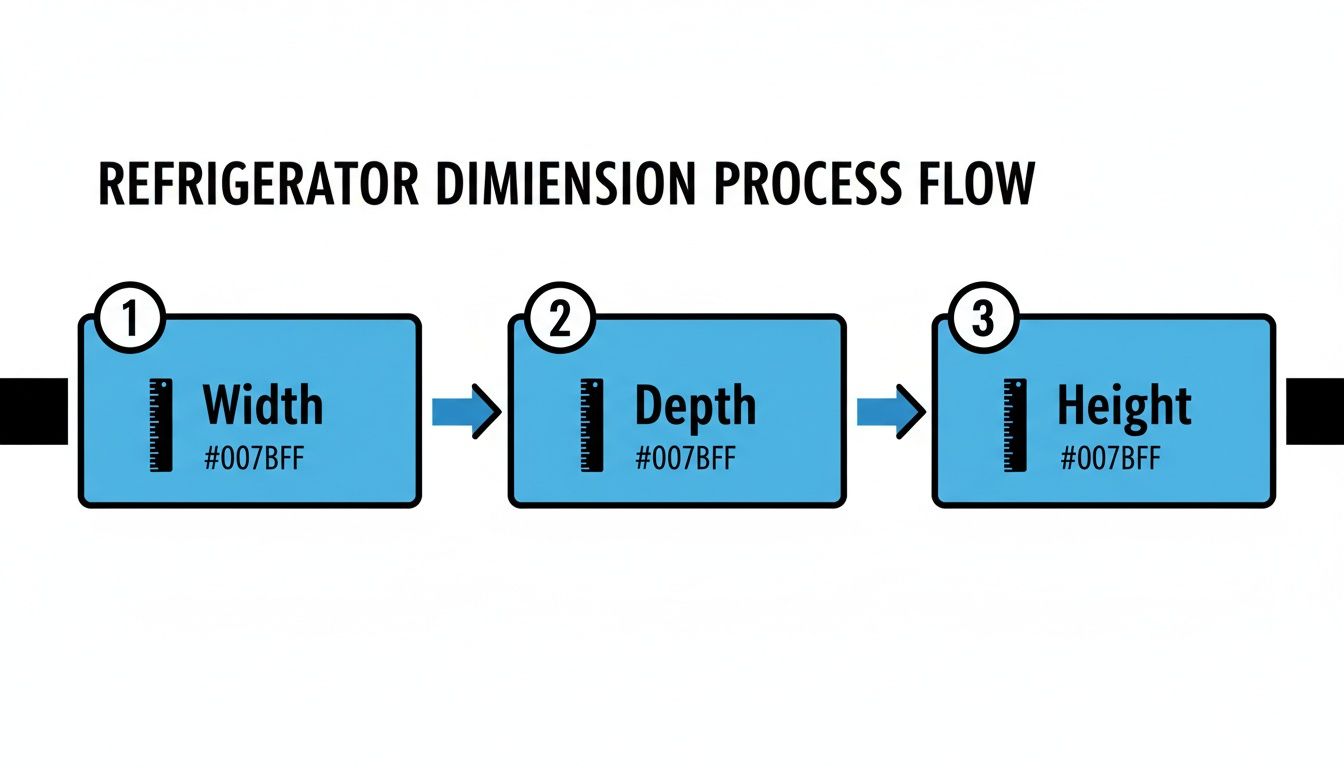
As you can see, getting the width, depth, and height right is the foundation. Everything else comes after.
Mapping the Entire Delivery Path
What good is a griddle that fits the cook line if you can't even get it into the kitchen? The delivery path is a classic blind spot that leads to a lot of frustration—and sometimes damaged equipment—on installation day.
Walk the entire route from the loading dock to its final spot, tape measure in hand. Check the width and height of every single doorway, hallway, and tight corner it needs to pass through. Look for potential bottlenecks, like a narrow kitchen entrance or a sharp turn you have to make around existing stations.
And don’t forget to factor in the packaging! The box and packing materials can easily add several inches to every side of the unit.
Accounting for Operational Needs
Last but not least, you need to measure for the "invisible" stuff—the details that ensure your unit runs efficiently and safely for its entire lifespan. This is what separates a professional, long-lasting installation from a problematic one.
- Breathing Room (Clearance): Every griddle needs clearance from other equipment and walls, especially combustible surfaces. Check the spec sheet for the manufacturer's minimums, but a good rule of thumb is to leave 6 inches of space at the back and sides to prevent heat damage and fire hazards.
- Utility Access: Find the gas line and electrical outlet. The unit's hookups need to reach easily. Remember, most commercial griddles require a specific gas connection type and may need a dedicated electrical circuit for controls, so double-check that your utility setup is ready.
Before you pull the trigger on a new commercial griddle, getting these measurements right is absolutely crucial. These same principles apply to almost any kitchen appliance; for more on this, check out a complete guide to appliance sizing for spaces.
The most expensive griddle is the one that doesn't fit. Taking an extra 15 minutes to measure the space, the delivery path, and the operational clearances will save you hours of headaches and potentially thousands of dollars in return fees or custom fabrication work.
By carefully working through these measurement steps, you can choose your next griddle with total confidence, knowing it will integrate perfectly into your kitchen from the moment it arrives.
Matching Griddle Size to Your Kitchen Workflow
A commercial griddle is so much more than just a hot slab of steel—it's a strategic piece of equipment that can make or break your kitchen's rhythm and speed. The right size, placed in the right spot, can turn a frantic cook line into a well-oiled machine. It’s not about finding a unit that just fits; it's about engineering a workflow where every burger, pancake, and cheesesteak is cooked efficiently.
Think of your griddle line like a pit stop in a Formula 1 race. The crew doesn't sprint back to the garage for a fresh set of tires; everything is positioned for blinding speed. In your kitchen, the griddle is the racetrack. A perfectly sized flat-top supports a high volume of menu items, all within arm's reach of the prep area. This simple setup eliminates wasted steps and shaves precious seconds off every single order.
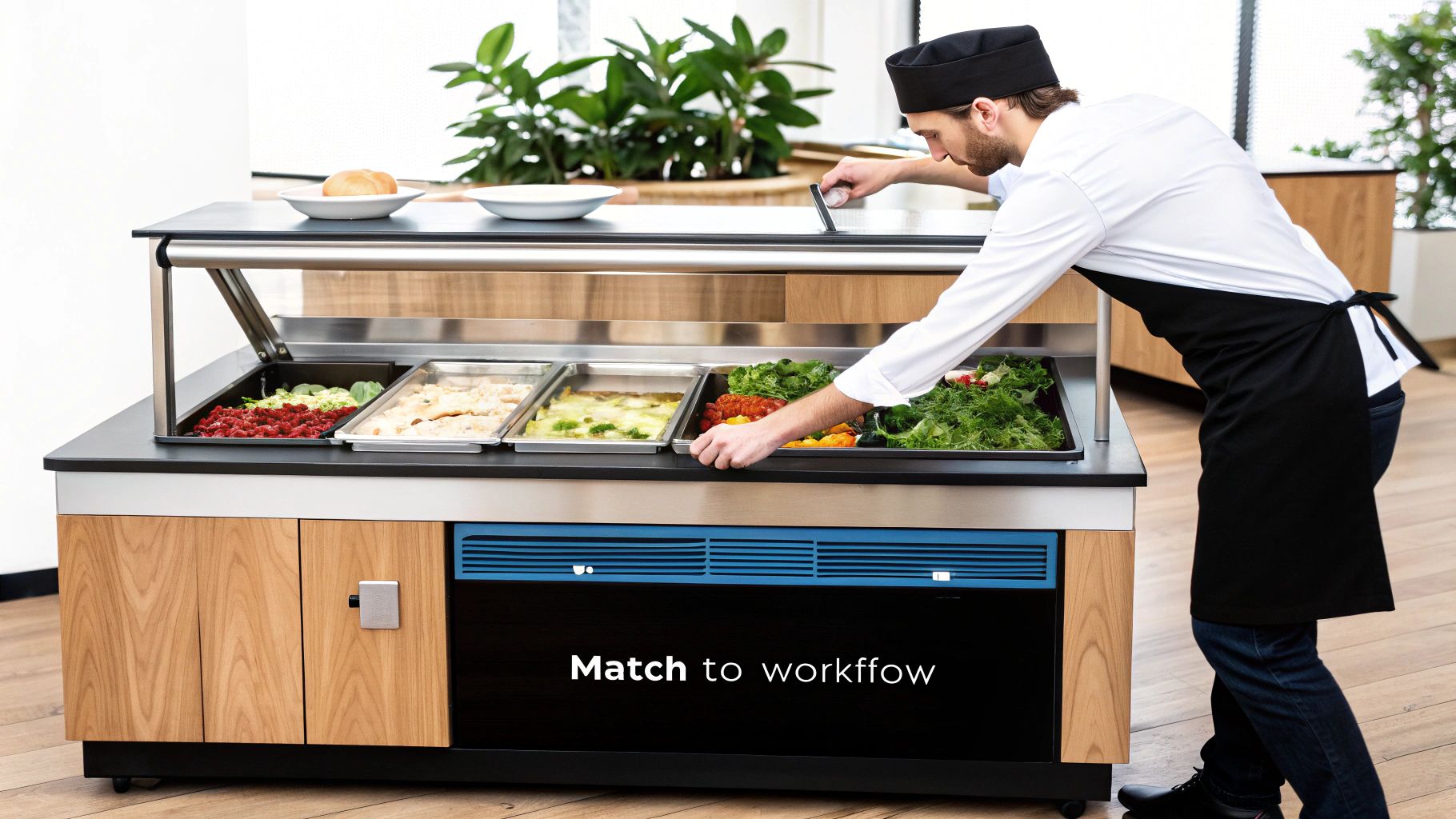
Sizing for High-Volume Diners and Restaurants
In a busy diner or restaurant, the griddle is the heart of the kitchen, and every single movement counts. This is where the bigger commercial griddles, like 48-inch or 60-inch models, really shine.
You’ll want to position these units centrally in the cook line, often on a refrigerated chef base to create a high-capacity ingredient and cooking arsenal. A 60-inch griddle can easily handle dozens of burgers, pancakes, and eggs simultaneously. This setup lets a cook pivot, grab, and cook without taking more than a step, which is absolutely critical during a slammed breakfast or lunch rush.
The rapid growth in foodservice is directly fueling demand for these hyper-efficient solutions. High-output griddles are a staple in the restaurant industry, and choosing the right size is crucial for meeting customer demand. For these kitchens, units from 36 to 72 inches are indispensable.
Compact Solutions for Food Trucks and Cafes
In a food truck or a small café, space is the ultimate luxury. Every single inch has to work for you, which makes compact commercial griddles the only real option. The 24-inch unit is the undisputed champion in these tight quarters.
This small-footprint workhorse can be tucked neatly onto a small equipment stand, giving you just enough cooking surface for a service without eating up valuable floor space. For a food truck cranking out gourmet grilled cheese or smash burgers, a 24-inch model handles all the essentials for a few hours of peak business, cooking food to perfection.
A small griddle in a tight space isn't a compromise; it's a strategic advantage. It forces you to be smart about menu planning and keeps the most critical cooking surface right at the point of use, which is the secret to a fast and efficient small-kitchen workflow.
Specialized Applications and Plating
Beyond standard kitchens, griddles play a few specialized roles that are critical to a smooth workflow. Different setups call for different configurations to really dial in the cook station.
-
Breakfast and Brunch Stations: A busy brunch spot needs instant access to pancake and egg batter. A 36-inch or 48-inch griddle is perfect here, allowing for multiple temperature zones for different items.
-
Ghost Kitchens: In a delivery-only kitchen, speed is everything. Using multiple 24-inch or 36-inch units at different prep stations creates self-contained "pods" for specific menu items, which helps prevent cooks from tripping over each other.
-
Chef Bases: The ultimate tool for griddle efficiency is pairing it with a chef base refrigerator. These are heavy-duty, low-profile refrigerated drawers designed for a commercial griddle to sit directly on top. This puts cold storage for raw proteins literally inches below the cooking surface, creating the most streamlined griddle station you can possibly have.
When you carefully consider how your team moves and what they cook, you can choose commercial griddle sizes that actively support their work. This thoughtful approach is fundamental to building a truly productive operation. For more ideas on optimizing your space, explore our guide on designing an efficient restaurant kitchen layout. The right unit doesn't just cook food—it accelerates service and improves the ergonomics of your entire kitchen.
Operational Factors Beyond Simple Dimensions
Getting the perfect commercial griddle isn't just about pulling out a tape measure. While the physical griddle sizes are where you start, it’s the operational details that will make or break the unit's success in a high-speed commercial kitchen. A unit that fits perfectly on paper can quickly become a logistical nightmare if you overlook a few critical factors.
It's like picking an engine for a race car. You wouldn't just grab one that fits in the frame; you’d look at its cooling needs, fuel type, and how it performs under pressure. In the same way, your griddle's ventilation, plate thickness, and utility hookups are the high-performance components that keep it running smoothly for years.
The Critical Role of Ventilation
Ventilation is hands-down the most important operational factor for any griddle. Ignoring it is a recipe for disaster. Commercial griddles are workhorses that kick out a lot of heat, grease, and smoke. That has to go somewhere.
All commercial griddles must be installed under a Type 1 commercial ventilation hood. This is a non-negotiable fire safety and health code requirement. The hood is designed to capture grease-laden vapors and exhaust them safely out of the building.
If your griddle is too big for your hood, or if the hood isn't functioning properly, you're creating a serious fire hazard. Grease can build up in the ductwork, leading to dangerous flare-ups. This is a primary cause of kitchen fires and can lead to immediate shutdown by a health inspector.
Choosing the Right Griddle Plate
The griddle plate itself has a direct impact on your kitchen’s workflow, energy costs, and the quality of your food. The right choice depends entirely on how you operate.
- Standard Steel Plate: These are the industry standard. They heat up quickly and are great all-purpose surfaces. The thickness of the plate matters: a thicker plate (1 inch) retains heat better and has a faster recovery time, which is essential for high-volume cooking.
- Chrome Plate: A chrome-top griddle has a mirror-like finish that prevents food from sticking and transfers heat more efficiently. This reduces flavor transfer between items and uses less energy. They're great for delicate items like eggs and fish.
- Thermostatic vs. Manual Controls: Thermostatic controls use a thermostat to maintain a precise temperature, making them great for consistent results. Manual controls are simpler and give cooks direct control over the flame, which some chefs prefer for certain applications.
Gas and Electrical Essentials
Finally, don't forget about the unit's utility needs. This is more than just finding an open outlet; it's about making sure your kitchen’s infrastructure can handle the new equipment safely. Most commercial griddles use natural gas or propane and require a professional gas line installation.
On top of that, many units—especially those with electronic ignition or thermostatic controls—will need an electrical connection. You’ll want to make sure you have an outlet nearby. Sorting these details out before the unit arrives saves you from a last-minute scramble to call a plumber or electrician. For a deeper dive, our breakdown of counter-top refrigeration solutions covers more of these setup considerations.
Market data really highlights the importance of getting the size and features right for efficiency. Globally, smaller griddles are perfect for tight spaces like food trucks, while 48-inch models are popular for high-volume kitchens. For griddle-centric kitchens, choosing durable stainless steel units with features like thick plates can boost cooking speed and efficiency. In fact, many operators report significant efficiency gains from griddles that are properly sized and set up for their main cooking line. For more on this, check out this commercial refrigeration market report.
Your Commercial Griddle Selection Checklist
Alright, let's turn all that technical talk into a final, confident decision. This checklist is your last line of defense, organizing everything we've covered into a simple, actionable format. Run through this before you hit "buy" to make sure the commercial griddle you choose is the perfect fit for your cook line.
Think of this as your pre-flight check before you invest in a core piece of kitchen equipment. A quick review here can save you from a massive headache and ensure the unit you pick improves your workflow from day one.
Measurement and Space
Getting the physical fit right is non-negotiable. One small error here can bring your installation to a screeching halt, so double-check every number.
- Space Dimensions Confirmed: Have you measured the width, height, and depth of the opening under the hood? Remember to use the smallest measurement for each to be safe.
- Clearance Added: Does the total size of your chosen model—including its required breathing room (usually 6 inches)—actually fit inside your available space?
- Delivery Path Cleared: Did you measure every single doorway, tight hallway, and tricky corner on the delivery route? Make sure the crated unit can physically get into your kitchen.
Workflow and Capacity
The right unit should feel like a natural part of your cook line, not just a hot plate shoved in a corner. Its size and design have to directly support your cooks.
A well-chosen commercial griddle doesn't just cook food; it reduces wasted motion, accelerates ticket times, and improves overall kitchen ergonomics. It's an investment in speed and efficiency.
- Cooking Surface Needs Met: Does the griddle width match the amount of product you need to cook at once during your busiest rush?
- Plate Type and Controls: Is the setup—a thick steel plate for high volume, a chrome top for delicate items, or thermostatic controls for precision—the best choice for your menu?
Operational Needs and Features
Beyond just fitting, the unit has to plug in and play nice with your kitchen's existing setup and operational demands.
- Ventilation Capacity: Is your Type 1 hood large enough and powerful enough to properly ventilate the new griddle?
- Utility Specs: Do you have the correct gas line and a dedicated circuit ready that matches the griddle's requirements?
- Material and Durability: Is the unit built from a tough grade of stainless steel that can handle the chaos of a commercial kitchen? For a deeper dive on this, check out our guide to choosing a stainless steel commercial refrigerator.
- Energy Efficiency: Have you thought about the long-term running costs? It's worth looking for energy-saving features that will cut down your utility bills over the life of the unit.
Frequently Asked Questions
When you're trying to figure out commercial griddle sizes, a few questions always seem to pop up. Getting the right answers is key before you spend any money, so let's walk through the most common ones. This will help you pick a unit that not only fits perfectly but works like a charm in your professional kitchen.
What Is the Standard Depth of a Commercial Griddle?
Most commercial griddles are built to a depth between 30 and 32 inches. There's a good reason for this specific range—it’s designed to line up with other standard pieces of cooking equipment, like ranges and fryers. This gives you that clean, flush cook line and makes your workflow much smoother.
That said, you should always double-check the manufacturer's spec sheet. Some models might be slightly shallower or deeper, which could impact your kitchen layout.
How Much Clearance Space Is Required?
Proper clearance is the key to fire safety for your griddle. Think of it like giving your hot equipment room to breathe. All commercial griddles produce intense heat and must have adequate space from walls and other equipment, especially if those surfaces are combustible.
As a solid rule of thumb, plan for at least 6 inches of open space at the back and sides of the unit. This buffer zone stops heat from building up and helps you sidestep a dangerous fire hazard. Never just guess—always look up the manufacturer’s specific clearance recommendations and check your local fire codes.
A common mistake is thinking you can shove the griddle right against a wall. That 6-inch buffer is what keeps your kitchen safe, prevents damage to your building, and keeps you compliant with safety regulations.
Can I Use a Residential Griddle in My Commercial Kitchen?
In a word: no. While a home griddle might look like it could work, it’s not built for the grind of a commercial kitchen. Trying to use one is a bad idea for a few critical reasons.
- Durability: Commercial units are made with heavy-duty stainless steel and tough components. They're built to run for hours on end and handle the general chaos of a busy kitchen.
- Cooking Power: The burners in a commercial unit are workhorses. They're powerful enough to maintain high heat and recover quickly even when loaded up with cold food during a dinner rush.
- Health Code Compliance: Professional kitchens must use equipment that is NSF certified to meet health and safety laws. A residential griddle won't have this certification, and that’s a quick way to fail a health inspection.
If you're thinking about the bigger picture of your kitchen's design, you might have more general layout questions. For that, you can check out a guide on frequently asked questions about remodeling your kitchen. Getting it right from the start saves you a world of trouble later.
Ready to find the perfect commercial griddle to power your cook line? At Griddles.com, we specialize in outfitting high-performance kitchens with reliable, value-forward equipment. Explore our full selection of commercial griddles and build a more efficient workspace today at https://griddles.com.