

Commercial Griddles: A Chef's Guide to Choosing the Right Hot Plate
In any busy commercial kitchen, you'll find the real workhorses holding down the line. Commercial griddles are exactly that—engineered for nonstop performance and rock-solid heat across a massive cooking surface. These powerful units are so much more than just big pans; they're the beating heart of high-volume breakfast joints, diners, and burger spots, driving both speed and menu creativity.
The Role of Commercial Griddles in a Professional Kitchen
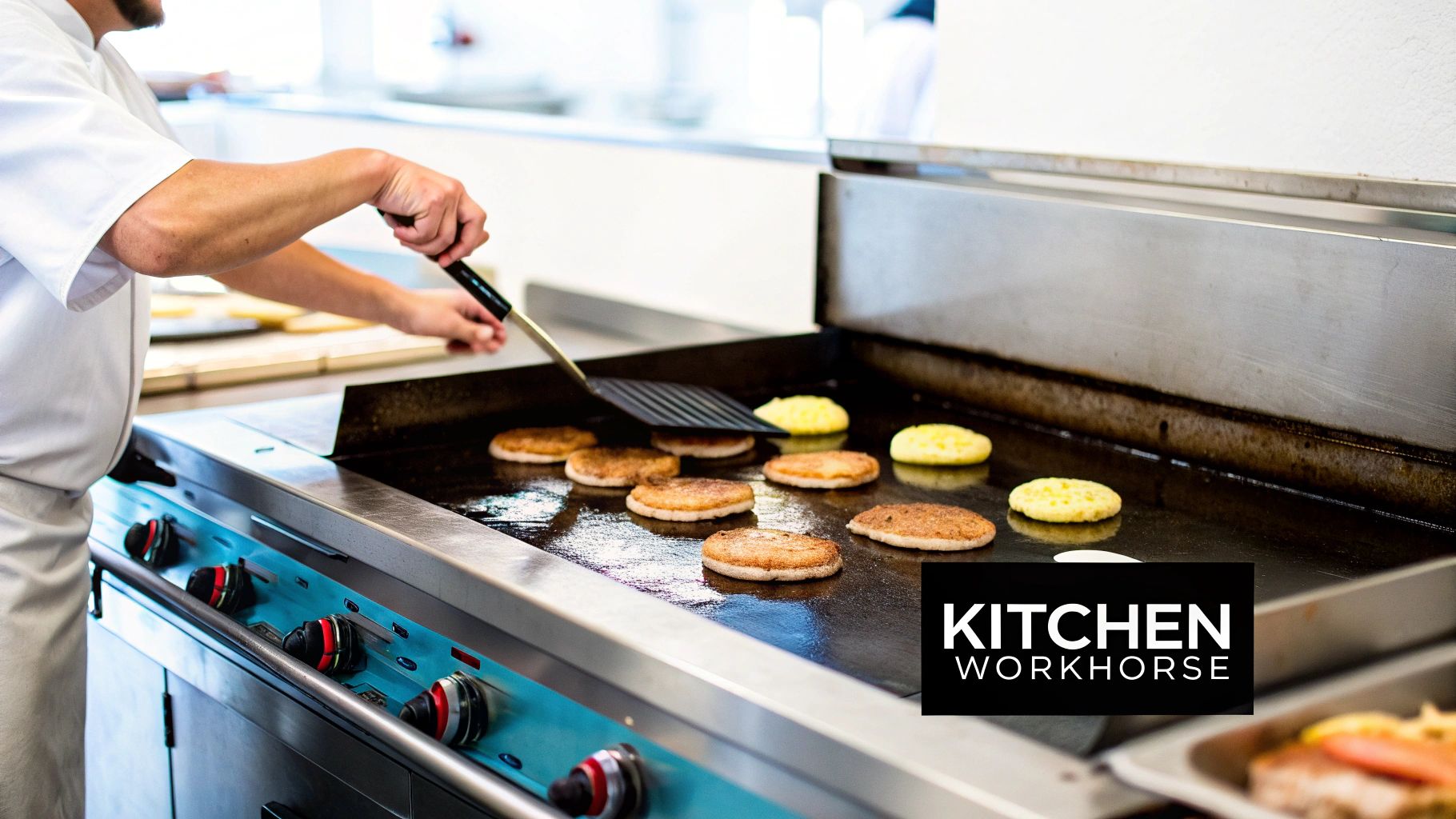
Don't think of a griddle as just another piece of equipment. It's the main stage for your kitchen's craziest hours. From the morning rush of pancakes and eggs to the lunchtime chaos of burgers and cheesesteaks, the griddle is where speed and consistency shake hands. Its huge, evenly heated surface lets a single chef juggle multiple orders at once—something that would be impossible with a bunch of pans on individual burners.
This single feature makes it an absolute must-have. Unlike the cookware you have at home, commercial griddles are built from heavy-duty materials meant to take the punishment of constant use. They hold their temperature even when you slam them with cold ingredients, making sure every single item is cooked perfectly. Knowing how to place a piece of equipment like this is a key part of smart commercial kitchens design that keeps the whole operation flowing smoothly.
Driving Kitchen Efficiency and Versatility
The real magic of a commercial griddle is how it streamlines your entire operation while opening up new culinary doors. The right griddle quickly becomes a profit center, letting your kitchen crank out huge volumes of popular, high-margin items with less staff.
That kind of efficiency is why you see the market for commercial cooking equipment growing year after year. Projections show a steady climb, all thanks to the rising demand for do-it-all cooking solutions that can keep up with the pace of modern restaurants and food trucks.
At its core, a commercial griddle's job is simple: provide a massive, stable, direct-heat cooking surface. This simple concept is what allows it to be one of the most productive and profitable pieces of equipment in any food service business.
When it comes down to it, a commercial griddle is a strategic investment in your kitchen's output. The benefits are impossible to ignore:
- High-Volume Output: Cook dozens of items at the same time, from strips of bacon to burger patties, and watch your ticket times drop.
- Menu Flexibility: Effortlessly whip up a huge range of dishes on a single surface, including breakfast classics, seared fish, and toasted sandwiches.
- Consistent Results: The incredible heat retention means the 100th pancake comes off looking just as golden-brown as the first, keeping quality high even when you're slammed.
Comparing Different Types of Commercial Griddles
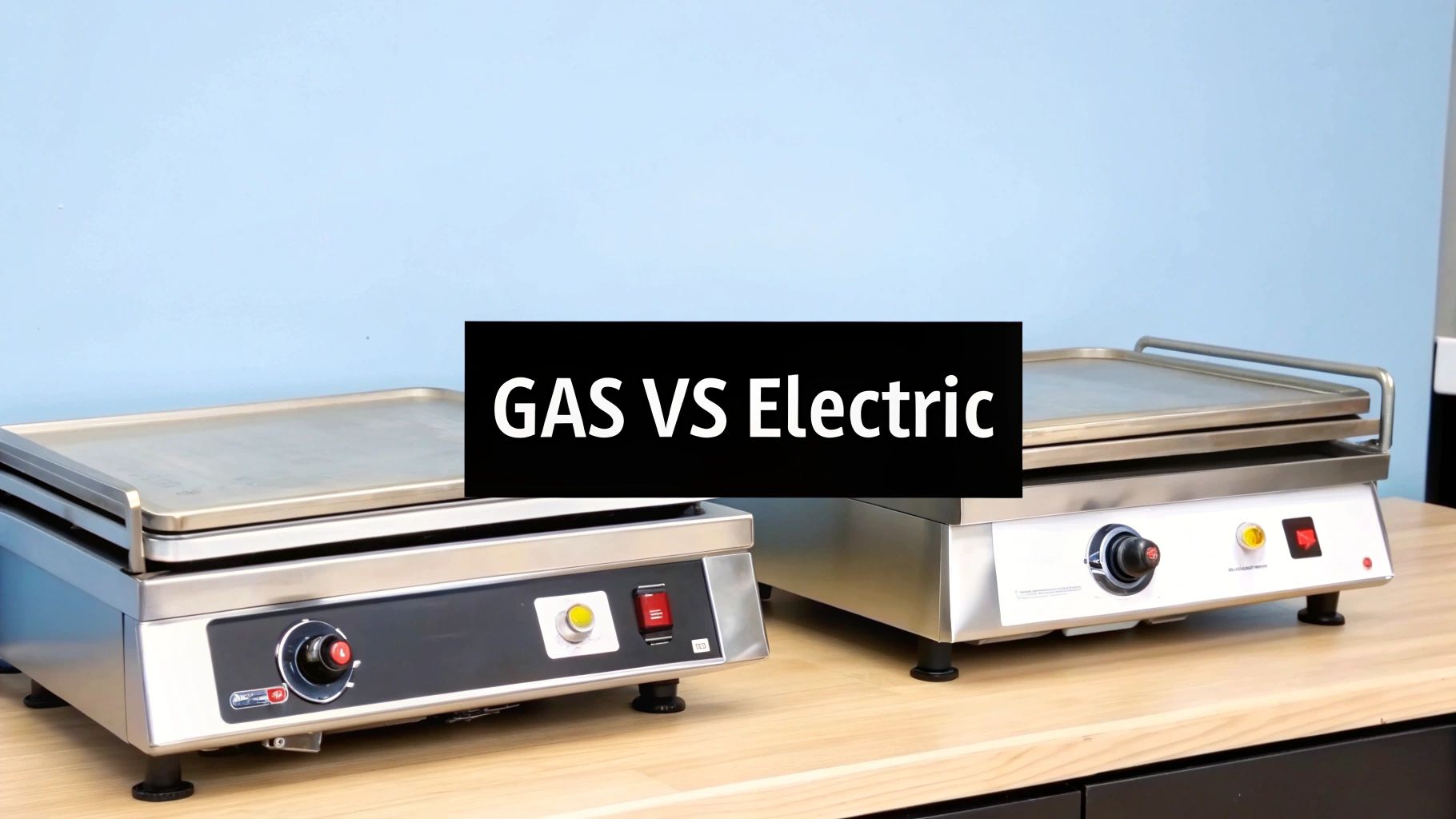
Picking the right commercial griddle isn't just about getting a big, flat cooking surface—it’s a decision that shapes your kitchen's entire workflow. The choice you make will directly influence your speed, what you can cook, and how efficiently you operate.
At its core, the decision boils down to two main players: gas and electric. Each has its own personality, its own strengths, and is built for different kinds of kitchens and cooking styles.
You can think of a gas griddle like a classic manual sports car. It puts the chef in total control, offering instant, raw power and the ability to change temperatures on a dime. It's built for cooks who feel the heat and react in real-time.
An electric griddle, on the other hand, is more like a modern automatic with cruise control. You dial in the exact temperature you want, and its thermostats do all the work, holding that heat steady across the entire surface. This set-it-and-forget-it nature is a lifesaver for delicate foods and kitchens that need absolute consistency.
To make the right call, it helps to see how these two technologies stack up in the real world.
Commercial Griddle Technology Comparison
| Griddle Type | Heating Method | Heat Control | Energy Efficiency | Best For |
|---|---|---|---|---|
| Gas Griddle | Direct flame from burners | Manual, immediate response | Less efficient; heat loss around the plate | High-volume searing, smash burgers, kitchens needing rapid temperature changes |
| Electric Griddle | Embedded heating elements | Thermostatic, highly precise | More efficient; heat is contained under the plate | Breakfast items, delicate proteins, kitchens prioritizing consistency and ease of use |
Ultimately, both are fantastic tools. The "best" one really depends on your menu, your staff's experience, and your kitchen's specific demands.
Gas Griddles: The Power and Precision Choice
In the trenches of a high-volume kitchen, gas griddles have long been the reigning champs. Their claim to fame? Sheer, unadulterated power and speed.
When the dinner rush hits, there’s no time to waste waiting for equipment to heat up. Gas burners ignite instantly, delivering that intense, searing heat you need for a perfect crust on a steak or a beautifully caramelized smash burger. That rapid-fire response is a game-changer in any fast-paced environment.
These workhorses can be hooked up to a natural gas line or run off a liquid propane tank, giving you great flexibility for food trucks, catering gigs, or any mobile setup. If you're weighing your options, getting the fuel source right is critical. We dive deep into this topic in our article on natural gas vs. propane for commercial equipment to help you figure out the logistics and costs.
The trade-off for all that power is that gas griddles can have minor hot spots, typically right above the burners. A seasoned line cook knows how to work these zones to their advantage, but it does take a bit more hands-on skill to manage the heat perfectly.
Electric Griddles: The Consistency Champions
Lately, electric griddles have been winning over kitchens where absolute precision is the name of the game. Their biggest advantage is their uncanny ability to maintain incredibly even, consistent heat from corner to corner.
The heating elements are built right into the plate, spreading warmth so uniformly that the hot spots common to gas models are virtually eliminated.
This level of consistency makes them perfect for:
- Breakfast-centric menus: Turning out stacks of perfectly golden-brown pancakes or evenly cooked eggs is a breeze when you're not fighting temperature fluctuations.
- Delicate proteins: Cooking fish or other items that burn easily becomes much less stressful on a steady electric surface.
- Standardized kitchens: For operations that need every dish to be identical across multiple locations, the precise temperature controls of an electric unit are invaluable.
The real magic of an electric griddle lies in its thermostatic precision. It means the first burger of the day cooks at the exact same temperature as the 500th, giving you repeatable, reliable results every single time.
While they might take a few extra minutes to preheat compared to gas, modern electric units are incredibly efficient and recover their temperature quickly between batches. The only real constraint is the need for a high-voltage electrical hookup, which might require an electrician to install and isn't always practical for mobile kitchens.
Countertop vs. Freestanding Models
Once you've settled on gas or electric, your next decision is about size and placement: countertop or freestanding. This choice comes down to your available space and how much food you plan to crank out.
A countertop griddle is a compact beast, ideal for smaller kitchens, food trucks, or as an extra cooking station on your main prep line. They pack all the power of their bigger siblings into a smaller footprint, fitting neatly on a refrigerated chef base or a stainless steel work table. They’re versatile and can be repositioned if your kitchen layout ever needs to change.
Freestanding griddles are the undisputed heavyweights, built for maximum production. These are large, floor-based units that often come with a cabinet or oven base for extra storage or cooking power. They are the heart of the kitchen in busy diners and restaurants where the griddle runs nonstop all day long. Their sheer size and permanent placement make them the workhorses for any operation that needs to push out a massive volume of food.
Understanding Griddle Plate Materials and Thickness
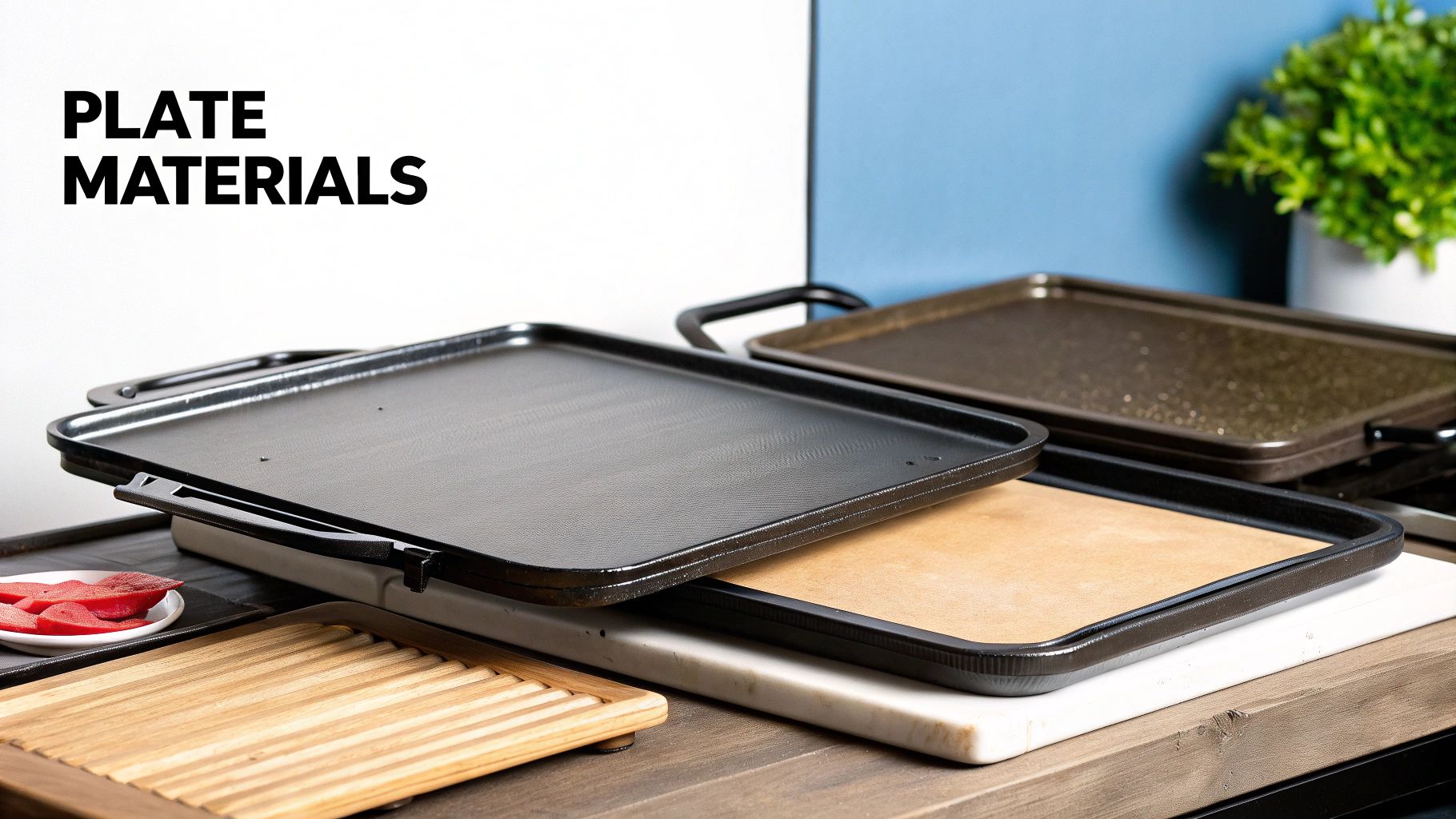
The griddle plate is the heart and soul of your operation. It’s where the action happens, where the perfect sear is born, and where your food truly comes alive. The material and thickness of this plate aren’t just small details—they’re the most critical factors dictating how your griddle will perform when the tickets start flying.
Think of the griddle plate as a thermal battery. Its job is to soak up heat from the burners, hold onto it, and then transfer it consistently to the food. How well it does that comes down to what it's made of and how thick it is.
Get this combination right, and you’ll have a reliable workhorse that churns out perfectly cooked food, order after order.
The Role of Griddle Plate Thickness
Griddle plate thickness typically runs from a standard 1/2-inch to a beefy 1-inch, and this single spec directly controls heat retention and recovery time. Picking the right one can make or break your kitchen’s flow during a chaotic lunch rush.
A thicker plate—say, 1-inch—is a true heat reservoir. It takes a bit longer to get up to temp, but once it’s hot, it stays hot. You can slap down a whole row of frozen burger patties and the temperature barely budges. This means faster cook times and a killer sear on every single burger.
On the flip side, a thinner plate heats up quicker, which is great for low-volume spots or operations that aren't constantly loaded. But it also loses heat faster when you load it with cold food, leading to longer recovery times. During an unexpected rush, that can spell trouble with inconsistent results and lagging ticket times.
A 1-inch thick griddle plate is the undisputed champ for high-volume kitchens. Its ability to hold heat means that even during the most slammed service, your cooking surface stays stable and won't get bogged down.
Exploring Common Griddle Plate Materials
Beyond just thickness, the actual material of your griddle plate determines its cooking personality, how you'll clean it, and how long it will last. In commercial kitchens, you'll almost always run into one of these three: steel, chrome, or cast iron.
- Steel Plates: This is the industry workhorse. Steel is loved for its durability and fantastic heat transfer. It needs to be seasoned—that slick, non-stick layer of baked-on oil—to prevent rust and sticking. A properly seasoned steel griddle can handle anything you throw at it, from pancakes to Philly cheesesteaks.
- Chrome-Plated Griddles: A chrome-top griddle has a slick, mirror-like finish that’s naturally non-stick right out of the box, no seasoning required. It’s perfect for delicate foods like eggs and fish because it doesn’t transfer flavors. As a bonus, chrome radiates less heat out into the kitchen, making life a little easier on the line cooks. The catch? You have to use special non-abrasive tools to avoid scratching that beautiful finish.
- Cast Iron: While not as common in brand-new griddles today, cast iron is a legend for a reason: its heat retention is phenomenal. Like steel, it needs a good seasoning, but once you have it, the surface cooks like a dream with incredibly even heat. It's tough as nails but can be brittle; a sudden temperature shock could potentially crack it.
Matching Plate Specs to Your Menu
So, what’s the right call? It all comes back to your menu.
A busy burger joint will get the most out of a thick, 1-inch steel plate that can take the constant abuse of a full press. A classic diner focusing on breakfast might be perfectly happy with a standard steel plate. Meanwhile, an upscale kitchen preparing delicate scallops would probably prefer the pristine, non-reactive surface of a chrome top.
In today's kitchens, performance is also about efficiency. A griddle with a thick plate that holds heat better isn't just a better cooking tool; it's also more energy-efficient, which can trim down your utility bills over time. As you can see in this detailed report, the entire hot plate market is trending toward greater efficiency. That initial investment in a heavy-duty plate often pays for itself.
By weighing both the material and thickness against your kitchen’s real-world needs, you'll land a griddle that’s not just a piece of equipment, but a true profit-generating machine.
Essential Installation and Safety Requirements
Getting your commercial griddle installed properly is hands-down the most important thing you can do to guarantee its performance, lifespan, and safety. This is definitely not a weekend DIY project. It’s a job governed by strict fire and health codes that exist to protect your staff, your customers, and your business. Nail it from the start, and you’ll sidestep dangerous accidents and keep your new workhorse running like a dream.
First things first: placement. Think of your griddle like a furnace that cranks out intense heat. It needs its own "safe zone" with plenty of breathing room on all sides and behind it. Shoving a griddle too close to a wall or another piece of equipment is a massive fire hazard because all that ambient heat has nowhere to go. Manufacturers give you these minimum clearance specs for a reason—they are non-negotiable.
Mastering Ventilation and Airflow
If there's one part of the installation you can't afford to get wrong, it's ventilation. Commercial griddles pump out a staggering amount of heat, smoke, and grease-filled vapor. Without a powerful system to yank all that out of the air, your kitchen quickly becomes a hazardous space with poor air quality and a sky-high risk of grease fires.
This is why a commercial griddle must be installed under a properly sized commercial ventilation hood. This isn't a friendly suggestion; it's a legal requirement in nearly every city and state. The hood acts like a giant vacuum, sucking all that hot, greasy air up and away from your kitchen, making it a safer and more bearable place for your crew to work. Skimp on this, and you’re looking at failed health inspections and an immediate shutdown order. For a deeper dive into this critical topic, check out our complete guide to commercial kitchen ventilation requirements.
Proper ventilation does more than just clear the air. According to safety regulations, it is the primary defense against grease fires, which are among the most common and devastating incidents in commercial kitchens.
Connecting Utilities The Professional Way
Once your griddle is in place under its hood, it’s time to hook up the utilities. Whether you’ve got a gas or electric model, this is where you call in the pros. Trying to connect gas lines or high-voltage wiring without the right license isn't just illegal—it's incredibly dangerous.
A licensed professional will handle these critical hookups:
- Gas Connections: You’ll need a certified plumber or gas fitter. They'll make sure the gas line is the right size to deliver enough fuel pressure (measured in BTUs) and will meticulously check for leaks. They’re also the ones to call if you need to convert your unit from natural gas to propane.
- Electrical Connections: For electric griddles, you need a licensed electrician. These units are power hogs, often needing high-voltage, three-phase power on a dedicated circuit. The electrician will ensure the wiring, breaker, and outlet are all rated to handle the griddle's heavy electrical load to prevent overloads and fires.
At the end of the day, paying for professional installation isn't just another cost—it's insurance. It ensures your equipment runs safely and efficiently, passes every inspection, and is ready to be the reliable workhorse your kitchen depends on.
Best Practices for Cleaning and Maintaining Your Griddle
Your commercial griddle is the heart of the kitchen line, and like any workhorse, it needs consistent care to keep performing at its peak. Taking just a few minutes after every service for a solid cleaning routine isn't just about sanitation—it's about protecting your investment, guaranteeing food quality, and dodging those expensive, middle-of-the-rush breakdowns. If you let it go, your best asset quickly becomes your biggest headache.
Great griddle care really boils down to two things: the daily clean-down and long-term seasoning. The daily scrub is your frontline defense against grime, bacteria, and yesterday's flavors creeping into today's specials. It gets rid of all the grease and food bits from a long day, so you can start fresh every morning on a perfect cooking surface.
Your Daily Cleaning Ritual
The end-of-shift clean is an absolute must in any serious kitchen. The trick is to tackle the mess while the griddle is still warm—not blazing hot, but warm enough to make the job a whole lot easier.
- Scrape While Warm: With the burners off but the surface still holding heat, grab a good scraper. Push all the loose food and extra grease straight into the drip tray.
- Add Water or Oil: Pour a little warm water or cooking oil on the plate. You'll see it bubble and steam, which is exactly what you want—it's lifting off all that stubborn, cooked-on gunk.
- Use a Griddle Brick: Gently go over the entire surface with a griddle brick or a non-scratch pad. Use small, circular motions to get everything off without damaging the plate.
- Wipe and Dry: Use a clean, damp cloth to wipe away all the residue, then follow up with a dry one to make sure there's no moisture left behind.
- Empty and Clean Drip Tray: The final step. Pull out the drip tray, empty it, and give it a good wash with soap and water.
This simple, five-step routine is the single best thing you can do to make your griddle last. If you want to dive deeper into the techniques, check out our guide on how to clean a flat top griddle for some extra pro tips.
The Art of Seasoning and Long-Term Care
Beyond the daily wipe-down, keeping your griddle's seasoning in top shape is crucial, especially if you're working with steel or cast iron. Seasoning is just the process of baking a super-thin layer of oil onto the metal. This creates a natural, non-stick surface and protects the griddle from rust.
After every cleaning, just put a tiny bit of cooking oil on a paper towel and wipe it across the whole plate. This micro-layer of oil protects the metal overnight and keeps building up that beautiful non-stick finish. For those really tough, built-up grease situations that every griddle eventually faces, specialized cleaners are your friend. You can get a better handle on this by understanding commercial degreasers and what they bring to the table.
Think of seasoning like a protective shield for your griddle plate. A well-maintained seasoning not only makes cooking and cleanup easier but also prevents the corrosion that can permanently damage the steel.
Lastly, don't forget to schedule some quick maintenance checks. About once a month, take a minute to look over your gas connections for any leaks and double-check that the thermostats are accurate. Catching these little things early stops them from turning into big, service-killing emergencies down the road.
How to Choose the Right Commercial Griddle
Alright, let’s get down to the most important decision: picking the right griddle. This is where everything we’ve talked about comes together. It’s not about just checking off features on a list; it’s about picturing how this piece of steel will perform in the middle of a chaotic dinner rush.
A smart choice will become the money-making heart of your kitchen. A bad one? It’s just a constant headache and a bottleneck for tickets.
To get it right, you need to ask a few honest questions that will instantly cut through the noise and point you to the perfect griddle for your operation.
Key Questions to Guide Your Decision
Your menu, your customer volume, and your kitchen layout are the three pillars of this decision. Answering these questions will stop you from buying a monster griddle you don't need or, even worse, underpowering your line with a unit that just can't keep up.
-
What will I be cooking? This is the big one. Your menu dictates everything. If you're slinging delicate items like pancakes and eggs all morning, you’ll love the gentle, consistent heat of an electric model. But if you're a burger joint needing a hard sear on hundreds of patties, you need the raw power and quick recovery of a thick-plated gas griddle. No question.
-
How much volume do I expect? Be brutally honest about your busiest hours. A small cafe might get by just fine with a 24-inch countertop unit. A high-traffic diner that’s firing up the griddle before the sun comes up needs a 48-inch freestanding beast to avoid getting buried. If you think you might grow, always size up a little.
-
What are my space and utility limitations? You can't fight the physical layout of your kitchen. Do you have the counter space for a compact model, or are you looking at a freestanding unit with an oven base? More importantly, what are your hookups? Do you have the right gas line and proper ventilation, or is a high-voltage electric connection the only realistic option?
And don't forget, the work isn't done after the purchase. Daily care is a huge part of its long-term performance.
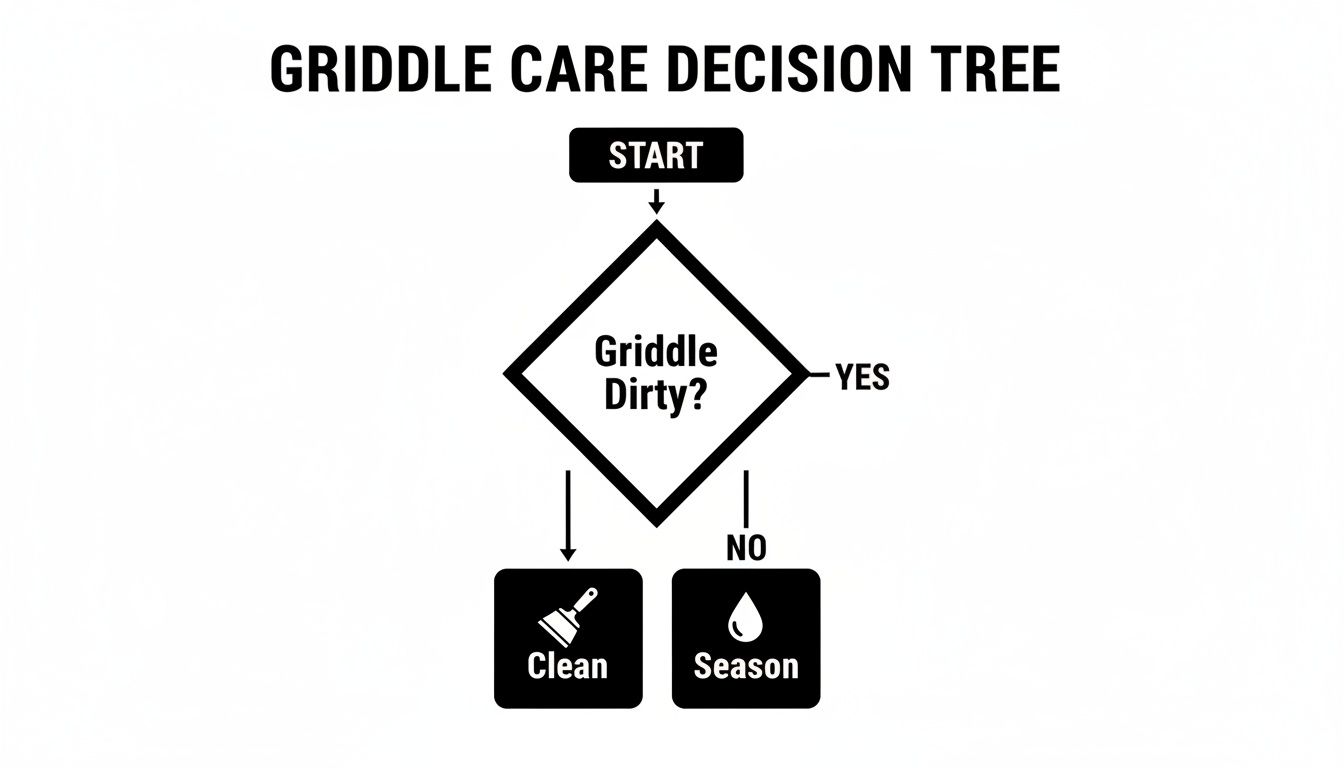
As you can see, proper maintenance—cleaning or seasoning—is a daily ritual that keeps your griddle running smoothly and extends its life.
Balancing Specs with Your Budget
Once you know what you need, it's time to talk specs and money. You’ll be looking at BTUs or kilowatts, plate thickness, and materials. With so many different types of restaurants and food trucks out there, the demand for versatile cooking equipment has never been higher. Griddles are a staple because they can handle almost anything you throw at them. You can learn more about the growth of the electric hot plate market to see how trends are shaping kitchen gear.
Remember, the sticker price is just the beginning of the story. A cheaper, thin-plated griddle might save you cash today but cost you a fortune in slow recovery times and lost sales during a rush. Investing in a unit with a thick 1-inch plate almost always pays off through sheer output and durability.
A griddle is not just an expense; it's an investment in your kitchen's production capacity. Choose the model that best equips you to serve your customers efficiently and consistently, and it will pay for itself many times over.
Don't Overlook Safety Certifications
Last but not least, never, ever compromise on safety. Make sure any griddle you’re considering is certified by a recognized organization. These little stickers are your guarantee that the equipment has been put through its paces to meet strict safety and sanitation standards.
- NSF (National Sanitation Foundation): This mark tells you the griddle is designed for food safety, with smooth surfaces that are easy to clean properly.
- UL (Underwriters Laboratories): This means all the gas and electrical parts have been tested to prevent fire and electrical hazards.
Choosing a certified griddle isn't just about following rules. It gives you peace of mind that you're buying a safe, reliable, and code-compliant machine that will be the workhorse of your kitchen for years.
Frequently Asked Questions About Commercial Griddles
When you're in the market for a new commercial griddle, a few questions always seem to pop up. We get it. Making the right call for your kitchen is a big deal, so we've put together some straight-to-the-point answers for the most common things we hear from chefs and restaurant owners.
Think of this as your cheat sheet to cut through the noise and get the info you actually need.
What Is the Difference Between a Griddle and a Flat Top Grill?
You’ll hear these terms thrown around a lot, often for the same piece of equipment, but there's a subtle distinction. A "flat top grill" is usually the griddle surface built right into a larger commercial range. It's part of an all-in-one unit.
A standalone "commercial griddle" is its own dedicated appliance, either sitting on a countertop or as a freestanding unit. In terms of how they cook? They’re practically identical. The real difference is just whether you're getting a dedicated griddle or a full range with a griddle top.
How Often Do I Need to Season My Steel Griddle?
Right out of the box, a new steel griddle needs a solid seasoning before you cook a single thing on it. This initial step is what builds that slick, non-stick surface you're looking for.
After that, maintenance is simple. Just wipe a thin coat of cooking oil over the surface with a cloth after you clean it each day. If you start seeing rust spots or food is sticking like crazy, it's a sign you need to strip it down and do a full re-seasoning from scratch.
A little daily care goes a long way. Keeping that seasoning intact is the secret to a long-lasting, rust-free griddle plate. A well-seasoned surface is a well-protected surface.
Should I Choose a Gas or an Electric Griddle?
This is the big one, and the right answer really depends on your kitchen, your staff, and what’s on your menu.
- Go with gas if you need speed and power. Gas griddles heat up fast and let you make instant temperature adjustments, which is perfect for high-heat cooking like getting that perfect crust on smash burgers. It's the choice for chefs who want that hands-on, immediate control.
- Go with electric if consistency is king. Electric models are champs at holding a steady, even temperature across the entire cooktop. This makes them unbeatable for delicate items like pancakes and eggs, or in kitchens where you need consistent results no matter who is on the line.
Ultimately, you have to weigh what's most important: the responsiveness of gas versus the steady heat of electric, alongside your kitchen's utility hookups and your budget.
Ready to find the perfect workhorse for your kitchen? At Griddles.com, we specialize in high-performance commercial griddles designed to withstand the demands of any busy service. Explore our full range of gas and electric models today at https://griddles.com.