
How to Open a Breakfast Restaurant: Start with the Right Griddle
Every successful breakfast restaurant is built around the sizzle of a commercial griddle. While passion for pancakes and eggs is the spark, the heart of your operation—and your profitability—is the flat-top steel where your menu comes to life. A solid plan for choosing, installing, and mastering your commercial griddle is the first step toward a sustainable, profitable restaurant.
Your Blueprint for a Griddle-Centric Breakfast Spot
Before you write a business plan or scout locations, you must define your concept through the lens of your primary piece of equipment: the commercial griddle. This decision dictates everything that follows. Are you a high-volume diner that needs a massive griddle to fire hundreds of eggs an hour? Or a gourmet brunch spot where a smaller, more precise griddle will be used for artisanal pancakes and sausages?
Your concept determines your griddle needs, which in turn shapes your entire business model. The fast-paced diner requires a large, powerful gas griddle as its centerpiece, designed for speed and raw output. The brunch spot might prioritize an electric griddle with precise thermostatic controls for more delicate, complex dishes, influencing kitchen layout and even menu pricing.
From Niche to Numbers: Planning Your Griddle Investment
Once you've defined your griddle-centric concept, your business plan must reflect it. This document is your financial roadmap, and your griddle is a major landmark. Startup costs must include a detailed line item for not just "a griddle," but the specific model that fits your plan.
A huge portion of your initial budget will be dedicated to this single appliance. Be specific. Do you need a 48-inch gas griddle with a 1-inch thick plate for maximum heat retention? Or will a smaller 36-inch electric unit suffice? This level of detail shows investors you understand the operational heart of your business. If you need help outlining all the surrounding equipment, our guide on building a complete commercial kitchen equipment list can help contextualize your primary purchase.
This chart shows how a focused equipment strategy leads to a fundable business plan.
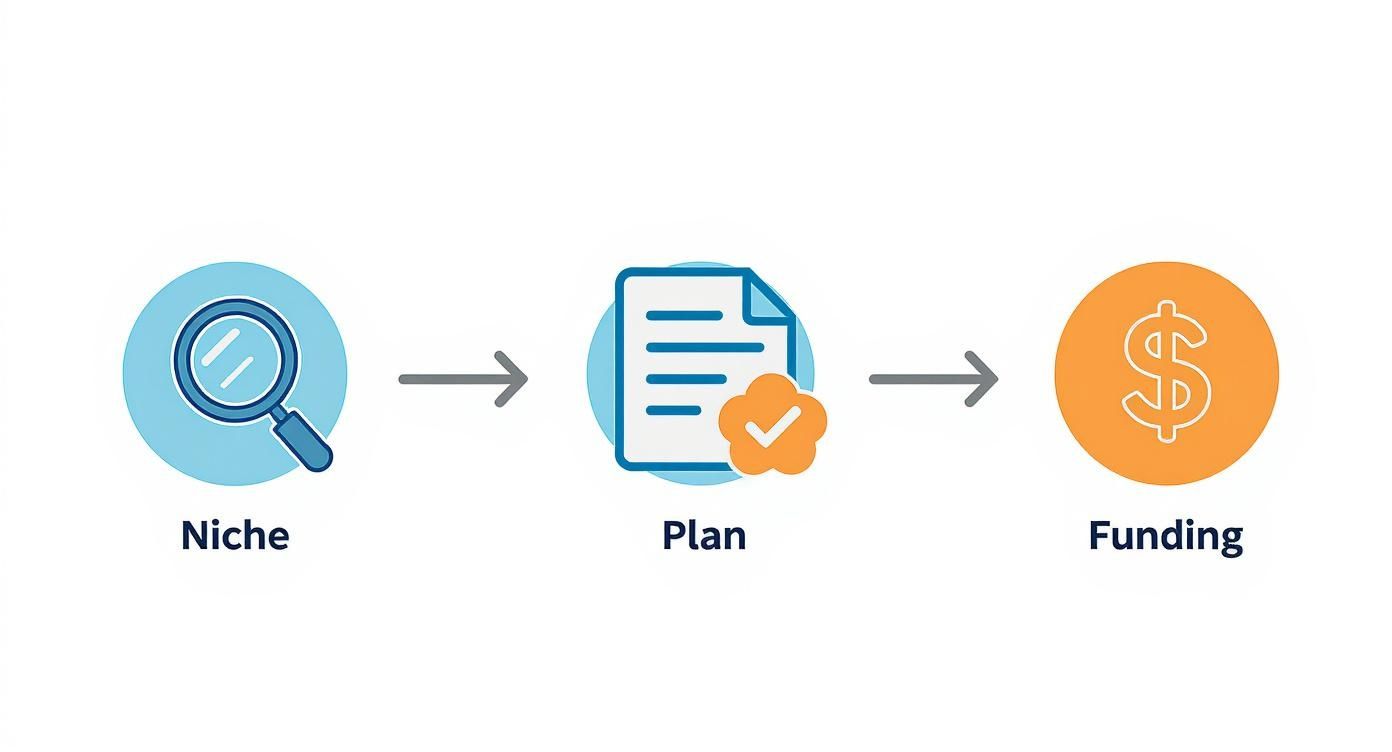
As you can see, securing funding is a direct result of a well-researched plan built around your core equipment.
Securing Capital by Highlighting Griddle ROI
With a detailed business plan, you can confidently approach lenders. Your pitch isn't just about delicious breakfast; it's about a profitable business model powered by an efficient commercial griddle. This is your core advantage.
Explain how this single piece of equipment is the key to producing high-margin menu items like pancakes, eggs, and bacon at high speed. Demonstrate how its efficiency helps control labor costs by allowing a small team to handle a large volume of orders. Frame your commercial griddle not as an expense, but as the primary revenue-generating engine of the entire restaurant.
Key Takeaway: Investors fund businesses with clear paths to profitability. A plan that showcases a deep understanding of how a commercial griddle drives revenue, backed by detailed financial projections, is far more compelling and likely to get funded.
The market data supports this focus. The breakfast sector is booming, with a global market expected to grow at a compound annual growth rate of 6.8% through 2028. This growth is driven by consumer demand for the exact kinds of foods you'll produce on your griddle, making it a powerful and attractive investment.
Navigating Legal Requirements for Your Commercial Griddle
You've planned your griddle-centric breakfast concept, but before you can fire it up, you need to navigate a maze of legal requirements. Cutting corners on licenses and permits related to your cooking equipment is the fastest way to delay your opening indefinitely.
Think of these regulations as the foundation for your kitchen. Without proper compliance, everything you build is at risk.
The first step is establishing your legal business entity, like an LLC, to protect your personal assets. Next, you'll need an Employer Identification Number (EIN) from the IRS, which is essential for taxes and payroll. But the most critical paperwork revolves around your physical kitchen and your commercial griddle.
Securing Health and Safety Permits for Your Cookline
The local health department will be your most important regulatory partner. To get your food service license, you must submit detailed kitchen plans for approval. An inspector will conduct a thorough walkthrough before you open, and their focus will be squarely on your cookline.
Your commercial griddle is a primary point of inspection. It must be NSF-certified, which guarantees it meets public health standards for safety and sanitation. But that's just the beginning. The inspector will verify its installation, ensuring it has proper clearance from walls and other equipment for cleaning and fire safety. All surfaces must be smooth and non-porous.
I can't stress this enough: improper equipment installation is a leading cause of failed health and fire inspections. Ensure your commercial griddle is installed according to the manufacturer’s specifications and all local codes to avoid costly delays.
Essential Codes and Certifications for Griddle Operation
Beyond the main license, a checklist of other permits is directly tied to your griddle.
Your staff's training is also regulated. Your kitchen manager and supervisors will likely need a ServSafe Manager certification, which includes knowledge of safe equipment operation. Anyone operating the griddle will need a local food handler's card.
You'll also need permits from your city or county that are impacted by your griddle installation:
- Building Permits: Any new gas lines for a gas griddle or high-voltage electrical work for an electric model will require a building permit.
- Certificate of Occupancy: This confirms your building is safe for public use, which includes having a professionally installed and compliant cookline.
One of the most critical systems is your kitchen ventilation. A commercial griddle produces significant heat, smoke, and grease-laden vapor. It must be installed under a Type 1 commercial hood with an integrated fire suppression system. This entire assembly is subject to strict local fire codes and will be a major checkpoint for the fire marshal. For a complete overview, review our guide on commercial kitchen ventilation requirements.
Designing a High-Efficiency Griddle-Powered Kitchen
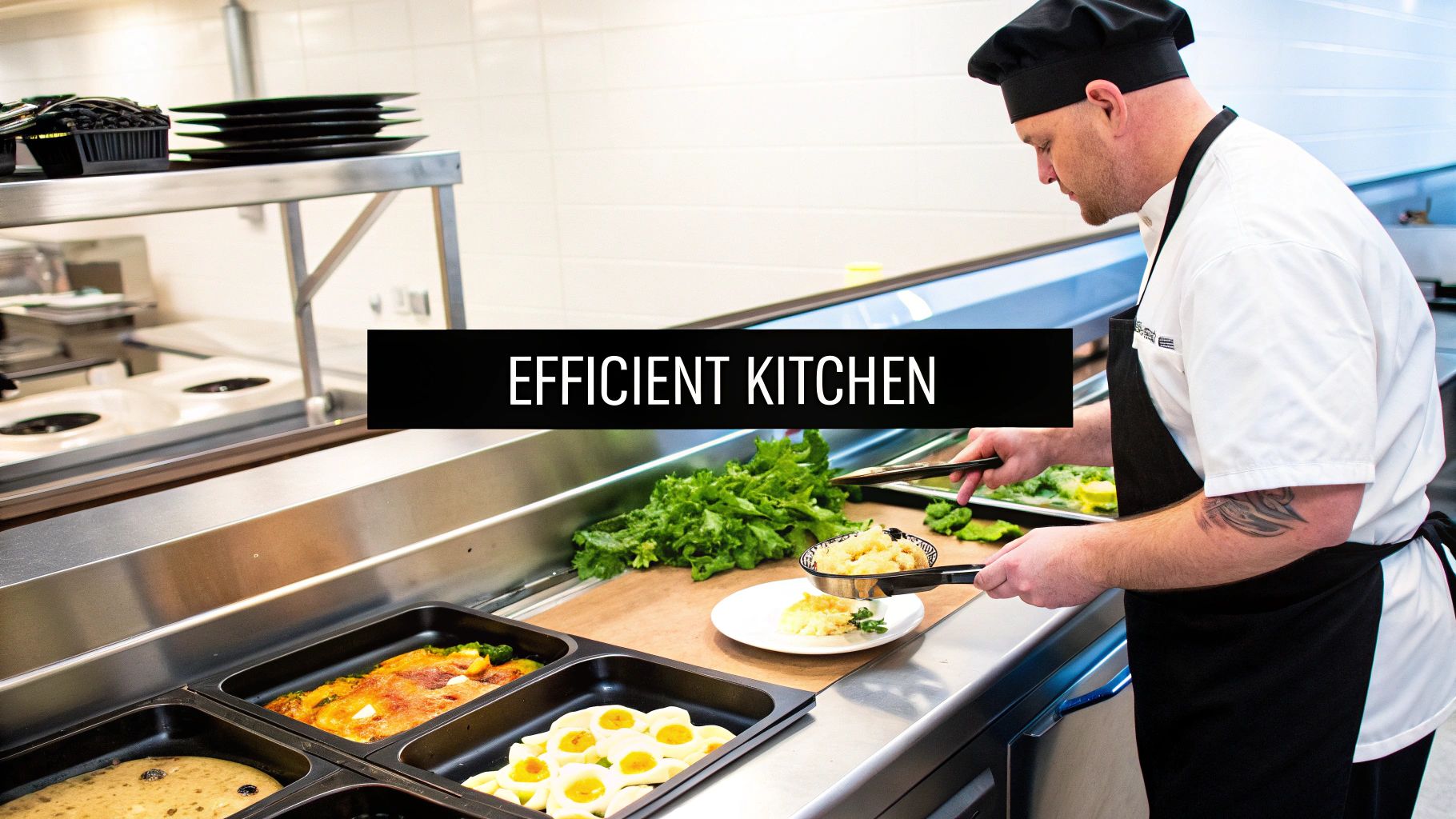
The financial success of your breakfast restaurant is forged on the hot, seasoned steel of your commercial griddle. This isn't just a piece of equipment; it is the engine of your entire operation. Your kitchen layout, workflow, and profitability all flow directly from the griddle.
The griddle must be the undeniable centerpiece of your cookline, positioned for maximum speed and efficiency. Every other station—refrigeration, prep, and plating—must be designed to serve the griddle, allowing your cooks to work in a fluid, assembly-line rhythm during the chaotic morning rush.
Choosing the Heart of Your Kitchen: Gas vs. Electric Griddles
Selecting the right commercial griddle is the single most important equipment decision you will make. The primary choice is between your power source: gas or electric. Each has distinct advantages that cater to different menu types and cooking styles.
Gas griddles are the traditional choice, prized by chefs for their rapid heat-up times and responsive manual controls. You can make temperature adjustments on the fly, which is crucial for managing a busy service with varied orders.
Electric griddles, however, offer superior technological advantages. They provide exceptionally precise and even heat distribution across the entire cook plate, eliminating the hot and cold spots common on some gas models. This consistency is ideal for delicate items like pancakes, ensuring a perfect golden-brown finish every time.
Choosing Your Commercial Griddle
To make the best decision for your breakfast concept, you need to understand the key differences between gas and electric models. This table breaks down the core features.
| Feature | Gas Griddle | Electric Griddle |
|---|---|---|
| Heat-Up Time | Very fast initial heating and recovery. | Slower to heat up initially but maintains heat well. |
| Temperature Control | Instant, manual adjustments with knobs. | Precise, often with thermostatic controls for accuracy. |
| Heat Distribution | Can have hot spots, requiring more skill to manage. | Extremely even heat across the entire plate. |
| Installation | Requires a dedicated gas line and proper ventilation. | Needs a high-voltage electrical outlet; simpler setup. |
| Energy Efficiency | Generally less efficient; more heat escapes into the kitchen. | More energy-efficient as heat is transferred directly to the plate. |
Ultimately, the choice depends on your menu's demands, local utility costs, and your chef's comfort level. A high-volume diner might prefer the raw power of gas, while a concept focused on precision might opt for an electric model.
Sizing Your Griddle for Peak Performance
Once you've chosen a type, you must select the right size. A griddle that is too small creates an instant bottleneck, slowing down your kitchen and frustrating customers. One that is too large wastes energy and valuable hood space.
To size it correctly, you need to forecast your needs:
- Estimate Peak Volume: How many griddle-based entrees will you sell during your busiest hour?
- Analyze Your Menu: What percentage of your menu is cooked on the griddle? For most breakfast spots, this is over 80%.
- Calculate Surface Area: Determine how many of your main items (pancakes, eggs, bacon) can fit on the surface at one time.
A small café might start with a 36-inch griddle, while a high-volume diner will likely require a 48-inch or even a 72-inch model to keep up with demand.
Mastering Griddle Maintenance and Workflow
Your commercial griddle is a long-term investment. Proper daily maintenance is non-negotiable for performance, food quality, and longevity. A poorly maintained griddle surface leads to sticking, uneven cooking, and flavor transfer.
Institute these habits from day one:
- Scrape After Each Use: Keep a griddle scraper handy to remove food debris between orders and prevent carbon buildup.
- Clean Thoroughly at Closing: Use a griddle brick and food-safe cleaner on a warm surface to remove all grease and residue.
- Season Regularly: After cleaning, apply a thin layer of cooking oil to the warm surface to build and maintain a natural non-stick patina.
The workflow around the griddle is just as important as its maintenance. Our article on effective restaurant kitchen layout design offers key insights. An ideal setup includes refrigerated drawers directly below the griddle for eggs and batter, with the plating station just a pivot away to create an efficient breakfast assembly line.
Building Your All-Star Griddle Team
Your commercial griddle may be the engine of your restaurant, but your kitchen team is the fuel. You need to hire and train cooks who can master that flat-top, executing your menu with speed, precision, and consistency. Assembling the right team is about building a culture centered on quality griddle work.
The restaurant industry has a vast talent pool, with over 900,000 cooks in the U.S. alone, but you are competing for the best. Attracting top talent starts with job descriptions that specifically highlight the griddle skills you need.
Crafting Job Descriptions That Attract Griddle Experts
Forget generic job postings. Your job descriptions should sell your vision and set clear expectations about the central role of the griddle.
-
Line Cook: Instead of "cooks food," be specific: "Griddle expert wanted. You will command our 48-inch flat-top, responsible for executing our core breakfast menu with speed and precision. Must have a passion for turning out consistently perfect pancakes, eggs, and bacon during high-volume rushes." This language attracts candidates who take pride in their station.
-
Prep Cook: Emphasize their role in supporting the griddle station: "The organizational backbone of our kitchen. You will set our griddle cooks up for success by meticulously prepping all ingredients for the cookline, managing inventory, and maintaining a spotless workspace."
When you frame roles with purpose and a focus on your core equipment, you attract candidates who see an opportunity to master a craft, not just clock in for a shift.
Finding and Vetting Your Kitchen Team
Post your griddle-focused job descriptions on industry-specific boards like Indeed and Culinary Agents. Don't overlook networking with food suppliers; they are in kitchens all day and know who has the skills you need.
During the interview, move beyond standard questions. You need to assess their real-world griddle skills under pressure.
Pro Tip: Give them a scenario-based question. For a line cook, ask: "A ticket for a six-top just came in with custom egg temperatures and multiple pancake add-ons. You're working a 36-inch griddle. Walk me through how you organize and fire that order." Their answer will reveal more about their skill and experience than any resume.
Training for Griddle Consistency and Culture
Your training program must ingrain your standards for quality and consistency. Create a detailed training manual that covers everything from the precise temperature settings for different menu items to the exact procedure for seasoning the griddle at the end of a shift.
When budgeting for labor, research competitive wages in your area. Attracting and retaining talent who can expertly operate your most important piece of equipment is worth the investment. According to the latest industry data, building a budget for competitive wages is essential for reducing turnover. You can explore the latest data from Yelp for more benchmarks.
A positive work environment, centered on respect for the craft of cooking, is your best tool for retention. A happy, motivated team that takes pride in the food coming off their griddle is your single greatest asset.
Marketing Your Restaurant's Signature Sizzle
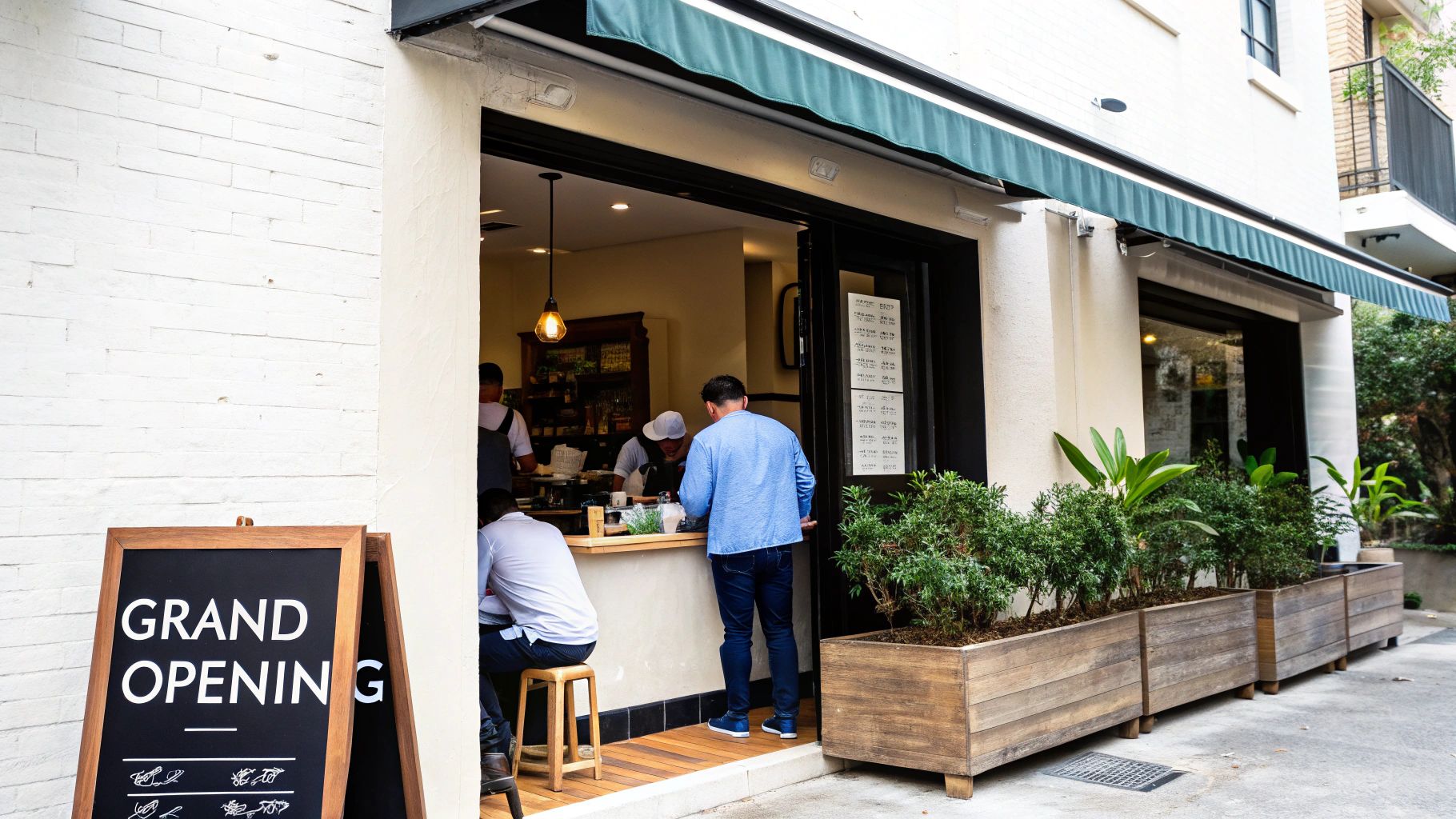
A top-of-the-line commercial griddle and a perfect menu are meaningless if no one knows you exist. Your marketing efforts should start long before you serve your first customer, building anticipation and creating a following that is excited for opening day. The goal is to make your griddle famous before it even gets hot.
Building Buzz by Showcasing Your Griddle
Your marketing should start the moment you sign your lease. Create a "Coming Soon" landing page on your website to collect email addresses, offering an opening-week discount to subscribers.
On social media platforms like Instagram and Facebook, document your journey with a focus on your kitchen's centerpiece. Post behind-the-scenes photos and videos of your commercial griddle being delivered and installed. Run polls asking followers what kind of specialty pancakes they'd like to see you make. This content makes future customers feel invested in your story.
Connect with local food bloggers and influencers by inviting them for a pre-opening tasting. Give them a kitchen tour and let them see the griddle in action. An authentic post showcasing the heart of your operation can generate more buzz than a paid ad.
Executing a Flawless Grand Opening
A successful grand opening hinges on a well-executed soft opening. This invite-only dress rehearsal for friends, family, and influencers allows your team to test the workflow of the griddle station in a low-pressure environment. It's your chance to identify and fix any bottlenecks before you open to the public.
Key Takeaway: The feedback from a soft opening is invaluable. Use it to fine-tune your griddle temperatures, adjust your ticket-to-table workflow, and ensure your team can handle the pressure. This is your chance to perfect your operations.
Your grand opening day checklist should be griddle-focused:
- Final Staff Briefing: Huddle with your cooks to review griddle station assignments and service expectations.
- Inventory Double-Check: Ensure you have more than enough batter, eggs, and bacon to get through a busy service.
- Social Media Blitz: Post all day. Share videos of the first dishes coming off the griddle and photos of happy customers.
- Local Press Alert: Send a press release to local media announcing your opening, highlighting a signature griddle-cooked dish.
Long-Term Growth Strategies Centered on Your Griddle
Once you're open, your marketing focus shifts to building loyalty. Use your online presence to continually highlight what makes your food special—the quality that comes from your griddle.
Prioritize local SEO by creating and optimizing your Google Business Profile. Fill it with high-quality photos of your most popular griddle items. Encourage happy customers to leave reviews mentioning their favorite dishes, like "the best pancakes in town."
Embrace online ordering with a system that integrates seamlessly with your website. The convenience market for breakfast is massive. Data shows that since 2021, mobile ordering for breakfast has climbed to 43% of all orders. Making it easy for customers to order your griddled favorites for pickup is essential for growth. You can see more data on this trend in this overview of the industry.
Finally, use the email list you built to send out weekly specials featuring a unique "Griddle Creation of the Week." This keeps your menu exciting and turns first-time visitors into loyal regulars.
Answering Your Top Questions About Commercial Griddles
When you're building a breakfast restaurant, the most important questions will revolve around your commercial griddle. Getting clear, practical answers will help you make the right investment and build a more efficient kitchen. Let's tackle the most common questions we hear.
What Is the Single Most Important Piece of Equipment?
Without a doubt, it's the commercial griddle. It is the undisputed workhorse of any breakfast kitchen, responsible for producing the vast majority of your menu—from pancakes and eggs to bacon and home fries.
Your choice of griddle directly impacts your food quality, service speed, and profitability. The right model will provide consistent, reliable heat during the busiest rushes, recover temperature quickly between orders, and be easy for your staff to clean and maintain. Look for features like a 1-inch thick griddle plate, which offers superior heat retention for more consistent cooking performance when you're slammed.
Why Does Griddle Size and Type Matter So Much?
Choosing the right size and type of griddle is fundamental to your kitchen's workflow. A griddle that's too small will create an immediate bottleneck, slowing down service and frustrating both cooks and customers. A model that's too large wastes energy, money, and valuable hood space.
The primary decision is between gas and electric power sources.
- Gas griddles are prized for their rapid heat-up times and responsive manual controls, giving experienced chefs the ability to adjust temperatures instantly.
- Electric griddles offer superior precision and perfectly even heat distribution, which is a significant advantage for delicate items like pancakes, where consistent temperature is crucial for a perfect result.
A small cafe might only need a 24 or 36-inch model. A high-volume diner, however, will require the cooking capacity of a 48-inch or even a 72-inch griddle to keep up with demand.
How Can an Independent Restaurant Compete with Chains?
Independents win by leveraging the power of their commercial griddle to produce food that chains simply can't match. While large chains often rely on pre-cooked, standardized products that are merely reheated, you have the ability to cook every single order from scratch on a quality flat-top.
This is your greatest competitive advantage. Use your griddle to create signature dishes with superior quality and flavor—lemon ricotta pancakes with a fresh berry compote, or a house-made corned beef hash crisped to perfection. This is how you build a loyal following that can't be replicated by a national brand.
The best part of being independent is your agility. You can run a "Griddle Special of the Week" based on fresh, seasonal ingredients from local suppliers. A large chain's rigid supply chain could never allow for that kind of creativity. This keeps your menu exciting and reinforces your commitment to quality.
By focusing on the incredible food you can produce on a high-quality commercial griddle, you can create a brand and an experience that stands out in any market.
Ready to build the heart of your kitchen? At Griddles.com, we specialize in the high-performance commercial griddles that breakfast restaurants like yours rely on every single day. From compact countertop units to massive, high-volume models, we have the equipment to power your menu. Explore our selection and get free shipping on every order.