
The Ultimate Guide to Using a Commercial Griddle
Using a commercial griddle couldn't be simpler: preheat your surface to the right temperature, add your food, and cook with direct, even heat. The flat-top's massive cooking area and consistent temperature control allow you to produce high volumes of perfectly cooked food with incredible speed and efficiency.
This simple process is the first, crucial step that ensures the quality of every dish you send out, whether it's for a buffet line, a busy diner, or a catering event.
The Role of Commercial Griddles in Professional Kitchens
Let's be real. The quality of the cook can absolutely make or break a catering gig or restaurant service. You can have the best presentation in the world, but if the food wasn't cooked properly from the start, nothing else matters.
This is exactly where the commercial griddle proves its worth. It’s not just a big hot plate; it's the non-negotiable engine of any serious food service operation. It’s all about producing high volumes of consistently cooked menu items, bridging that critical gap between raw ingredients and a finished product. We call it the 'heart of the line,' and it's a workhorse.
Bridging the Gap Between Prep and Service
This workflow is what allows a commercial kitchen to pump out high volumes of food for large crowds without the quality dropping off a cliff. Think about a food truck during the morning rush—they can crank out hundreds of breakfast burritos on the flat-top, ready for instant sale. That single piece of gear is a cornerstone of both quality control and profitability.
To really get a handle on the bigger picture, it helps to understand the basics of effective event management. It’s all connected.
The numbers back this up, too. The global serveware market was valued at USD 13.14 billion in 2023, and while chafing dishes are part of that, the food they hold is often cooked first on a griddle. Why? Because more and more operators are relying on the griddle as the primary 'high-volume cooking' stage before any hot holding. You can see the full breakdown on serveware market growth on GrandViewResearch.com.
Key Takeaway: A commercial griddle is for cooking. It’s a specialized cooking tool designed to efficiently manage temperature and transfer heat to perfectly cook food before it's held for service.
For really big jobs, you might even see dedicated units working alongside griddles. If you want to dive deeper into how different holding equipment works, check out our guide on commercial food warmer tables. At the end of the day, mastering the griddle is what creates a happy customer.
Choosing Between Gas Griddles and Electric Griddles
Deciding between traditional gas griddles and modern electric units isn't just a matter of preference—it's a strategic move that affects your kitchen workflow, your utility bills, and even your menu. The right choice depends entirely on how you operate, whether that's slinging food from a truck, managing a hotel kitchen, or running a busy diner.
Each option has its perks and its pains, and you’ll want to know what you’re getting into before you invest.
The Practicalities of Gas Power
For anyone needing raw power and rapid response, traditional gas griddles are the undisputed king. You get instant heat and can make quick temperature adjustments on the fly, which is critical during a busy service. That freedom is why we love them.
But that freedom comes at a cost. Gas lines and proper ventilation are significant expenses. The global chafing fuel market is already valued at around USD 0.24 billion and is projected to nearly double by 2035, highlighting the ongoing costs of fuel-based systems. While different, the principle of fuel cost for gas griddles is similar. If you're running a high-volume kitchen, your gas bill could easily be thousands of dollars a year. For more insight on this, you can check out some of the chafing fuel market trends on MarketResearchFuture.com.
Smart operators get granular with this. We understand the BTU output needed for specific menu items, knowing a powerful burner gives you faster recovery times. It's all about managing that energy.
As this flowchart shows, the griddle is the critical "cook" phase. You cook the food, you hold it at a safe temperature, and then you serve. It's not an afterthought—it's the core part of the service workflow.
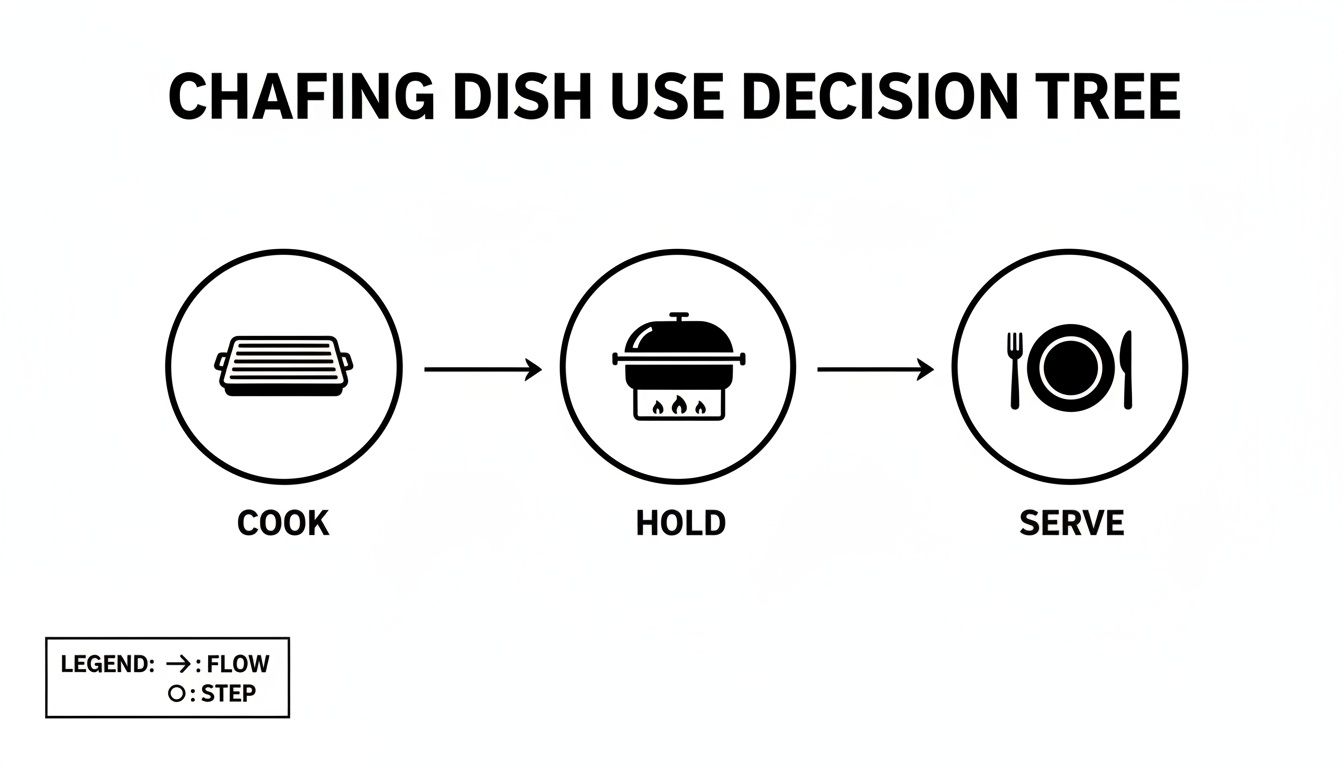
This visual really hammers home that cooking food properly is the essential first stage of the process, and your griddle is what makes it work.
Weighing the Benefits of Electric Power
Flipping the script, electric griddles are a game-changer for kitchens where gas isn't an option or where precise, consistent temperature is paramount. Their biggest advantage? Precise temperature control.
Instead of adjusting a flame and hoping for the best, you can dial in an exact temperature and walk away, confident that your surface will stay perfectly heated for hours. It’s consistent and reliable.
Operational Insight: Electric griddles can reduce fire risk and are often easier to install, which is a huge deal for certain locations with strict codes. This can make your setup smoother and give everyone—from your team to the building inspector—some serious peace of mind.
Of course, electric units have their own headaches. You have to confirm you have the right voltage and amperage ahead of time. No exceptions. You also need to consider recovery times, as they can be slower to heat up and recover than gas models. A slow griddle is a liability waiting to happen, so it's one more thing to add to your equipment checklist.
To help you decide, here’s a quick head-to-head comparison of what you can expect from each option in the real world.
Gas vs Electric Commercial Griddle Comparison
| Feature | Gas Griddle | Electric Griddle |
|---|---|---|
| Portability | Good. Can be used in food trucks with propane. | Limited. Requires a specific, high-voltage electrical outlet. |
| Temperature Control | Good, but requires skill. Quick response to adjustments. | Excellent. Set and maintain a specific temperature with a thermostat. |
| Safety | Higher risk due to open flame and gas lines. Requires proper ventilation. | Lower fire risk. The primary hazard is electrical faults. |
| Upfront Cost | Generally lower initial investment for the griddle unit itself. | Higher initial cost for the unit due to electrical components. |
| Operating Cost | Ongoing expense for natural gas or propane. | Consumes electricity. Can be more energy-efficient for maintaining temps. |
| Best For | High-volume diners, steak houses, any kitchen needing fast recovery times. | Delicate items like eggs, pancakes, locations without gas access. |
Ultimately, many businesses end up using both. A gas griddle for the heavy-duty searing, and an electric one for delicate, temperature-sensitive items. The key is matching the tool to the job.
Your Guide to Flawless Griddle Operation
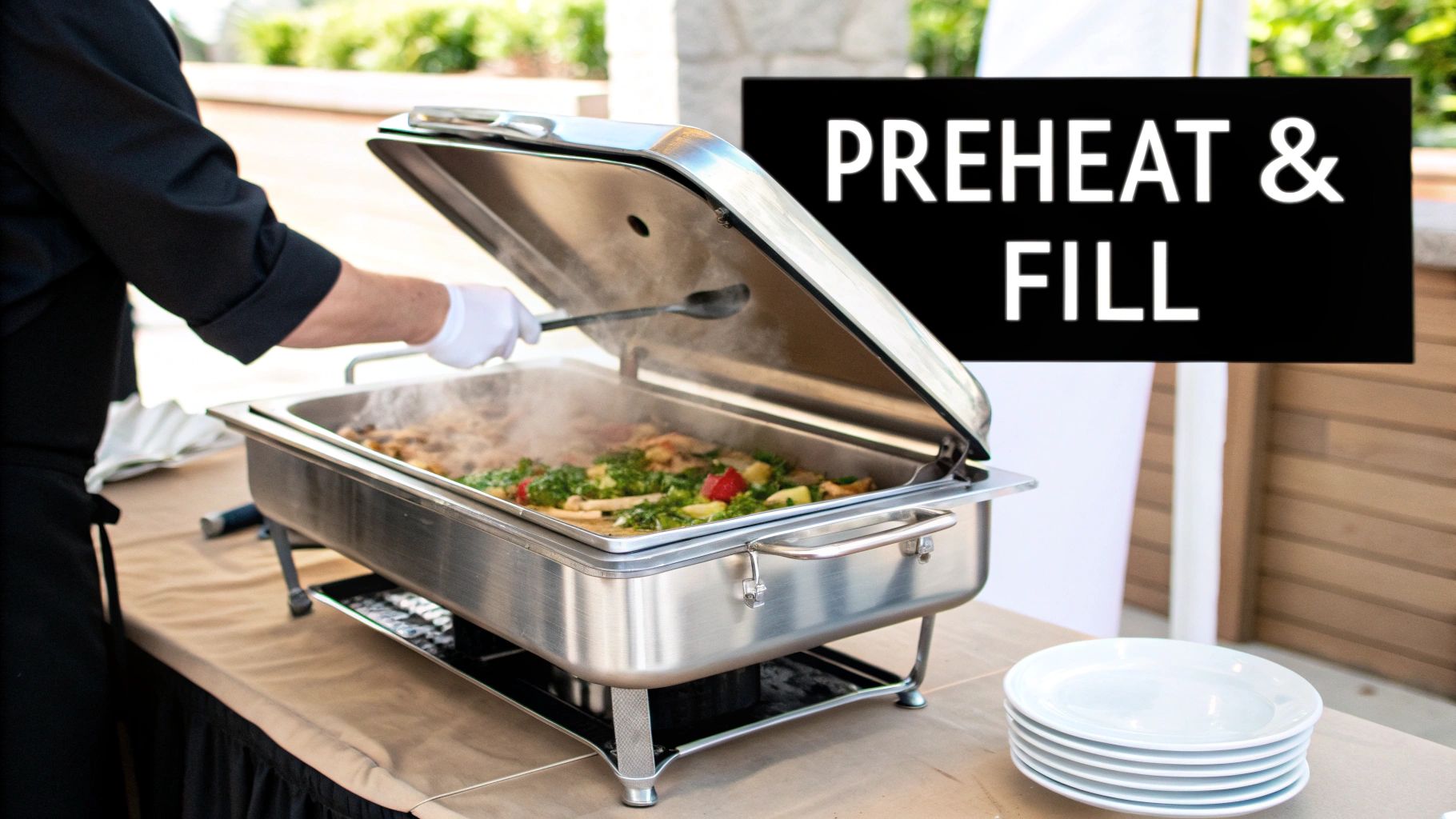
A killer service all comes down to the setup. It’s not a complicated dance, but miss one beat and you're looking at burnt food, unhappy guests, and a service that feels like you're constantly playing catch-up. For seasoned chefs, a perfect service isn't luck—it's a disciplined routine.
First things first, get that griddle on a stable, level surface. A wobbly griddle is a major safety hazard. Once you're confident it's secure, you can grab the most important piece of the puzzle for that consistent, even heat: the seasoning.
Preparing the Cooking Surface
The real magic behind a commercial griddle is its non-stick, seasoned surface. You’ll want to properly season it before the first use—that’s the crucial step. Trust me, starting with a well-seasoned griddle is a game-changer. It slashes your cooking time, prevents sticking, and gets your line ready to go that much faster.
The industry gold standard is a thin layer of cooking oil heated past its smoke point. That’s the sweet spot for creating a durable, slick surface without it getting gummy or, even worse, flaking off into the food.
Pro Tip: Whatever you do, never put food onto a cold, unseasoned griddle. Direct contact with un-prepped steel will cause food to stick and cook unevenly. The seasoning isn't a suggestion; it's a requirement.
Firing Up and Reaching Temperature
With the surface sorted, it's time to bring the heat. If you're using a gas griddle, ignite the pilots or burners. The key here is timing. Turn the griddle on a good 15 minutes before you plan to start cooking. This gives the thick plate plenty of time to get nice and hot all the way through.
You're aiming for a consistent surface temperature, not just a raging flame underneath. Once you see a light shimmer from the oil, you're golden. The griddle is now ready for food. This step is critical—it means your food hits a hot environment right away, searing instantly instead of slowly steaming while the griddle struggles to keep up.
- Heat Zones: Use your burners to create different temperature zones. A hot zone for searing and a cooler zone for finishing or holding.
- Safety Check: Always follow the manufacturer's lighting procedures. Keep flammable materials clear of the griddle.
- Electric Units: If you're working with an electric griddle, just set it to your target temperature to get that preheat going.
Final Touches for a Perfect Service
Once your griddle is hot, it’s showtime. Carefully place your food onto the hot surface. But don't walk away just yet—the last few steps are just as crucial for keeping that food tasting great.
That griddle scraper is your best friend. Keep it clean between items to prevent flavor transfer. This is what prevents delicious things like pancakes from tasting like last night's onions.
Finally, think about your tools. Having the right spatula, tongs, or press ready to go is part of the setup, not an afterthought. Nobody wants to see a cook frantically digging for a utensil mid-service. A complete, ready-to-cook station is what separates the pros from the amateurs.
Maintaining Safe Food Temperatures and Quality
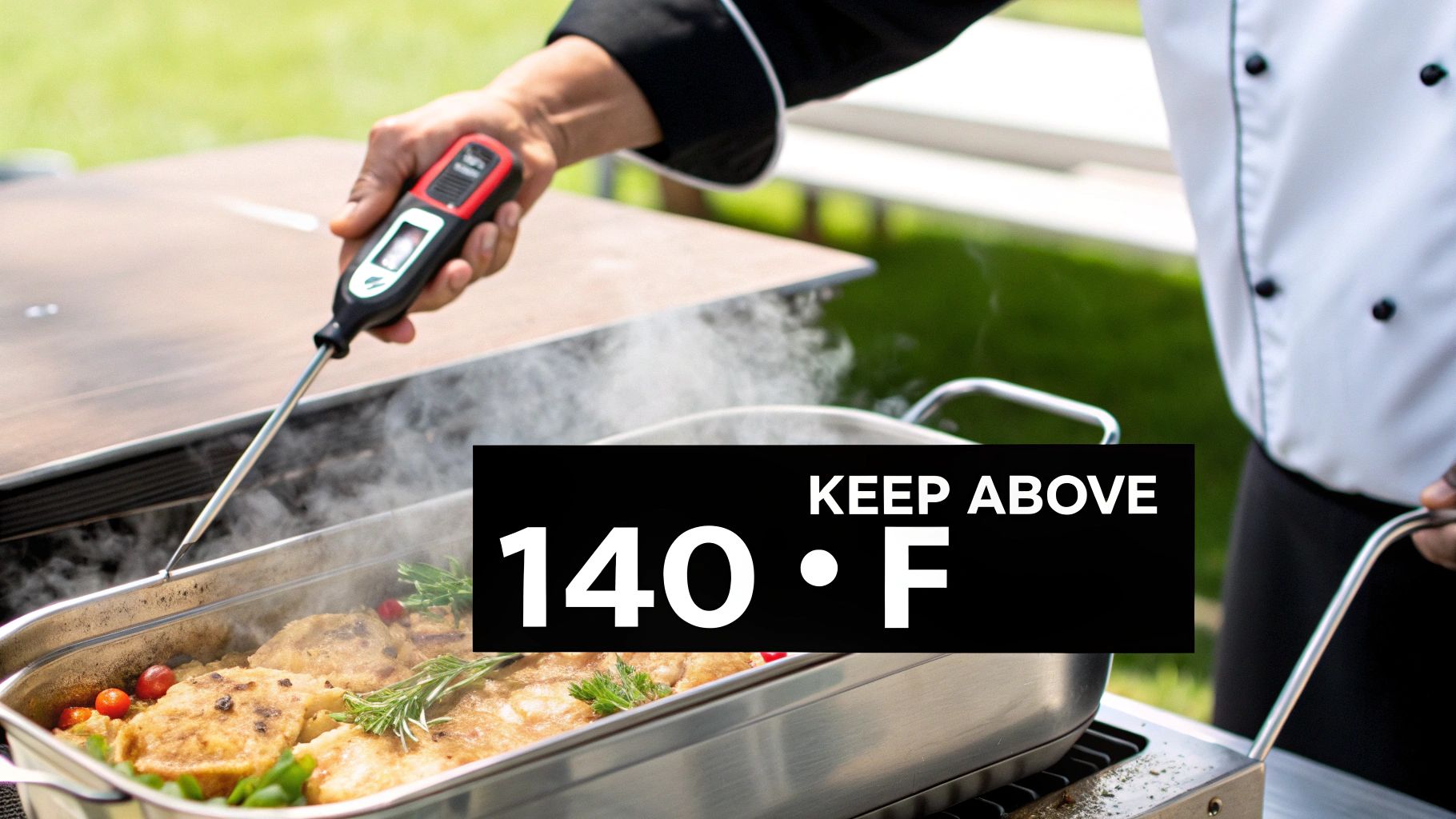
Let's be clear: the single most important job of a commercial griddle is to cook your food to a safe, delicious temperature. It’s the engine of your hot line, and its main purpose is to create high-quality, perfectly cooked food while keeping every bite safe.
The absolute golden rule here is cooking food to its proper internal temperature, such as chicken to 165°F (74°C). This is non-negotiable. Undercooking food puts it into the dreaded "danger zone" where bacteria can thrive. Getting this wrong doesn't just ruin food; it puts your entire operation at risk.
Active Temperature Management
A commercial griddle is not a simple stove or a "set it and forget it" appliance. Keeping that surface temperature consistent is an active job that needs your attention throughout the entire service. A little discipline here ensures the last plate served is just as good—and as safe—as the first.
Your probe and infrared thermometers are your best friends on the line. Get in the habit of temping your griddle surface and your food products regularly. This quick check gives you real-time feedback, letting you make tiny adjustments before a small dip in temperature becomes a big problem. If you see a griddle zone dropping temperature, it’s time to act.
- For Gas Griddles: Tweak the burner controls. Turning it up just a bit can boost the heat for faster recovery.
- For Electric Units: Give the thermostat dial a small nudge upward. This is where electric models really shine, offering precise control.
This constant vigilance is what separates the pros from the amateurs. It’s also a cornerstone of passing health inspections. You can get a deeper look at what inspectors check for in our restaurant health inspection checklist.
Preserving Food Quality and Texture
Beyond safety, you want the food coming off that griddle to taste fantastic. This means fighting the two biggest enemies of any cook line: burning and undercooking.
Think about that perfectly seared steak you're cooking. If you let it sit on a griddle that's too hot, the outside will burn before the inside is cooked. The easy fix? Use heat zones. Sear it on the hot part, then move it to a cooler zone to finish cooking gently.
On the flip side, things like pancakes or eggs can get tough on a griddle that's too hot. For these dishes, a lower, consistent temperature is key. It also helps to use the right amount of oil or butter to create a barrier and ensure even browning.
Expert Insight: Top kitchens now treat their commercial griddles as a dynamic cooking surface with multiple zones, not just one big hot plate. It's a fundamental shift in mindset that focuses on controlling heat to maximize quality right at the point of cooking.
This professional approach is what's driving the market. The global electric griddle market continues to grow, with controlled-temperature models accounting for a huge portion of sales. Many kitchens dial their units to a precise temperature for specific items and verify with an infrared thermometer. It’s all about guaranteeing both safety and quality. When you master these techniques, your commercial griddle stops being just a flat-top and becomes a critical tool for quality control.
Smart Menu Planning for Your Commercial Griddle
Let's talk strategy. The real secret to a killer menu isn't just about what you cook, but choosing dishes that were practically made for a commercial griddle. Not everything can handle that direct, intense heat. Smart planning means the food you serve is perfectly cooked every single time.
Think of your griddle as a high-speed, high-volume cooking station. This is where dishes that benefit from a quick sear, even browning, and fast cooking times really shine. In fact, many don't just cook well—they get even better as they develop that delicious Maillard reaction crust.
Griddle-Friendly Food Choices
Some foods are just born for the flat-top. They cook quickly and develop amazing texture and taste, which makes your job a whole lot easier and keeps everyone coming back for more.
These are the reliable workhorses you can count on:
- Breakfast Items: Pancakes, bacon, French toast, and fried or scrambled eggs are all griddle perfect.
- Burgers and Sandwiches: You can't beat a griddle for smashing burgers, toasting buns for a Philly cheesesteak, or making a perfect grilled cheese.
- Proteins: Thin-cut steaks, chicken breasts, and fish fillets get a beautiful sear and cook through quickly.
- Vegetables: Sliced onions, peppers, mushrooms, and zucchini are fantastic. The direct heat caramelizes them perfectly.
On the flip side, some foods just can't take the direct heat. Large, thick cuts of meat will burn on the outside before the inside is cooked. And anything that needs to be boiled or deep-fried is obviously not for the griddle. It's best to cook those items on other equipment.
Kitchen Layout and Equipment Planning
Once you've locked in your menu, it's time to think about flow. A logical layout prevents a traffic jam on the line and makes for a much smoother service. The griddle is often the centerpiece, with prep stations on one side and the finishing/plating station on the other.
Here’s a good rule of thumb I've learned over the years: plan your griddle space based on your busiest item. This gives you enough surface area to meet peak demand. For a big event like a wedding, this kind of planning is critical. Using a detailed wedding planning checklist can be a lifesaver to make sure you've covered all your bases, including your kitchen setup.
Presentation is Everything: Don't just cook in one big pile. Use your griddle space wisely. Keep items separate to manage cooking times and create a station that looks organized and efficient. A clean griddle surface can make the food pop with almost zero effort.
Proper Cleaning and Storage to Protect Your Investment
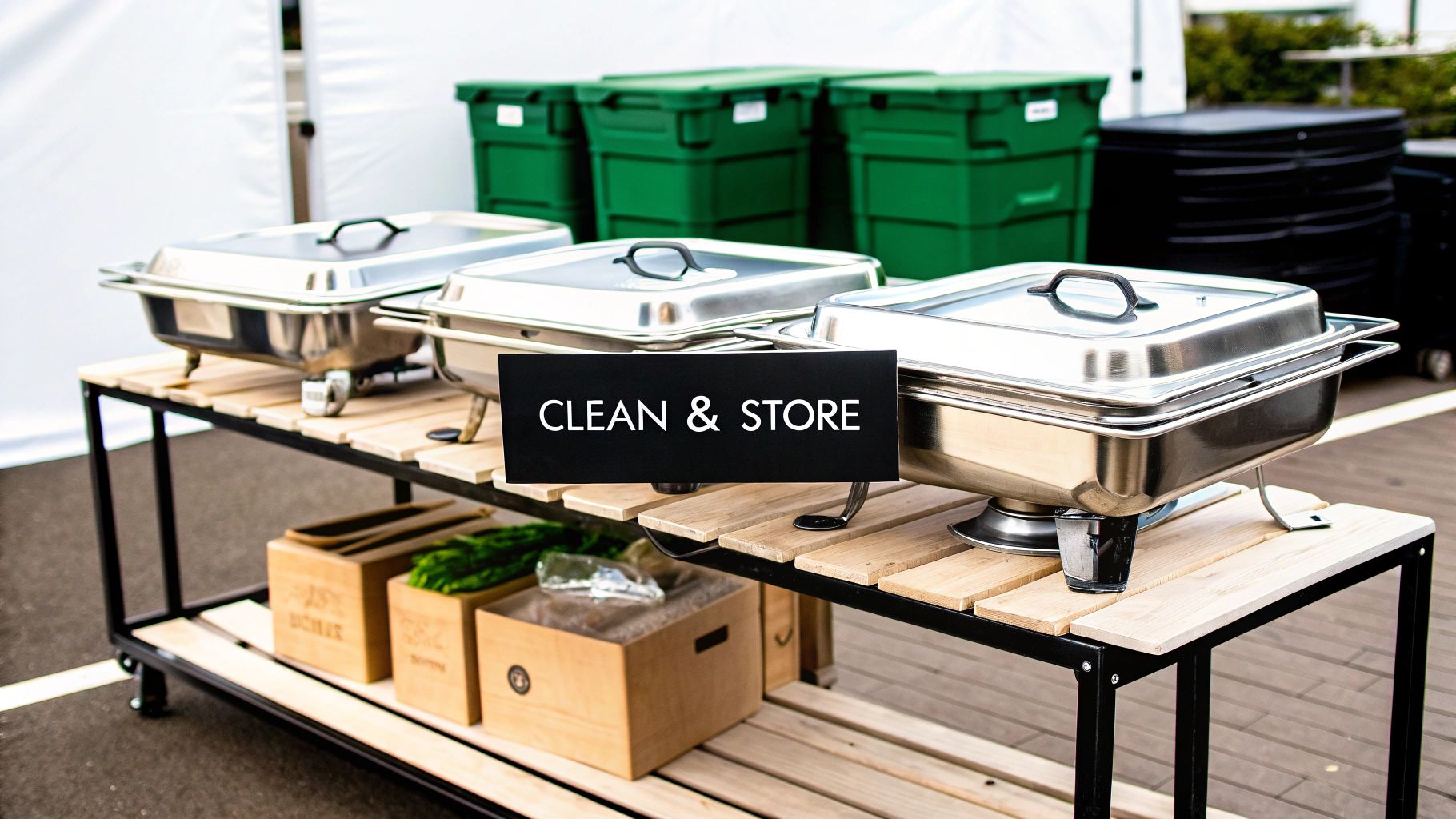
Your commercial griddles are the workhorses of your kitchen, but they're also a serious investment. If you want them to last for years and perform perfectly at every service, your post-shift care routine is just as important as your cooking technique.
First things first: safety. Before you even think about cleaning a griddle, you absolutely have to turn off the gas or electric supply. Use the proper shutoff valves or breakers. No shortcuts.
Once the heat is off, let the surface cool down slightly before you clean it. This isn't just about avoiding burns; dumping cold water on a piping hot griddle can cause the metal to warp (thermal shock). A little patience here goes a long way.
Post-Service Cleaning Best Practices
After the griddle has cooled a bit but is still warm, it's time to get cleaning. It's tempting to grab a wire brush for tough, baked-on food, but that will just scratch and ruin the surface. Stick with a griddle scraper and a non-abrasive pad.
For the really stubborn stuff, your best friend is a griddle stone or screen used on a warm, oiled surface. Having the right cleaning supplies for restaurants on hand makes this a whole lot easier and faster.
Crucial Tip: After scraping and cleaning, you need to thoroughly wipe the surface and apply a thin coat of cooking oil. Don't just leave it bare. This re-seasons the griddle, protecting it from rust and ensuring it's ready for the next service.
Smart Maintenance Solutions
Maintaining your griddle correctly is key to protecting it from damage and ensuring it operates efficiently. Whatever you do, don't just ignore the grease trap.
- Empty Grease Traps: Make it a daily habit to empty and clean the grease trap. An overflowing trap is a fire hazard and a sanitation nightmare.
- Check Connections: Regularly inspect gas lines or electrical cords for any signs of wear and tear. This simple check can prevent major problems down the road.
Treating your commercial griddle with this kind of care ensures it stays in prime condition and is always ready to perform.
Burning Questions About Commercial Griddles
Even if you've been in the business for years, there are always a few tricky questions about getting the most out of your commercial griddles. Nailing these little details is what separates an amateur cook from a truly professional chef. Let's tackle some of the most common things we get asked.
How Hot Should a Commercial Griddle Be?
The sweet spot is between 350-450°F (175-232°C) for most items. This provides that perfect, quick sear for burgers, chicken, and vegetables without burning them.
Here’s a pro tip: always use an infrared thermometer to check your surface temperature. It makes a massive difference in consistency, which saves you from sending out under or overcooked food and gets your line moving much faster.
If you set the temperature too low, you risk food steaming instead of searing. Too high, and you’ll have a burnt exterior with a raw interior.
Key Insight: That griddle surface isn't just there to be hot; it's the engine of the whole operation. It provides direct, conductive heat, making sure the food cooks perfectly with that desirable crust and texture.
Can You Cook Anything on a Commercial Griddle?
That’s a hard no. Think of a griddle as a high-heat searing station, not an all-purpose cooking device. Its job is to cook food that benefits from direct contact with a hot, flat surface.
The intense, dry heat just isn't suitable for cooking soups, stews, or anything that needs to be boiled. Trying to cook these items on a griddle will lead to a burnt, sticky mess, and you'll probably damage your equipment in the process. Always use the right tool for the job.
What Is the Best Way to Keep Food From Sticking?
A well-seasoned surface is your best friend here. The number one rule is simple: keep your griddle clean and properly seasoned. This creates a natural non-stick layer that makes everything from eggs to fish slide right off.
For foods that are especially prone to sticking—think pancakes or delicate fish fillets—you can give yourself an edge by using a bit of clarified butter or oil right before you place the food down.
It also helps to ensure the griddle is fully preheated. Placing food on a griddle that isn't hot enough is a surefire way to get it to stick.
At Griddles.com, we supply the high-performance commercial equipment you need to cook your menu perfectly. Explore our selection of commercial griddles and cooking equipment today.