
Your Complete Guide to a Commercial Kitchen Range with Griddle
In a busy commercial kitchen, few pieces of equipment pull their weight quite like a kitchen range with an integrated griddle. It's the undisputed MVP, blending open burners with a flat-top cooking surface into a single, powerhouse unit. This setup is the secret weapon for high-volume kitchens, letting chefs juggle searing, simmering, and griddling all at the same time.
The True Workhorse of Your Commercial Kitchen
Picture a classic diner during the morning rush. On one side, a line cook is flipping stacks of pancakes and sizzling breakfast sausage on the griddle. Steps away, another chef is keeping sauces warm and boiling water on the open burners. This isn't chaos; it's a perfectly choreographed dance made possible by one piece of gear: the commercial range with a griddle. It becomes the anchor of the entire cook line.
These aren't your average home appliances. Commercial ranges are built from heavy-gauge stainless steel and engineered to take a beating—day in, day out. They stand up to intense heat, constant scrubbing, and the general abuse of a professional kitchen. The biggest win here is unmatched efficiency. By combining multiple cooking stations into one, you save a ton of floor space, which is pure gold in tight spots like food trucks or ghost kitchens.
Expanding Your Menu with a Single Appliance
The real beauty of a commercial kitchen range with a griddle is how it opens up your menu. You're essentially getting two distinct cooking styles in one footprint, letting you offer more without buying more equipment.
- Breakfast Powerhouse: Knock out pancakes, eggs, bacon, and hash browns on the griddle while your burners handle oatmeal or hollandaise sauce.
- Lunch Rush Dominance: Sear burgers and toast buns on the flat-top as you’re frying up sides or simmering soups on the range.
- Dinner Service Versatility: Get that perfect crust on a steak or piece of fish using the griddle, while the burners are free for delicate sauces and pasta.
This isn’t just about adding more items to the menu; it’s about making the kitchen flow better. A chef can manage several orders from one spot, cutting down on wasted steps and pushing out more food when it counts.
At the end of the day, this appliance is a profit engine. Every square inch is built for output, consistency, and a long life. By merging these critical functions, a commercial kitchen range with a griddle quickly becomes the most valuable player on your line, turning ingredients into revenue with incredible speed and reliability. It's the kind of solid foundation every successful food business is built on.
Understanding the Features That Matter Most
When you're shopping for a commercial kitchen range with a griddle, you're not just buying another piece of equipment. You're investing in the absolute engine of your kitchen's production line. Getting bogged down in technical specs is easy, so let's cut through the noise and talk about what really separates a workhorse from a headache during a dinner rush.
A great commercial range boils down to three things: efficiency, flexibility, and consistency. Get these right, and your whole operation runs smoother.
This just shows how the right professional gear isn't just one thing—it's a system that helps you manage your workflow, expand your menu, and nail the quality of every single dish that leaves the kitchen.
The Critical Role of Griddle Plate Thickness
Think of the griddle plate like a thermal battery. A thin, flimsy plate heats up in a flash, but the second you throw down a dozen cold burger patties, it loses all its heat. That temperature drop is a killer, leading to soggy, unevenly cooked food and longer ticket times.
For any serious commercial kitchen, a plate thickness of at least 3/4-inch to 1-inch is non-negotiable. That heavy chunk of steel holds onto heat like a champ, giving you incredible thermal stability and almost instant recovery. It's the secret to making sure every inch of that griddle cooks at the same temperature, from the first order of the day to the last.
Fuel Types: The Power Behind the Plate
The fuel source you choose will dictate your commercial range's performance, where you can install it, and what your monthly utility bills will look like. Each type has its own sweet spot depending on the kind of professional kitchen you're running.
When you're trying to decide what's best for your setup, it really comes down to balancing raw power against location flexibility and precision.
Commercial Griddle Fuel Type Comparison
| Fuel Type | Best For | Pros | Cons |
|---|---|---|---|
| Natural Gas | High-volume restaurants, diners, and institutions with existing gas lines. | Unbeatable power and fast heat recovery. Lower long-term operating costs. | Requires professional installation and a fixed gas line connection. |
| Propane | Food trucks, outdoor catering, and pop-up events. Anywhere you need power on the go. | Offers the same high-heat performance as natural gas but with complete portability. | Requires managing and refilling propane tanks. Fuel can be more expensive. |
| Electric | Kitchens with strict ventilation codes, delicate cooking, or no gas access. | Excellent temperature precision. Often easier and cheaper to install. | Slower heat-up and recovery times. May struggle with high-volume rushes. |
While electric has its place, gas is still king in the commercial world. Gas-powered ranges account for an estimated 55.2% of market revenue simply because nothing beats their recovery time and raw output. In fact, in North America, gas models are found in 60% of QSR kitchens, with heavy-duty units pushing 30,000-60,000 BTUs to sear over 200 burger patties an hour. You can dig deeper into these numbers with recent commercial griddle market analysis.
At the end of the day, your choice of fuel is one of the most fundamental decisions you'll make, impacting everything from your menu capabilities to your operational budget.
Precision vs. Feel: Thermostatic and Manual Controls
The final piece of the puzzle is how you control that heat. This choice often comes down to your menu complexity and the experience level of your kitchen staff.
Think of thermostatic controls like the cruise control in your car. You set a specific temperature—say, 350°F for perfect pancakes—and the griddle automatically cycles on and off to hold that exact temp. This is a game-changer for consistency, especially if you have newer cooks on the line.
On the other hand, manual controls are for the old-school chefs who cook by feel. With simple low, medium, and high settings, they give a more direct, hands-on connection to the heat. While some seasoned pros swear by them, most modern kitchens aiming for repeatable, high-quality results will find that thermostatic controls offer a huge advantage.
Matching the Right Commercial Griddle Range to Your Business
Finding the perfect commercial kitchen range with griddle isn't about picking the biggest or shiniest model. It’s a strategic decision that needs to line up perfectly with how your business actually runs day-to-day. A beast of a range that works wonders in a sprawling diner would be a total nightmare in a cramped food truck. The real secret is matching the machine to the mission—your menu, your space, and how you serve your customers.
To make the right choice, you have to look past the stainless steel and think about daily output. A huge, multi-zone gas range is a breakfast-slinging powerhouse for a busy restaurant, while a smaller electric model brings the precision needed for a delivery-only ghost kitchen. When you're laying out a kitchen, like in the detailed plans for Wild Wings Cafe renovations, picking the right griddle range from the start is absolutely critical to keeping up with orders.
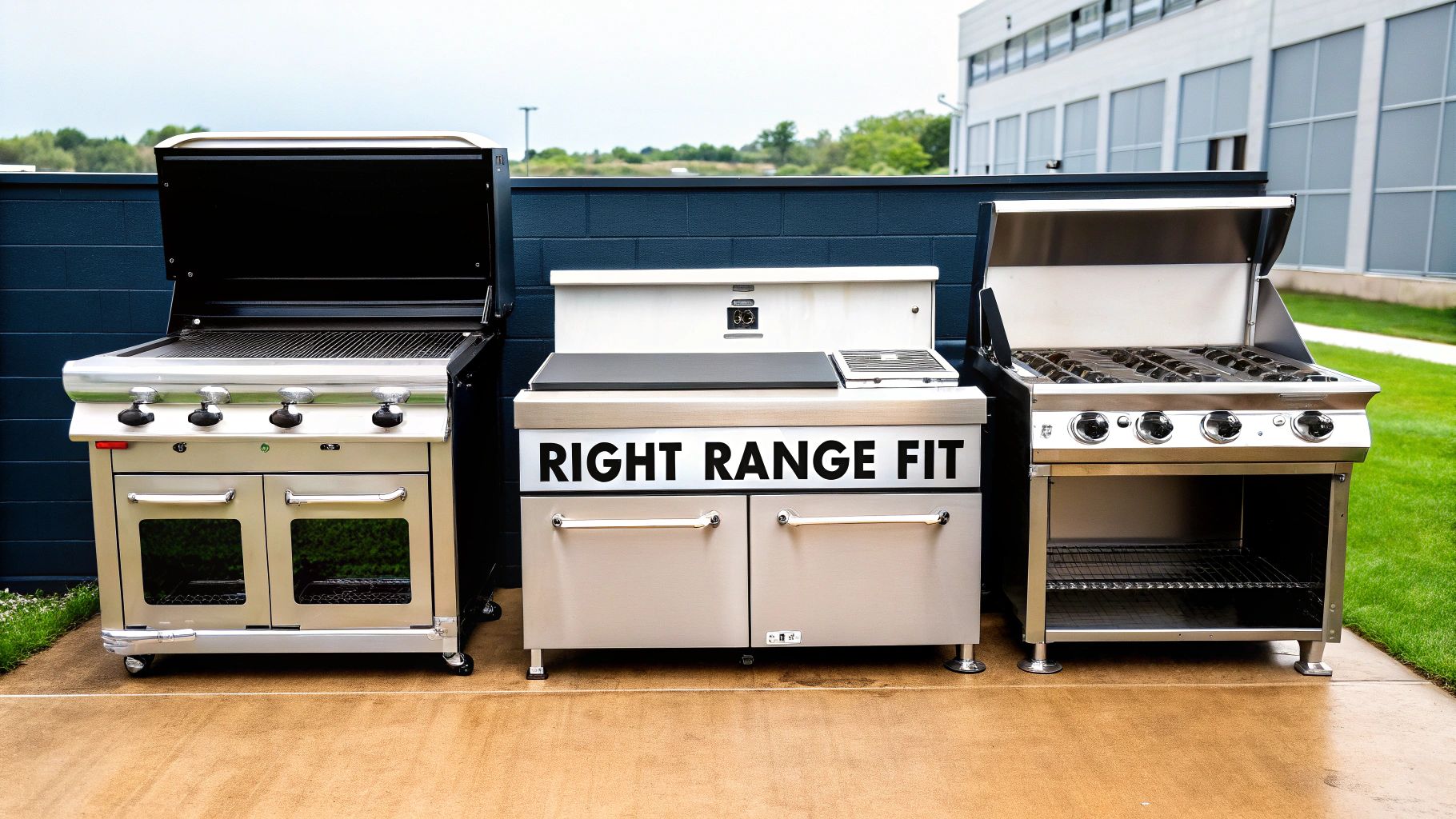
High-Volume Diners and Breakfast Spots
For the classic American diner or any breakfast joint slammed with morning rushes, it's all about volume and speed. This is where a heavy-duty gas range, usually 48 to 60 inches wide, truly shines. You'll want multiple open burners alongside a massive griddle surface to keep things moving. The raw power of gas gives you that instant heat-up and quick recovery time you need to handle endless waves of pancakes, eggs, and bacon without breaking a sweat.
- What to Look For: A wide, multi-zone griddle is your best friend. It lets you sear sausages on one side while gently cooking eggs on the other.
- The Go-To Setup: A 60-inch range with six burners and a 24-inch griddle gives you the ultimate flexibility to tackle a diverse, high-demand menu.
Food Trucks and Mobile Kitchens
When you're working out of a food truck, every single inch is prime real estate. Space is a luxury you just don't have, so your equipment has to be compact and ruthlessly efficient. This is the domain of countertop models or smaller 24 to 36-inch ranges. Propane is almost always the fuel of choice here; it gives you the performance of gas without being tethered to a utility line.
Countertop griddles are absolutely exploding in popularity, especially in North America’s food truck scene—where there are over 36,000 trucks in the US alone. Operators need versatile gear that fits tight spaces, and a portable electric or propane griddle is often the perfect plug-and-play solution.
Ghost Kitchens and Delivery Hubs
Ghost kitchens are a different breed. The game here is all about precision and consistency, especially when you have different cooks cycling through. An electric kitchen range with a griddle is a fantastic fit for this model. Electric units with thermostatic controls take the guesswork out of cooking, making sure every dish comes out exactly the same, no matter who's on the line.
They also make life easier when it comes to installation and can have less demanding ventilation needs—a huge advantage in the mixed-use buildings where ghost kitchens often operate.
If you're trying to figure out which commercial model is right for you, check out our guide on choosing the best range with a griddle. When you match the equipment to the job, your investment starts paying for itself from day one.
Navigating Installation and Safety Requirements
So you're ready to bring a commercial kitchen range with griddle into your operation. That’s a serious upgrade, but let's be clear: this installation is far from a weekend DIY project. Getting the setup right isn't just about making sure your food cooks properly; it’s about the safety of your crew, your customers, and your entire business.
Cutting corners here can lead to failed health inspections, terrifying fire hazards, and the kind of costly downtime that sinks a restaurant. This part is non-negotiable and demands a professional touch from start to finish. We’re talking about licensed pros handling everything from the gas line hookup to final calibration, ensuring the unit is safe and efficient from day one.
The Mandate for Commercial Ventilation
One of the first things any inspector will look for is your ventilation system. A commercial range throws off an incredible amount of heat, smoke, and grease-filled vapor. Without a proper hood system, you’re creating a dangerous, unsanitary mess.
That's why a Type 1 commercial hood isn't a suggestion—it's mandatory. Think of it as the lungs of your kitchen, constantly pulling all that nasty stuff out of the air. It captures everything coming off your griddle and burners, preventing that greasy film from building up on your walls and ceilings, which is a massive fire risk. For a closer look at the different options, check out our guide to commercial kitchen ventilation systems.
Proper ventilation is the number one defense against kitchen fires. A correctly installed and maintained hood system is not just a recommendation; it is a legal requirement designed to protect your investment and your people.
Matching Hood Power to Range Output
Not all hoods are built the same. A hood's power is measured in CFM (Cubic Feet per Minute), which is just a fancy way of saying how much air it can suck out of the room. It’s absolutely critical to match your hood’s CFM rating to your range’s total heat output, measured in BTUs. A high-output gas range needs a seriously powerful hood to keep up.
Here's a quick rule of thumb to follow:
- Total the BTUs: Add up the BTU output of every burner plus the griddle on your range.
- Match the CFM: Make sure your hood’s CFM is powerful enough for that heat load. A good starting point is about 1 CFM for every 100 BTUs for gas appliances.
Clearances and Fire Suppression Systems
Finally, safety goes beyond just what's in the air. Every commercial range has specific clearance requirements straight from the manufacturer. This is the minimum safe distance the unit needs to be from walls and other equipment to prevent heat from transferring and igniting something. Don't eyeball it; follow the specs exactly.
On top of that, a certified fire suppression system is an absolute must. These automated systems are typically built right into the hood and are designed to detect and extinguish a grease fire in seconds. This is your ultimate safety net, the thing that stops a minor flare-up from becoming a full-blown catastrophe. When it comes to fire safety, compliance isn't optional—it's essential.
Daily Cleaning and Long-Term Maintenance Routines
Let's be honest, a commercial kitchen range with griddle is a serious piece of equipment and a major investment. The performance of that flat top is directly tied to your bottom line. That's why committing to a solid daily care routine isn't just a suggestion—it's non-negotiable.
Just a few minutes of proper cleaning at the end of every single shift will save you a fortune in repairs, guarantee better-tasting food, and add years to the life of your commercial range.
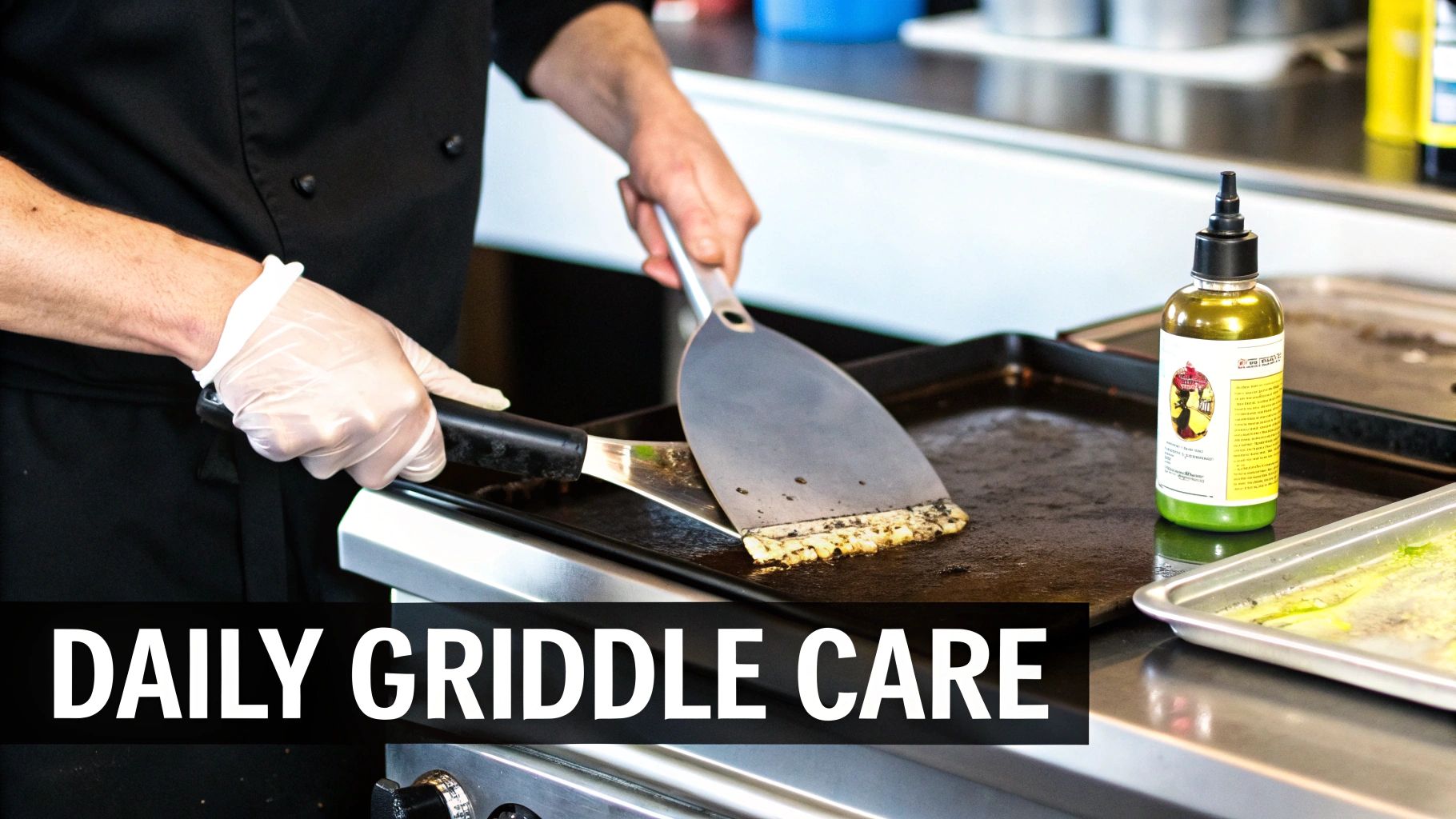
The end-of-day shutdown is where the magic happens. A consistent routine prevents that nasty buildup of carbonized grease—the stuff that ruins your griddle's surface and makes everything taste a little... off.
For a deep dive into the process, check out our complete guide on how to clean a commercial griddle.
Your Daily Shutdown Checklist
The name of the game is leaving the surface spotless, protected, and ready to fire up for the next day's rush. Consistency is everything.
- Scrape While Warm: Don't wait for it to go cold. While the griddle is still warm (but not blazing hot), grab a griddle scraper and get all that food debris and grease off. It’s so much easier when it’s warm.
- Degrease and Rinse: Hit it with a food-safe griddle cleaner. You can also use a simple mix of hot water and vinegar. Use a griddle brick or pad to scrub away any stubborn bits, then give it a good rinse with clean water.
- Dry and Season: This next step is absolutely critical. You have to dry the griddle completely to stop rust in its tracks. Once it's bone dry, wipe a super-thin layer of cooking oil across the entire surface with a clean cloth. This keeps the seasoning perfect and protects the steel.
- Empty and Clean Trays: Don't forget the rest of the station! Pull out the grease trap or drip tray, empty it, and give it a good cleaning. Wipe down the splash guards, too. Keep the whole area sanitary.
A well-maintained griddle surface is just like a seasoned cast-iron skillet—it gets better with age. The thin layer of oil applied daily builds a natural non-stick patina that is essential for peak performance.
Long-Term Health Checks
Beyond the daily grind, you need to do a few quick checks to keep your commercial range running safely and efficiently.
About once a month, take a minute to inspect gas connections for any signs of leaks. You'll also want to make sure the burners are clear of any gunk or obstructions that could mess with the flame. This simple, proactive check-up helps you spot small issues before they turn into major weekend-killing headaches.
Calculating the Return on Your Investment
It's easy to get sticker shock when looking at a new commercial kitchen range with a griddle. But smart operators know the upfront price isn't the whole story. This isn't just another line item expense; it's a revenue-generating machine that can pay for itself surprisingly fast.
The quickest return comes from your menu. Suddenly, you can roll out high-margin breakfast plates, smash burgers that are all the rage, or perfectly seared steaks without buying a separate piece of equipment. This one unit opens up brand new income streams, letting you make more money from the exact same kitchen footprint.
Boosting Throughput and Long-Term Value
Think about the chaos of a lunch rush. Faster cooking and quick heat recovery mean you're turning tickets faster. More tickets turned means more customers served and more sales in the register. A tough, stainless-steel commercial range with a griddle is built for the long haul, saving you from the headaches and costs of downtime and replacements down the road.
The investment in quality commercial equipment is a cornerstone of a profitable kitchen. It enhances efficiency, expands menu potential, and ensures reliability when you need it most, directly contributing to a healthier bottom line.
This isn't just talk; the market reflects this reality. The global commercial griddle market is already worth USD 2.43 billion and is expected to climb to USD 3.72 billion by 2033, all because modern kitchens need this kind of high-volume workhorse. You can dig into more of the numbers in HTF Market Intelligence's latest report.
When you're doing the math, look past the initial cost and focus on the lasting financial upside. For a wider view on this, understanding the overall return on investment of kitchen upgrades offers some great insights. The right commercial range pays you back through more sales, smoother operations, and rock-solid reliability day in and day out.
Frequently Asked Questions
It's a big decision, adding a new commercial range to your kitchen lineup. You've got questions, and we've got answers based on years of helping chefs and operators find the right fit. Let's tackle some of the most common ones we hear.
What Is the Best Griddle Plate Thickness for a Commercial Range
In any commercial kitchen that takes its food seriously, the undisputed champion is a griddle plate between 3/4-inch and 1-inch thick. Don't think of it as just a cooking surface; think of it as a thermal battery. That heavy-duty steel stores an incredible amount of heat.
Why does that matter? When you slam down a dozen frozen burger patties or get a sudden rush on pancakes, a thinner plate will instantly lose temperature, leading to inconsistent cooking. A thick plate holds that heat steady, eliminating hot and cold spots and giving you perfectly cooked food, every single time, even during the craziest lunch rush.
Should I Choose Thermostatic or Manual Griddle Controls
This really boils down to your kitchen's style and who's doing the cooking.
Thermostatic controls are all about precision. You set it to a specific temperature, and it stays there. This is a lifesaver for delicate items like eggs or when you have multiple cooks on the line—it takes all the guesswork out of the equation and guarantees repeatable results.
On the other hand, manual controls give a seasoned chef that old-school, tactile feel with simple low-to-high adjustments. Many experienced cooks prefer to work by instinct, making tiny adjustments on the fly. For most modern kitchens, though, where consistency is king, thermostatic controls are the safer and more reliable bet.
Key Takeaway: Using a residential range is a critical safety hazard, violates local health codes, and is not designed to withstand the intense, continuous use of a professional kitchen environment.
Can I Use a Residential Range in My Commercial Kitchen
Let me make this simple: absolutely not. It’s not just a bad idea; it’s dangerous and illegal. Commercial ranges are built like tanks with heavy-gauge steel to handle the relentless, all-day abuse of a professional kitchen.
They're also certified by organizations like the National Sanitation Foundation (NSF) to meet mandatory health and safety codes. A residential unit would fail inspection, void your insurance, and likely break down in a matter of weeks.
How Often Do I Need to Season My Commercial Griddle
You only need to do a full seasoning process once, right before you use your new commercial griddle for the first time. This initial step creates that all-important non-stick layer.
After that, it's all about maintenance. The "seasoning" just builds up naturally over time with daily use. The real secret is a simple end-of-shift routine: scrape it clean, and while it's still warm, wipe on a paper-thin layer of cooking oil. This protects the steel from rust and keeps that beautiful patina getting better with age.
Ready to find the perfect workhorse for your professional kitchen? The experts at Griddles.com can help you select a commercial kitchen range with a griddle that meets your exact needs, with free shipping and fast delivery. Explore our full collection of professional-grade equipment at https://griddles.com today.